Leather for bookbinding
CN → USProduct Images

AI Analysis
📚 Leather for Bookbinding (Binders’ Leathers)
🌐 HS Code Reference & Clearance Guide | 2026 Latest Tariff Schedule | Professional Entry Strategy
📌 I. Product Definition & Classification: Do You Really Understand "Bookbinding Leather"?
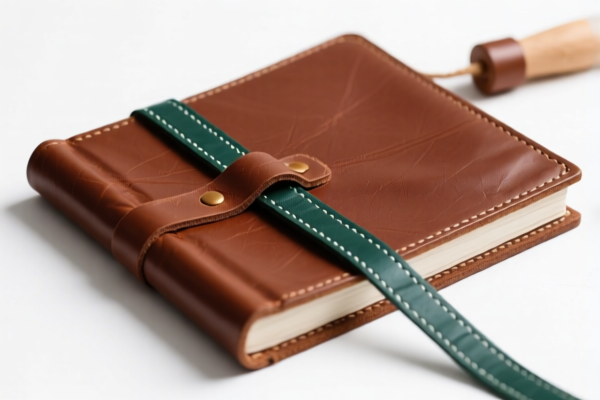
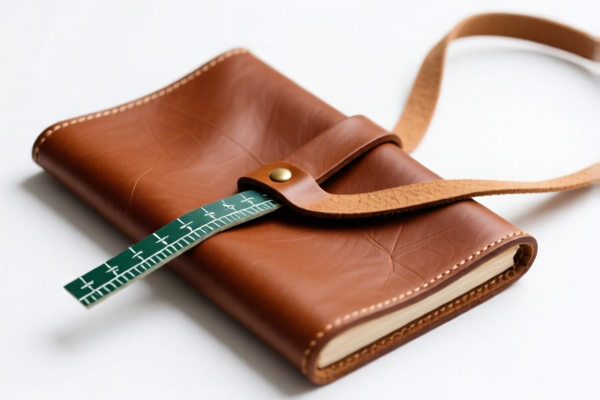
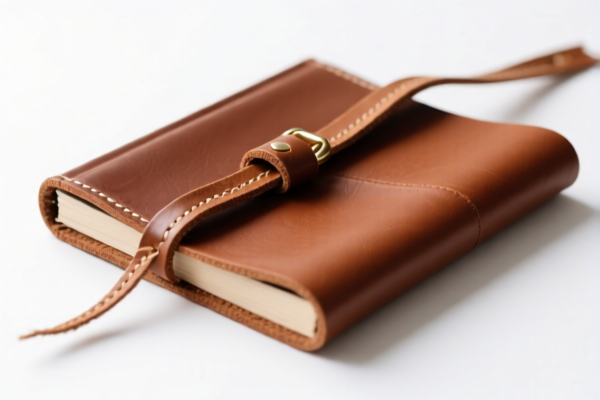
Leather for bookbinding, technically known as "Binders' Leathers," is a specialized type of tanned or crusted leather specifically processed for covering books, ledgers, diaries, and similar articles. In international trade, it is distinct from general leather goods (like bags or shoes) due to its specific finish, thickness, and softness requirements.
Key Distinction:
- Binders' Leather: Thin, supple, often pigmented or finished specifically for durability and aesthetic appeal in printing.
- Other Leather: General-purpose leather for garments, upholstery, or footwear.
⚠️ Critical Classification Point:
- If the leather is tanned/crust and thin/supple specifically for bookbinding → Chapter 41 / 46 (depending on state).
- If it is finished and cut/pressed into specific shapes for covers → Still usually 4115 or 4117, but requires precise description.
- Do NOT classify as "Leather Articles" (Chapter 42) unless it is finished into a specific article (e.g., a pre-bound book cover with text already attached). Raw/semi-finished binding leather falls under Chapter 41.
📦 II. HS Code Classification Details (2026 Latest Tariff Authoritative Comparison)
| HS Code | Product Description | Application Scenario | State of Leather |
|---|---|---|---|
4115.20.10.00 |
Binders' leathers, tanned or crust, of bovine (including buffalo) or equine animals | High-quality hardcover books, legal documents, premium diaries | ✅ Tanned/Crust |
4115.20.90.00 |
Other binders' leathers (e.g., goat, sheep, pig) | General paperbacks, student notebooks, lower-cost bindings | ✅ Tanned/Crust |
4117.10.10.00 |
Tanned fur skins and pieces thereof (not with hair on) | Rare high-end luxury book covers (using exotic skins like reptile or specific furs) | ✅ Processed |
4117.10.90.00 |
Other tanned fur skins and pieces thereof | Niche artisanal bookbinding | ✅ Processed |
🔍 Key Reminder:
- The term "Binders' Leather" is explicitly mentioned in HS 4115.
- Bovine/Equine vs. Other Animals: Bovine/Equine (Cows/Horses) are more common for durability. Goat/Sheep is used for softer, flexible covers.
- Crust Leather: Semi-processed leather ready for final dyeing/finishing by the binder. This is critical for customs to distinguish from "finished leather" which might have different tariff implications.
💰 III. 2026 Latest Tariff Rate Breakdown (Including Surtaxes & Policy Add-ons)
✅ Applicable Country: United States (US)
✅ Country of Origin: China (CN)
✅ Effective Date: From November 10, 2025 (including subsequent imports)
🎯 1. 4115.20.10.00 —— Binders' Leathers (Bovine/Equine)
| Item | Content |
|---|---|
| Base Rate | 7.2% (ad valorem) |
| USITC Surcharge | +25% (from USITC Footnote 9903.88.01) |
| IEEPA Surcharge | +10% (for China/HK origin, from Nov 10, 2025) |
| Total Rate | 42.2% |
| Tax Calculation | CIF Value × 42.2% |
| De Minimis Eligibility | ❌ No (deny_de_minimis) |
| Legal Basis Path | IEEPA:9903.01.25 → IEEPA:9903.01.24 → USITC:4115.20.10.00 → FOOTNOTE:9903.88.01 |
📌 Explanation:
- Leather products are often subject to higher base tariffs than electronics.
- The 25% USITC surcharge applies under Section 301.
- The 10% IEEPA surcharge adds further cost for Chinese-origin leather.
- Total 42.2% is a significant cost driver. Importers must factor this into pricing.
🎯 2. 4115.20.90.00 —— Binders' Leathers (Other Animals)
| Item | Content |
|---|---|
| Base Rate | 7.2% |
| USITC Surcharge | +25% |
| IEEPA Surcharge | +10% |
| Total Rate | 42.2% |
| Tax Calculation | CIF Value × 42.2% |
| De Minimis Eligibility | ❌ No |
| Legal Basis Path | IEEPA:9901.25 → IEEPA:9903.01.24 → USITC:4115.20.90.00 → FOOTNOTE:9903.88.01 |
📌 Note:
- Same tax burden as Bovine/Equine binders' leather.
- Goat/sheep leather may have different aesthetic properties but faces identical trade restrictions in the US market.
🛠️ IV. Customs Clearance Practical Advice (Battle-Tested Pitfall Avoidance Guide)
✅ 1. Document Checklist (Missing Items Will Delay Clearance)
| Document | Must Provide | Description |
|---|---|---|
| ✅ Product Specification Sheet | ✔️ | Material composition (100% cowhide, etc.), thickness (in mm or oz), finish type (pigmented, corrected grain) |
| ✅ Tanning Process Description | ✔️ | Vegetable-tanned, chrome-tanned, or crust? Critical for classification |
| ✅ Product Photos (including roll/cut samples) | ✔️ | Show texture, color, and lack of finished article status |
| ✅ Commercial Invoice | ✔️ | Must clearly state "Binders' Leather, Tanned/Crust, for Bookbinding" |
| ✅ Packing List | ✔️ | Weight and dimensions of leather rolls or cut pieces |
| ✅ Certificate of Origin (CO) | ✔️ | Essential for proving China origin (and thus tariff application) |
✅ 2. Declaration Tips (Key Mantra)
🔥 "State as 'Binders' Leather', Not 'General Leather'! Specify Animal Origin! Clarity Prevents Penalty!"
| Scenario | Correct Declaration | Wrong Practice |
|---|---|---|
| Leather rolls for binding books | 4115.20.10.00 (Bovine) or 4115.20.90.00 (Other) |
Misclassifying as 4104 (General Tanned Leather) → Potential penalty |
| Finished leather jackets made from binding leather | 4203.10.00.00 (Articles of Apparel) |
Declaring as "Leather for Bookbinding" → Wrong HS Code |
| Leather scraps/off-cuts from binding | 4115.20.90.00 (if usable) or 4115.90 (Scrap) |
Misdeclaring as new leather |
✅ 3. Special Circumstances Handling
| Scenario | Handling Advice |
|---|---|
| OEM Custom-Printed Leather | If the leather has custom text/logos pre-pressed, it may be considered a "finished article." However, if it's just surface finishing, keep as 4115. Provide proof of process. |
| Sustainable/Eco-Leather | If it's "vegetable-tanned," emphasize this in specs. May help with ESG reporting but does not change HS Code. |
| Exotic Skins (Reptile/Fur) | Requires CITES permits if from protected species. Declare under 4117 or 4115 accordingly. Heavy regulatory scrutiny. |
| Mixed Shipments (Book + Leather) | If books are already bound, declare as Book (4901). Do not split into leather + paper. |
🌍 V. Global Market Customs Comparison (2026 Latest)
| Country/Region | Recommended HS Code | Tariff | Certification Requirements | Notes |
|---|---|---|---|---|
| 🇺🇸 USA | 4115.20.10.00 |
42.2% (China) | No specific cert | High tariff due to IEEPA/301 |
| 🇨🇳 China | 4115.20.10.00 |
6.5% | No special cert | Import duty lower than US |
| 🇪🇺 EU | 4115.20.00 |
4.7% | REACH Compliance | Lower base tariff, no IEEPA |
| 🇦🇺 Australia | 4115.20.10.00 |
5.0% | No special cert | Competitive rate |
| 🇯🇵 Japan | 4115.20.10.00 |
6.0% | No special cert | Stable tariff |
📌 Conclusion:
- USA is the most expensive market for Chinese-origin bookbinding leather due to the 42.2% effective rate.
- EU and Asia-Pacific offer significantly lower duty burdens (~5-7%).
- Consider supply chain diversification (e.g., leather sourced from Vietnam or EU) to mitigate US tariffs.
📌 VI. Common Mistakes & Pitfall Guide (Blood-Taught Lessons)
❌ Mistake 1: Declaring "Leather for Books" as "General Tanned Leather" (4104)
👉 Consequence: Customs may reclassify and apply different duties or deny entry if description is vague.
👉 Fix: Always use the specific term "Binders' Leather".
❌ Mistake 2: Failing to distinguish between Bovine and Other
👉 Consequence: Potential audit flags for misclassification.
👉 Fix: Clearly state "Cowhide" or "Goat Skin" in the invoice.
❌ Mistake 3: Ignoring CITES Regulations for exotic leathers
👉 Consequence: Seizure of goods, heavy fines.
👉 Fix: Ensure proper CITES permits for any non-standard animal skins.
✅ Correct Practice:
"Binders' Leather, Tanned Bovine, Crust Finish, 0.8mm Thickness, For Hardcover Book Binding, Model BL-2026, No CITES Restrictions"
🎯 VII. Conclusion: Professional Declaration, Cost Savings, Efficiency!
🎯 Remember the Mantra:
🔹 "Binders' Leather, Not General! Specify Animal! Avoid 42.2% Shock!"
🔹 "HS Code 4115 is King for Bookbinding! Clarity Saves Dollars!"
📌 Pro Tip:
If your leather is originating from Vietnam, Mexico, or Thailand, you may apply for IEEPA Exemption or lower tariffs under USMCA/EVFTA.
Recommend Advance Ruling (Preliminary Ruling) from US CBP to confirm classification and duty rate before shipment.
📣 Immediate Action:
📞 Contact a specialized customs broker + Provide Leather Sample Photos + Apply for HS Code Pre-Ruling
🚀 Ensure your Binders' Leather clears customs smoothly, maximizing profit margins!
✨ Professional Clearance Starts with Accurate Classification!
💼 Every percentage point of duty matters!
Customer Reviews
About HS Code Classification
The Harmonized System (HS) is an internationally standardized nomenclature developed by the World Customs Organization (WCO) to classify traded products. Over 200 countries use the HS system as the basis for customs tariffs, trade statistics, and import/export regulations.
Each HS code follows a hierarchical structure:
- Chapter (2 digits) — Broad category of goods (e.g., Chapter 84: Machinery and Mechanical Appliances)
- Heading (4 digits) — More specific grouping within the chapter
- Subheading (6 digits) — Internationally standardized breakdown, used by all WCO member countries
- National subdivisions (8-10 digits) — Country-specific extensions for further classification, such as US HTSUS 10-digit codes
Correct HS code classification is essential for smooth customs clearance, accurate duty payment, and compliance with trade regulations. Misclassification can lead to customs delays, overpayment of duties, or penalties.
When importing from CN to US, the applicable tariff rates may include:
- Most-Favored-Nation (MFN) rate — The standard duty rate applied to WTO members
- General rate — Applied to countries without trade agreements
- Trade remedy duties — Additional tariffs such as Section 301 (anti-dumping), Section 232 (national security), or countervailing duties
The information provided on this page is for reference purposes only. For official classification, please consult with your local customs authority or a licensed customs broker.