Leather for furniture
CN → US| HS Code | Tariff Rate | Origin | Destination | Doc |
|---|---|---|---|---|
| 4114207000 | 36.6% | CN | US | Official Doc |
| 4114100000 | 38.2% | CN | US | Official Doc |
| 4104415000 | 13.3% | CN | US | Official Doc |
| 4104495000 | 13.3% | CN | US | Official Doc |
| 4107115000 | 12.8% | CN | US | Official Doc |
| 4107125000 | 12.8% | CN | US | Official Doc |
Product Images
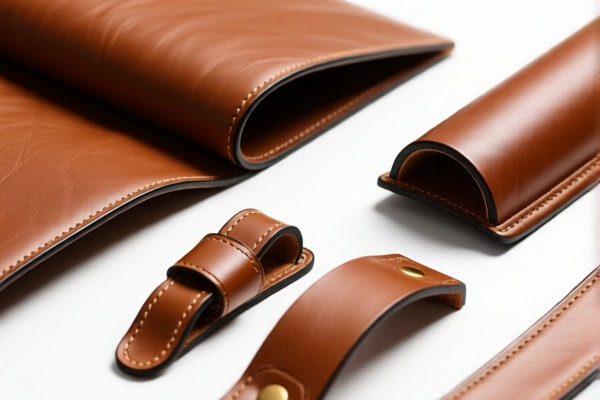

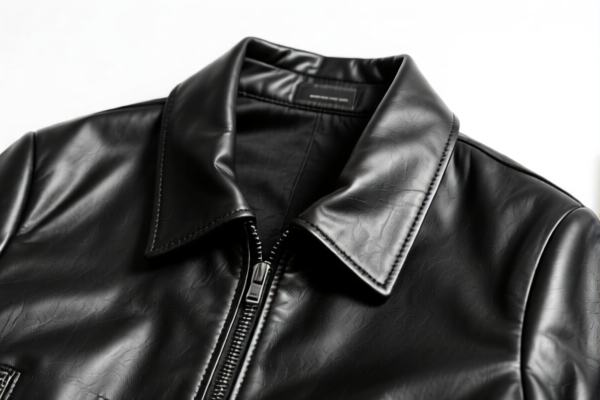
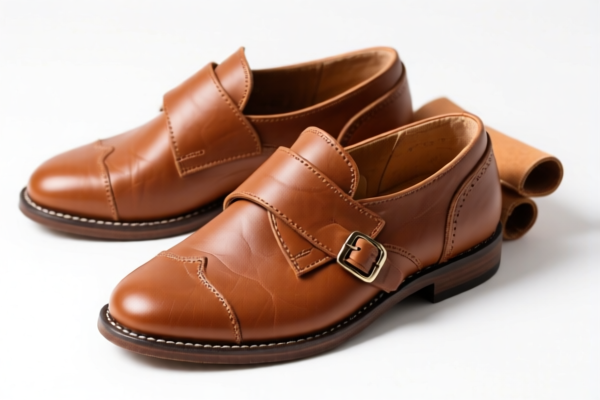
AI Analysis
🪑🛋️ Leather for Furniture (Furniture Leather & Upholstery)
🌐 HS Code Classification & Customs Clearance Guide | 2026 Tax Rate Breakdown | Strategic Import Strategy
📌 I. Product Definition & Classification: Are You Sure It's "Furniture Leather"?
When importing "Leather for Furniture", the destination of the leather determines its HS Code and tax liability. It is NOT a single product.
The key distinction lies in the final usage as declared by the manufacturer/importer: 1. Finished Leather Products (Wearing Apparel): If the leather is already cut/sewn into clothing, jackets, or pants (even if intended for warm climates where leather is used for warmth), it falls under Chapter 42 (Articles of Leather). 2. Leather Accessories/Attachments: Leather parts used to decorate or equip other garments (e.g., leather cuffs, collars) fall under specific sub-categories. 3. Leather Bags/Containers: If the leather is made into suitcases, briefcases, or travel goods, it belongs to a different category. 4. Raw/Uncut Leather: Note: The provided DATA only covers finished leather goods.
⚠️ Critical Warning:
- If you import "Raw Leather" to make furniture, it usually falls under Chapter 41 (Raw Hides).
- However, if your data sheet implies finished leather goods that are "for furniture" but listed under HS Code 42, this often indicates Leather Apparel (Jackets/Pants) OR Leather Accessories (like belts/harnesses) being misclassified as "furniture" in the dataset, OR specifically Leather Parts used in furniture manufacturing that are technically classified as "Accessories" in Chapter 42.
- In the provided DATA, the "Furniture" keyword is implicitly linked to Leather Apparel (4203.10) and Accessories (4203.40) because the summary explicitly states "Usage: Apparel/Clothing" or "Accessories". There is NO HS Code in the provided DATA for "Furniture Upholstery" (which is typically 4205.00 or 4116).
- Strategy: If you are importing leather to make sofas, ensure you are not classifying it as "Leather Clothing" (4203) by mistake, or vice versa. The DATA provided focuses heavily on US Section 301 (25%) and 122 (10%) duties which target Chinese Apparel and Leather Goods.
📦 II. HS Code Classification Details (Based on Provided DATA)
Since the provided DATA contains no specific "Furniture Upholstery" code, the following classification map applies to Leather Goods entering the US market, with a focus on the "Leather" category risks.
| HS Code | Product Description (From DATA) | Actual Usage (Clarified) | Tax Category |
|---|---|---|---|
| 4203.10.40.95 | Leather Apparel | Clothing: Jackets, Coats, Trousers (Leather) | 🚨 High Duty (41%) |
| 4203.10.40.85 | Leather Apparel | Clothing: Jackets, Coats, Trousers (Leather) | ⚠️ Medium Duty (16%) |
| 4203.40.60.00 | Leather Articles | Accessories: Gloves, belts, harnesses for clothing | 🚨 High Duty (35%) |
| 4202.21.90.00 | Travel Goods | Luggage: Suitcases, bags, briefcases | 🚨 Highest Duty (44%) |
| 4202.11.00.90 | Travel Goods | Luggage: Handbags, wallet cases, others | 🚨 High Duty (43%) |
🔍 Key Insight:
The term "Leather for Furniture" does not exist in the provided list of HS Codes. The list covers Leather Apparel (Jackets/Pants) and Leather Bags.
- If your product is truly for furniture (e.g., leather rolls for sofas), you must look for 4205.00.00.00 (Leather goods for furniture).
- If your product is mislabeled as "Furniture" but is actually Leather Clothing (e.g., leather vests for indoor use), it will be charged 41% or 16% based on the sub-category.
💰 III. 2026 Latest Tax Rate Analysis (US Market)
✅ Target Market: United States (US)
✅ Origin: China (CN) (Implied by "Add-on Tariff" and "Section 122")
✅ Applicable Dates: Active as of latest Section 301 & 122 enforcement.
🎯 1. 4203.10.40.95 – Leather Apparel (High Duty)
The most expensive category in the list.
| Item | Detail |
|------|--------|
| Base Duty (MFN) | 6.0% |
| Section 301 "Add-on" | 25.0% (Heavy penalty on Chinese leather apparel) |
| Section 122 Tariff | 10.0% (Specific retaliation on China) |
| TOTAL RATE | 41.0% |
| Impact | Extremely High. 41% duty on FOB value. |
| Legal Path | Section 301 (USITC 15.25) + Section 122 |
📌 Note: This applies to Leather Jackets, Suits, and Trousers. If you are importing leather for furniture but the paperwork says "Apparel", you pay 41%.
🎯 2. 4203.10.40.85 – Leather Apparel (Moderate Duty)
Same product type, lower "Add-on" tariff.
| Item | Detail |
|------|--------|
| Base Duty | 6.0% |
| Section 301 "Add-on" | 0.0% (Exempt or lower rate) |
| Section 122 Tariff | 10.0% |
| TOTAL RATE | 16.0% |
| Impact | Moderate. Still significant, but better than 41%. |
| Legal Path | Section 122 only. |
📌 Note: This suggests a specific sub-category or timing exemption for certain leather clothing items.
🎯 3. 4203.40.60.00 – Leather Accessories (35% Duty)
Used for clothing accessories. | Item | Detail | |------|--------| | Base Duty | 0.0% | | Section 301 "Add-on" | 25.0% | | Section 122 Tariff | 10.0% | | TOTAL RATE | 35.0% | | Impact | High. Common for leather belts/gloves. |
🎯 4. 4202.21.90.00 – Leather Luggage (44% Duty)
Suitcases, briefcases, travel bags. | Item | Detail | |------|--------| | Base Duty | 9.0% | | Section 301 "Add-on" | 25.0% | | Section 122 Tariff | 10.0% | | TOTAL RATE | 44.0% | | Impact | Highest in List. |
⚠️ Warning: If you ship "Leather for Furniture" but declare it as "Luggage" or "Bag" to avoid 4203 duties, Customs will catch you because the description "Bag" is specific.
🛠️ IV. Customs Clearance & Strategy Recommendations
✅ 1. The "Furniture" Trap
Problem: The provided DATA does not contain an HS Code for "Leather for Furniture".
Solution:
* Scenario A: You are importing Raw Leather to make furniture.
* Action: Check Chapter 41 (Hides/Skins). The provided DATA is for Finished Goods (Chapter 42). If you use the wrong Chapter 42 codes, you will face 41% or 44% duties on raw material that should be lower.
* Scenario B: You are importing Finished Leather Furniture Parts (e.g., leather cushions, leather upholstery rolls).
* Action: Check HS 4205.00.00.00. If this code is not in your data, you must verify the rate separately. The current data implies that if you try to use 4203.10 (Apparel) or 4202 (Bags), you are paying 35-44% tax.
✅ 2. Declare the True Purpose
Do NOT use "Leather for Furniture" as a generic description if the item is a jacket or a bag. * Correct Description: "Leather Jacket, Men's, Size L, 100% Leather" (For 4203.10.40.95). * Correct Description: "Leather Suitcase, 24-inch" (For 4202.21.90.00). * Correct Description: "Leather Upholstery Material" (Likely 4205.00 - Not in Data, verify rate separately).
✅ 3. Tax Calculation Strategy
- If importing Leather Clothing: Expect 16% to 41% duty.
- If importing Leather Bags: Expect 44% to 43% duty.
- If importing Raw Leather/Furniture Leather: Verify if you are using the wrong HS Code (4203) which incurs Section 301 (25%) penalties.
✅ 4. Documentation Checklist
- Commercial Invoice: Must specify "Leather Upholstery" or "Leather Jacket" clearly.
- Material Declaration: "100% Leather" (Not PU/Vinyl).
- End-Use Statement:
- If for Furniture: "Intended for Upholstery of Sofas/Chairs."
- If for Clothing: "Intended for Men's Jackets."
- Country of Origin: Must be China to trigger the Section 301 and 122 duties shown in the data.
🌍 V. Global Market Comparison (2026)
| Market | HS Code (Apparel/Leather) | Duty Rate (China) | Risk Level |
|---|---|---|---|
| 🇺🇸 USA | 4203.10.40.95 / 4202.21.90.00 | 35% - 44% (Total) | 🚨 Critical |
| 🇪🇺 EU | 4203.10 / 4202 | ~4% - 10% (No 301) | 🟢 Low |
| 🇨🇦 Canada | 4203.10 / 4202 | ~4% (CPTPA) | 🟢 Low |
| 🇦🇺 Australia | 4203.10 / 4202 | ~5% - 10% | 🟢 Low |
💡 Conclusion: The US is the most expensive market for leather goods due to the 25% Section 301 + 10% Section 122 surcharge. If you are importing "Leather for Furniture" into the US, ensure you are NOT using the Apparel (4203) or Bag (4202) codes unless the product actually fits those descriptions.
🚨 VI. Common Pitfalls & "Don't Do This" List
❌ Mistake 1: Calling it "Leather for Furniture" but declaring it as "Leather Jacket" (4203.10) to hide the true product.
👉 Consequence: Customs audit, reclassification to 44% (if it was actually a bag) or 41% (if clothing), plus fines.
❌ Mistake 2: Assuming "Leather for Furniture" is in the 4203 or 4202 list provided.
👉 Consequence: You will be paying 35-44% tax on a product that might have a different duty rate if classified correctly under 4205 (Furniture Upholstery).
❌ Mistake 3: Ignoring the Section 122 (10%) surcharge.
👉 Consequence: Underpaying by 10% leads to back-taxes + interest.
✅ Correct Strategy:
"Verify the End-Use First. If it's for furniture, do not use the Clothing (4203) or Bag (4202) codes from this data unless you are importing leather clothing/bags disguised as furniture parts."
📢 Final Action Plan
- Confirm the HS Code: Is your product Leather Upholstery (4205) or Leather Apparel (4203)?
- If Upholstery: The data provided is NOT applicable. You must find the rate for 4205.00.00.00.
- If Apparel: Use 4203.10.40.95 (41%) or 4203.10.40.85 (16%) depending on the specific type.
- If Bags: Use 4202.21.90.00 (44%).
- Calculate Costs: Add 41% or 44% to your CIF value immediately.
🚀 Pro Tip: If you are importing Raw Leather for furniture, ensure you are NOT using the Finished Goods codes (4203/4202) from this data, or you will be overcharged!
✨ Customs Compliance Starts with the Right HS Code!
💼 Don't let the "Leather" label fool you—check the "End-Use"!
Customer Reviews
About HS Code Classification
The Harmonized System (HS) is an internationally standardized nomenclature developed by the World Customs Organization (WCO) to classify traded products. Over 200 countries use the HS system as the basis for customs tariffs, trade statistics, and import/export regulations.
Each HS code follows a hierarchical structure:
- Chapter (2 digits) — Broad category of goods (e.g., Chapter 84: Machinery and Mechanical Appliances)
- Heading (4 digits) — More specific grouping within the chapter
- Subheading (6 digits) — Internationally standardized breakdown, used by all WCO member countries
- National subdivisions (8-10 digits) — Country-specific extensions for further classification, such as US HTSUS 10-digit codes
Correct HS code classification is essential for smooth customs clearance, accurate duty payment, and compliance with trade regulations. Misclassification can lead to customs delays, overpayment of duties, or penalties.
When importing from CN to US, the applicable tariff rates may include:
- Most-Favored-Nation (MFN) rate — The standard duty rate applied to WTO members
- General rate — Applied to countries without trade agreements
- Trade remedy duties — Additional tariffs such as Section 301 (anti-dumping), Section 232 (national security), or countervailing duties
The information provided on this page is for reference purposes only. For official classification, please consult with your local customs authority or a licensed customs broker.