Leather for shoe soles
CN → US| HS Code | Tariff Rate | Origin | Destination | Doc |
|---|---|---|---|---|
| 6406102061 | 28.0% | CN | US | Official Doc |
| 4113103000 | 12.4% | CN | US | Official Doc |
| 6403513030 | 15.0% | CN | US | Official Doc |
| 6403513060 | 15.0% | CN | US | Official Doc |
| 6405100030 | 27.5% | CN | US | Official Doc |
Product Images
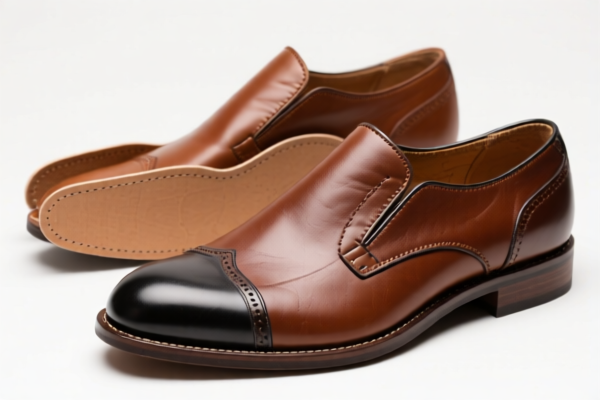
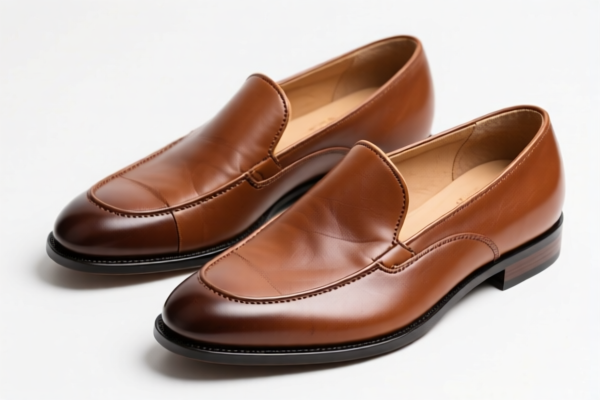
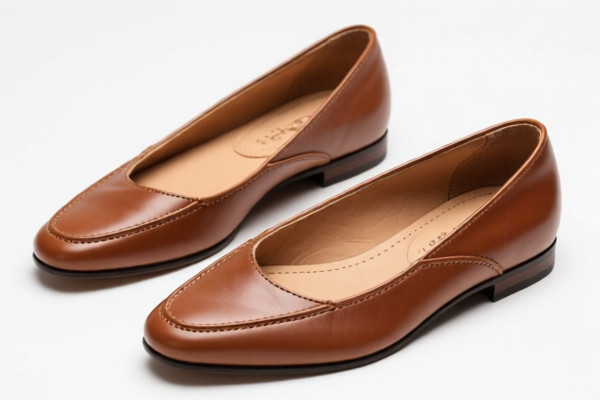
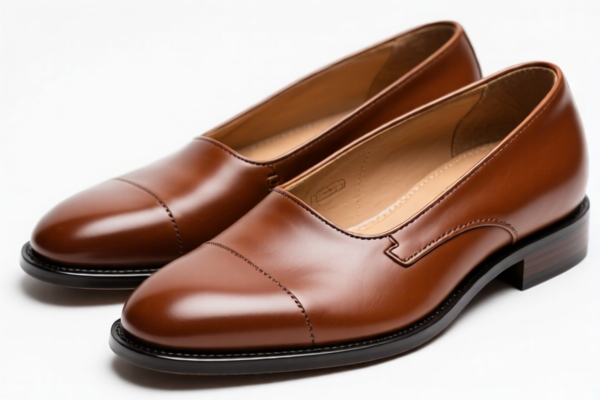
AI Analysis
👞 Leather for Shoe Soles (Sole Leather)
🌐 HS Code Reference & Customs Clearance Guide | 2026 Latest Tariff Analysis | Professional Strategy
📌 I. Product Definition & Classification: What is "Sole Leather"?
Leather for shoe soles is a specialized category of processed leather designed specifically for durability and wear resistance. Unlike upper leather (which prioritizes appearance and flexibility), sole leather must possess high tensile strength, abrasion resistance, and often undergoes specific tanning processes (such as veg-tan or combination tanning) to withstand ground contact.
In international trade, it is crucial to distinguish between: 1. Prepared Sole Leather: Finished leather specifically intended for outsoles. 2. Upper Leather (Misclassified): Leather intended for the upper part of the shoe (often softer, more decorative). 3. Parts vs. Finished Goods: Leather sheets/materials vs. assembled shoes.
⚠️ Key Distinction Point:
- If the leather is specifically processed for soles (thick, durable, often full-grain), it falls under specific HS codes.
- If the leather is used for uppers (even if used in a shoe context), it must be classified under Chapter 41 (Leather) or Chapter 64 (Footwear) depending on whether it is raw material or part of the finished shoe.
- Warning: Many importers mistakenly classify upper leather as sole leather to reduce tariffs, or vice versa. The summary data provided highlights different tax burdens based on this classification.
📦 II. HS Code Classification Details (Based on Provided Data)
Note: The following HS Codes are derived directly from the provided <DATA> which contains a mix of Leather Materials and Finished Footwear. This suggests the user input "Leather for shoe soles" may be triggering a broader classification tree including both materials and final products containing such leather.
| HS Code | Product Description | Classification Logic | Tax Rate (Total) |
|---|---|---|---|
| 4113.10.30.00 | Upper/Lining Leather (Goat/Sheepskin processed) | Processed goat or kid skin leather intended for shoe uppers or linings. | 12.4% |
| 6406.10.20.61 | Shoe Parts (Leather Upper/Lining) | Leather parts where >50% of the external surface area is leather. Classified as accessories/parts, not finished shoes. | 28.0% |
| 6403.51.30.30 | Leather Boots (Ankle-covering) | Finished footwear: Outer sole and upper are leather, covering the ankle. | 15.0% |
| 6403.51.30.60 | Leather Boots (Sewing/Binding) | Finished footwear: Outer sole and upper are leather, specifically "sewn/edge-stitched" type. | 15.0% |
| 6405.10.00.30 | Leather Boots (General Use) | Finished footwear: Upper made of leather or synthetic leather for general use. | 27.5% |
🔍 Critical Insight:
- If you are importing raw/prepared leather specifically for soles, the provided data does not explicitly list a pure "Sole Leather" HS Code (like 4113.10 for general prepared leather). However, 4113.10.30.00 is the closest match for processed leather (specifically goat/sheep), though it is noted as "Upper/Lining".
- If you are importing finished shoes with leather soles/upper, the classification shifts to Chapter 64 (Footwear), with rates ranging from 15.0% to 28.0%.
- Misclassification Risk: Declaring "Upper Leather" as "Sole Leather" (or vice versa) can lead to significant duty discrepancies (e.g., 12.4% vs 28.0%).
💰 III. 2026 Latest Tariff Rate Breakdown (Detailed)
✅ Applicable Country: USA (US)
✅ Origin: China (CN)
✅ Effective Date: As per 2025/2026 trade policies (Section 122 & 301 tariffs included)
🎯 1. 4113.10.30.00 – Processed Goat/Sheepskin Leather (Upper/Lining)
| Item | Content |
|---|---|
| Base Duty | 2.4% |
| Section 301 / Additional Tariff | 0.0% |
| Section 122 Tariff | 10.0% |
| Total Tax Rate | 12.4% |
| Calculation | CIF Value × 12.4% |
| De Minimis Exemption | ❌ Not applicable (likely) |
| Legal Basis | USITC Tariff Schedule + Section 122 Trade Remedy |
📌 Explanation:
- This is the lowest tariff in the provided dataset.
- It applies specifically to processed goat or kid skin.
- Caution: If your leather is not goat/sheep, or if it is clearly for soles (not uppers), this code may be rejected by customs for inaccurate description.
🎯 2. 6406.10.20.61 – Leather Shoe Parts (Upper/Lining, >50% Leather Area)
| Item | Content |
|---|---|
| Base Duty | 10.5% |
| Section 301 / Additional Tariff | 7.5% |
| Section 122 Tariff | 10.0% |
| Total Tax Rate | 28.0% |
| Calculation | CIF Value × 28.0% |
| De Minimis Exemption | ❌ Not applicable |
| Legal Basis | USITC Tariff Schedule + Section 301 + Section 122 |
📌 Explanation:
- High tariff rate. Applies to shoe parts where leather covers >50% of the external surface.
- If you are importing cut leather shapes (blanks) for shoes, this is the likely code.
- High Cost Alert: 28% is significantly higher than the 12.4% for raw processed leather.
🎯 3. 6403.51.30.30 & 6403.51.30.60 – Leather Boots
| Item | Content |
|---|---|
| Base Duty | 5.0% |
| Section 301 / Additional Tariff | 0.0% |
| Section 122 Tariff | 10.0% |
| Total Tax Rate | 15.0% |
| Calculation | CIF Value × 15.0% |
| De Minimis Exemption | ❌ Not applicable |
📌 Explanation:
- Applies to finished boots with leather uppers and soles, covering the ankle.
- Lower total tax (15.0%) compared to shoe parts (28.0%) due to different tariff structure for finished goods.
- Sub-difference:30for general ankle-covering,60for sewing/edge-stitched types.
🎯 4. 6405.10.00.30 – Leather Boots (General)
| Item | Content |
|---|---|
| Base Duty | 10.0% |
| Section 301 / Additional Tariff | 7.5% |
| Section 122 Tariff | 10.0% |
| Total Tax Rate | 27.5% |
| Calculation | CIF Value × 27.5% |
| De Minimis Exemption | ❌ Not applicable |
📌 Explanation:
- Higher tariff (27.5%) than the 15% boots.
- Likely applies to a broader or less specific category of leather footwear.
- Avoid if6403codes are more accurate for your product.
🛠️ IV. Customs Clearance Practical Advice
✅ 1. Documentation Checklist
| Document | Required | Notes |
|---|---|---|
| Commercial Invoice | ✔️ | Clearly state "Leather for Shoe Soles" OR "Shoe Parts" OR "Leather Boots" as per HS Code. |
| Product Specification Sheet | ✔️ | Detail thickness, tanning method, material (goat/sheep/cow), and intended use (sole vs. upper). |
| Photos of Product | ✔️ | Show grain, thickness, and any markings. Crucial for proving "sole leather" vs "upper leather". |
| Tanning Certificate | ✔️ | Required to verify origin and processing method, especially for Section 122 eligibility. |
| Bill of Lading / Air Waybill | ✔️ | Standard shipping documents. |
✅ 2. Declaration Strategy
🔥 "Define Use, Define Material, Avoid Ambiguity!"
| Scenario | Recommended Declaration | Risk if Incorrect |
|---|---|---|
| Importing Raw/Prepared Leather Sheets | 4113.10.30.00 (if goat/sheep) |
Misclassification as 6406 (28%) → Huge Overpayment |
| Importing Cut Leather Blanks for Soles | Verify if 6406.10.20.61 applies |
Misclassification as 4113 (12.4%) → Undervaluation Fine |
| Importing Finished Leather Boots | 6403.51.30.30 or .60 |
Misclassification as 6405 (27.5%) → Unnecessary Cost |
| Mixed Containers (Parts + Finished Goods) | Separate Line Items | Combined declaration → Clearance Delay or Seizure |
✅ 3. Special Considerations for "Sole Leather"
-
Material Identification:
- If your leather is cowhide or other species,
4113.10.30.00(goat/sheep) is incorrect. You must find the correct subheading for cowhide sole leather (not in provided data, but likely similar base duty). - Using
4113.10.30.00for non-goat/sheep leather is a major red flag for CBP (Customs and Border Protection).
- If your leather is cowhide or other species,
-
Section 122 Impact:
- All items in the provided data include a 10% Section 122 Tariff. This is a non-negotiable surcharge on most leather products from China.
- Ensure your supplier is not trying to bypass this by misdeclaring as "non-China origin" without proper proof.
-
Parts vs. Finished Goods:
- If you import leather cutouts (blanks) and assemble them elsewhere, declare as Parts (6406).
- If you import finished shoes, declare as Footwear (6403/6405).
- Do not declare finished shoes as "parts" to save tax, or parts as "finished goods" without proper licensing.
🌍 V. Global Market Comparison (2026)
| Country | Recommended HS Code (Similar) | Est. Duty (China Origin) | Notes |
|---|---|---|---|
| 🇺🇸 USA | 4113.10 / 6403 / 6406 |
12.4% - 28.0% | High Section 122 & 301 tariffs apply. |
| 🇨🇳 China | 4113.10 / 6403 |
5% - 10% | Lower base duties, no Section 122. |
| 🇪🇺 EU | 4113.10 / 6403 |
4% - 12% | No Section 122, but may have anti-dumping duties. |
| 🇬🇧 UK | 4113.10 / 6403 |
5% - 12% | Post-Brexit tariffs apply. |
📌 Conclusion:
- USA is the most expensive market for leather goods due to Section 122 and 301 tariffs.
- Optimize Classification: If possible, ensure your product qualifies for the 12.4% (4113.10.30.00) rate by correctly identifying the material (goat/sheep) and use (upper/lining).
- For Soles Specifically: If your sole leather is not goat/sheep, check for other4113subheadings or4106(preparations) which may have different rates.
📌 VI. Common Mistakes & Pitfalls
❌ Mistake 1: Calling all leather "Sole Leather"
👉 Result: If it's goat/sheep upper leather, it gets 4113.10.30.00 (12.4%). If it's cowhide sole, it might be 6406 (28%). Don't assume.
❌ Mistake 2: Ignoring Section 122 Tariff
👉 Result: Budgeting only for base duty leads to unexpected 10% surcharge at customs.
❌ Mistake 3: Misdeclaring Parts as Finished Goods
👉 Result: If you import blanks and they are inspected as "finished shoes," you may face penalties for incorrect valuation.
✅ Correct Approach:
"Importing Goatskin Upper Leather for Shoe Manufacturing" →
4113.10.30.00(12.4%)
"Importing Leather Shoe Parts (Upper/Lining)" →6406.10.20.61(28.0%)
"Importing Finished Leather Boots" →6403.51.30.30(15.0%)
🎯 VII. Conclusion: Optimize Your Tariff Strategy
🎯 Key Takeaway:
- Leather for Soles is a broad term. The provided data shows a wide tax range (12.4% - 28.0%) based on material type (goat/sheep vs. general) and product state (parts vs. finished boots).
- Cheapest Option: 4113.10.30.00 (12.4%) if it's goat/sheep leather.
- Most Expensive: 6406.10.20.61 (28.0%) for leather parts.
- Middle Ground: 6403.51.30.30 (15.0%) for finished boots.
📌 Pro Tip:
Always request material composition certificates from suppliers.
If your leather is cowhide or synthetic, do not use4113.10.30.00.
Consider Advance Rulings from CBP if your product falls in a gray area between "parts" and "finished goods."
📣 Immediate Action:
📞 Consult with a licensed customs broker to verify your leather type and intended use.
📄 Prepare detailed product specifications to justify your HS Code selection.
💼 Accurate classification saves money and prevents clearance delays!
✨ Professional Customs Clearance Starts with Precise Classification!
💼 Every dollar saved in duty is pure profit!
Customer Reviews
About HS Code Classification
The Harmonized System (HS) is an internationally standardized nomenclature developed by the World Customs Organization (WCO) to classify traded products. Over 200 countries use the HS system as the basis for customs tariffs, trade statistics, and import/export regulations.
Each HS code follows a hierarchical structure:
- Chapter (2 digits) — Broad category of goods (e.g., Chapter 84: Machinery and Mechanical Appliances)
- Heading (4 digits) — More specific grouping within the chapter
- Subheading (6 digits) — Internationally standardized breakdown, used by all WCO member countries
- National subdivisions (8-10 digits) — Country-specific extensions for further classification, such as US HTSUS 10-digit codes
Correct HS code classification is essential for smooth customs clearance, accurate duty payment, and compliance with trade regulations. Misclassification can lead to customs delays, overpayment of duties, or penalties.
When importing from CN to US, the applicable tariff rates may include:
- Most-Favored-Nation (MFN) rate — The standard duty rate applied to WTO members
- General rate — Applied to countries without trade agreements
- Trade remedy duties — Additional tariffs such as Section 301 (anti-dumping), Section 232 (national security), or countervailing duties
The information provided on this page is for reference purposes only. For official classification, please consult with your local customs authority or a licensed customs broker.