Leather or Faux Leather Clothing
CN → US| HS Code | Tariff Rate | Origin | Destination | Doc |
|---|---|---|---|---|
| 4203104095 | 41.0% | CN | US | Official Doc |
| 4203104085 | 16.0% | CN | US | Official Doc |
| 6113009086 | 24.6% | CN | US | Official Doc |
Product Images
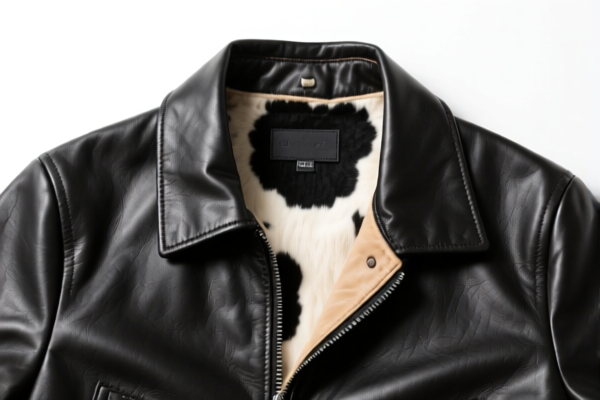
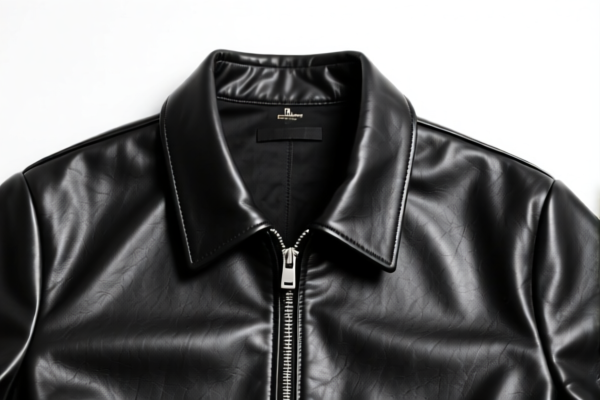
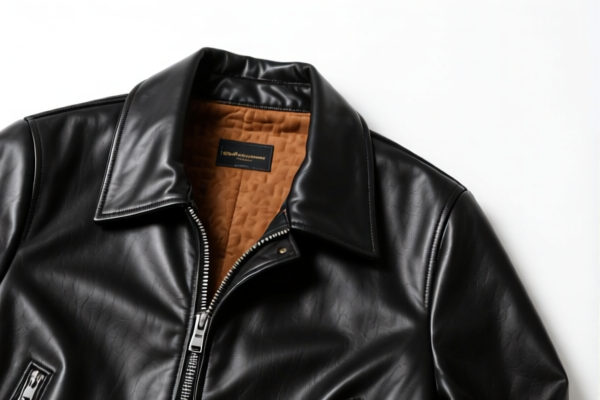
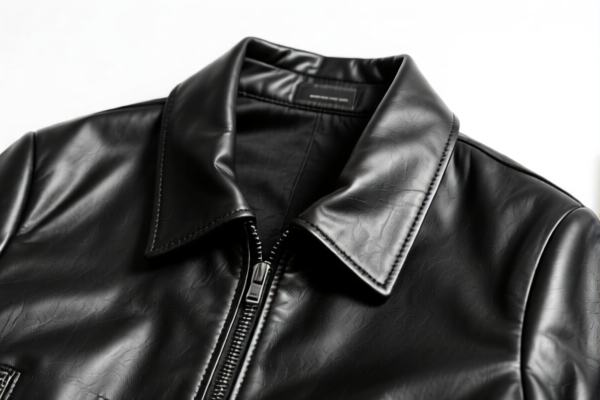
AI Analysis
👗 Leather & Faux Leather Clothing (Apparel)
🌐 HS Code Reference & Clearance Guide | 2026 Latest Tariff Structure | Professional Customs Strategy
📌 I. Product Definition & Classification: Do You Know Your "Leather"?
Leather and faux leather clothing represent a broad category in international trade, distinguished primarily by material composition (genuine vs. synthetic) and construction method (woven vs. knitted). Misclassification here can lead to drastic tariff differences due to US trade policies (Section 301 and IEEPA).
1. Genuine Leather Apparel
Made from tanned animal hides. Generally enjoys lower base duties but is heavily scrutinized for material origin.
2. Synthetic/Faux Leather Apparel
Made from polyurethane (PU), polyvinyl chloride (PVC), or other non-leather materials. Often classified under textile chapters (Chapter 61/62) depending on the base fabric (knit vs. woven).
⚠️ Key Distinction Points:
- Material: Is it real hide (4203) or a textile base with a leather-like coating (6113)?
- Structure: Is it knitted (6113) or assembled from cut pieces (4203)?
- Risk Factor: Synthetic leather often falls under "Knitted or Crocheted" headings, triggering different duty rates than "Assembly" headings.
📦 II. HS Code Classification Matrix (2026 Latest Tariff Authority)
| HS Code | Product Description | Material/Construction | Total Tax Rate |
|---|---|---|---|
4203.10.40.85 |
Leather or reconstructed leather clothing, Genuine Leather | Material: Genuine Leather; Form: Apparel | 16.0% |
4203.10.40.95 |
Leather or reconstructed leather clothing, Synthetic/Faux Leather | Material: Synthetic Leather; Form: Apparel | 41.0% |
6113.00.90.86 |
Clothing of leather, Knitted/Crocheted | Non-cotton textile base with leather finish; Knitted structure | 24.6% |
🔍 Critical Analysis:
-4203.10.40.85is the "Golden Ticket" for genuine leather goods, offering the lowest total tax (16%).
-4203.10.40.95is the "Tax Trap" for faux leather made via assembly; it carries the highest total tax (41%).
-6113.00.90.86is the "Middle Ground" for knitted leather-style fabrics; it avoids the high Section 301 rate of4203.95but still incurs significant duties due to its knitted nature.
💰 III. 2026 Latest Tariff Breakdown (US-China Trade Context)
✅ Applicable Country: United States (US)
✅ Origin: China (CN)
✅ Effective Date: Current rates apply for imports post-2025.
🎯 1. 4203.10.40.85 — Genuine Leather Clothing
The Low-Tax Advantage
| Item | Detail |
|---|---|
| Base Duty Rate | 6.0% |
| Section 301 Add-on | 0.0% (Exempt) |
| IEEPA 122 Clause Add-on | 10.0% |
| Total Effective Tax | 16.0% |
| Calculation | CIF Value × 16% |
| De Minimis Exemption? | ❌ No (Deny De Minimis) |
| Legal Path | Base Tariff → IEEPA:9903.01.25 (10% Add-on) |
📌 Explanation:
- This code benefits from 0% Section 301 tariffs.
- The only additional cost is the 10% IEEPA 122 Clause tariff, designed to target specific high-value imports.
- Strategy: If your product is genuine leather, insist on this classification. It saves you 25% in tariffs compared to the synthetic counterpart.
🎯 2. 4203.10.40.95 — Faux/Synthetic Leather Clothing
The High-Cost Penalty
| Item | Detail |
|---|---|
| Base Duty Rate | 6.0% |
| Section 301 Add-on | 25.0% (Heavy Penalty) |
| IEEPA 122 Clause Add-on | 10.0% |
| Total Effective Tax | 41.0% |
| Calculation | CIF Value × 41% |
| De Minimis Exemption? | ❌ No (Deny De Minimis) |
| Legal Path | Base Tariff → USITC:9903.88.01 (301) → IEEPA:9903.01.25 |
📌 Warning:
- This code attracts the full 25% Section 301 tariff because synthetic leather is often viewed as a "manufactured textile composite" subject to broader trade barriers.
- Combined with the 10% IEEPA, the 41% rate is prohibitive for high-volume imports.
- Strategy: Avoid this classification if possible. Consider if the garment can be classified as knitted textile (6113) to reduce the burden.
🎯 3. 6113.00.90.86 — Knitted Leather-Style Clothing
The Middle-Path Compromise
| Item | Detail |
|---|---|
| Base Duty Rate | 7.1% |
| Section 301 Add-on | 7.5% (Reduced Penalty) |
| IEEPA 122 Clause Add-on | 10.0% |
| Total Effective Tax | 24.6% |
| Calculation | CIF Value × 24.6% |
| De Minimis Exemption? | ❌ No (Deny De Minimis) |
| Legal Path | Base Tariff → USITC:Footnote (Partial 301) → IEEPA |
📌 Nuance:
- Because this is a knitted/crocheted item (Chapter 61), it does not face the full 25% Section 301 hit.
- The 7.5% partial add-on reflects the specific nature of knitted leather-like materials.
- Strategy: If your product is made from knitted fabric with a leather coating (common in fashion jackets/pants), this is the optimal balance between cost and classification accuracy.
🛠️ IV. Clearance Practical Advice (Avoiding Pitfalls)
✅ 1. Documentation Checklist (Non-Negotiable)
| Document | Required? | Purpose |
|---|---|---|
| ✅ Composition Label | ✔️ | Must clearly state "100% Polyurethane" (Faux) vs. "100% Cowhide" (Genuine). Crucial for 16% vs 41% decision. |
| ✅ Material Test Report | ✔️ | Third-party lab test confirming fiber content. Customs will challenge "Leather" claims without proof. |
| ✅ Structure Diagram | ✔️ | Shows if the garment is knitted (looped yarn) or sewn (cut panels). Determines 4203 vs 6113. |
| ✅ Commercial Invoice | ✔️ | Must specify "Leather Clothing" or "Faux Leather Clothing" — generic "Apparel" leads to audits. |
| ✅ Packing List | ✔️ | Detail weight and quantity. |
✅ 2. Classification Strategy (The "How-To")
🔥 Mnemonic: "Genuine is Gold, Knit is Silver, Synthetic is Lead!"
| Scenario | Correct HS Code | Tax Rate | Action |
|---|---|---|---|
| Real Leather Jacket (Sewn panels) | 4203.10.40.85 |
16.0% | ✅ Best Option. Provide hide origin documents. |
| Faux Leather Jacket (Sewn panels, PVC/PU) | 4203.10.40.95 |
41.0% | ❌ Avoid if possible. High tax. |
| Leather-Look Jacket (Knitted fabric with coating) | 6113.00.90.86 |
24.6% | ✅ Good Alternative. Prove it is knitted first. |
| Mixed Material (Leather sleeves, Cotton body) | Complex | Varies | ❌ High Risk. Requires ruling. May be split-classified. |
✅ 3. Special Cases & Edge Scenarios
| Situation | Handling Suggestion |
|---|---|
| "Leather" Labeled but is Synthetic | DO NOT claim 4203.10.40.85 (16%). Customs will test and penalize. Use 4203.10.40.95 (41%) or reclassify as 6113 if knitted. |
| Knitted Faux Leather | Try to classify under 6113.00.90.86 (24.6%). Provide fabric mill certificates proving the base is knitted jersey or similar. |
| Reconstructed Leather | Falls under 4203. Same tax rules apply as genuine leather. Must prove it is made from leather fibers/shreds. |
| Accessories (Belts/Gloves) | Different HS codes apply. Do not bundle with clothing. |
🌍 V. Global Market Comparison (2026 Update)
| Country/Region | Recommended HS Code | Estimated Duty | Notes |
|---|---|---|---|
| 🇺🇸 USA | 4203.10.40.85 / 6113.00.90.86 |
16% / 24.6% | High sensitivity to China origin. Section 301 is critical. |
| 🇪🇺 EU | 4203.10 (General) |
4.0% - 12% | Lower base duties. No Section 301 equivalent. |
| 🇨🇳 China | 4203.10 |
6.0% - 8.0% | Import duties are lower. Focus on VAT (13%). |
| 🇨🇦 Canada | 4203.10 |
6.0% - 12% | Similar to US but without Section 301. |
📌 Conclusion:
The US market is uniquely punitive for synthetic leather (41%).
For US exports, proving knitted construction (6113) or genuine material (4203.85) is essential for cost control.
📌 VI. Common Errors & Pitfalls (Blood & Tears)
❌ Error 1: Labeling PU-coated knit fabric as "Genuine Leather" to get 16% tax.
👉 Consequence: Customs lab test proves it's synthetic → Back taxes of 25% + penalties + seizure risk.
❌ Error 2: Classifying knitted faux leather as 4203.10.40.95 (41%).
👉 Consequence: Overpaying 16.4% in taxes. You could have used 6113.00.90.86 (24.6%).
❌ Error 3: Ignoring the "Knitted" vs "Sewn" distinction.
👉 Consequence: 4203 is for "manufactured" (sewn) leather goods. 6113 is for "knitted" textiles. Misclassification leads to delays.
✅ Correct Action:
"Fashion Jacket, Knitted Base, PU Coated, Faux Leather Appearance, Model XYZ."
→ Declare as6113.00.90.86.
🎯 VII. Conclusion: Professional Classification Saves Money!
🎯 Remember the Mantra:
🔹 "Genuine is 16%, Synthetic Sewn is 41%, Knitted is 24%."
🔹 "Prove the knit, save the tax. Fake the leather, pay the price."
📌 Pro Tip:
If you are importing Faux Leather goods, request your supplier to provide fabric construction reports proving the base is knitted. This allows you to use 6113.00.90.86 (24.6%) instead of 4203.10.40.95 (41%), saving you 16.4% in duties immediately.
📣 Immediate Action:
📞 Engage a Customs Broker: Submit your fabric composition sheet and photos for a Binding Ruling before shipment.
🚀 Optimize Your Supply Chain: Shift marketing to "Knitted Leather-Style" if applicable, to unlock the lower tax bracket.
✨ Professional Clearance Starts with Accurate Classification!
💼 Every Percentage Point Saved is Pure Profit!
Customer Reviews
About HS Code Classification
The Harmonized System (HS) is an internationally standardized nomenclature developed by the World Customs Organization (WCO) to classify traded products. Over 200 countries use the HS system as the basis for customs tariffs, trade statistics, and import/export regulations.
Each HS code follows a hierarchical structure:
- Chapter (2 digits) — Broad category of goods (e.g., Chapter 84: Machinery and Mechanical Appliances)
- Heading (4 digits) — More specific grouping within the chapter
- Subheading (6 digits) — Internationally standardized breakdown, used by all WCO member countries
- National subdivisions (8-10 digits) — Country-specific extensions for further classification, such as US HTSUS 10-digit codes
Correct HS code classification is essential for smooth customs clearance, accurate duty payment, and compliance with trade regulations. Misclassification can lead to customs delays, overpayment of duties, or penalties.
When importing from CN to US, the applicable tariff rates may include:
- Most-Favored-Nation (MFN) rate — The standard duty rate applied to WTO members
- General rate — Applied to countries without trade agreements
- Trade remedy duties — Additional tariffs such as Section 301 (anti-dumping), Section 232 (national security), or countervailing duties
The information provided on this page is for reference purposes only. For official classification, please consult with your local customs authority or a licensed customs broker.