Leather or Reconstituted Leather Clothing
CN → US| HS Code | Tariff Rate | Origin | Destination | Doc |
|---|---|---|---|---|
| 4203104085 | 16.0% | CN | US | Official Doc |
| 4203104095 | 41.0% | CN | US | Official Doc |
| 6113009086 | 24.6% | CN | US | Official Doc |
| 6217109550 | 32.1% | CN | US | Official Doc |
| 6217108500 | 24.6% | CN | US | Official Doc |
Product Images
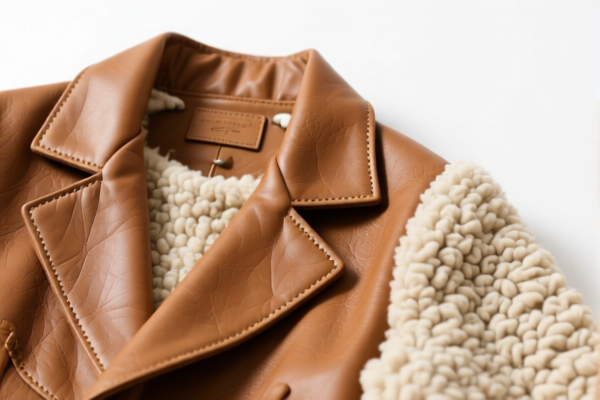
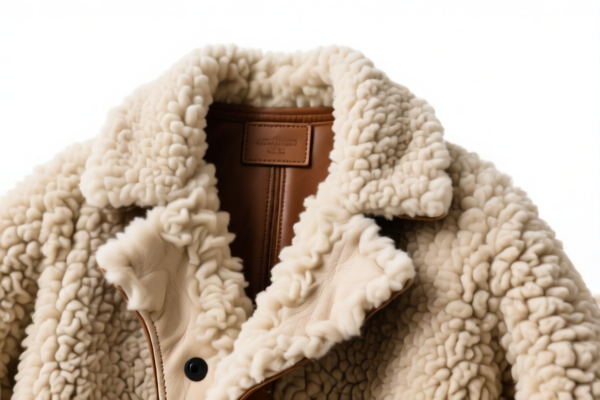
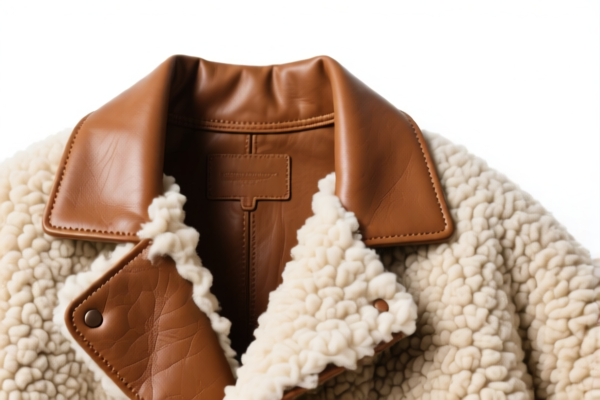
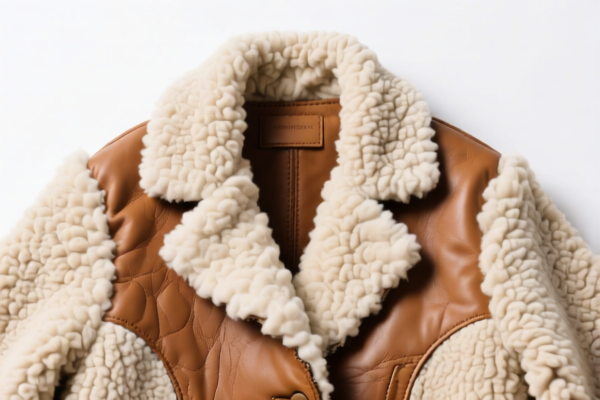
AI Analysis
🧥 Leather or Reconstituted Leather Clothing
🌐 HS Code Reference & Customs Clearance Guide | 2026 Latest Tariff Analysis | Professional Tier-1 Strategy
📌 I. Product Definition & Classification: Are You Sure You Know "Leather Apparel"?
Leather clothing is not a single monolithic category. In international trade, it is strictly segmented based on material consistency, product form (finished vs. accessory), and structural logic. Misclassification can lead to tariff hikes of up to 25% due to Section 301 and Section 122 additions.
Key Distinctions: * Matching Leather Apparel (4203.10.40.85): Garments where the leather matches the primary garment type, meeting standard form requirements. * Consistent Material/Synthetic Leather Apparel (4203.10.40.95): Garments made of materials consistent with leather or synthetic leather, adhering to specific form requirements. * Finished Apparel (Non-Cotton Logic) (6113.00.90.86): Finished garments classified under non-cotton other categories. * Accessories (6217.10.95.50 / 6217.10.85.00): Non-garment items like belts, collars, or cuffs. These are often misdeclared as garments, leading to severe penalties.
⚠️ Critical Differentiator:
- If it’s a complete jacket/coat with matching leather parts → 4203.10.40.85
- If it’s leather-like/synthetic consistent with specific form → 4203.10.40.95
- If it’s an accessory (belt, strap, cuff) → 6217.10.xxxx
- If it’s a finished garment falling under non-cotton logic → 6113.00.90.86
📦 II. HS Code Classification Matrix (2026 Latest Tariff Authority)
| HS Code | Product Description | Applicability Scenario | Key Characteristic |
|---|---|---|---|
4203.10.40.85 |
Leather or Reconstituted Leather Clothing, Matching | Primary leather garments where material matches form requirements | ✅ Lowest Add-on Tariff (0% Section 301) |
4203.10.40.95 |
Leather/Synthetic Consistent Clothing | Garments with material consistent with leather/synthetic, specific form | ❌ High Add-on Tariff (25% Section 301) |
6113.00.90.86 |
Finished Leather/Reconstituted Leather Apparel | Finished garments, non-cotton logic classification | ⚠️ Moderate Add-on Tariff (7.5% Section 301) |
6217.10.95.50 |
Accessories of Leather/Reconstituted Leather | Non-garment accessories, "other" category logic | ❌ High Base Duty (14.6% + 7.5% Section 301) |
6217.10.85.00 |
Ready-made Clothing Accessories | Accessories classified as ready-made, fallback category logic | ⚠️ Moderate Base Duty (14.6% + 0% Section 301) |
🔍 Key Reminder:
- Accessories vs. Garments: A belt is 6217, not 4203. Misdeclaring a belt as a "jacket" to avoid accessory duties is a common red flag for Customs. - "Matching" vs. "Consistent":4203.10.40.85requires the leather to match the garment's primary classification, whereas4203.10.40.95is for materials consistent with leather but may include synthetic blends or specific forms.
💰 III. 2026 Tariff Rate Breakdown (Including Surcharges & Policy Add-ons)
✅ Applicable Country: United States (US)
✅ Origin: China (CN)
✅ Effective Time: Current rates applicable for imports post-2025 policies
Tariff Components:
- MFN Base Duty: Standard tariff.
- Section 301 (Add-on 122): Often listed as "122 Clause Tariff" or specific footnotes. Here, consistently +10%.
- Section 301 (Additional): The variable 0%, 7.5%, or 25% surcharge.
🎯 1. 4203.10.40.85 — Matching Leather Apparel
Best Case Scenario for Tariff Optimization
| Item | Detail |
|---|---|
| Base Duty | 6.0% |
| Section 301 Add-on | 0.0% |
| 122 Clause Tariff | +10.0% |
| Total Tax Rate | 16.0% |
| Calculation | CIF Value × 16.0% |
| De Minimis Exemption | ❌ Not Eligible (Deny de minimis) |
| Legal Basis Path | Base: 4203.10.40.85 → Add-on: 0% → 122 Clause: +10% |
📌 Explanation:
- This is the most favorable HS code for leather apparel from China.
- The 0% Section 301 add-on significantly reduces costs compared to other leather codes.
- Total effective tax is only 16%, making this the target for proper classification.
🎯 2. 4203.10.40.95 — Leather/Synthetic Consistent Apparel
High Cost Scenario
| Item | Detail |
|---|---|
| Base Duty | 6.0% |
| Section 301 Add-on | +25.0% |
| 122 Clause Tariff | +10.0% |
| Total Tax Rate | 41.0% |
| Calculation | CIF Value × 41.0% |
| De Minimis Exemption | ❌ Not Eligible |
| Legal Basis Path | Base: 4203.10.40.95 → Add-on: 25% → 122 Clause: +10% |
📌 Explanation:
- The 25% Section 301 surcharge makes this code extremely expensive.
- Applies when the material is "consistent" with leather/synthetic but doesn't meet the strict "matching" criteria of4203.10.40.85.
- Risk: If your garment actually fits4203.10.40.85but is declared as4203.10.40.95, you are overpaying. If you declare4203.10.40.85incorrectly to save tax, you face penalties for misclassification.
🎯 3. 6113.00.90.86 — Finished Apparel (Non-Cotton Logic)
Moderate Cost Scenario
| Item | Detail |
|---|---|
| Base Duty | 7.1% |
| Section 301 Add-on | +7.5% |
| 122 Clause Tariff | +10.0% |
| Total Tax Rate | 24.6% |
| Calculation | CIF Value × 24.6% |
| De Minimis Exemption | ❌ Not Eligible |
| Legal Basis Path | Base: 6113.00.90.86 → Add-on: 7.5% → 122 Clause: +10% |
📌 Explanation:
- Applies to finished leather garments that fall under non-cotton classification logic.
- Higher base duty (7.1%) than4203.10(6.0%), but lower Section 301 surcharge (7.5% vs 25%).
- Use Case: Specific types of leather apparel that don't fit the standard "leather garment" heading but are still finished products.
🎯 4. 6217.10.95.50 — Other Accessories
High Base Duty Scenario
| Item | Detail |
|---|---|
| Base Duty | 14.6% |
| Section 301 Add-on | +7.5% |
| 122 Clause Tariff | +10.0% |
| Total Tax Rate | 32.1% |
| Calculation | CIF Value × 32.1% |
| De Minimis Exemption | ❌ Not Eligible |
| Legal Basis Path | Base: 6217.10.95.50 → Add-on: 7.5% → 122 Clause: +10% |
📌 Explanation:
- Applies to accessories (e.g., belts, cuffs) that don't fit other specific accessory subheadings.
- High Base Duty (14.6%) is the main cost driver.
- Warning: Do not misdeclare garments as accessories to avoid higher garment tariffs; Customs scrutinizes this heavily.
🎯 5. 6217.10.85.00 — Ready-made Accessories
Moderate Base Duty, No Section 301 Add-on
| Item | Detail |
|---|---|
| Base Duty | 14.6% |
| Section 301 Add-on | 0.0% |
| 122 Clause Tariff | +10.0% |
| Total Tax Rate | 24.6% |
| Calculation | CIF Value × 24.6% |
| De Minimis Exemption | ❌ Not Eligible |
| Legal Basis Path | Base: 6217.10.85.00 → Add-on: 0% → 122 Clause: +10% |
📌 Explanation:
- Applies to ready-made clothing accessories under the "fallback" category logic.
- Zero Section 301 add-on makes it competitive with6113.00.90.86.
- Critical: Only for accessories, not garments. If you ship a belt, this is the correct code (if applicable), not a garment code.
🛠️ IV. Customs Clearance Practical Advice (Pitfall Avoidance Guide)
✅ 1. Documentation Checklist (Mandatory)
| Document | Required? | Notes |
|---|---|---|
| ✅ Product Spec Sheet | ✔️ | Must detail material composition (e.g., "100% Cowhide Leather" vs. "Polyurethane Coated Fabric"). |
| ✅ Composition Declaration | ✔️ | Explicitly state if "Matching" or "Consistent" for 4203 codes. |
| ✅ Product Photos | ✔️ | Clear images of the item, label, and any hardware (zippers, buttons). |
| ✅ Commercial Invoice | ✔️ | Description must match HS Code logic (e.g., "Leather Jacket" vs. "Leather Accessory"). |
| ✅ Packing List | ✔️ | Separate garments from accessories. Do not mix. |
| ✅ Certificate of Origin | ✔️ | If applicable for non-US origin. |
✅ 2. Declaration Strategy (Key Mantra)
🔥 “Garment vs. Accessory, Material Matters Most!
Matching = 16%, Consistent = 41%, Don’t Mix!”
| Scenario | Correct HS Code | Wrong Code | Consequence |
|---|---|---|---|
| Leather Jacket (Matching) | 4203.10.40.85 (16%) |
4203.10.40.95 (41%) |
Overpaying 25% unnecessarily. |
| Leather Jacket (Synthetic/Consistent) | 4203.10.40.95 (41%) |
4203.10.40.85 (16%) |
Underpayment Risk: Severe penalties, potential seizure. |
| Leather Belt | 6217.10.95.50 (32.1%) or 6217.10.85.00 (24.6%) |
4203.10.40.85 (16%) |
Misclassification: Customs will reclassify and charge the higher duty + penalties. |
| Leather Garment (Non-Cotton Logic) | 6113.00.90.86 (24.6%) |
4203.10.40.85 (16%) |
Audit Risk: Requires justification for non-standard leather classification. |
✅ 3. Special Cases
| Case | Handling Advice |
|---|---|
| Mixed Materials (Leather + Fabric) | If leather is >50% or principal material, likely 4203. If fabric is principal, may fall under 6113 or apparel chapters. Provide material breakdown. |
| OEM Private Label | Ensure the description doesn’t imply brand-specific exclusivity that changes classification. |
| Accessories Sold with Garments | Ship separately or declare separately. Mixing a belt (6217) with a jacket (4203) in one line item can cause Customs to inspect the whole shipment. |
| Reconstituted Leather | Clearly state "Reconstituted" if applicable. Some codes specify "Leather OR Reconstituted Leather," so ensure the description matches the HS text exactly. |
🌍 V. Global Market Comparison (2026 Latest)
| Country/Region | Recommended HS Code | Estimated Duty (China Origin) | Notes |
|---|---|---|---|
| 🇺🇸 USA | 4203.10.40.85 |
16.0% | Lowest US Rate for matching leather. 4203.10.40.95 is 41%. |
| 🇨🇳 China | 4203.10.40.85 |
~5-10% | Import duties differ; focus on US export data above. |
| 🇪🇺 EU | 4203.10.00 |
~4% + VAT | No Section 301 or 122 clauses. EU is much cheaper for leather apparel. |
| 🇬🇧 UK | 4203.10.00 |
~4% + VAT | Similar to EU post-Brexit. |
| 🇨🇦 Canada | 4203.10.40 |
~0% (CUSMA) | Duty-Free if eligible under CUSMA. |
| 🇲🇽 Mexico | 4203.10.40 |
~0% (USMCA) | Duty-Free if eligible under USMCA. |
📌 Strategic Insight:
- US Tariffs are punitive due to Section 301/122.
- Consider Nearshoring: If exporting to the US, consider manufacturing in Mexico or Canada to leverage USMCA/CUSMA duty-free rates (0%).
- EU Market: Lower base duties, but stricter REACH/SVHC regulations for leather chemicals.
📌 VI. Common Errors & Pitfalls (Lessons Learned)
❌ Error 1: Declaring a Leather Belt as a Jacket to get the 16% rate instead of 32.1%
👉 Consequence: Customs detects accessory content → Audit, penalty, and back-tariff.
❌ Error 2: Using 4203.10.40.85 for Synthetic Leather that doesn’t "Match"
👉 Consequence: Misclassification → 25% retroactive penalty + interest.
❌ Error 3: Mixing Garments and Accessories in one HS Code
👉 Consequence: Customs may separate them, apply different duties, and hold the shipment for inspection.
❌ Error 4: Ignoring the 122 Clause Tariff
👉 Consequence: All listed HS codes include a +10% 122 Clause. Failing to account for this leads to underpayment.
✅ Correct Declaration Example:
"Men's Leather Jacket, 100% Cowhide, Matching Material, Ready-made, Model XYZ, HS Code: 4203.10.40.85"
🎯 VII. Conclusion: Precision Saves Money!
🎯 Remember the Mantra:
🔹 “Matching is Key: 16% vs 41%.
Accessories are NOT Garments.
122 Clause Always Adds 10%.
Ship to Mexico/Canada for 0% Duty!”🔹 “HS Code is Life. 25% Difference Can Kill Profit Margins.”
📌 Pro Tip:
If you are exporting significant volumes to the US, apply for a Binding Tariff Information (BTI) or Advance Ruling from US Customs and Border Protection (CBP). This locks in your HS Code classification and protects you from retroactive changes.
📣 Immediate Action:
📞 Consult a Customs Broker with your product samples.
🚀 Evaluate Supply Chain: Can you source from Mexico/Canada for US duty-free entry?
💼 Optimize Your Classification: Don’t guess. Get it right to save up to 25% in tariffs.
✨ Professional Customs Clearance Starts with Accurate Classification!
💼 Your Cost Savings Are Calculated in HS Codes!
Customer Reviews
About HS Code Classification
The Harmonized System (HS) is an internationally standardized nomenclature developed by the World Customs Organization (WCO) to classify traded products. Over 200 countries use the HS system as the basis for customs tariffs, trade statistics, and import/export regulations.
Each HS code follows a hierarchical structure:
- Chapter (2 digits) — Broad category of goods (e.g., Chapter 84: Machinery and Mechanical Appliances)
- Heading (4 digits) — More specific grouping within the chapter
- Subheading (6 digits) — Internationally standardized breakdown, used by all WCO member countries
- National subdivisions (8-10 digits) — Country-specific extensions for further classification, such as US HTSUS 10-digit codes
Correct HS code classification is essential for smooth customs clearance, accurate duty payment, and compliance with trade regulations. Misclassification can lead to customs delays, overpayment of duties, or penalties.
When importing from CN to US, the applicable tariff rates may include:
- Most-Favored-Nation (MFN) rate — The standard duty rate applied to WTO members
- General rate — Applied to countries without trade agreements
- Trade remedy duties — Additional tariffs such as Section 301 (anti-dumping), Section 232 (national security), or countervailing duties
The information provided on this page is for reference purposes only. For official classification, please consult with your local customs authority or a licensed customs broker.