Leather or Synthetic Leather Handbag
CN → US| HS Code | Tariff Rate | Origin | Destination | Doc |
|---|---|---|---|---|
| 3926903300 | 16.5% | CN | US | Official Doc |
| 3926903500 | 24.0% | CN | US | Official Doc |
| 4202213000 | 40.3% | CN | US | Official Doc |
| 4202216000 | 45.0% | CN | US | Official Doc |
Product Images
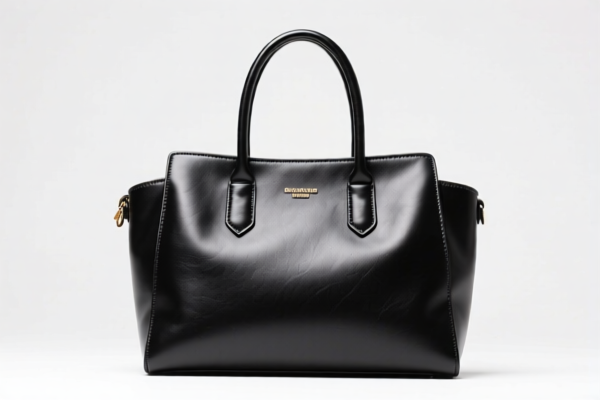
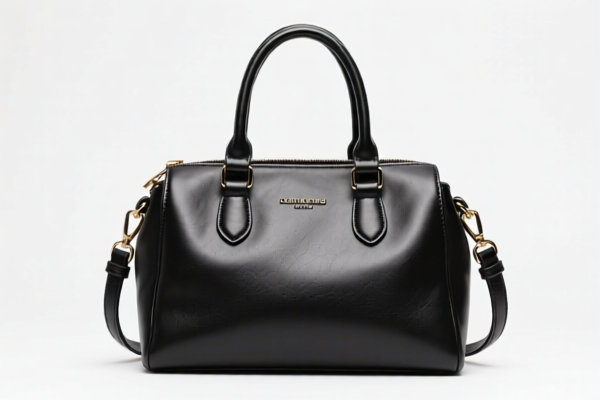
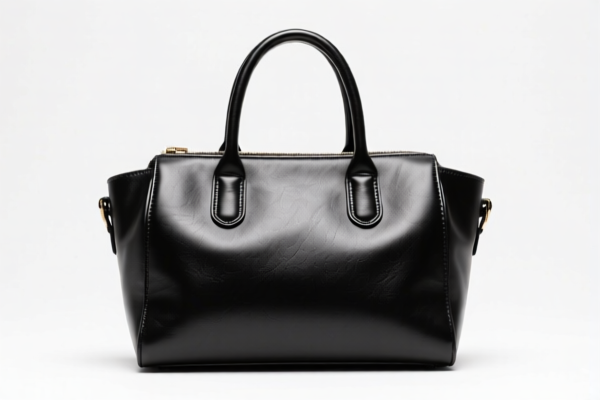
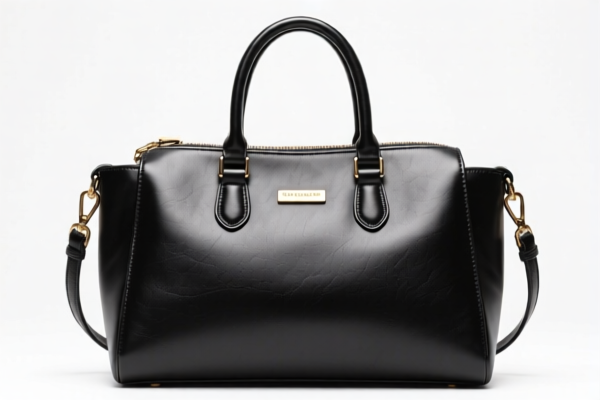
AI Analysis
👜 Handbags (Leather or Synthetic Leather)
🌐 HS Code Reference & Customs Clearance Guide | 2026 Latest Tariff Analysis | Professional Clearance Strategy
📌 I. Product Definition & Classification: Do You Know What "Handbag" Means in Trade?
In international trade, "handbags" are not a single, uniform category. They are strictly classified based on material composition and value thresholds. The term "Leather or Synthetic Leather Handbag" covers two distinct legal paths under the Harmonized System (HS):
- Plastic-Based "Leather" (Synthetic Leather/Artificial Leather): If the "leather" is made from plastics (PVC, PU, etc.), it falls under Chapter 39.
- Actual Leather or Composition Leather: If the outer surface is genuine leather or leather substitutes (not primarily plastic sheeting), it falls under Chapter 42.
⚠️ Critical Distinction Point:
- If the material is plastic sheeting molded or shaped into a bag appearance →归入 3926.90.33.00 / 3926.90.35.00
- If the material is genuine leather or composition leather (textile backed with rubber/plastic coating) → 归入 4202.21.30.00 / 4202.21.60.00
📦 II. HS Code Classification Details (2026 Latest Tariff Authority Comparison)
| HS Code | Product Description | Applicable Scenario | Material Type |
|---|---|---|---|
3926.90.33.00 |
Articles of plastics: Handbags | Plastic-made handbags (PVC/PU), not strung/set beads | ✅ Plastic |
3926.90.35.00 |
Articles of plastics: Other (Handbags) | Plastic handbags with additional accessories, beads, bugles (not set) | ✅ Plastic |
4202.21.30.00 |
Handbags: Outer surface of leather or composition leather: Reptile leather | Luxury handbags made from snake, crocodile, lizard skin | ✅ Genuine Leather |
4202.21.60.00 |
Handbags: Outer surface of leather or composition leather: Valued not over $20 each | Affordable fashion handbags made from genuine/composition leather | ✅ Genuine/Composition Leather |
🔍 Key Reminder:
- "Synthetic Leather" in Chapter 39: If the bag is made from PVC sheets or PU-coated fabric where the plastic is the primary material, it is NOT Chapter 42. It is Chapter 39.
- "Synthetic Leather" in Chapter 42: "Composition leather" refers to split leather or leather scraps bonded to a textile backing with rubber or plastic. These ARE Chapter 42.
- Value Threshold: For Chapter 42, the $20 price limit distinguishes between "Over $20" (not listed in data) and "Not Over $20" (4202.21.60.00).
💰 III. 2026 Latest Tariff Rate Details (Including Additional Duties & Policy Add-ons)
✅ Applicable Country: United States (US)
✅ Origin: China (CN)
✅ Effective Time: 2025/2026 (As per data)
🎯 1. 3926.90.33.00 —— Handbags of Plastic (Basic)
| Item | Content |
|---|---|
| Basic Tariff | 6.5% (ad valorem) |
| Additional Duty (Section 301/IEEPA) | 0.0% |
| Total Tariff | 6.5% |
| Tax Calculation | CIF Value × 6.5% |
| De Minimis Eligibility | ❌ No (High risk of inspection if value is low, but legally eligible under standard rules unless specific exclusions apply) |
| Legal Basis | USITC 3926.90.33.00 |
📌 Explanation:
- This code applies to standard plastic handbags (e.g., PVC tote bags, PU clutches).
- No additional punitive tariffs are currently listed for this specific subheading in the provided data, making it the most cost-effective option if the product is indeed plastic-based.
🎯 2. 3926.90.35.00 —— Handbags of Plastic (With Accessories/Beads)
| Item | Content |
|---|---|
| Basic Tariff | 6.5% |
| Additional Duty (Section 301/IEEPA) | 7.5% |
| Total Tariff | 14.0% |
| Tax Calculation | CIF Value × 14.0% |
| De Minimis Eligibility | ❌ No |
| Legal Basis | USITC 3926.90.35.00 |
📌 Explanation:
- Applies if the plastic handbag contains beads, bugles, or spangles that are not strung/set (i.e., attached as loose elements or requiring further assembly), or other specific plastic articles not elsewhere specified.
- Additional 7.5% tariff applies due to specific trade restrictions on certain plastic accessories.
- Total 14% is significantly higher than the basic plastic handbag rate.
🎯 3. 4202.21.30.00 —— Reptile Leather Handbags
| Item | Content |
|---|---|
| Basic Tariff | 0.0% |
| Additional Duty (Section 301/IEEPA) | 0.0% |
| Total Tariff | 0.0% |
| Tax Calculation | CIF Value × 0.0% |
| De Minimis Eligibility | ✅ Yes (Generally eligible, subject to CVD/Section 301 exemptions if any) |
| Legal Basis | USITC 4202.21.30.00 |
📌 Explanation:
- Zero Tariff! This is the most favorable rate for high-end luxury goods.
- Applies ONLY if the outer surface is made from reptile leather (snake, crocodile, alligator, lizard).
- Warning: Misdeclaring standard leather as reptile leather is a severe customs violation. Must provide CITES permits if applicable.
🎯 4. 4202.21.60.00 —— Leather Handbags (Valued ≤ $20)
| Item | Content |
|---|---|
| Basic Tariff | 0.0% |
| Additional Duty (Section 301/IEEPA) | 0.0% |
| Total Tariff | 0.0% |
| Tax Calculation | CIF Value × 0.0% |
| De Minimis Eligibility | ✅ Yes |
| Legal Basis | USITC 4202.21.60.00 |
📌 Explanation:
- Zero Tariff!
- Applies to handbags made of genuine leather or composition leather where the transaction value is $20 or less per unit.
- Critical Condition: If the bag is valued at $20.01, it falls into the "Over $20" category (not listed in data, likely higher tariff).
- Ideal for budget fashion brands, promotional items, or small accessory bags.
🛠️ IV. Customs Clearance Practical Advice (Real-World Pitfall Guide)
✅ 1. Preparation Checklist (Required Documents)
| Document | Required | Description |
|---|---|---|
| ✅ Product Composition Sheet | ✔️ | Must specify % of materials (e.g., "100% PVC," "Leather outer, fabric lining"). |
| ✅ Technical Drawing/Photos | ✔️ | Show stitching, hardware, and material texture to distinguish plastic vs. leather. |
| ✅ Commercial Invoice | ✔️ | Must explicitly state: "Handbag, Material: [Plastic/Leather], Unit Value: $[X.XX]" |
| ✅ CITES Certificate | ✔️ | Mandatory for 4202.21.30.00 (Reptile Leather). Without it, goods will be seized. |
| ✅ Price Proof | ✔️ | For 4202.21.60.00, must prove value ≤ $20 (e.g., sales contract, catalog). |
✅ 2. Classification Tips (Key Rules)
🔥 "Material First, Value Second, Luxury Special!"
| Scenario | Correct HS Code | Risk of Misclassification |
|---|---|---|
| PVC Tote Bag | 3926.90.33.00 |
⚠️ High if declared as "Leather" |
| PU Leather Bag (Plastic-coated textile) | 3926.90.33.00 or 4202.21.60.00? |
CRITICAL: If it's "Composition Leather" → Ch 42. If it's "Plastic Sheeting" → Ch 39. |
| Snake Skin Bag | 4202.21.30.00 |
🚫 SEVERE: No CITES permit = Seizure + Fine |
| Leather Bag ($25) | ❌ Not in Data | Likely higher tariff (not provided). Check other chapters. |
| Leather Bag ($15) | 4202.21.60.00 |
✅ Best for budget leather |
✅ 3. Special Cases
| Case | Handling Advice |
|---|---|
| "Synthetic Leather" Confusion | If the material is PU-coated fabric, it is often classified as Chapter 42 (Composition Leather) if the backing is textile. If it is solid PVC sheet, it is Chapter 39. Provide a lab test report if unsure. |
| Beaded Handbags | If beads are sewn on, it may still be 3926.90.33.00. If beads are loose or part of a decorative accessory assembly, it might trigger 3926.90.35.00 (14% tariff). |
| Reptile Leather Claims | Do NOT claim reptile leather unless you have CITES documentation. Customs will test and reject false claims. |
| Value Justification | For 4202.21.60.00, ensure the invoice value reflects the true transaction price. If customs怀疑s the $20 cap, they will assess based on transaction value of similar goods. |
🌍 V. Global Market Comparison (2026 Latest)
| Country/Region | Recommended HS Code | Tariff | Certification | Note |
|---|---|---|---|---|
| 🇺🇸 USA | 3926.90.33.00 / 4202.21.60.00 |
0% - 6.5% | None | Avoid 3926.90.35.00 due to 7.5% add-on. |
| 🇨🇳 China | 4202.21.60.00 |
0% - 10% | CCC (if applicable) | Export duties may apply. |
| 🇪🇺 EU | 4202.21.60.00 |
12% (Leather) | CE (for accessories) | No "De Minimis" for non-EU imports. |
| 🇬🇧 UK | 4202.21.60.00 |
12% | UKCA | Post-Brexit rules apply. |
| 🇦🇺 Australia | 4202.21.60.00 |
5% | RCM | GST applies. |
📌 Conclusion:
- USA offers the most favorable rates for plastic handbags (3926.90.33.00at 6.5%) and leather handbags under $20 (4202.21.60.00at 0%).
- Reptile leather (4202.21.30.00) is tax-free in the US but requires strict CITES compliance.
- Avoid3926.90.35.00unless necessary, as the 14% total tariff is high.
📌 VI. Common Mistakes & Pitfalls (Lessons Learned)
❌ Mistake 1: Declaring PVC handbags as "Leather" to get 0% tariff.
👉 Consequence: Customs lab test reveals plastic → 6.5% tariff + penalties + seizure.
❌ Mistake 2: Not declaring beadwork on plastic bags.
👉 Consequence: Declared as 3926.90.33.00 (6.5%) but should be 3926.90.35.00 (14%) → Back taxes + interest.
❌ Mistake 3: Claiming "Reptile Leather" without CITES permit.
👉 Consequence: Immediate seizure, heavy fines, and potential criminal charges.
❌ Mistake 4: Misunderstanding "Composition Leather".
👉 Consequence: Declaring PU-coated fabric as "Leather" when it's actually "Plastic Articles" → Misclassification.
✅ Correct Approach:
"Handbag, Outer Material: 100% Polyurethane (PU) Leather, Lining: Polyester, No Beads, Unit Value: $15.00" → Use
4202.21.60.00(if PU is considered composition leather) or3926.90.33.00(if PU is plastic sheeting). Verify with a lab test.
🎯 VII. Conclusion: Professional Classification, Save Money, Clear Quickly!
🎯 Remember the Mantra:
🔹 "Plastic is 39, Leather is 42, Reptile is Zero, Under $20 is Free!"
🔹 "Beads add 7.5%, CITES is mandatory for snakes, and $20 is the magic number!"
📌 Pro Tip:
If your handbag is made of genuine leather and valued over $20, it is NOT listed in the provided data. It likely falls under 4202.21.90 or other subheadings with higher tariffs. Consult a customs broker for those specific codes.
📣 Immediate Action:
📞 Contact a customs broker + Provide material test report + Apply for pre-classification ruling if value is close to $20.
🚀 Ensure your handbags clear customs smoothly, efficiently, and at the lowest possible cost!
✨ Professional clearance starts with accurate classification!
💼 Every cent of tariff is worth calculating precisely!
Customer Reviews
About HS Code Classification
The Harmonized System (HS) is an internationally standardized nomenclature developed by the World Customs Organization (WCO) to classify traded products. Over 200 countries use the HS system as the basis for customs tariffs, trade statistics, and import/export regulations.
Each HS code follows a hierarchical structure:
- Chapter (2 digits) — Broad category of goods (e.g., Chapter 84: Machinery and Mechanical Appliances)
- Heading (4 digits) — More specific grouping within the chapter
- Subheading (6 digits) — Internationally standardized breakdown, used by all WCO member countries
- National subdivisions (8-10 digits) — Country-specific extensions for further classification, such as US HTSUS 10-digit codes
Correct HS code classification is essential for smooth customs clearance, accurate duty payment, and compliance with trade regulations. Misclassification can lead to customs delays, overpayment of duties, or penalties.
When importing from CN to US, the applicable tariff rates may include:
- Most-Favored-Nation (MFN) rate — The standard duty rate applied to WTO members
- General rate — Applied to countries without trade agreements
- Trade remedy duties — Additional tariffs such as Section 301 (anti-dumping), Section 232 (national security), or countervailing duties
The information provided on this page is for reference purposes only. For official classification, please consult with your local customs authority or a licensed customs broker.