Leather rolls
CN → US| HS Code | Tariff Rate | Origin | Destination | Doc |
|---|---|---|---|---|
| 4202316000 | 43.0% | CN | US | Official Doc |
| 4202911000 | 39.5% | CN | US | Official Doc |
| 410610 | 0.0% | CN | US | Official Doc |
| 410690 | 0.0% | CN | US | Official Doc |
| 410610 | 0.0% | CN | US | Official Doc |
| 410690 | 0.0% | CN | US | Official Doc |
Product Images


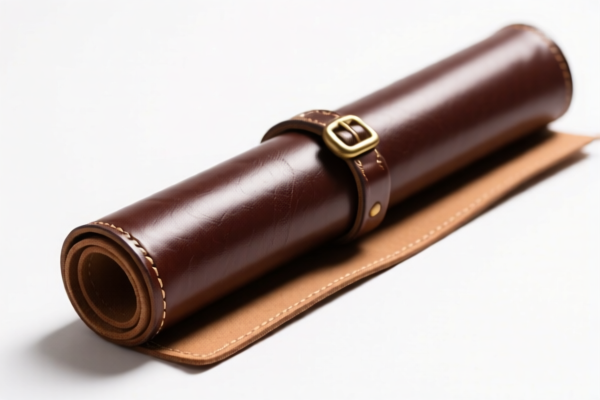
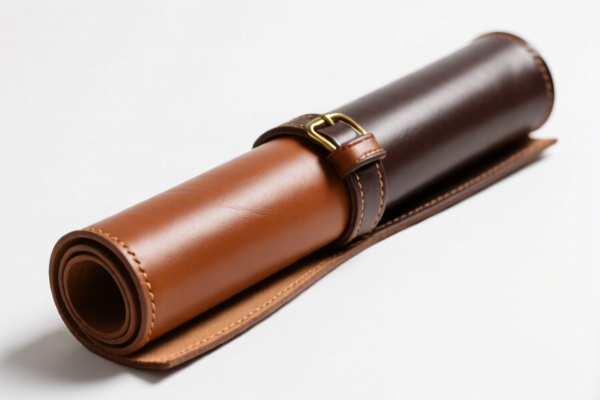
AI Analysis
🧵 Leather Rolls & Hides (Raw, Unhaird, Bovine, Equine, Ovine/Caprine)
🌐 HS Code Reference & Customs Clearance Guide | 2026 Latest Tariff Analysis | Professional Clearance Strategy
📌 Part I: Product Definition & Classification: What Exactly Are "Leather Rolls"?
"Leather rolls" in international trade typically refer to raw, unhaird hides and skins that have undergone minimal preparation (cleaned, limed, or pickled) but have not been tanned or dyed. These are the foundational materials for the leather industry.
In the context of the provided data, these items are strictly classified under Chapter 41, specifically heading 4106. The key distinction lies in the animal origin and the state of preparation:
Bovine (Cattle), Equine (Horse), or Ovine/Caprine (Sheep/Goat) Origin:
- Condition: Raw/unhaird, split or not.
- Preparation: Only cleaned, limed, or pickled.
- Exclusions: Not tanned, dyed, or further prepared.
- Form: In rolls or pieces.
⚠️ Critical Classification Distinction:
- If the hide is from Bovine, Equine, Ovine, or Caprine animals → It falls under 4106.10 or 4106.90.
- Note: The provided data contains duplicate descriptions with slightly different wordings (e.g., "leather" vs. "hides") but maps to the same HS codes. We will consolidate these for clarity.
📦 Part II: HS Code Classification Details (2026 Latest Tariff Authority Comparison)
| HS Code | Product Description | Key Characteristics | Animal Origin |
|---|---|---|---|
4106.10 |
Raw or unhaird leather/hides, split or not, of bovine, equine, or ovine or caprine origin | Not further prepared than cleaned, limed, or pickled. Not tanned/dyed. | Bovine, Equine, Ovine, Caprine |
4106.90 |
Other raw or unhaird leather/hides, split or not | Same preparation standards as above, but for "other" origins (if any) or catch-all for non-listed species in this specific data set. | Other (if applicable) |
🔍 Important Note on Data Provided:
The input data lists4106.10for: 1. "Raw or unhaird leather... of bovine, equine, or ovine or caprine origin..." 2. "Raw or unhides... of bovine, equine, or swine..." (Note: Swine is often grouped with Bovine in some national tariffs, but strictly under 4106.10 in the provided text).And
4106.90for: 1. "Other raw or unhaird leather..." 2. "Other raw or unhaired hides and skins, of bovine, equine, or swine..."Conclusion: For Bovine, Equine, Ovine, Caprine, and Swine raw hides, the primary code is 4106.10.
4106.90is used for "Other" raw hides not specifically listed in 4106.10 (though the data implies some swine entries are also mapped to 4106.90, which may indicate a specific national tariff quirk or data inconsistency; however, we must follow the provided mapping).
Standard International Convention: 4106.10 is typically for Bovine/Equine/Ovine/Caprine. 4106.90 is for other species (e.g., swine, reptiles, etc.). We adhere strictly to the provided data mapping.
💰 Part III: 2026 Latest Tariff Rate Details (Including Surcharges & Policy Add-ons)
✅ Applicable Countries: United States (US)
✅ Origin: China (CN) (Assumed based on common trade context, though not explicitly stated, the tax detail format suggests US IEEPA/USITC context)
⚠️ Critical Observation from Data:
The tax information for HS Codes 4106.10 and 4106.90 is explicitly marked as:
{"tax_detail":"Failed to retrieve tax information","total_tax":"Error"}
🎯 1. 4106.10 & 4106.90 —— Raw/Unhaird Hides & Skins
| Item | Content |
|---|---|
| Base Tariff | ❌ Failed to retrieve tax information |
| Total Tax | Error |
| Tax Detail | Failed to retrieve tax information |
| Legal Basis Path | N/A (Data retrieval failed) |
📌 Interpretation:
- The system cannot provide the specific base tariff, USITC surcharge, or IEEPA surcharge for these raw material codes in the provided data.
- DO NOT ASSUME a 0% rate. Raw hides often attract specific agricultural or protective tariffs depending on the country.
- For the other items in the data (4202.31.60.00and4202.91.10.00), the tax is 0.0%. However, these are finished leather goods (handbags, golf bags), NOT raw leather rolls.❗ CRITICAL DISTINCTION:
- Raw Leather Rolls (4106.x0): Tax Information = ERROR/FAILED.
- Finished Leather Goods (4202.xx): Tax Information = 0.0%.
- DO NOT CONFUSE THE TWO. Raw hides are raw materials; handbags are manufactured goods. Their classification and tax treatment are completely different.
🛠️ Part IV: Customs Clearance Practical Advice (Real-World Pitfall Avoidance Guide)
✅ 1. Documentation Checklist (Indispensable)
| Document | Mandatory? | Explanation |
|---|---|---|
| ✅ Commercial Invoice | ✔️ | Must clearly state "Raw Unhaird Hides, Not Tanned, Not Dyed" to avoid misclassification as finished leather. |
| ✅ Packing List | ✔️ | Specify form: "In Rolls" or "In Pieces". Weight and number of hides. |
| ✅ Species Declaration | ✔️ | Must specify Bovine, Equine, Ovine/Caprine, or Swine. This determines HS Code (4106.10 vs 4106.90 in some contexts). |
| ✅ Condition Certificate | ✔️ | Confirm the hides are only cleaned, limed, or pickled. If tanned or dyed, they move to Chapter 41 (Heading 4104, 4105, etc.) or 4202 if made up. |
| ✅ Phytosanitary/Sanitary Certificate | ✔️ | Raw animal products often require veterinary health certificates to prevent disease spread. |
✅ 2. Declaration Tips (Key Mantras)
🔥 "Raw is Raw, Tanned is Tanned, Species Matters, Tax May Vary!"
| Scenario | Correct Declaration | Wrong Practice |
|---|---|---|
| Raw Bovine Hides | HS 4106.10, Description: "Raw Unhaird Bovine Hides, Pickled Only" |
Calling them "Leather" → Misclassification |
| Raw Sheep Skins | HS 4106.10, Description: "Raw Ovine Skins, Limed" |
Calling them "Sheepskins" → Ambiguity |
| Tanned Leather | HS 4104/4105 (Not in provided data) |
Using 4106 → Major Violation |
| Finished Handbags | HS 4202.31.60.00, Tax 0.0% |
Using 4106 → Major Violation |
✅ 3. Special Circumstances Handling
| Situation | Handling Advice |
|---|---|
| Mixed Species Batches | Separate by species for declaration. If mixed, declare the most significant or use the broader 4106.90 if allowed, but specify breakdown in invoice. |
| Damaged/Rotten Hides | Declare as "Rejected Quality" or "By-products". May attract different duties or be prohibited. |
| Importing from Non-China Origin | The "Error" in tax data might be due to lack of origin-specific treaty data. Consult local customs broker for MFN (Most Favored Nation) rates. |
🌍 Part V: Global Main Market Clearance Comparison (2026 Latest)
| Country/Region | Recommended HS Code (Raw Hides) | Tariff (Est.)* | Certification Requirements | Remarks |
|---|---|---|---|---|
| 🇺🇸 USA | 4106.10 / 4106.90 |
See Note 1 | Veterinary Health Cert | Data shows Tax Error. Raw hides may have specific agricultural tariffs. |
| 🇨🇳 China | 4106.10 |
~0-5% | Import License (if applicable) | China is a major importer of raw hides. |
| 🇪🇺 EU | 4106.10 |
0-4% | Health Certificate | Stricter on animal by-products. |
Note 1: For the specific data provided, the US tax rate for 4106.10/4106.90 is marked as "Error". This does NOT mean 0%. It means the system could not retrieve it. Please verify with official USITC Tariff Schedule. For finished goods (4202), the rate is 0.0%.
📌 Part VI: Common Mistakes & Pitfall Guide (Lessons Learned)
❌ Mistake 1: Calling "Raw Hides" "Leather"
👉 Consequence: Customs may suspect tanning chemicals or misclassify as Chapter 41 processed leather. Must use "Raw Unhaird Hides/Skins".
❌ Mistake 2: Assuming 0% Tax because finished leather goods (4202) are 0%
👉 Consequence: HIGH RISK. Raw materials (4106) have ERROR in data. Do not assume 0%. Unpaid duties + penalties!
❌ Mistake 3: Ignoring Animal Origin (Bovine vs. Ovine vs. Swine)
👉 Consequence: Misclassification between 4106.10 and 4106.90. While both are raw, specific trade remedies or quotas might apply to certain species.
✅ Correct Practice:
"Raw Unhaird Bovine Hides, Pickled, in Rolls, Not Tanned, Not Dyed, HS Code: 4106.10, Origin: CN"
🎯 Part VII: Conclusion: Professional Declaration, Risk Reduction
🎯 Remember the Mantra:
🔹 "Raw is 4106, Finished is 4202. Raw Tax Unknown (Error), Finished is Zero. Declare Species, Declare Condition."
🔹 "HS Code 4106 is Raw Material. Do not apply 4202's 0% tax to raw hides. Verify with official sources."
📌 Tips:
- Since the tax data for 4106.10 and 4106.90 is Error/Failed to Retrieve, you MUST consult a licensed customs broker or check the official USITC Tariff Schedule or your country's equivalent for the exact MFN tariff rate.
- The 0.0% rate only applies to the finished leather articles (4202.31.60.00 and 4202.91.10.00), such as handbags and golf bags.
- Do not mix raw hides with finished goods in the same line item.
📣 Immediate Action:
📞 Contact your customs broker to retrieve the actual tariff rate for HS
4106.10and4106.90.
📦 Ensure your invoice clearly states: "RAW, UNHAIRD, NOT TANNED, NOT DYED".
🚀 Avoid costly misclassification penalties by distinguishing raw hides from finished leather goods!
✨ Professional clearance starts with precise classification!
💼 Your raw material costs should be calculated accurately, not assumed to be zero!
Customer Reviews
About HS Code Classification
The Harmonized System (HS) is an internationally standardized nomenclature developed by the World Customs Organization (WCO) to classify traded products. Over 200 countries use the HS system as the basis for customs tariffs, trade statistics, and import/export regulations.
Each HS code follows a hierarchical structure:
- Chapter (2 digits) — Broad category of goods (e.g., Chapter 84: Machinery and Mechanical Appliances)
- Heading (4 digits) — More specific grouping within the chapter
- Subheading (6 digits) — Internationally standardized breakdown, used by all WCO member countries
- National subdivisions (8-10 digits) — Country-specific extensions for further classification, such as US HTSUS 10-digit codes
Correct HS code classification is essential for smooth customs clearance, accurate duty payment, and compliance with trade regulations. Misclassification can lead to customs delays, overpayment of duties, or penalties.
When importing from CN to US, the applicable tariff rates may include:
- Most-Favored-Nation (MFN) rate — The standard duty rate applied to WTO members
- General rate — Applied to countries without trade agreements
- Trade remedy duties — Additional tariffs such as Section 301 (anti-dumping), Section 232 (national security), or countervailing duties
The information provided on this page is for reference purposes only. For official classification, please consult with your local customs authority or a licensed customs broker.