Leather shoe sole for cowhide shoes
CN → US| HS Code | Tariff Rate | Origin | Destination | Doc |
|---|---|---|---|---|
| 4104493060 | 12.4% | CN | US | Official Doc |
| 4107196050 | 15.0% | CN | US | Official Doc |
| 4104114010 | 15.0% | CN | US | Official Doc |
| 4104111020 | 35.0% | CN | US | Official Doc |
| 4107121020 | 35.0% | CN | US | Official Doc |
Product Images
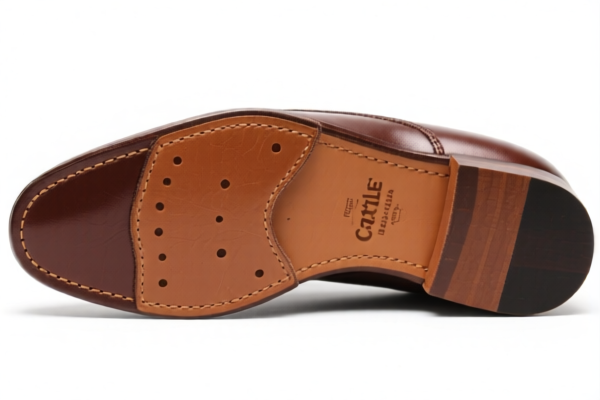
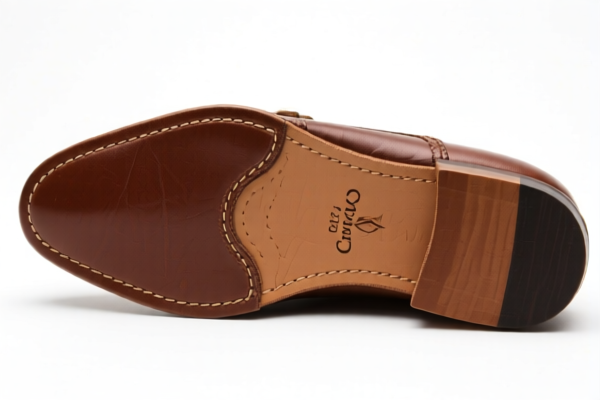
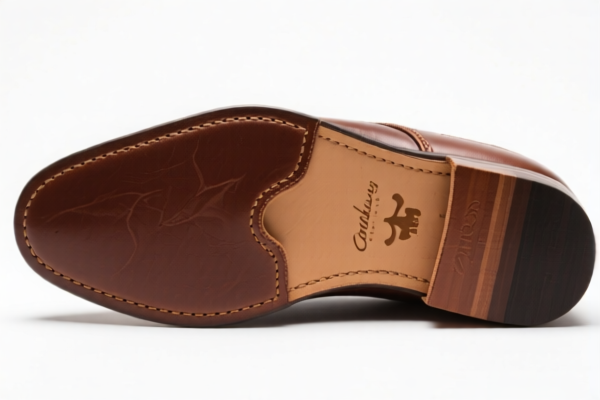

AI Analysis
👞 Leather Shoe Sole for Cowhide Shoes (Water Buffalo & Cow)
🌐 HS Code Reference & Clearance Guide | 2026 Latest Tariff Analysis | Professional Customs Strategy
📌 I. Product Definition & Classification: What is "Leather Shoe Sole"?
Leather shoe soles, particularly those made from cowhide (including water buffalo), are classified differently based on their processing level, specific usage (sole vs. upper), and tariff treatment. In international trade, the distinction between a raw "leather upper" and a processed "sole" can drastically change the tax burden due to specific trade agreements (e.g., Section 301 and Section 122 of U.S. trade laws).
Key Distinctions: * Processed Sole (Full Tannage): Leather specifically prepared for soles, often with specific thickness and hardness. * Upper Leather: Leather intended for the upper part of the shoe, which may sometimes be incorrectly declared as a sole to avoid higher tariffs, or vice versa.
⚠️ Critical Classification Point:
- If the leather is explicitly for soles and meets specific tanning definitions → HS 4107
- If the leather is a general cattle hide prepared for other uses (including potential sole use but not exclusively classified as such) → HS 4104
- Note: The total tax rate varies significantly (12.4% to 35.0%) based on this nuanced classification.
📦 II. HS Code Classification Details (2026 Latest Tariff Authority Mapping)
| HS Code | Product Description | Specific Usage/Material | Tariff Category |
|---|---|---|---|
4104.49.30.60 |
Natural Water Buffalo Leather Sole | Material: Water Buffalo; Form: Sole. Classified under "Other" residual category. | General |
4107.19.60.50 |
Natural Water Buffalo Leather Sole | Material: Water Buffalo; Use: Shoe Sole. Fits the strict definition of "Sole Leather." | Sole Specific |
4104.11.40.10 |
Cowhide Leather for Shoes | Material: Cow (including Water Buffalo); Use: Upper Leather (Not Sole). | Upper/General |
4104.11.10.20 |
Cowhide Leather for Shoes | Material: Cowhide; Form: Leather Material; Use: Shoe Use. | High Tariff (Retanned) |
4107.12.10.20 |
Cowhide Leather for Shoes | Material: Cowhide; Use: Shoe Leather Material, belongs to the Upper Leather category. | High Tariff (Upper) |
🔍 Key Insight:
-4107.19.60.50and4104.49.30.60are specifically for SOLES.
-4107.12.10.20,4104.11.40.10, and4104.11.10.20are primarily for UPPERS or general leather goods, but if declared as "shoe use," they attract much higher taxes due to the "25% Additional Tariff" under U.S. Section 301.
💰 III. 2026 Latest Tariff Rate Breakdown (Including Surcharge & Policy Add-ons)
✅ Applicable Country: United States (US)
✅ Origin: China (CN)
✅ Effective Time: Current trade policies (Section 301 & Section 122)
🎯 1. 4104.49.30.60 —— Natural Water Buffalo Leather Sole (General/Residual Category)
| Item | Content |
|---|---|
| Base Tariff | 2.4% (Ad Valorem) |
| USITC Surcharge (Section 301) | +0.0% (Note: This specific sub-category may not be listed under the high 25% list, or is exempt) |
| Section 122 Tariff | +10% (Specific to certain leather articles) |
| Total Tariff Rate | 12.4% |
| Tax Calculation | CIF Value × 12.4% |
| De Minimis Exemption | ❌ No (Deals with >$800 typically require formal entry) |
| Legal Basis Path | USITC:4104.49.30.60 → Section 122: 10% |
📌 Explanation:
- This code represents a residual category ("Other") for water buffalo soles.
- It benefits from a lower base tariff (2.4%) and no 25% Section 301 surcharge.
- The total 12.4% is the most cost-effective option if the product genuinely qualifies as "Water Buffalo Sole."
🎯 2. 4107.19.60.50 —— Natural Water Buffalo Leather Sole (Specific Sole Leather Definition)
| Item | Content |
|---|---|
| Base Tariff | 5.0% (Ad Valorem) |
| USITC Surcharge (Section 301) | +0.0% |
| Section 122 Tariff | +10% |
| Total Tariff Rate | 15.0% |
| Tax Calculation | CIF Value × 15.0% |
| De Minimis Exemption | ❌ No |
| Legal Basis Path | USITC:4107.19.60.50 → Section 122: 10% |
📌 Explanation:
- This code is for leather that strictly meets the definition of "Sole Leather."
- Although the base tariff is higher (5.0% vs 2.4%), it avoids the 25% surcharge.
- Total 15.0% is still significantly lower than the upper-leather codes.
🎯 3. 4104.11.40.10 —— Cowhide Leather for Shoes (Upper Leather)
| Item | Content |
|---|---|
| Base Tariff | 5.0% |
| USITC Surcharge (Section 301) | +0.0% |
| Section 122 Tariff | +10% |
| Total Tariff Rate | 15.0% |
| Tax Calculation | CIF Value × 15.0% |
| De Minimis Exemption | ❌ No |
| Legal Basis Path | USITC:4104.11.40.10 → Section 122: 10% |
📌 Explanation:
- Warning: This code is for UPPER LEATHER, not soles.
- However, if misclassified as a sole, it might be challenged.
- Total 15.0% is comparable to4107.19.60.50, but the product description must match (Upper vs. Sole). Misdeclaration leads to penalties.
🎯 4. 4104.11.10.20 —— Cowhide Leather for Shoes (High Tariff Category)
| Item | Content |
|---|---|
| Base Tariff | 0.0% |
| USITC Surcharge (Section 301) | +25.0% |
| Section 122 Tariff | +10% |
| Total Tariff Rate | 35.0% |
| Tax Calculation | CIF Value × 35.0% |
| De Minimis Exemption | ❌ No |
| Legal Basis Path | USITC:4104.11.10.20 → Section 301: 25% → Section 122: 10% |
📌 Critical Warning:
- This is a high-tariff code. The 25% Section 301 surcharge applies.
- This category is likely for retanned cowhide that does not meet the specific "sole" definition but is used in shoes.
- 35.0% is more than double the cost of the correct sole codes.
🎯 5. 4107.12.10.20 —— Cowhide Leather for Shoes (Upper Leather, High Tariff)
| Item | Content |
|---|---|
| Base Tariff | 0.0% |
| USITC Surcharge (Section 301) | +25.0% |
| Section 122 Tariff | +10% |
| Total Tariff Rate | 35.0% |
| Tax Calculation | CIF Value × 35.0% |
| De Minimis Exemption | ❌ No |
| Legal Basis Path | USITC:4107.12.10.20 → Section 301: 25% → Section 122: 10% |
📌 Critical Warning:
- This code is for UPPER LEATHER (面革) under the 4107 heading.
- It also incurs the 25% Section 301 surcharge.
- Total 35.0%. Do not use this for soles. If you declare a sole as this, you risk underpayment if the customs officer reclassifies it, or overpayment if you incorrectly use this for a sole.
🛠️ IV. Customs Clearance Practical Advice (Battle-Tested Pitfall Avoidance)
✅ 1. Documentation Checklist (Essential)
| Document | Required | Description |
|---|---|---|
| ✅ Product Specifications | ✔️ | Must clearly state: "Shoe Sole," "Water Buffalo/Cowhide," "Tanned," "Thickness," "Hardness." |
| ✅ Material Composition | ✔️ | Confirm if it is 100% natural leather or composite. |
| ✅ Photos of Product | ✔️ | Clear images showing the sole shape, grain, and any branding. |
| ✅ Commercial Invoice | ✔️ | Accurate description: "Natural Water Buffalo Leather Shoe Sole" vs. "Cowhide Leather Upper." |
| ✅ Certificate of Origin | ✔️ | For country of origin verification (China). |
✅ 2. Declaration Strategy (Key Mantra)
🔥 "Sole Must Be Sole, Upper Must Be Upper, 25% Surcharge Avoider!"
| Scenario | Correct Declaration | Wrong Declaration | Consequence |
|---|---|---|---|
| Water Buffalo Sole | 4104.49.30.60 or 4107.19.60.50 |
4104.11.10.20 |
Overpay by 20%+ |
| Cowhide Sole | Check if qualifies for 4107 | 4104.11.10.20 |
Pay 35% instead of 12.4-15% |
| Shoe Upper | 4107.12.10.20 or 4104.11.40.10 |
4104.49.30.60 |
Risk of penalty for misdeclaration |
✅ 3. Special Considerations
| Situation | Handling Advice |
|---|---|
| Mixed Materials | If the sole has a rubber part, it may fall under a different HS code (e.g., 4016). Check composition. |
| Water Buffalo vs. Cow | Specify the exact animal type. "Water Buffalo" may have different classification nuances than generic "Cow." |
| Section 122 Applicability | Confirm if the specific leather article qualifies for the 10% Section 122 tariff. Not all leather goods do. |
| Pre-Ruling | For high-volume shipments, apply for a US Customs Ruling to confirm the correct HS code and avoid surprise audits. |
🌍 V. Global Market Clearance Comparison (2026 Latest)
| Country/Region | Recommended HS Code | Total Tariff | Certification | Notes |
|---|---|---|---|---|
| 🇺🇸 USA | 4104.49.30.60 |
12.4% | None | Best for Water Buffalo Sole |
| 🇺🇸 USA | 4104.11.10.20 |
35.0% | None | High risk for misclassification |
| 🇨🇳 China | 4107.19.60.50 |
Varies | None | Import duties may differ |
| 🇪🇺 EU | 4107.19.60.50 |
Varies | REACH | VAT applies, but no Section 301 |
| 🇬🇧 UK | 4107.19.60.50 |
Varies | None | Post-Brexit rules apply |
📌 Conclusion:
- USA is the critical market due to the Section 301 (25%) and Section 122 (10%) tariffs.
- Accurate classification between "Sole" and "Upper" and between "Water Buffalo" and "Cow" is vital to save up to 22.6% in taxes.
📌 VI. Common Errors & Pitfall Avoidance (Lessons Learned)
❌ Error 1: Declaring Shoe Upper Leather as Shoe Sole to avoid Section 301.
👉 Consequence: Customs may reclassify and charge the 25% surcharge + penalties.
👉 Fix: Ensure the product shape and specification match the "Sole" definition.
❌ Error 2: Using 4104.11.10.20 for Water Buffalo Sole.
👉 Consequence: Paying 35% instead of 12.4%.
👉 Fix: Use 4104.49.30.60 or 4107.19.60.50 for water buffalo soles.
❌ Error 3: Ignoring Section 122.
👉 Consequence: Underpaying by 10%.
👉 Fix: Always verify if Section 122 applies to the specific HS code.
✅ Correct Practice:
"Natural Water Buffalo Leather Shoe Sole, Tanned, Thickness: 3mm, for Men's Dress Shoes"
🎯 VII. Conclusion: Precise Classification Saves Money!
🎯 Remember the Mantra:
🔹 "Sole vs. Upper: Don't Mix Up, 25% Surcharge is the Risk!"
🔹 "Water Buffalo: Check Code, 12.4% is the Goal!"
🔹 "Section 122: 10% Always, Check the Footnote!"
📌 Pro Tip:
If your product is not from China, the Section 301 (25%) tariff does not apply. This can significantly reduce costs for products from Vietnam, India, or other countries.
Always seek a Pre-Ruling from US Customs and Border Protection (CBP) for new product lines.
📣 Take Action Now:
📞 Contact a Licensed Customs Broker
📤 Provide Product Samples & Specs
🚀 Optimize Your HS Code, Maximize Your Profit!
✨ Professional Clearance Starts with Accurate Classification!
💼 Every Percentage Point Matters in Global Trade!
Customer Reviews
About HS Code Classification
The Harmonized System (HS) is an internationally standardized nomenclature developed by the World Customs Organization (WCO) to classify traded products. Over 200 countries use the HS system as the basis for customs tariffs, trade statistics, and import/export regulations.
Each HS code follows a hierarchical structure:
- Chapter (2 digits) — Broad category of goods (e.g., Chapter 84: Machinery and Mechanical Appliances)
- Heading (4 digits) — More specific grouping within the chapter
- Subheading (6 digits) — Internationally standardized breakdown, used by all WCO member countries
- National subdivisions (8-10 digits) — Country-specific extensions for further classification, such as US HTSUS 10-digit codes
Correct HS code classification is essential for smooth customs clearance, accurate duty payment, and compliance with trade regulations. Misclassification can lead to customs delays, overpayment of duties, or penalties.
When importing from CN to US, the applicable tariff rates may include:
- Most-Favored-Nation (MFN) rate — The standard duty rate applied to WTO members
- General rate — Applied to countries without trade agreements
- Trade remedy duties — Additional tariffs such as Section 301 (anti-dumping), Section 232 (national security), or countervailing duties
The information provided on this page is for reference purposes only. For official classification, please consult with your local customs authority or a licensed customs broker.