Leather waste for automotive interior
CN → US| HS Code | Tariff Rate | Origin | Destination | Doc |
|---|---|---|---|---|
| 6309000010 | 17.5% | CN | US | Official Doc |
| 4115200000 | 17.5% | CN | US | Official Doc |
| 4115100000 | 35.0% | CN | US | Official Doc |
| 6309000020 | 17.5% | CN | US | Official Doc |
Product Images


AI Analysis
🚗 Automotive Interior Leather Waste (Scrap/Offcuts)
🌐 HS Code Reference & Clearance Guide | 2026 Latest Tariff Analysis | Professional Compliance Strategy
📌 I. Product Definition & Classification: What Exactly is "Leather Waste"?
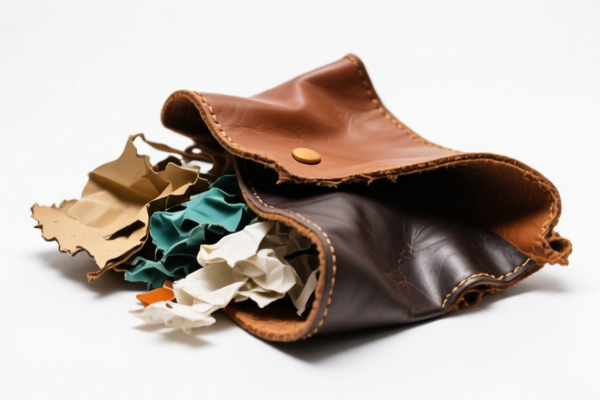
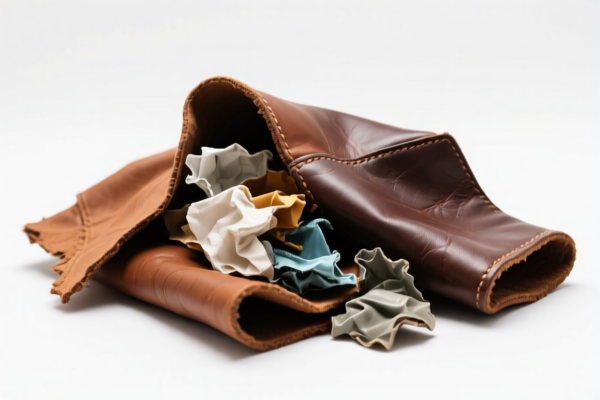
Leather Waste (specifically for Automotive Interiors) refers to offcuts, trimmings, or discarded pieces of leather generated during the manufacturing or cutting process of car seats, dashboards, door panels, and steering wheels. In international trade, the classification depends heavily on the nature of the leather (tanned, composite) and the state of the material (waste vs. second-hand goods).
Key Distinctions: * Pure Leather Waste: Raw tanned leather offcuts. * Composite Leather Waste: Leather bonded with other materials (fabric, plastic). * Used/Second-Hand Leather: If the leather has been used in a vehicle and is now being exported as scrap, it may be classified differently depending on customs jurisdiction.
⚠️ Critical Classification Point:
- If the material is pure tanned leather in the form of waste/offcuts → Classified under 4115.20.00.00.
- If the material is composite leather (leather + other substances) in waste form → Classified under 4115.10.00.00.
- If the material is declared as "Waste for Reclassification" or falls under general waste headings → Classified under 6309.00.00.10.
- If the material is explicitly declared as "Used/Second-Hand Goods" (e.g., recycled interior parts) → Classified under 6309.00.00.20.
📦 II. HS Code Classification Matrix (2026 Latest Tariff Authority)
| HS Code | Product Description | Application Scenario | Material Nature |
|---|---|---|---|
6309.00.00.10 |
Waste of textiles; other waste used for automotive interior leather trimmings (Primary/Semi-finished form) | General leather offcuts, recycled leather waste for bulk processing | ✅ Leather (Waste Form) |
4115.20.00.00 |
Leather waste and leather refuse | Pure tanned leather scraps, offcuts, and trimmings | ✅ Pure Leather |
4115.10.00.00 |
Leather or composition leather, in the form of waste or scrap | Composite leather (leather bonded to fabric/plastic) offcuts | ✅ Composite Leather |
6309.00.00.20 |
Other second-hand goods | Used leather interior parts, recycled seats, or pre-consumer waste declared as used goods | ✅ Used/Second-Hand |
🔍 Key Reminder:
-4115.20.00.00is the standard for pure leather waste.
-4115.10.00.00applies if the leather is bonded/composite.
-6309codes are often used when the goods are considered general waste or used items, but beware of higher scrutiny for "second-hand" imports.
💰 III. 2026 Latest Tariff Rate Breakdown (Including Surcharges & Policy Add-ons)
✅ Applicable Country: United States (US)
✅ Country of Origin: China (CN)
✅ Effective Date: November 10, 2025 (for subsequent imports)
🎯 1. 6309.00.00.10 —— Leather Waste (General/Recycled Form)
| Item | Content |
|---|---|
| Base Tariff | 0% (ad valorem) |
| USITC Additional Tariff | +7.5% (Section 301 Tariff) |
| IEEPA Additional Tariff | +10% (China-specific tariff under International Emergency Economic Powers Act) |
| Total Tariff | 17.5% |
| Tax Calculation | CIF Value × 17.5% |
| De Minimis Eligibility | ❌ Not Eligible (Deny De Minimis for Section 301 goods) |
| Legal Basis Path | IEEPA:9903.01.24 → USITC:6309.00.00.10 → FOOTNOTE:301_Tariff |
📌 Explanation:
- This code often captures recycled or general leather waste.
- The 17.5% rate is a combination of standard Section 301 duties and IEEPA surcharges.
- Note: If classified as pure leather waste (4115.20.00.00), the rate is the same. However, if classified as composite (4115.10.00.00), the rate jumps significantly.
🎯 2. 4115.20.00.00 —— Pure Leather Waste & Refuse
| Item | Content |
|---|---|
| Base Tariff | 0% |
| USITC Additional Tariff | +7.5% |
| IEEPA Additional Tariff | +10% |
| Total Tariff | 17.5% |
| Tax Calculation | CIF × 17.5% |
| De Minimis Eligibility | ❌ Not Eligible |
| Legal Basis Path | IEEPA:9903.01.24 → USITC:4115.20.00.00 → FOOTNOTE:301_Tariff |
📌 Note:
- This is the most accurate classification for pure tanned leather offcuts from automotive manufacturing.
- The 17.5% total rate applies uniformly to pure leather waste from China.
🎯 3. 4115.10.00.00 —— Composite Leather Waste
| Item | Content |
|---|---|
| Base Tariff | 0% |
| USITC Additional Tariff | +25% |
| IEEPA Additional Tariff | +10% |
| Total Tariff | 35.0% |
| Tax Calculation | CIF × 35.0% |
| De Minimis Eligibility | ❌ Not Eligible |
| Legal Basis Path | IEEPA:9903.01.24 → USITC:4115.10.00.00 → FOOTNOTE:301_Tariff |
📌 Critical Warning:
- Composite leather (leather bonded with plastic/fabric) is subject to higher duties.
- If your "leather waste" includes bonded layers, you must use this code to avoid misclassification penalties.
- Rate: 35% is nearly double the pure leather rate.
🎯 4. 6309.00.00.20 —— Other Second-Hand Goods
| Item | Content |
|---|---|
| Base Tariff | 0% |
| USITC Additional Tariff | +7.5% |
| IEEPA Additional Tariff | +10% |
| Total Tariff | 17.5% |
| Tax Calculation | CIF × 17.5% |
| De Minimis Eligibility | ❌ Not Eligible |
| Legal Basis Path | IEEPA:9903.01.24 → USITC:6309.00.00.20 → FOOTNOTE:301_Tariff |
📌 Note:
- Use this only if the goods are explicitly used/second-hand.
- Customs may require proof that the items are not new but recycled/used.
- Same 17.5% rate as general waste, but higher regulatory scrutiny for hygiene/environmental standards.
🛠️ IV. Customs Clearance Practical Advice (Real-World Pitfall Guide)
✅ 1. Required Documentation Checklist (No Exceptions)
| Document | Mandatory | Notes |
|---|---|---|
| ✅ Commercial Invoice | ✔️ | Must specify "Leather Waste for Automotive Interiors" and HS Code. |
| ✅ Packing List | ✔️ | Detail weight/volume; distinguish between pure leather and composite waste. |
| ✅ Material Composition Certificate | ✔️ | Crucial to distinguish between 4115.20.00.00 (Pure) and 4115.10.00.00 (Composite). |
| ✅ Photos of Goods | ✔️ | Show texture, edges, and any bonding layers to prove material type. |
| ✅ Certificate of Origin | ✔️ | Required to apply origin-specific tariffs (e.g., US-China trade rules). |
| ✅ Recycling/Reclamation Statement | ✔️ | If using 6309 codes, provide proof of intended recycling use. |
✅ 2. Declaration Strategy (Key Mantras)
🔥 "Pure vs. Composite, Waste vs. Used, Declare Accurately!"
| Scenario | Correct Declaration | Wrong Practice |
|---|---|---|
| Pure tanned leather offcuts | 4115.20.00.00 |
Misdeclare as 6309.00.00.10 → Risk of audit |
| Composite leather scraps | 4115.10.00.00 |
Misdeclare as 4115.20.00.00 → Underpayment penalty + 35% retroactive |
| Used car seat leather | 6309.00.00.20 |
Declare as "New Waste" → Customs Rejection/Return |
| Mixed batch (Pure + Composite) | Split Declaration or use higher rate (4115.10.00.00) |
Single code for mixed batch → Confiscation |
✅ 3. Special Cases Handling
| Scenario | Handling Advice |
|---|---|
| Mixed Batches | If a shipment contains both pure and composite leather, declare separately or apply the higher tariff (35%) to the entire batch to avoid penalties. |
| Bonded Leather | If leather is bonded with PVC/fabric, must use 4115.10.00.00. Do not try to classify as "leather waste." |
| Second-Hand Use | If the leather was previously installed in a car, provide photos of wear/tear and a declaration of "Used Goods." |
| Recycling Destination | If exporting for recycling, provide recycling facility contracts to justify 6309 codes if applicable. |
🌍 V. Global Market Clearance Comparison (2026 Latest)
| Country/Region | Recommended HS Code | Tariff (China Origin) | Certification Requirements | Notes |
|---|---|---|---|---|
| 🇺🇸 USA | 4115.20.00.00 / 4115.10.00.00 |
17.5% / 35% | None specific for waste | High scrutiny on composite vs. pure |
| 🇨🇳 China | 4115.20.00.00 |
5-10% | None | Lower tariffs for domestic recycling |
| 🇪🇺 EU | 3703.10 / 3703.90 |
0-3% | REACH Compliance | Strict environmental regulations for waste |
| 🇲🇽 Mexico | 4115.20.00 |
0% (USMCA if processed) | NAFT/USMCA Rules | Potential for duty-free if processed in Mexico |
📌 Conclusion:
- USA is the most complex due to Section 301 and IEEPA surcharges.
- EU has strict environmental laws; ensure waste is properly documented for recycling.
- Misclassification between pure and composite leather can lead to double tariffs.
📌 VI. Common Errors & Pitfall Guide (Lessons Learned)
❌ Error 1: Declaring composite leather waste as pure leather waste
👉 Consequence: Tariff drops from 35% to 17.5% → Customs Audit, Back Taxes, Fines!
❌ Error 2: Failing to distinguish between new offcuts and used second-hand goods
👉 Consequence: Goods held at customs, request for additional documentation → Delays & Storage Fees
❌ Error 3: Using "Leather Waste" generically without specifying composite vs. pure
👉 Consequence: Customs assigns arbitrary code, often the higher one (35%) → Overpayment
❌ Error 4: Ignoring IEEPA Section 122 surcharges
👉 Consequence: Underestimating total cost → Profit Margin Erosion
✅ Correct Approach:
"Automotive Interior Leather Waste, 100% Tanned Cowhide Offcuts (Pure), for Recycling, HS Code:
4115.20.00.00"
OR
"Automotive Interior Composite Leather Waste (Leather + PVC), HS Code:4115.10.00.00"
🎯 VII. Conclusion: Precision Classification for Cost Efficiency!
🎯 Remember the Mantra:
🔹 "Pure Leather = 17.5%, Composite = 35%, Used = 17.5% + Scrutiny"
🔹 "HS Code Determines Tax, Misclassification Costs Double!"
🔹 "Declare Material Composition Clearly, Avoid Penalties!"
📌 Pro Tip:
If your leather waste is from Mexico or Canada under USMCA, you may qualify for 0% tariffs if processed appropriately.
For USA imports, always apply for an Advance Ruling if unsure whether your product is "pure" or "composite."
📣 Immediate Action:
📞 Contact a Licensed Customs Broker
📄 Provide Material Composition Reports
🚀 Ensure HS Code Pre-Ruling for large shipments
💡 Your Bottom Line Depends on Accurate Classification!
✨ Professional Clearance, Starting with Precise Classification!
💼 Every Percent Saved is Profit Added!
Customer Reviews
About HS Code Classification
The Harmonized System (HS) is an internationally standardized nomenclature developed by the World Customs Organization (WCO) to classify traded products. Over 200 countries use the HS system as the basis for customs tariffs, trade statistics, and import/export regulations.
Each HS code follows a hierarchical structure:
- Chapter (2 digits) — Broad category of goods (e.g., Chapter 84: Machinery and Mechanical Appliances)
- Heading (4 digits) — More specific grouping within the chapter
- Subheading (6 digits) — Internationally standardized breakdown, used by all WCO member countries
- National subdivisions (8-10 digits) — Country-specific extensions for further classification, such as US HTSUS 10-digit codes
Correct HS code classification is essential for smooth customs clearance, accurate duty payment, and compliance with trade regulations. Misclassification can lead to customs delays, overpayment of duties, or penalties.
When importing from CN to US, the applicable tariff rates may include:
- Most-Favored-Nation (MFN) rate — The standard duty rate applied to WTO members
- General rate — Applied to countries without trade agreements
- Trade remedy duties — Additional tariffs such as Section 301 (anti-dumping), Section 232 (national security), or countervailing duties
The information provided on this page is for reference purposes only. For official classification, please consult with your local customs authority or a licensed customs broker.