Leisure Travel Backpack
CN → US| HS Code | Tariff Rate | Origin | Destination | Doc |
|---|---|---|---|---|
| 4202923120 | 52.6% | CN | US | Official Doc |
| 3923900080 | 38.0% | CN | US | Official Doc |
| 6307909891 | 24.5% | CN | US | Official Doc |
| 4202923131 | 52.6% | CN | US | Official Doc |
| 4202923120 | 52.6% | CN | US | Official Doc |
Product Images
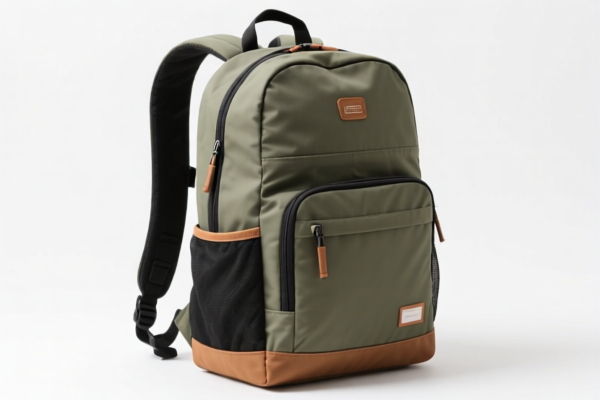
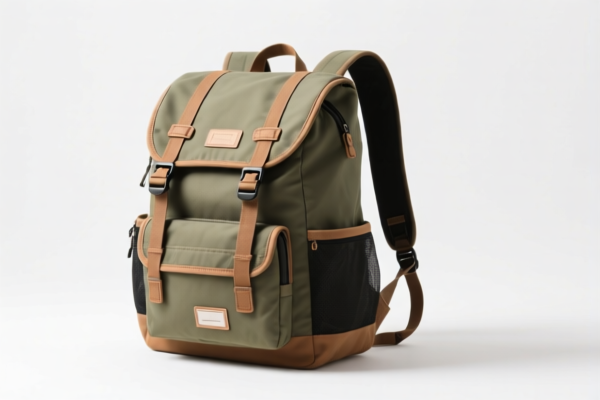
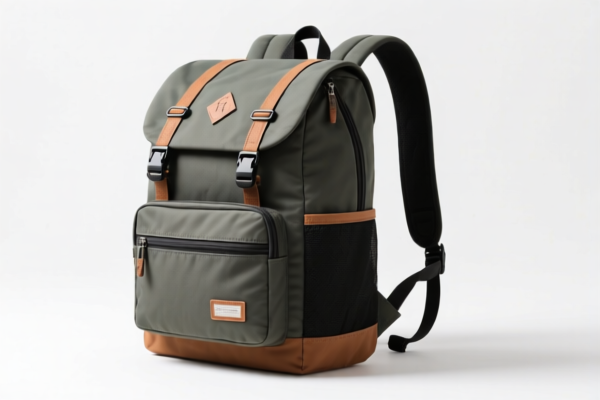
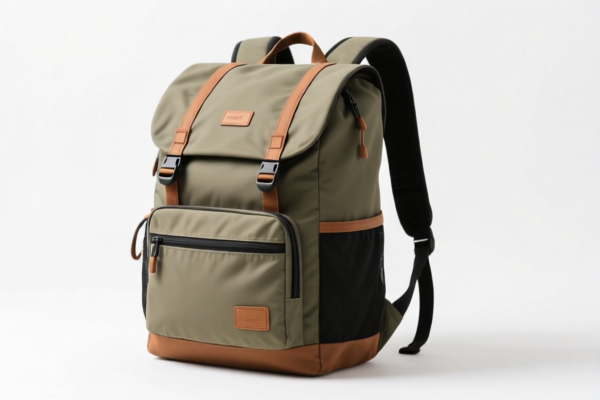
AI Analysis
🎒 Leisure Travel Backpack: The Ultimate HS Code & Tax Analysis for US Imports
🌐 HS Code Reference & Customs Clearance Guide | 2026 Latest Tariff Breakdown | Professional Clearance Strategy
📌 I. Product Definition: What is a "Leisure Travel Backpack"?
A Leisure Travel Backpack is not a single homogeneous product. In international trade, its Harmonized System (HS) classification depends heavily on its material composition and specific design purpose. Misclassification can lead to significant tariff shocks due to Section 301 and Section 122 duties.
There are three main categories based on the provided data: 1. Textile/Synthetic Fiber Backpacks: Classified under Heading 4202. 2. Plastic/Synthetic Fiber Packing Bags: Classified under Heading 3923. 3. Other Textile Travel Accessories: Classified under Heading 6307.
⚠️ Key Distinction:
- If it is a structured bag with straps (Backpack/Travel Bag) made of textiles → HS 4202 (Highest Tax).
- If it is a soft, unstructured packing cube/organizer made of plastic → HS 3923 (Medium Tax).
- If it is a general textile accessory not specifically defined as a bag → HS 6307 (Lowest Tax).
📦 II. HS Code Classification Details (2026 Latest Tariff Authority)
| HS Code | Product Description | Applicable Scenario | Material |
|---|---|---|---|
4202.92.31.20 |
Backpacks or travel storage bags, textile/synthetic fiber | Structured backpacks, travel organizers matching form/function | ✅ Textile/Synthetic |
3923.90.00.80 |
Travel storage bags, plastic/synthetic fiber, packaging category | Soft packing cubes, toiletry kits, non-structured containers | ✅ Plastic |
6307.90.98.91 |
Travel storage bags, textile, other manufactured goods | General textile travel accessories, non-specific form | ✅ Textile |
4202.92.31.31 |
Travel bags, textile outer surface, form/function match | Structured travel duffles or bags with textile exterior | ✅ Textile |
🔍 Critical Reminder:
- HS 4202 applies to bags designed to be carried on the body (backpacks, duffles). This category is subject to the highest tariffs (17.6% base + 25% Section 301 + 10% Section 122).
- HS 3923 applies if the item is strictly a "container" or "packing aid" made of plastic, not intended as a primary carrying bag.
- HS 6307 is a "catch-all" for textile goods that don't fit neatly into 4202, offering the lowest duty rate but requiring strict justification of "other manufactured goods."
💰 III. 2026 Latest Tariff Rate Breakdown (Detailed Tax Clause Explanation)
✅ Applicable Country: United States (US)
✅ Origin: China (CN)
✅ Effective Date: 2025/2026 Tariff Regime
🎯 1. 4202.92.31.20 & 4202.92.31.31 — Backpacks / Travel Bags (Textile)
| Item | Content |
|---|---|
| Base Tariff | 17.6% |
| Section 301 Tariff (Add-on) | +25.0% |
| Section 122 Tariff (Add-on) | +10.0% |
| Total Effective Tax Rate | 52.6% |
| Tax Calculation | CIF Value × 52.6% |
| De Minimis Exemption | ❌ Not Eligible (High duty threshold blocks $800 exemption) |
| Legal Basis Path | HTSUS:4202.92.31 → Section 301: Footnote 9903.88.01 → Section 122: IEEPA |
📌 Explanation:
- Base Tariff (17.6%): Standard duty for backpacks made of textile materials under heading 4202.
- Section 301 (+25%): Additional duty imposed on Chinese goods under the Trade Act of 1974, Section 301.
- Section 122 (+10%): Additional duty under Section 122 of the Trade Expansion Act of 1962, often applied to specific categories to protect domestic industries.
- Total: 52.6%. This is a very high cost factor. Importers must absorb this or raise prices significantly.
🎯 2. 3923.90.00.80 — Plastic Travel Storage/Packing Bags
| Item | Content |
|---|---|
| Base Tariff | 3.0% |
| Section 301 Tariff (Add-on) | +25.0% |
| Section 122 Tariff (Add-on) | +10.0% |
| Total Effective Tax Rate | 38.0% |
| Tax Calculation | CIF Value × 38.0% |
| De Minimis Exemption | ❌ Not Eligible |
| Legal Basis Path | HTSUS:3923.90 → Section 301: Footnote 9903.88.01 → Section 122: IEEPA |
📌 Explanation:
- Base Tariff (3.0%): Much lower base duty for plastic articles of heading 3923.
- Add-ons: Same Section 301 and 122 duties apply because the origin is still China.
- Total: 38.0%. This is significantly cheaper than textile backpacks, making plastic packing cubes a tax-efficient alternative if the product design allows.
🎯 3. 6307.90.98.91 — Other Textile Travel Accessories
| Item | Content |
|---|---|
| Base Tariff | 7.0% |
| Section 301 Tariff (Add-on) | +7.5% |
| Section 122 Tariff (Add-on) | +10.0% |
| Total Effective Tax Rate | 24.5% |
| Tax Calculation | CIF Value × 24.5% |
| De Minimis Exemption | ❌ Not Eligible |
| Legal Basis Path | HTSUS:6307.90 → Section 301: Footnote 9903.88.01 (Note: Rate may vary by specific footnote application) |
📌 Explanation:
- Base Tariff (7.0%): Standard duty for other made-up textile articles.
- Section 301 (+7.5%): Note that for some 6307 subheadings, the Section 301 rate might be lower (7.5%) compared to the 25% for 4202/3923, depending on the specific exclusion list or footnote. Based on provided data: 7.5%.
- Section 122 (+10%): Uniform add-on.
- Total: 24.5%. This is the most tax-efficient classification for textile products, but requires careful product description to avoid being reclassified as a "bag" (4202).
🛠️ IV. Customs Clearance Practical Advice (Pitfall Avoidance Guide)
✅ 1. Documentation Checklist (Non-negotiable)
| Document | Required? | Explanation |
|---|---|---|
| ✅ Product Specifications | ✔️ | Detailed material composition (e.g., "100% Polyester," "PVC Plastic"). |
| ✅ Product Photos | ✔️ | Must clearly show form factor: Is it a backpack with straps? Or a soft packing cube? |
| ✅ Commercial Invoice | ✔️ | Description must match HS Code: "Textile Backpack" vs. "Plastic Packing Bag." |
| ✅ Country of Origin Certificate | ✔️ | Proof of Chinese origin triggers Section 301/122. |
| ✅ Internal Use Label | ✔️ | Markings like "Made in China" are critical for customs verification. |
✅ 2. Classification Strategy (Key Tips)
🔥 “Form Dictates Function, Material Dictates Duty!”
| Scenario | Recommended HS Code | Tax Rate | Why? |
|---|---|---|---|
| Structured Backpack with shoulder straps, used for daily carry | 4202.92.31.20 |
52.6% | Fits "Backpack" definition in HTSUS 4202. Highest risk, highest tax. |
| Packing Cube/Organizer made of plastic, no straps, used inside luggage | 3923.90.00.80 |
38.0% | Classified as "packing material/container" (Heading 39). Lower base duty. |
| Travel Accessory (e.g., shoe bag, toiletry pouch) made of textile, not a full bag | 6307.90.98.91 |
24.5% | Classified as "other made-up articles." Lowest tax, but must avoid "bag" language. |
| Travel Duffel/Bag with textile exterior | 4202.92.31.31 |
52.6% | Same as backpack. Heading 4202 is for "trunks, suitcases, vanity cases, attache cases, briefcases, school satchels, and similar containers." |
⚠️ Warning:
- Do NOT label a structured backpack as "Packing Cube" to save taxes. Customs officers will inspect the item, see the straps and structure, and reclassify it to 4202, leading to back taxes + penalties.
- Do NOT label a plastic packing cube as "Textile Accessory." Mismatch in material description leads to clearance delays.
✅ 3. Special Cases & Optimization
| Situation | Handling Advice |
|---|---|
| Hybrid Products (e.g., Plastic bag with textile handle) | Classify based on essential character. If plastic is primary material → 3923. If textile structure dominates → 4202. |
| Sample Imports | Even samples are subject to these duties. Do not assume de minimis ($800) applies if total value > $800 OR if duty exceeds exemption limits. |
| Section 301 Exclusions | Check if the specific HTSUS code currently has an Exclusion Number (e.g., 8840, 8841, etc.). Most 4202/3923/6307 items do not have exclusions. |
| Re-export from Third Country | If shipped from Vietnam/Malaysia, you need a Certificate of Origin (Form A/D) to prove non-Chinese origin and avoid Section 301/122. |
🌍 V. Global Market Comparison (2026)
| Country/Region | Recommended HS Code | Est. Total Duty (China Origin) | Notes |
|---|---|---|---|
| 🇺🇸 USA | 4202.92.31.20 |
52.6% | Highest cost. Includes 25% Sec 301 + 10% Sec 122. |
| 🇨🇳 China | 4202.92.31.20 |
~8-10% | Standard import duty. No Section 301/122. |
| 🇪🇺 EU | 4202.92.31.20 |
~4-6% | Standard MFN duty. No equivalent US-style section tariffs. |
| 🇬🇧 UK | 4202.92.31.20 |
~5-8% | Post-Brexit tariffs. Lower than US. |
📌 Conclusion:
- The US market is the most expensive due to punitive tariffs (Section 301 & 122).
- Profit Margins for Chinese-made backpacks in the US must account for 52.6% duty.
- Consider shifting production to SE Asia (Vietnam, Cambodia) to bypass these duties if possible.
📌 VI. Common Mistakes & Pitfalls (Lessons Learned)
❌ Mistake 1: Using "Travel Bag" generically on the invoice
👉 Consequence: Customs may assign the highest default rate or delay for further classification.
✅ Fix: Use precise terms: "Textile Backpack" or "Plastic Packing Cube."
❌ Mistake 2: Ignoring Section 122 Tariff (10%)
👉 Consequence: Underpayment of taxes.
✅ Fix: Always calculate Base + Sec 301 + Sec 122.
❌ Mistake 3: Assuming De Minimis ($800) applies
👉 Consequence: Goods seized or held at border if duty > exemption or if value exceeds limit.
✅ Fix: Plan for full duty payment for commercial shipments.
🎯 VII. Conclusion: Professional Classification, Cost Savings!
🎯 Remember the Golden Rule:
🔹 "Backpacks (4202) = 52.6% Tax"
🔹 "Plastic Packing (3923) = 38.0% Tax"
🔹 "Textile Accessories (6307) = 24.5% Tax"🔹 "Material and Form Decide the Fate. Don't Guess, Verify!"
📌 Pro Tip:
For large volumes, consider applying for an Advance Ruling from CBP (U.S. Customs and Border Protection) to get a binding classification decision. This protects you from retroactive audits and penalties.
📣 Immediate Action:
📞 Consult a Licensed Customs Broker
📦 Provide Detailed Product Photos & Material Specs
🚀 Optimize Supply Chain: Consider Non-China Origins to save 35%+ in taxes!
✨ Accurate Classification Saves Money!
💼 Every Percent of Duty Counts in Your Profit Margin!
Customer Reviews
About HS Code Classification
The Harmonized System (HS) is an internationally standardized nomenclature developed by the World Customs Organization (WCO) to classify traded products. Over 200 countries use the HS system as the basis for customs tariffs, trade statistics, and import/export regulations.
Each HS code follows a hierarchical structure:
- Chapter (2 digits) — Broad category of goods (e.g., Chapter 84: Machinery and Mechanical Appliances)
- Heading (4 digits) — More specific grouping within the chapter
- Subheading (6 digits) — Internationally standardized breakdown, used by all WCO member countries
- National subdivisions (8-10 digits) — Country-specific extensions for further classification, such as US HTSUS 10-digit codes
Correct HS code classification is essential for smooth customs clearance, accurate duty payment, and compliance with trade regulations. Misclassification can lead to customs delays, overpayment of duties, or penalties.
When importing from CN to US, the applicable tariff rates may include:
- Most-Favored-Nation (MFN) rate — The standard duty rate applied to WTO members
- General rate — Applied to countries without trade agreements
- Trade remedy duties — Additional tariffs such as Section 301 (anti-dumping), Section 232 (national security), or countervailing duties
The information provided on this page is for reference purposes only. For official classification, please consult with your local customs authority or a licensed customs broker.