Lemon Squeezer
CN → US| HS Code | Tariff Rate | Origin | Destination | Doc |
|---|---|---|---|---|
| 8210000000 | 38.7% | CN | US | Official Doc |
| 8509400030 | 14.2% | CN | US | Official Doc |
| 8509400015 | 14.2% | CN | US | Official Doc |
| 3924104000 | 13.4% | CN | US | Official Doc |
| 3924102000 | 24.0% | CN | US | Official Doc |
Product Images
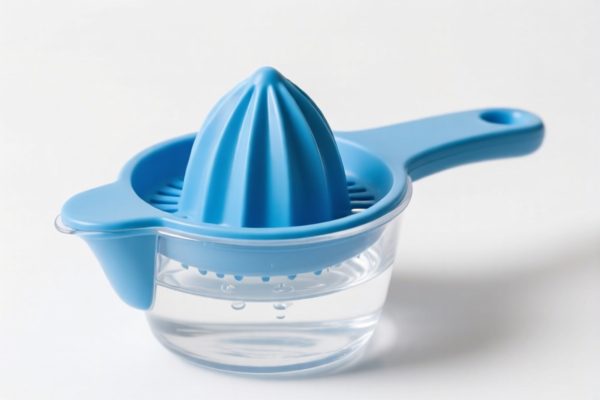
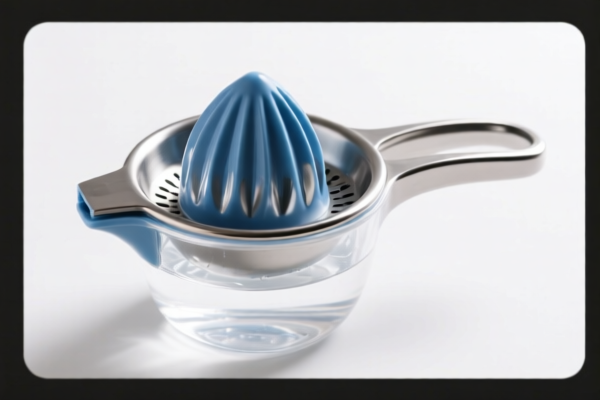
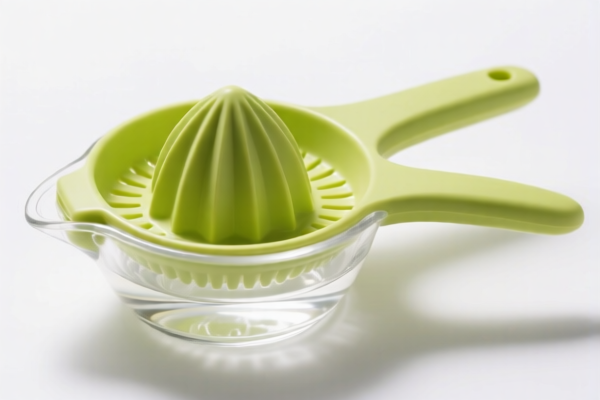
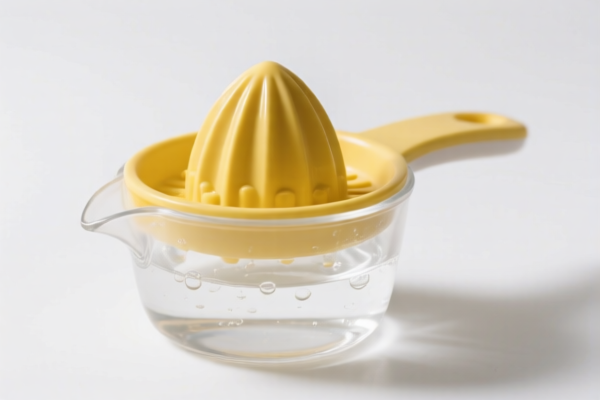
AI Analysis
🍋 Lemon Squeezer (Citrus Press / Juicer)
🌐 HS Code Reference & Customs Clearance Guide | 2026 Latest Tariff Analysis | Professional Clearance Strategy
📌 I. Product Definition & Classification: Are You Sure You Know a "Lemon Squeezer"?
A "Lemon Squeezer" is a broad term in international trade. It encompasses everything from simple handheld metal pliers to complex electric countertop appliances. The classification depends entirely on the mechanism (manual vs. electric) and the material (metal vs. plastic).
In the provided <DATA>, two distinct categories exist for citrus extraction tools:
1. Manual Mechanical Tools (Metal/Hybrid)
- Typically made of metal with a pressing mechanism.
- Classified under Chapter 82 (Tools of Base Metal).
- Note: Even if it has a plastic handle, if the primary function is a mechanical press, it often falls here.
2. Electric Household Appliances (Plastic/Electric Motor)
- Contains a motor, power cord, and plastic housing.
- Classified under Chapter 85 (Electrical Machinery and Equipment).
- Specifically falls under 8509 (Electromechanical domestic appliances).
⚠️ Critical Distinction:
- Manual Press (Metal body): Goes to 8210.00.00.00 → High Tax (38.7%) due to Section 301/122 tariffs.
- Electric Juicer (Plastic/Motor): Goes to 8509.40.00.30 → Lower Tax (14.2%).
- Blender Category: If the device uses a rotating blade rather than a press, it may go to 8509.40.00.15 → Lower Tax (14.2%).
- Plastic Parts/Accessories: If you are importing just the plastic container or lid, it goes to 3924 → 13.4% or 24.0%.
📦 II. HS Code Classification Details (Based on Provided Data)
| HS Code | Product Description (Summary) | Type | Mechanism | Material Focus | Total Tax Rate |
|---|---|---|---|---|---|
| 8210.00.00.00 | Manual mechanical器具 for beverage preparation | Manual Press | Mechanical Press | Metal/Steel Base | 38.7% |
| 8509.40.00.30 | Fruit or Vegetable Juice Extractor | Electric Juicer | Electric Motor | Plastic/Electric | 14.2% |
| 8509.40.00.15 | Blender under Juice Extractor Category | Electric Blender | Rotating Blades | Plastic/Electric | 14.2% |
| 3924.10.40.00 | Plastic Tableware/Kitchenware | Plastic Component | N/A (Part/Accessory) | Plastic Only | 13.4% |
| 3924.10.20.00 | Kitchenware of Plastic or Metal | Mixed/Plastic Part | N/A (Part/Accessory) | Plastic/Metal Mix | 24.0% |
🔍 Key Insight:
- Avoid 8210 if possible: Unless your product is a purely manual, heavy-duty metal press (like a traditional "Reamex" style), you will pay 38.7%.
- Choose 8509 if Electric: If your "squeezer" plugs in, use 8509.40.00.30. The tax is 24.5% lower than the manual metal version!
- Be Careful with "Blenders": Some electric citrus juicers use spinning cones. If declared as a "Blender," ensure it matches 8509.40.00.15. If it’s a standard press juicer, use 8509.40.00.30.
💰 III. 2026 Latest Tariff Rate Breakdown (Including Surtaxes)
✅ Applicable Country: United States (US)
✅ Origin: China (CN)
✅ 生效时间 (Effective Date): Current active rates as per 122/Bis clauses
🎯 1. 8210.00.00.00 —— Manual Mechanical Beverage Prep Tool (Metal Press)
| Item | Detail |
|---|---|
| Base Duty Rate | 3.7% |
| Section 301 Surcharge | +25.0% |
| Section 122/Bis Surcharge | +10.0% |
| Total Effective Rate | 38.7% |
| Tax Calculation | CIF Value × 38.7% |
| De Minimis Exemption? | ❌ NO (De minimis does not apply to goods subject to Section 301 or 122 tariffs) |
| Legal Basis | Base Rate (HTSUS) + USITC Footnote 9903.88.01 (Sec 301) + IEEPA 122 Clause |
📌 Why so high?
- This is classified as a "Tool of Base Metal" (Chapter 82).
- It attracts the standard 301 tariff (25%) plus the 122 tariff (10%).
- No de minimis exception: Even small packages (under $800) are subject to these duties if they are not exempted.
- Risk: High. Customs may audit manual presses to ensure they aren’t misclassified as cheap plastic toys.
🎯 2. 8509.40.00.30 & 8509.40.00.15 —— Electric Juice Extractors & Blenders
| Item | Detail |
|---|---|
| Base Duty Rate | 4.2% |
| Section 301 Surcharge | 0.0% (Exempt from Sec 301) |
| Section 122/Bis Surcharge | +10.0% |
| Total Effective Rate | 14.2% |
| Tax Calculation | CIF Value × 14.2% |
| De Minimis Exemption? | ❌ NO (De minimis does not apply to goods subject to Section 122 tariffs) |
| Legal Basis | Base Rate (HTSUS) + IEEPA 122 Clause |
📌 Why lower?
- Electrical appliances (Chapter 85) are exempt from Section 301 tariffs (25%).
- However, they still attract the 122 tariff (10%).
- Savings: Compared to the manual metal squeezer (38.7%), this saves 24.5% in duties.
- Recommendation: If your product is electric, always declare as 8509, not 8210.
🎯 3. 3924.10.40.00 & 3924.10.20.00 —— Plastic Kitchenware Parts
| Item | Detail |
|---|---|
| Base Duty Rate | 3.4% or 6.5% |
| Section 301 Surcharge | 0.0% or 7.5% |
| Section 122/Bis Surcharge | +10.0% |
| Total Effective Rate | 13.4% or 24.0% |
| Tax Calculation | CIF Value × Rate |
| De Minimis Exemption? | ❌ NO |
| Legal Basis | Base Rate (HTSUS) + USITC Footnote + IEEPA 122 Clause |
📌 Note:
- If you are importing only plastic parts (e.g., replacement cups, lids), use these codes.
-3924.10.40.00is for general plastic tableware (13.4%).
-3924.10.20.00is for plastic/metal mix kitchenware (24.0%).
- Do not use these for whole units. If you import a complete electric juicer, declare it as 8509, not 3924.
🛠️ IV. Customs Clearance Practical Advice (Pitfall Avoidance Guide)
✅ 1. Documentation Checklist (Mandatory)
| Document | Required | Notes |
|---|---|---|
| Product Spec Sheet | ✔️ | Must state: Manual vs. Electric, Material (Metal/Plastic), Power Rating (if electric) |
| Product Photos | ✔️ | Clear images of the entire unit, including power cord (if electric) |
| Commercial Invoice | ✔️ | Clearly state: "Electric Citrus Juicer" or "Manual Lemon Press" – Do not use vague terms like "Kitchen Gadget" |
| Packing List | ✔️ | List weight and dimensions accurately |
| Certifications | ✔️ | UL/ETL (for electric models in US), FDA (for food contact surfaces) |
| Country of Origin | ✔️ | Must be marked "Made in China" |
✅ 2. Declaration Strategy (Key Tips)
🔥 "Electric is Cheaper, Manual is Costly!"
| Scenario | Correct HS Code | Incorrect HS Code | Risk |
|---|---|---|---|
| Electric Citrus Juicer | 8509.40.00.30 |
8210.00.00.00 |
24.5% Overpayment if misclassified as manual tool |
| Manual Metal Press | 8210.00.00.00 |
8509.40.00.30 |
Penalty + Back Taxes if declared as electric (misrepresentation) |
| Blender with Citrus Attachment | 8509.40.00.15 |
8210.00.00.00 |
14.5% Overpayment |
| Just Plastic Cup for Juicer | 3924.10.40.00 |
8509.40.00.30 |
Misclassification if declared as whole unit |
✅ 3. Special Cases & Recommendations
| Situation | Advice |
|---|---|
| OEM Electric Juicer | Ensure the invoice describes it as "Electric Citrus Juicer" and includes voltage (110V/120V). Do not list as "Kitchen Tool." |
| Manual Press with Plastic Handle | Still likely 8210. The base metal mechanism drives classification. Do not try to argue for 8509. |
| Importing under $800 (De Minimis) | ⚠️ Warning: Section 122 tariffs (10%) apply to de minimis imports. You cannot avoid the 10% tax by using Section 321. Budget for the 14.2% or 38.7% tax even on small packages. |
| Plastic Parts Only | If importing replacement parts, ensure they are not shipped as "parts of an appliance" (which might have different duties). Declare as "Plastic Tableware." |
🌍 V. Global Market Comparison (2026 Update)
| Country/Region | Recommended HS Code (Electric) | Duty Rate | Notes |
|---|---|---|---|
| 🇺🇸 USA | 8509.40.00.30 |
14.2% | Includes 10% Sec 122 tariff. No Sec 301. |
| 🇨🇳 China | 8509.40.00.30 |
~5-10% | Check latest Chinese tariff schedule. |
| 🇪🇺 EU | 8509.40.90 |
0% (if under €22) or ~2-4% | No 122/301 equivalents, but VAT applies. |
| 🇬🇧 UK | 8509.40.90 |
0-2.5% | Post-Brexit tariffs may vary. |
📌 Conclusion for US Market:
- Electric Juicers (8509) are significantly more cost-effective than Manual Metal Presses (8210).
- Always pay the 10% Section 122 tariff. It applies to nearly all Chinese-origin goods regardless of HS Code (with few exceptions).
- Misclassification Risk: Do not try to declare an electric juicer as a "plastic part" (3924) to save tax. Customs will reclassify and penalize.
📌 VI. Common Mistakes & Pitfalls (Lessons Learned)
❌ Mistake 1: Declaring an Electric Juicer as 8210 (Manual Tool)
👉 Result: You pay 38.7% instead of 14.2%. Loss of 24.5% profit margin.
❌ Mistake 2: Declaring a Manual Metal Press as 8509 (Electric)
👉 Result: Customs Penalties. If it has no motor, it cannot be 8509. You will be fined for misdeclaration.
❌ Mistake 3: Thinking De Minimis ($800) exempts you from Duties
👉 Result: Section 122 Tariff (10%) STILL APPLIES. Do not assume "no tax" for small shipments.
❌ Mistake 4: Using Vague Descriptions ("Kitchen Tool")
👉 Result: Customs Hold. CBP will request more information, causing delays and storage fees.
✅ Correct Practice:
"Electric Citrus Juicer, 120V, 50W, Plastic Housing, Model XYZ, UL Certified"
→ HS Code: 8509.40.00.30 → Tax: 14.2%
🎯 VII. Conclusion: Professional Classification Saves Money!
🎯 Key Takeaway:
🔹 Electric = 14.2% (8509)
🔹 Manual Metal = 38.7% (8210)
🔹 Plastic Parts = 13.4% - 24.0% (3924)
📌 Pro Tip:
If you are importing from China, always budget for the 10% Section 122 tariff. It is unavoidable. Focus on correct HS Code to avoid the extra 25% Section 301 tariff where possible.
✨ Professional Customs Clearance, Starting from Precise Classification!
💼 Every Percent Counts in Your Profit Margin!
Customer Reviews
About HS Code Classification
The Harmonized System (HS) is an internationally standardized nomenclature developed by the World Customs Organization (WCO) to classify traded products. Over 200 countries use the HS system as the basis for customs tariffs, trade statistics, and import/export regulations.
Each HS code follows a hierarchical structure:
- Chapter (2 digits) — Broad category of goods (e.g., Chapter 84: Machinery and Mechanical Appliances)
- Heading (4 digits) — More specific grouping within the chapter
- Subheading (6 digits) — Internationally standardized breakdown, used by all WCO member countries
- National subdivisions (8-10 digits) — Country-specific extensions for further classification, such as US HTSUS 10-digit codes
Correct HS code classification is essential for smooth customs clearance, accurate duty payment, and compliance with trade regulations. Misclassification can lead to customs delays, overpayment of duties, or penalties.
When importing from CN to US, the applicable tariff rates may include:
- Most-Favored-Nation (MFN) rate — The standard duty rate applied to WTO members
- General rate — Applied to countries without trade agreements
- Trade remedy duties — Additional tariffs such as Section 301 (anti-dumping), Section 232 (national security), or countervailing duties
The information provided on this page is for reference purposes only. For official classification, please consult with your local customs authority or a licensed customs broker.