Letter Ornament
CN → US| HS Code | Tariff Rate | Origin | Destination | Doc |
|---|---|---|---|---|
| 4421919880 | 38.3% | CN | US | Official Doc |
| 4421999880 | 38.3% | CN | US | Official Doc |
| 7326190080 | 87.9% | CN | US | Official Doc |
| 3926400090 | 15.3% | CN | US | Official Doc |
| 3926400010 | 15.3% | CN | US | Official Doc |
Product Images
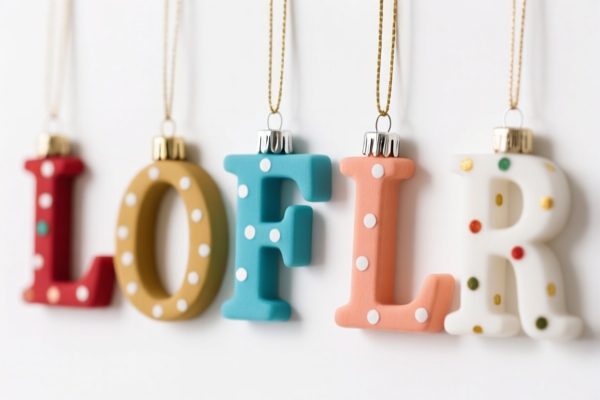
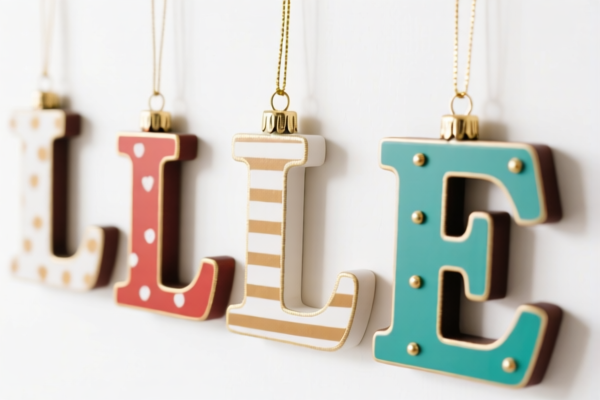
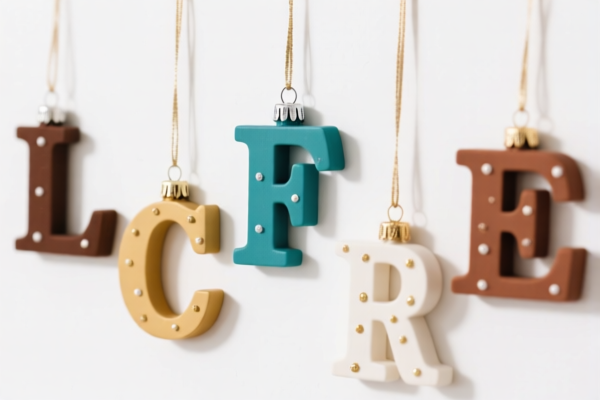
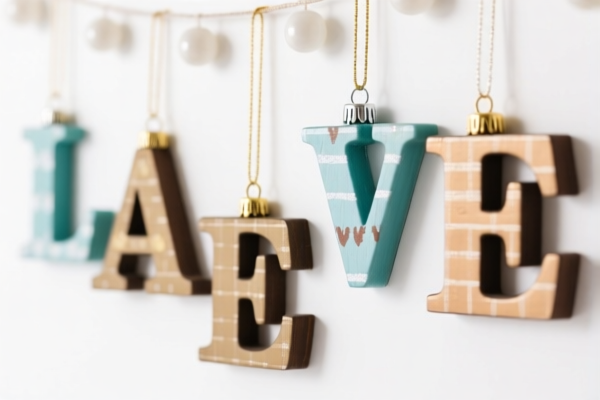
AI Analysis
🎄 Letter Ornament (Decorative Letters)
🌐 HS Code Reference & Customs Clearance Guide | 2026 Latest Tariff Analysis | Professional Strategy
📌 I. Product Definition & Classification: What Exactly Is a "Letter Ornament"?
Letter ornaments are decorative items shaped like alphabet letters, commonly used for holidays (Christmas, Hanukkah), weddings, home decor, or corporate branding. In international trade, their classification depends entirely on the manufacturing material. Misidentifying the material leads to massive tariff discrepancies (e.g., 15.3% vs. 87.9%).
Key Material Categories: 1. Wood/Bamboo: Natural materials, carved or laser-cut. 2. Plastic/Resin: Molded, painted, or 3D-printed decorative items. 3. Metal (Steel/Iron/Aluminum): Cast, cut, or fabricated metal letters.
⚠️ Critical Distinction Point:
- If made of Wood →归入 Chapter 44 (Wood and articles of wood);
- If made of Plastic → 归入 Chapter 39 (Plastics and articles thereof);
- If made of Metal → 归入 Chapter 73 (Articles of iron or steel).
📦 二、HS Code Classification Details (2026 Latest Tariff Authority Comparison)
Based on the provided data, here are the four possible HS Codes for "Letter Ornament" depending on the material:
| HS Code | Product Summary | Material Inference | Applicable Scenario |
|---|---|---|---|
4421.91.98.80 |
Letter ornaments, inferred as wooden or bamboo decorative ornaments | 🪵 Wood/Bamboo | Christmas tree decorations, wooden wall signs, carved letter displays |
4421.99.98.80 |
Letter ornaments, inferred as other wood products | 🪵 Wood (Other) | Unspecified wood items, composite wood, or non-structural wood decorations |
7326.19.00.80 |
Letter ornaments, inferred as steel decorative ornaments | ⚙️ Steel/Iron | Industrial-chic decor, metal wire letters, steel wall art |
3926.40.00.90 |
Letter ornaments, inferred as plastic or other material decorations | 🧪 Plastic/Resin | Plastic alphabet blocks, resin wall letters, generic plastic decor |
3926.40.00.10 |
Letter ornaments, inferred as bows and similar plastic articles | 🎀 Plastic (Bows/Accessories) | Note: This code specifically mentions "bows," but data groups it with plastic ornaments. Use only if shaped like bows/ribbons. |
🔍 Key Reminder:
- Wood items (4421...) are subject to 38.3% total tax due to Section 301 & 122 tariffs.
- Plastic items (3926...) have the lowest burden at 15.3% (no Section 301 tariff, only 122 tariff).
- Steel items (7326...) face the highest burden at 87.9% due to additional steel/aluminum tariffs.
- Never mix materials in one shipment without clear separation; customs will classify the highest-risk item.
💰 三、2026 Latest Tariff Rate Breakdown (Including Surtaxes & Policy Add-ons)
✅ Applicable Country: United States (US)
✅ Origin: China (CN)
✅ Effective Date: Current rates apply as of 2026 data provided.
🎯 1. 4421.91.98.80 & 4421.99.98.80 —— Wooden/Bamboo Letter Ornaments
| Item | Content |
|---|---|
| Base Tariff Rate | 3.3% (Ad Valorem) |
| Section 301 Surtax | +25.0% (Additional tariff on Chinese goods) |
| Section 122 Tariff | +10.0% (Specific tariff on certain consumer goods) |
| Total Tax Rate | 38.3% |
| Tax Calculation | CIF Value × 38.3% |
| De Minimis Exemption | ❌ Not Applicable (High tariff rates disqualify from $800 exemption in most practical cases if audited) |
| Legal Basis Path | HTSUS:4421.91.98.80 → USITC Footnote: Section 301 → Section 122 Order |
📌 Explanation:
- Wood products from China are heavily impacted by Section 301 (25%) and Section 122 (10%).
- Total 38.3% is significant. Margins must account for this.
- These items are not exempt from additional duties.
🎯 2. 7326.19.00.80 —— Steel/Iron Letter Ornaments
| Item | Content |
|---|---|
| Base Tariff Rate | 2.9% (Ad Valorem) |
| Section 301 Surtax | +25.0% (Additional tariff on Chinese goods) |
| Section 122 Tariff | +10.0% (Specific tariff on certain consumer goods) |
| Steel/Aluminum Surtax | +50.0% (Additional tariff on steel/aluminum products) |
| Total Tax Rate | 87.9% |
| Tax Calculation | CIF Value × 87.9% |
| De Minimis Exemption | ❌ Not Applicable |
| Legal Basis Path | HTSUS:7326.19.00.80 → USITC Footnote: Steel/Aluminum → Section 301 → Section 122 |
📌 Warning:
- This is the most expensive classification.
- The +50% steel tariff is applied on top of the base + Section 301 + Section 122.
- Avoid importing steel letter ornaments from China unless the profit margin is extremely high or alternative origins (e.g., Vietnam, Mexico) are used.
🎯 3. 3926.40.00.90 & 3926.40.00.10 —— Plastic/Resin Letter Ornaments
| Item | Content |
|---|---|
| Base Tariff Rate | 5.3% (Ad Valorem) |
| Section 301 Surtax | 0.0% (Exempt) |
| Section 122 Tariff | +10.0% (Specific tariff on certain consumer goods) |
| Total Tax Rate | 15.3% |
| Tax Calculation | CIF Value × 15.3% |
| De Minimis Exemption | ⚠️ Check Eligibility (While base rate is low, Section 122 may affect de minimis eligibility depending on enforcement; generally safer than wood/metal but still subject to scrutiny) |
| Legal Basis Path | HTSUS:3926.40.00.90 → Section 122 Order |
📌 Advantage:
- Plastic ornaments benefit from 0% Section 301 tariff.
- Only the 10% Section 122 tariff applies, making it the most cost-effective material for US import.
- Recommendation: If product design allows, consider switching from wood/steel to high-quality plastic/resin to save ~23% (vs. wood) or ~72% (vs. steel) in taxes.
🛠️ 四、Customs Clearance Practical Advice (实战避坑指南)
✅ 1. Documentation Checklist (Essential for Smooth Clearance)
| Document | Required | Notes |
|---|---|---|
| ✅ Product Description | ✔️ | Must specify material: "Wooden," "Plastic," or "Steel." Vague terms like "Decorative Item" will cause delays. |
| ✅ Material Declaration | ✔️ | Explicitly state: "100% MDF Wood," "PVC Plastic," or "Carbon Steel." |
| ✅ Product Photos | ✔️ | Show texture and finish. Wood grain vs. plastic mold lines are visually distinguishable to customs. |
| ✅ Certificate of Origin | ✔️ | If shipped from non-China countries (e.g., Vietnam), claim preferential treatment if applicable. |
| ✅ Commercial Invoice | ✔️ | Clearly list HS Code and tax rate justification. |
| ✅ Packing List | ✔️ | Separate different materials in different cartons if possible to avoid classification confusion. |
✅ 2. Classification Strategy (Key Rules)
🔥 "Material Defines Code, Code Defines Tax!"
| Scenario | Correct HS Code | Risk if Wrong |
|---|---|---|
| Wooden Letters | 4421.91.98.80 |
If declared as Plastic → Underpayment of tax + penalties |
| Plastic Letters | 3926.40.00.90 |
If declared as Wood → Overpayment (38.3% vs 15.3%) |
| Steel Letters | 7326.19.00.80 |
If declared as Plastic → Huge penalty (87.9% vs 15.3%) |
| Mixed Materials | Split shipment | If mixed in one box → Customs may classify entire box as Highest Tax Rate Item |
📌 Pro Tip:
- Do not mix wood, plastic, and steel in the same carton. Label each box clearly.
- If your product is "Wood core with plastic coating," it may still be classified as wood. Check technical specs.
✅ 3. Special Considerations
| Situation | Recommendation |
|---|---|
| Origin Shift | If steel/wood tariffs are too high, consider sourcing from Vietnam, Thailand, or Mexico to avoid Section 301 and Steel tariffs. |
| Section 122 Exemptions | Monitor USTR updates. Some consumer goods may get temporary exemptions from the 10% Section 122 tariff. |
| De Minimis ($800) | While plastic items have lower taxes, Section 122 may still apply. Check if your shipment qualifies for de minimis entry; if audited, back-taxes + interest will be due. |
| Labeling | Ensure "Made in China" is clearly marked on products/packaging. Mislabeling origin leads to fraud charges. |
🌍 五、Global Market Comparison (2026 Data)
| Country/Region | Recommended HS Code (Plastic) | Tariff (China Origin) | Notes |
|---|---|---|---|
| 🇺🇸 USA | 3926.40.00.90 |
15.3% | Best option for plastic. Steel is 87.9%! |
| 🇨🇳 China | 3926.40.00.90 |
5.3% | No additional surtaxes for domestic trade. |
| 🇪🇺 EU | 3926.40.00.90 |
6.5% | No Section 301/122 equivalent. |
| 🇬🇧 UK | 3926.40.00.90 |
6.5% | Post-Brexit tariff structure. |
📌 Conclusion for US Market:
- Plastic is King: Lowest tax burden (15.3%).
- Steel is Enemy: Highest tax burden (87.9%).
- Wood is Middle: Moderate-high burden (38.3%).
📌 六、Common Mistakes & Pitfalls (Blood & Tears Lessons)
❌ Mistake 1: Declaring Steel Letters as "Decorative Items" without specifying material.
👉 Consequence: Customs assigns highest duty rate or issues a 201 Strike (repeated misclassification).
❌ Mistake 2: Mixing Wood and Plastic letters in one shipment.
👉 Consequence: Customs may classify the entire shipment as the higher-taxed item (Wood: 38.3%) instead of separating them.
❌ Mistake 3: Ignoring Section 122 Tariff for plastic items.
👉 Consequence: Assuming 0% tax because Section 301 is waived. Section 122 still applies (+10%).
❌ Mistake 4: Using "Bow" code (3926.40.00.10) for all plastic letters.
👉 Consequence: 3926.40.00.10 is for "Bows and Similar Articles." Most letters fall under 3926.40.00.90. Misclassification may trigger audit.
✅ Correct Approach:
"Plastic Letter Ornament, PVC Material, for Home Decor, Model XYZ, Made in China"
🎯 七、Conclusion: Smart Classification Saves Money!
🎯 Remember the Rule of Thumb:
🔹 "Plastic = 15.3% (Best)
🔹 "Wood = 38.3% (Average)
🔹 "Steel = 87.9% (Avoid!)
🔹 "Material is Everything!"
📌 Actionable Tip:
If you are importing Steel Letters from China, strongly consider:
1. Sourcing from Vietnam/Mexico to avoid Steel/Section 301 tariffs.
2. Switching design to Plastic/Resin to reduce tax from 87.9% to 15.3%.
3. Applying for Advance Ruling from CBP to confirm HS Code before shipping.
📣 Immediate Action:
📞 Verify material composition with supplier.
📄 Choose correct HS Code based on 100% material content.
🚀 Save up to 72% in taxes by optimizing material choice!
✨ Professional clearance starts with precise classification!
💼 Every percentage point counts in your profit margin!
Customer Reviews
About HS Code Classification
The Harmonized System (HS) is an internationally standardized nomenclature developed by the World Customs Organization (WCO) to classify traded products. Over 200 countries use the HS system as the basis for customs tariffs, trade statistics, and import/export regulations.
Each HS code follows a hierarchical structure:
- Chapter (2 digits) — Broad category of goods (e.g., Chapter 84: Machinery and Mechanical Appliances)
- Heading (4 digits) — More specific grouping within the chapter
- Subheading (6 digits) — Internationally standardized breakdown, used by all WCO member countries
- National subdivisions (8-10 digits) — Country-specific extensions for further classification, such as US HTSUS 10-digit codes
Correct HS code classification is essential for smooth customs clearance, accurate duty payment, and compliance with trade regulations. Misclassification can lead to customs delays, overpayment of duties, or penalties.
When importing from CN to US, the applicable tariff rates may include:
- Most-Favored-Nation (MFN) rate — The standard duty rate applied to WTO members
- General rate — Applied to countries without trade agreements
- Trade remedy duties — Additional tariffs such as Section 301 (anti-dumping), Section 232 (national security), or countervailing duties
The information provided on this page is for reference purposes only. For official classification, please consult with your local customs authority or a licensed customs broker.