Level
CN → US| HS Code | Tariff Rate | Origin | Destination | Doc |
|---|---|---|---|---|
| 9031499000 | 35.0% | CN | US | Official Doc |
| 9031808085 | 35.0% | CN | US | Official Doc |
| 9015304000 | 35.0% | CN | US | Official Doc |
| 9015308000 | 37.8% | CN | US | Official Doc |
| 8205595560 | 40.3% | CN | US | Official Doc |
| 8205598000 | 38.7% | CN | US | Official Doc |
Product Images
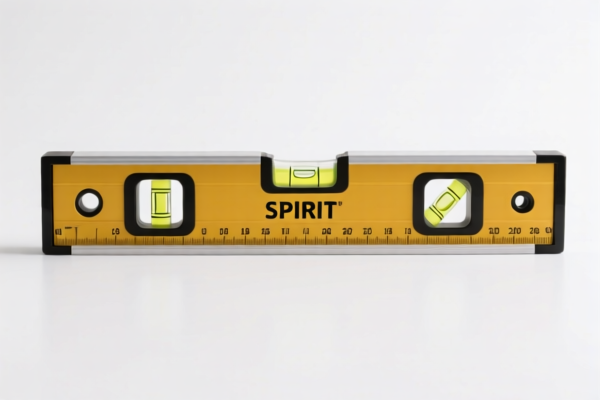
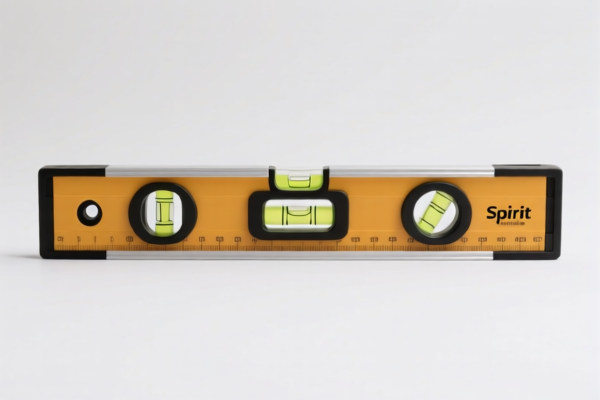
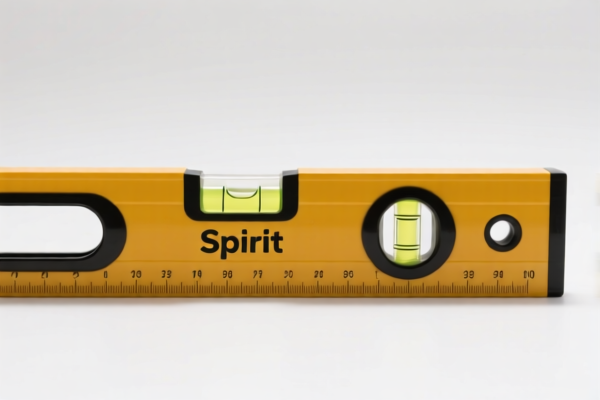
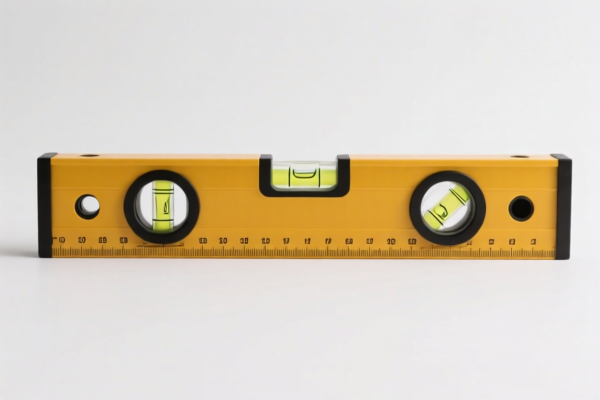
AI Analysis
📐 Level (Spirit Levels / Hydrostatic Levels)
🌐 HS Code Reference & Customs Clearance Guide | 2026 Latest Tariff Analysis | Professional Customs Strategy
📌 I. Product Definition & Classification: Do You Really Understand "Levels"?
Levels are precision instruments used to determine horizontal or vertical planes. In international trade, they are generally categorized under Chapter 90 (Optical, Photographic, Cinematographic, Measuring, Checking, Precision, Medical or Surgical Instruments). However, depending on the structure, material, and specific function, they can fall into different subheadings, leading to significantly different tariff rates.
Key Distinctions:
- Optical/Measurement Instruments: High-precision levels (e.g., hydrostatic levels, laser levels with electronic sensors) are classified as measuring/checking instruments.
- Hand Tools: Simple, non-optical, manual spirit levels (often made of metal or plastic) may be classified as hand tools if they lack complex optical or electronic components.
⚠️ Critical Classification Point:
- If the device uses optical lenses, lasers, or electronic sensors to measure levels → It is a Measuring Instrument (Chapter 90).
- If it is a simple metal/plastic tube with a bubble vial, considered a manual tool → It might be classified as a Hand Tool (Chapter 82), though this is rare for precision levels.
📦 II. HS Code Classification Details (2026 Latest Tariff Authority Comparison)
Based on the provided data, here are the possible HS Code classifications for "Levels" and the rationale for each:
| HS Code | Product Description | Rationale for Classification | Tax Rate |
|---|---|---|---|
9031.49.90.00 |
Other optical instruments & devices | The level is considered an optical instrument. No material conflict. It fits the "other optical instruments" description. | 35.0% |
9031.80.80.85 |
Other measuring/checking instruments | The level is used to measure height or horizontality. It falls under "other measuring or checking instruments/machines." | 35.0% |
9015.30.40.00 |
Leveling instruments (Theodolites/Levels) | The level's function is identical to "Leveling Instruments" (such as surveyor's levels) defined in this heading. | 35.0% |
9015.30.80.00 |
Other leveling instruments | Similar to above, but may apply to different types of leveling instruments. No material or form conflict. | 37.8% |
8205.59.55.60 |
Other hand tools (non-bladed) | The level is made of metal and used as a manual hand tool. It fits the logic of "other hand tools" if classified as a tool rather than an instrument. | 40.3% |
🔍 Key Insight:
- Most precision levels are classified under HS Code 9015 or 9031 because they are measuring instruments.
- Classifying a level as a hand tool (8205) is less common and usually applies only to very simple, non-precision manual levels.
- The difference between 35.0% and 40.3% is significant. Misclassification can lead to underpayment or overpayment of duties.
💰 III. 2026 Latest Tariff Rate Breakdown (Including Surtaxes & Policy Add-ons)
✅ Applicable Country: United States (US)
✅ Country of Origin: China (CN)
✅ Effective Date: From November 10, 2025 (including subsequent imports)
🎯 1. HS Code 9031.49.90.00 & 9031.80.80.85 & 9015.30.40.00 — Optical/Measuring Instruments
| Item | Content |
|---|---|
| Basic Tariff | 0.0% (ad valorem) |
| USITC Surtax (Section 301) | +25.0% (Applied to Chinese-origin goods) |
| IEEPA Surtax (Section 1223) | +10.0% (Specific 1223 Clause Tariff for certain Chinese goods) |
| Total Tariff Rate | 35.0% |
| Tax Calculation | CIF Value × 35% |
| De Minimis Eligibility | ❌ Not Eligible (Deny De Minimis) |
| Legal Basis Path | Base Tariff: 0% → Section 301: 25% → IEEPA 1223: 10% |
📌 Explanation:
- The 0% basic tariff reflects the standard MFN (Most Favored Nation) rate for many measuring instruments.
- The +25% surtax is due to Section 301 tariffs on Chinese goods.
- The +10% surtax is an additional "1223 Clause" tariff, likely referencing specific executive orders or trade regulations targeting certain categories of Chinese goods.
- Total: 35%. This is a high tariff category. Importers must account for this in their cost structure.
🎯 2. HS Code 9015.30.80.00 — Other Leveling Instruments
| Item | Content |
|---|---|
| Basic Tariff | 2.8% (ad valorem) |
| USITC Surtax (Section 301) | +25.0% |
| IEEPA Surtax (Section 1223) | +10.0% |
| Total Tariff Rate | 37.8% |
| Tax Calculation | CIF Value × 37.8% |
| De Minimis Eligibility | ❌ Not Eligible (Deny De Minimis) |
| Legal Basis Path | Base Tariff: 2.8% → Section 301: 25% → IEEPA 1223: 10% |
📌 Explanation:
- The 2.8% basic tariff is slightly higher than 0%, leading to a higher total rate of 37.8%.
- This highlights the importance of precise classification. Even a small difference in the base rate (2.8% vs. 0%) adds significant cost when combined with surtaxes.
🎯 3. HS Code 8205.59.55.60 — Other Hand Tools
| Item | Content |
|---|---|
| Basic Tariff | 5.3% (ad valorem) |
| USITC Surtax (Section 301) | +25.0% |
| IEEPA Surtax (Section 1223) | +10.0% |
| Total Tariff Rate | 40.3% |
| Tax Calculation | CIF Value × 40.3% |
| De Minimis Eligibility | ❌ Not Eligible (Deny De Minimis) |
| Legal Basis Path | Base Tariff: 5.3% → Section 301: 25% → IEEPA 1223: 10% |
📌 Explanation:
- If the level is incorrectly or alternatively classified as a hand tool, the base rate is 5.3%.
- This results in the highest total tariff of 40.3%.
- Recommendation: Avoid this classification unless the product is clearly a simple manual tool without optical/measuring instrument characteristics.
🛠️ IV. Customs Clearance Practical Advice (Real-World Pitfall Avoidance Guide)
✅ 1. Documentation Checklist (Mandatory)
| Document | Required | Explanation |
|---|---|---|
| ✅ Product Specification Sheet | ✔️ | Must include: Type (spirit/laser/hydrostatic), accuracy, material, usage. |
| ✅ Technical Diagram/Photos | ✔️ | Show internal components. If it has lenses, lasers, or electronic sensors, it’s an instrument, not a hand tool. |
| ✅ Commercial Invoice | ✔️ | Clearly state: "Precision Leveling Instrument" or "Hand Level Tool" based on classification. |
| ✅ Packing List | ✔️ | Detail items. Avoid splitting one product into multiple parts to misclassify. |
| ✅ Certificate of Origin (CO) | ✔️ | Essential for proving Chinese origin and applying surtaxes. |
| ✅ Third-Party Test Report | ✔️ | If applicable (e.g., FCC for electronic lasers). |
✅ 2. Declaration Tips (Key Mantras)
🔥 "Instrument vs. Tool: Check Components, Not Just Name!"
| Scenario | Correct Declaration | Wrong Practice |
|---|---|---|
| Laser Level / Digital Level | 9015.30.40.00 or 9031.80.80.85 |
Declaring as "Hand Tool" → 40.3% |
| Simple Spirit Level (Metal/Plastic) | Consider 9015.30.40.00 (Instrument) |
Declaring as 8205.59.55.60 → 40.3% (Higher Tax) |
| Hydrostatic Level System | 9015.30.40.00 (Measurement) |
Misclassifying as general tool |
📌 Note:
- Even simple spirit levels are often classified as measuring instruments (9015/9031) because their primary function is measurement, not just manual operation.
- Classifying as a hand tool (8205) is risky and usually results in a higher tax rate (40.3%).
✅ 3. Special Cases
| Case | Handling Advice |
|---|---|
| OEM Custom Levels | Provide client orders + design specs. Ensure description matches the actual function. |
| Levels with Digital Display | Clearly classified as electronic measuring instruments (9031/9015). Do not declare as hand tools. |
| Set with Accessories | Declare the level as the main item. Accessories should be included in the same shipment if functionally related. |
🌍 V. Global Market Comparison (2026 Latest)
| Country/Region | Recommended HS Code | Tariff Rate (China Origin) | Notes |
|---|---|---|---|
| 🇺🇸 USA | 9015.30.40.00 / 9031.80.80.85 |
35.0% | Base 0% + 25% (301) + 10% (1223) |
| 🇺🇸 USA | 9015.30.80.00 |
37.8% | Base 2.8% + 25% (301) + 10% (1223) |
| 🇺🇸 USA | 8205.59.55.60 |
40.3% | Base 5.3% + 25% (301) + 10% (1223) |
| 🇨🇳 China | 9015.30.40.00 |
~10-15% (Import Duty) | No Section 301/IEEPA surtaxes |
| 🇪🇺 EU | 9015.80.80 |
0-4.5% | Varies by member state. No major surtaxes. |
| 🇬🇧 UK | 9015.80.80 |
0-4.5% | Post-Brexit tariffs. |
📌 Conclusion:
- The USA imposes the highest tariffs due to Section 301 and IEEPA surtaxes.
- Precise classification is critical. A shift from9031(35%) to8205(40.3%) increases costs by 5.3%.
- For non-US markets, tariffs are generally lower, but local certification (CE, UKCA) is required.
📌 VI. Common Mistakes & Pitfall Avoidance (Lessons Learned)
❌ Mistake 1: Declaring a Laser Level as a "Hand Tool"
👉 Consequence: Tax rate jumps from 35% to 40.3%. Plus, customs may question the classification.
❌ Mistake 2: Ignoring the 1223 Clause
👉 Consequence: Underpayment of 10% surtax. Customs will demand back payment + penalties.
❌ Mistake 3: Splitting a Level + Tripod + Case into separate shipments
👉 Consequence: Complex clearance, potential rejection, or higher handling fees. Declare as a set if functionally related.
❌ Mistake 4: Using vague descriptions like "Construction Tool"
👉 Consequence: Customs may reclassify arbitrarily, leading to delays and higher duties.
✅ Correct Approach:
"Digital Laser Level, Precision ±0.1mm, With Tripod, Model XYZ, FCC Certified"
🎯 VII. Conclusion: Professional Declaration, Save Time, Reduce Costs!
🎯 Remember the Mantra:
🔹 "Instrument or Tool? Check the Function!"
🔹 "0% Base + 25% + 10% = 35%. Don’t Pay 40.3%!"
🔹 "HS Code Determines Tax. 5.3% Difference Matters!"
📌 Tip:
If your levels are originating from Vietnam, Mexico, Thailand, or Malaysia, you may qualify for IEEPA Exemptions or Section 301 exclusions, potentially reducing taxes to 0-5%.
Recommend Advance Ruling (Pre-classification) from US CBP to avoid clearance risks.
📣 Immediate Action:
📞 Contact a professional customs broker + Provide product photos + Apply for HS Code Advance Ruling
🚀 Let your levels clear customs smoothly, efficiently, and profitably!
✨ Professional Customs Clearance Starts with Accurate Classification!
💼 Every cent of cost deserves precise calculation!
Customer Reviews
About HS Code Classification
The Harmonized System (HS) is an internationally standardized nomenclature developed by the World Customs Organization (WCO) to classify traded products. Over 200 countries use the HS system as the basis for customs tariffs, trade statistics, and import/export regulations.
Each HS code follows a hierarchical structure:
- Chapter (2 digits) — Broad category of goods (e.g., Chapter 84: Machinery and Mechanical Appliances)
- Heading (4 digits) — More specific grouping within the chapter
- Subheading (6 digits) — Internationally standardized breakdown, used by all WCO member countries
- National subdivisions (8-10 digits) — Country-specific extensions for further classification, such as US HTSUS 10-digit codes
Correct HS code classification is essential for smooth customs clearance, accurate duty payment, and compliance with trade regulations. Misclassification can lead to customs delays, overpayment of duties, or penalties.
When importing from CN to US, the applicable tariff rates may include:
- Most-Favored-Nation (MFN) rate — The standard duty rate applied to WTO members
- General rate — Applied to countries without trade agreements
- Trade remedy duties — Additional tariffs such as Section 301 (anti-dumping), Section 232 (national security), or countervailing duties
The information provided on this page is for reference purposes only. For official classification, please consult with your local customs authority or a licensed customs broker.