Lidded Toast Box
CN → US| HS Code | Tariff Rate | Origin | Destination | Doc |
|---|---|---|---|---|
| 3924104000 | 13.4% | CN | US | Official Doc |
| 3924103000 | 22.8% | CN | US | Official Doc |
| 6911104100 | 16.3% | CN | US | Official Doc |
| 6911108010 | 38.3% | CN | US | Official Doc |
| 7310290065 | 85.0% | CN | US | Official Doc |
| 7310210075 | 85.0% | CN | US | Official Doc |
Product Images
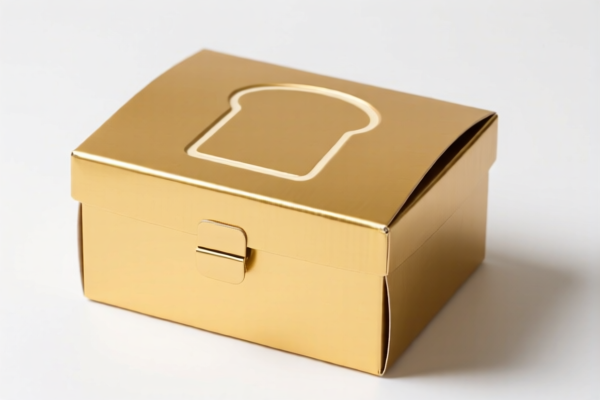
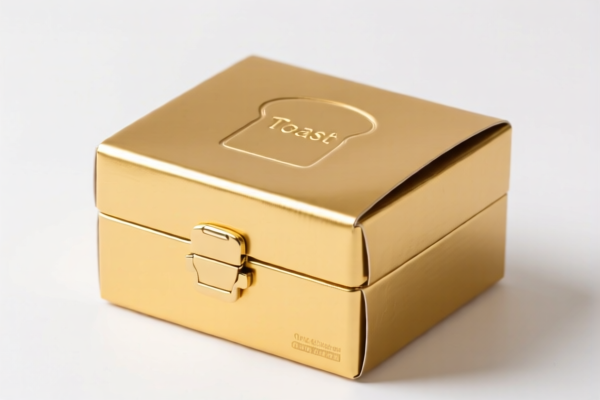
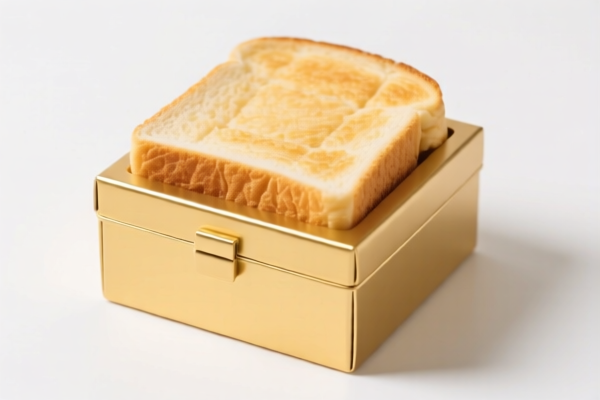
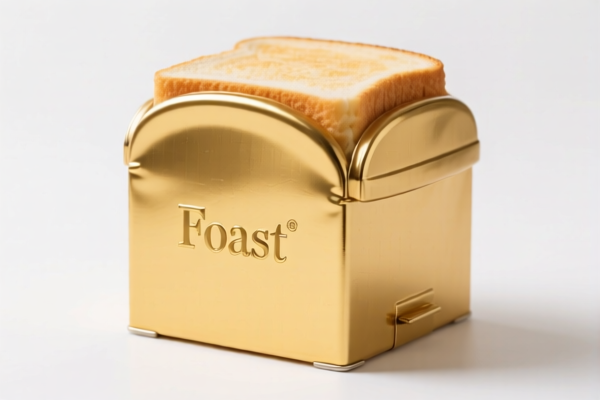
AI Analysis
🍞 Lidded Toast Box (Tableware, Kitchenware, of Plastics or Porcelain)
🌐 HS Code Reference & Customs Clearance Guide | 2026 Latest Tariff Analysis | Professional Clearance Strategy
📌 I. Product Definition & Classification: What Exactly is a "Lidded Toast Box"?
A Lidded Toast Box is typically a specialized container designed to hold toast slices, often kept warm or presented aesthetically. In international trade, the classification depends heavily on two factors: 1. Material: Plastic vs. Porcelain/China. 2. Specific Function/Design: Is it a generic tray, a stein, or a general household article?
⚠️ Critical Distinction: - If the item is made of Plastics and serves as a tray or general tableware → It falls under Chapter 39. - If the item is made of Porcelain/China and has specific decorative or functional shapes (like a stein or tiered server) → It falls under Chapter 69. - Misclassification Risk: Confusing "Plastic" with "Porcelain" or misidentifying a "Tray" as "Other" can lead to significant tariff differences due to Section 301 duties.
📦 II. HS Code Classification Details (2026 Latest Tariff Authority Comparison)
Based on the provided data, here are the precise HS Codes for Lidded Toast Boxes depending on material and design:
| HS Code | Product Description | Material | Specific Feature |
|---|---|---|---|
3924.10.40.00 |
Tableware and kitchenware | Plastics | Other (Generic plastic toast box/container) |
3924.10.30.00 |
Tableware and kitchenware | Plastics | Trays (If designed specifically as a serving tray) |
6911.10.41.00 |
Tableware and kitchenware | Porcelain/China | Steins with Pewter Lids or Specialized Decorative Sets (e.g., candy boxes, tiered servers) |
6911.10.80.10 |
Tableware and kitchenware | Porcelain/China | Other (Suitable for food/drink contact) |
🔍 Key Clarification: - Plastic Toast Box: Most common consumer goods fall under
3924.10.40.00("Other") unless explicitly designed as a flat "Tray" (3924.10.30.00). - Porcelain Toast Box: Rare. If it resembles a "Stein" with a pewter lid or is part of a decorative set (like a tiered server), it may qualify for6911.10.41.00. Otherwise, it is6911.10.80.10. - Avoid Confusion: Do not classify plastic items as porcelain (69xx) or vice versa. The material determines the chapter.
💰 III. 2026 Latest Tariff Rate Breakdown (Including Additional Duties)
✅ Applicable Country: United States (US)
✅ Origin: China (CN)
✅ Effective Date: 2025–2026 (Current Trade War Era)
🎯 1. 3924.10.40.00 – Tableware of Plastics (Other)
| Item | Content |
|---|---|
| Base Duty Rate | 3.4% (Ad Valorem) |
| Section 301 Additional Duty | 0.0% (No additional 25% or 7.5% for this specific subheading in the provided data) |
| Total Tax Rate | 3.4% |
| Calculation | CIF Value × 3.4% |
| De Minimis Exemption | ❌ Not Applicable (De Minimis usually applies to additional duties, not base duties, but check specific carrier rules) |
| Legal Basis | USHTS 3924.10.40.00 |
📌 Explanation: - This is the most likely classification for a standard plastic lidded toast box. - The tariff is relatively low (3.4%) with no additional Section 301 tariffs specified in the data for this code. - Benefit: Cost-effective for mass-market plastic tableware.
🎯 2. 3924.10.30.00 – Tableware of Plastics (Trays)
| Item | Content |
|---|---|
| Base Duty Rate | 5.3% |
| Section 301 Additional Duty | 7.5% |
| Total Tax Rate | 12.8% |
| Calculation | CIF Value × 12.8% |
| Legal Basis | USHTS 3924.10.30.00 |
📌 Explanation: - If your "Lidded Toast Box" is classified as a "Tray" (e.g., a rectangular plastic tray with a lid for serving toast), it falls here. - Warning: This incurs a 7.5% additional duty under Section 301, bringing the total to 12.8%. - Strategy: If the product is more of a "container" than a "tray," argue for
3924.10.40.00to save 9.4% in taxes.
🎯 3. 6911.10.41.00 – Porcelain Tableware (Steins/Specialized)
| Item | Content |
|---|---|
| Base Duty Rate | 6.3% |
| Section 301 Additional Duty | 0.0% |
| Total Tax Rate | 6.3% |
| Legal Basis | USHTS 6911.10.41.00 |
📌 Explanation: - Only applicable if the toast box is Porcelain AND qualifies as a "Stein with permanently attached pewter lids," "Candy Box," "Tiered Server," etc. - If your product is a simple porcelain box without these specific features, this code may be rejected by Customs.
🎯 4. 6911.10.80.10 – Porcelain Tableware (Other, Food Contact)
| Item | Content |
|---|---|
| Base Duty Rate | 20.8% |
| Section 301 Additional Duty | 7.5% |
| Total Tax Rate | 28.3% |
| Legal Basis | USHTS 6911.10.80.10 |
📌 Explanation: - This is the "catch-all" for porcelain tableware that doesn't fit specific descriptive codes (like steins). - High Cost: At 28.3%, this is the most expensive option. - Recommendation: Avoid this code if your product can be classified under
6911.10.41.00(if it has special features) or if you can switch to plastic (3924.10.40.00).
🛠️ IV. Customs Clearance Practical Advice (Real-World Pitfall Guide)
✅ 1. Documentation Checklist (Non-Negotiable)
| Document | Required | Notes |
|---|---|---|
| ✅ Commercial Invoice | ✔️ | Clearly state "Plastic Tableware" or "Porcelain Tableware." Do NOT use vague terms like "Kitchen Storage." |
| ✅ Product Photos | ✔️ | Show the latch/lid mechanism, interior, and material texture. Crucial for distinguishing "Tray" vs. "Container." |
| ✅ Material Declaration | ✔️ | Explicitly state: "100% Polypropylene (PP)" or "Bone China." |
| ✅ Design Description | ✔️ | If porcelain, describe if it has "pewter lid," "tiered structure," etc., to justify 6911.10.41.00. |
✅ 2. Classification Strategy (Key Mnemonic)
🔥 "Plastic Base, Tray Extra; Porcelain Special, Low Tax; Porcelain Generic, High Tax!"
| Scenario | Recommended HS Code | Total Tax | Why? |
|---|---|---|---|
| Plastic Box, Generic | 3924.10.40.00 |
3.4% | Lowest risk, lowest tax. Argue it's a "container," not a "tray." |
| Plastic Box, Tray Shape | 3924.10.30.00 |
12.8% | If it's flat and large, Customs may insist it's a tray. |
| Porcelain, Special Design | 6911.10.41.00 |
6.3% | Only if it fits "Stein," "Tiered Server," etc. Must provide proof. |
| Porcelain, Generic | 6911.10.80.10 |
28.3% | Avoid unless no other option exists. Very expensive. |
✅ 3. Special Handling Tips
| Situation | Advice |
|---|---|
| OEM Custom Orders | Ensure the design matches the HS code description. If ordering "Porcelain Toast Box" but it’s just a simple bowl, do NOT use 6911.10.41.00. |
| Mixed Materials | If the lid is pewter/metal and the box is porcelain, still classify as Porcelain (Chapter 69) because the porcelain is the principal material. |
| Plastic vs. Porcelain | Plastic is significantly cheaper in tariffs (3.4% vs 28.3%). Consider material substitution if cost is a driver. |
| "Tray" Definition | A "Tray" usually implies a flat, open or covered surface for serving. A "Box" with depth and a lid is more likely "Other." Use photos to prove depth. |
🌍 V. Global Market Comparison (2026 Latest)
| Country/Region | Recommended HS Code | Tariff (China Origin) | Certification Requirements | Notes |
|---|---|---|---|---|
| 🇺🇸 USA | 3924.10.40.00 (Plastic) |
3.4% | FDA Compliance (Food Contact) | Best for plastic. High risk for misclassification. |
| 🇺🇸 USA | 6911.10.80.10 (Porcelain) |
28.3% | FDA Compliance | Avoid unless necessary. |
| 🇨🇳 China | 3924.10.40.00 |
5.0% | GB Standards | Lower base rate, but US tariffs dominate export cost. |
| 🇪🇺 EU | 3924.10.40.00 |
6.5% | LFGB / FDA | No Section 301 equivalent, but higher base duty than US. |
| 🇯🇵 Japan | 3924.10.40.00 |
0.0% | JIS Standards | Zero duty for plastic tableware. |
📌 Conclusion: - US Market: Plastic (
3924.10.40.00) is highly competitive at 3.4%. Porcelain is penalized heavily. - Global: Plastic is generally cheaper in duties than porcelain across most markets.
📌 VI. Common Mistakes & Pitfalls (Lessons Learned)
❌ Mistake 1: Classifying a Plastic toast box as Porcelain (6911.10.80.10)
👉 Consequence: Tariff jumps from 3.4% to 28.3%. Huge cost increase!
❌ Mistake 2: Classifying a Generic Plastic Box as a Tray (3924.10.30.00)
👉 Consequence: Additional 7.5% Section 301 duty. Pay 12.8% instead of 3.4%.
❌ Mistake 3: Claiming Porcelain is a "Stein" or "Tiered Server" without proof
👉 Consequence: Customs inspection, seizure, or reclassification to 6911.10.80.10 (28.3%).
❌ Mistake 4: Vague Description "Kitchen Storage"
👉 Consequence: Customs may classify under "Other Household Articles" with higher duties or request extensive documentation.
✅ Correct Approach:
"Plastic Lidded Toast Container, 100% PP, Food Grade, Model TX-100, FDA Compliant"
🎯 VII. Conclusion: Professional Classification, Cost Saving, Efficiency!
🎯 Remember the Mnemonic:
🔹 "Plastic Box, Low Tax (3.4%); Plastic Tray, Pay Extra (12.8%); Porcelain Special, Maybe Low (6.3%); Porcelain Generic, High Cost (28.3%)."
🔹 "HS Code Determines Life, Tax Rate Differs 25 Points, One Mistake in Declaration, Thousands Lost!"
📌 Pro Tip:
If your product is Plastic, stick to 3924.10.40.00. It is the safest and cheapest option.
If your product is Porcelain, only use 6911.10.41.00 if it strictly meets the "Stein/Tiered Server" description. Otherwise, consider switching to plastic to save ~25% in tariffs.
📣 Immediate Action:
📞 Consult a Professional Customs Broker + Provide Product Photos + Request Advance Ruling if value is high. 🚀 Let your Lidded Toast Box Clear Customs Smoothly, Efficiently, and Profitably!
✨ Professional Clearance Starts with Precise Classification!
💼 Every Cent of Cost, Worth Being Precisely Calculated!
Customer Reviews
About HS Code Classification
The Harmonized System (HS) is an internationally standardized nomenclature developed by the World Customs Organization (WCO) to classify traded products. Over 200 countries use the HS system as the basis for customs tariffs, trade statistics, and import/export regulations.
Each HS code follows a hierarchical structure:
- Chapter (2 digits) — Broad category of goods (e.g., Chapter 84: Machinery and Mechanical Appliances)
- Heading (4 digits) — More specific grouping within the chapter
- Subheading (6 digits) — Internationally standardized breakdown, used by all WCO member countries
- National subdivisions (8-10 digits) — Country-specific extensions for further classification, such as US HTSUS 10-digit codes
Correct HS code classification is essential for smooth customs clearance, accurate duty payment, and compliance with trade regulations. Misclassification can lead to customs delays, overpayment of duties, or penalties.
When importing from CN to US, the applicable tariff rates may include:
- Most-Favored-Nation (MFN) rate — The standard duty rate applied to WTO members
- General rate — Applied to countries without trade agreements
- Trade remedy duties — Additional tariffs such as Section 301 (anti-dumping), Section 232 (national security), or countervailing duties
The information provided on this page is for reference purposes only. For official classification, please consult with your local customs authority or a licensed customs broker.