Lifting, Handling and Loading Machinery
CN → US| HS Code | Tariff Rate | Origin | Destination | Doc |
|---|---|---|---|---|
| 8425390100 | 35.0% | CN | US | Official Doc |
| 8423901000 | 35.0% | CN | US | Official Doc |
| 8431499084 | 85.0% | CN | US | Official Doc |
| 8423909000 | 37.8% | CN | US | Official Doc |
| 8431499090 | 85.0% | CN | US | Official Doc |
Product Images
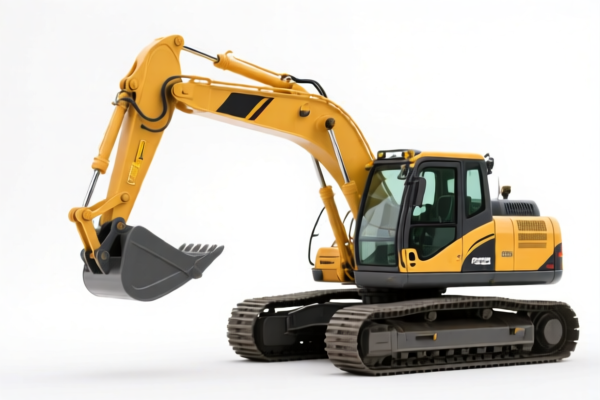
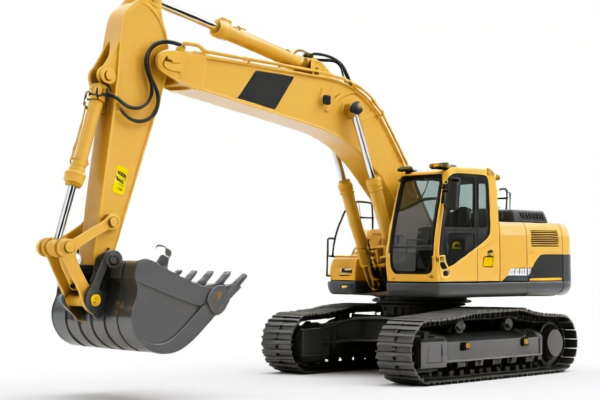
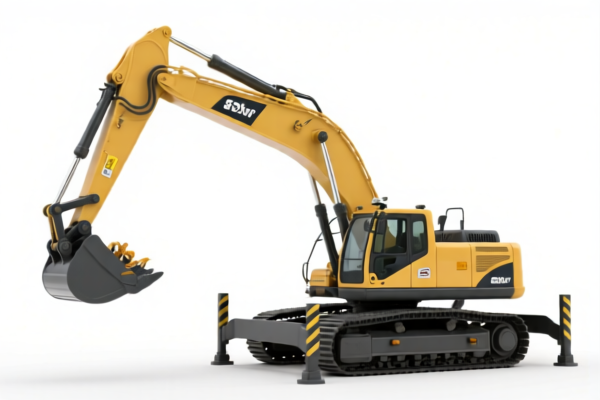
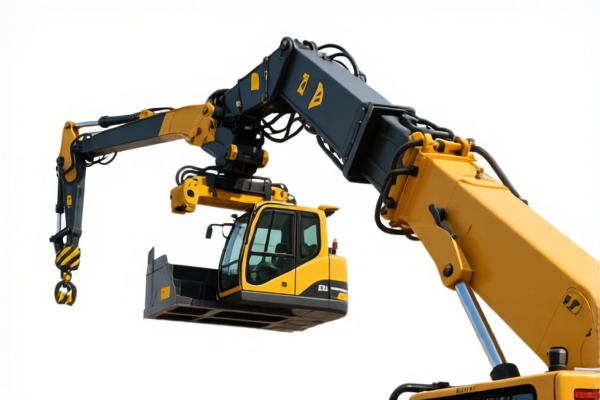
AI Analysis
🏗️ Lifting, Handling, and Loading Machinery: HS Code Classification & Customs Clearance Guide (2026)
🌐 HS Code Reference & Customs Clearance Strategy | 2026 Latest Tariff Analysis
📌 I. Product Definition: What is "Lifting, Handling, and Loading Machinery"?
In international trade, "Lifting, Handling, and Loading Machinery" is a broad category encompassing mechanical devices used to raise, lower, move, or stack goods. To ensure accurate customs clearance, these products are generally categorized into three distinct groups based on their function and component nature:
- Winches & Hoists (Complete Units): Self-contained lifting devices, often used in construction, shipping, or industrial settings.
- Scales & Weighing Apparatus Parts: Components specifically designed for weighing machines (e.g., load cells, platform parts).
- General Machinery Parts (Spares): Generic components for lifting equipment that do not fit specific functional descriptions (fallback categories).
⚠️ Key Distinction Point: - If the item is a complete winch/hoist unit → Classify under Chapter 8425. - If the item is a part for a scale/weighing machine → Classify under Chapter 8423. - If the item is a general spare part for lifting machinery (not specific to scales) → Classify under Chapter 8431.
📦 II. HS Code Classification Details (2026 Latest Tariff Authority Comparison)
| HS Code | Product Description | Applicable Scenario | Material/Feature Constraint |
|---|---|---|---|
8425.39.01.00 |
Parts of Winches and Hoists Belongs to lifting equipment category, matches uses like winches, hoists. |
Complete lifting mechanisms, drum assemblies, gearboxes for winches. | ✅ Functional match for lifting. |
8423.90.10.00 |
Parts of Weighing Machinery Belongs to spare parts category, consistent with mechanical parts use. |
Load cells, balance parts, platforms for industrial scales. | ⚖️ Specific to weighing function. |
8431.49.90.84 |
Other Parts for Lifting Machinery Belongs to spare parts category, matches "other" fallback logic under other headings. |
General structural parts, hooks, cables, brackets for cranes/forklifts. | ⚠️ High Tariff Risk: Steel, Aluminum, Copper products face additional 50% tariff. |
8423.90.90.00 |
Other Parts of Weighing Apparatus Belongs to scale parts category, morphological classification consistent, no material conflict. |
Miscellaneous scale components not covered under 8423.90.10. | ⚖️ Specific to weighing function. |
8431.49.90.90 |
Other Machinery Parts (n.e.s.) Belongs to n.e.s. fallback category for other machinery, consistent with mechanical parts attributes. |
General mechanical components for lifting equipment not specified elsewhere. | ⚠️ High Tariff Risk: Steel, Aluminum, Copper products face additional 50% tariff. |
🔍 Key Reminder: - Lifting Machinery Parts (HS 8431) are heavily scrutinized for material composition. If made of steel, aluminum, or copper, they trigger an additional 50% tariff under Section 122 rules. - Winch/Hoist Parts (HS 8425) and Scale Parts (HS 8423) have different tariff structures and do not automatically incur the material-based surcharge unless specified.
💰 III. 2026 Latest Tariff Rate Details (Including Surcharges & Policy Additions)
✅ Applicable Country: United States (US) ✅ Origin: China (CN) ✅ Effective Date: 2025 November 10 onwards (including subsequent imports)
🎯 1. 8425.39.01.00 —— Parts of Winches and Hoists
| Item | Content |
|---|---|
| Base Tariff | 0.0% (ad valorem) |
| Section 301 Surcharge | +25.0% |
| Section 122 Surcharge | +10.0% |
| Total Tariff Rate | 35.0% |
| Tax Calculation | CIF Value × 35% |
| De Minimis Eligibility | ❌ Not Eligible (deny_de_minimis) |
| Legal Basis Path | Section 301:8425 → Section 122:8425 → USITC:8425.39.01.00 |
📌 Explanation: - The 25% Section 301 tariff is applied to goods from China under the Trump-era trade war measures. - The 10% Section 122 tariff applies to specific industrial goods deemed to threaten national security or supply chains. - Total: 35%. This is a significant cost burden. Accurate classification as "Winch/Hoist Parts" (rather than general machinery parts) avoids the higher 85% rate.
🎯 2. 8423.90.10.00 —— Parts of Weighing Machinery
| Item | Content |
|---|---|
| Base Tariff | 0.0% |
| Section 301 Surcharge | +25.0% |
| Section 122 Surcharge | +10.0% |
| Total Tariff Rate | 35.0% |
| Tax Calculation | CIF × 35% |
| De Minimis Eligibility | ❌ Not Eligible |
| Legal Basis Path | Section 301:8423 → Section 122:8423 → USITC:8423.90.10.00 |
📌 Note: - Same tariff structure as winch parts. - Applies to weighing machine components (e.g., load cells). - Crucial: Do not misclassify as general machinery parts to avoid the 85% rate.
🎯 3. 8431.49.90.84 —— Other Parts for Lifting Machinery (Material-Specific)
| Item | Content |
|---|---|
| Base Tariff | 0.0% |
| Section 301 Surcharge | +25.0% |
| Section 122 Surcharge | +10.0% |
| Material Surcharge (Steel/Al/Cu) | +50.0% |
| Total Tariff Rate | 85.0% |
| Tax Calculation | CIF × 85% |
| De Minimis Eligibility | ❌ Not Eligible |
| Legal Basis Path | Section 301:8431 → Section 122:8431 → USITC:8431.49.90.84 → Material Rule:Steel/Al/Cu |
📌 Warning: - This is a fallback category for lifting machinery parts not covered elsewhere. - Critical Risk: If the part is made of steel, aluminum, or copper, an additional 50% tariff is applied. - Total: 85%. This is an extremely high tariff rate. - Strategy: Try to classify under 8425 (Winch Parts) or 8423 (Scale Parts) if functionally appropriate to reduce the rate to 35%.
🎯 4. 8423.90.90.00 —— Other Parts of Weighing Apparatus
| Item | Content |
|---|---|
| Base Tariff | 2.8% |
| Section 301 Surcharge | +25.0% |
| Section 122 Surcharge | +10.0% |
| Total Tariff Rate | 37.8% |
| Tax Calculation | CIF × 37.8% |
| De Minimis Eligibility | ❌ Not Eligible |
| Legal Basis Path | Base:8423 → Section 301:8423 → Section 122:8423 → USITC:8423.90.90.00 |
📌 Note: - Slightly higher base tariff (2.8%) compared to other scale parts. - No material surcharge applies here. - Total: 37.8%. Still high, but significantly lower than the 85% rate for general machinery parts.
🎯 5. 8431.49.90.90 —— Other Machinery Parts (n.e.s.)
| Item | Content |
|---|---|
| Base Tariff | 0.0% |
| Section 301 Surcharge | +25.0% |
| Section 122 Surcharge | +10.0% |
| Material Surcharge (Steel/Al/Cu) | +50.0% |
| Total Tariff Rate | 85.0% |
| Tax Calculation | CIF × 85% |
| De Minimis Eligibility | ❌ Not Eligible |
| Legal Basis Path | Section 301:8431 → Section 122:8431 → USITC:8431.49.90.90 → Material Rule:Steel/Al/Cu |
📌 Warning: - This is the n.e.s. (not elsewhere specified) fallback category. - Same High Risk: Material surcharge of 50% applies for steel, aluminum, or copper products. - Total: 85%. Avoid this classification if possible.
🛠️ IV. Customs Clearance Practical Advice (Live Avoidance Guide)
✅ 1. Prepare Documentation Checklist (All Required)
| Document | Required | Explanation |
|---|---|---|
| ✅ Product Specification Sheet | ✔️ | Dimensions, weight, material composition, intended use. |
| ✅ Technical Diagrams | ✔️ | Show how the part fits into the lifting/handling system. |
| ✅ Product Photos | ✔️ | Clear images of the item, labels, and any markings. |
| ✅ Commercial Invoice | ✔️ | Must clearly state "Lifting/Hoisting Machinery Parts" and the specific function. |
| ✅ Packing List | ✔️ | Detail contents, avoid mixing with unrelated goods. |
| ✅ Material Declaration | ✔️ | CRITICAL: Specify if the part is Steel, Aluminum, or Copper to predict the 50% surcharge. |
✅ 2. Classification Strategy (Key Rules)
🔥 "Function First, Material Second, Name Precision for Cost Saving!"
| Scenario | Correct Classification | Incorrect Practice |
|---|---|---|
| Part for a Winch/Hoist | 8425.39.01.00 (35%) |
Classify as 8431 → 85% |
| Part for a Scale/Weighing Machine | 8423.90.10.00 (35%) or 8423.90.90.00 (37.8%) |
Classify as 8431 → 85% |
| General Part for Crane/Forklift (Steel) | 8431.49.90.84 (85%) |
Attempt to classify as 8425 if not functionally a winch part → Risk of penalty |
| General Part for Crane/Forklift (Non-Metal) | 8431.49.90.84 (35%) |
Still classify as 8431, but no material surcharge if not Steel/Al/Cu. |
📌 Crucial Tip: - Always check if the part is functionally integral to a winch (
8425) or scale (8423). - If it is a generic bracket, hook, or structural component for a crane, it likely falls under8431. - Material Matters: If classified under8431, check the material. Steel/Aluminum/Copper = +50%.
✅ 3. Special Case Handling
| Scenario | Handling Advice |
|---|---|
| Mixed Material Parts | If a part is 90% steel and 10% plastic, it is usually considered a steel product → 85% tariff. |
| Kit Assemblies | If a kit includes a winch part and a general part, declare the primary function. If primary is winch-related, try 8425. |
| OEM Custom Parts | Provide customer design specs. If the design is unique to a winch or scale, it supports 8425 or 8423 classification. |
| Used Parts | Ensure compliance with US restrictions on used industrial machinery. New parts are preferred for tariff predictability. |
🌍 V. Global Market Clearance Comparison (2026 Latest)
| Country/Region | Recommended HS Code | Tariff (China Origin) | Certification Requirement | Notes |
|---|---|---|---|---|
| 🇺🇸 USA | 8425.39.01.00 |
35% (Parts) / 85% (General) | FCC, CE (if applicable) | Section 122 + 301 apply. High risk for 8431 material parts. |
| 🇨🇳 China | 8425.39.01.00 |
5% (Import) | CCC (if applicable) | Low import tariff for lifting parts. |
| 🇪🇺 EU | 8425.39.01.00 |
0% (if GSP/Free Trade) | CE, RoHS | No Section 301/122 equivalents. |
| 🇬🇧 UK | 8425.39.01.00 |
0% (if UK-GPA) | UKCA | Post-Brexit rules apply. |
| 🇦🇺 Australia | 8425.39.01.00 |
5% | RCM | No Section 301/122. |
📌 Conclusion: - The USA is the most expensive market for lifting/handling machinery parts due to Section 301 and Section 122 tariffs. - General machinery parts (
8431) made of steel/aluminum/copper face a punitive 85% rate. - Strategy: Try to classify under Chapter 8425 (Winch/Hoist) or Chapter 8423 (Scales) to reduce the rate to 35-37.8%.
📌 VI. Common Mistakes & Pitfalls (Lessons Learned)
❌ Mistake 1: Classifying a winch gear as a general machinery part (8431).
👉 Consequence: Tariff jumps from 35% to 85% due to material surcharge.
❌ Mistake 2: Declaring a steel load cell as a generic bracket. 👉 Consequence: Tariff stays at 85% instead of 35% (if correctly classified as scale part).
❌ Mistake 3: Ignoring material composition for 8431 goods.
👉 Consequence: Unexpected 50% surcharge for steel/aluminum/copper items.
❌ Mistake 4: Using vague descriptions like "Machine Part". 👉 Consequence: Customs may reject the declaration or audit the shipment, leading to delays and fines.
✅ Correct Practice:
"Winch Gear Assembly, Steel, Model XYZ, For Industrial Hoist, HS Code 8425.39.01.00"
🎯 VII. Conclusion: Professional Classification, Cost Savings, and Efficiency!
🎯 Remember the Mantra:
🔹 "Function First, Winch 35%, Scale 35-38%, General 85% (if Steel/Al/Cu)!" 🔹 "HS Code determines the fate, tariff difference 50 points, declaration one step wrong, thousands in taxes!"
📌 Tips:
If your parts are sourced from Vietnam, Mexico, Thailand, or Malaysia, you may apply for IEEPA Exemptions or lower tariffs under FTAs. Recommend applying for an Advance Ruling (Pre-classification) to avoid clearance risks.
📣 Act Now:
📞 Contact a professional customs broker + Provide product specs + Apply for HS Code Advance Ruling. 🚀 Ensure your lifting and handling machinery parts clear customs smoothly, export efficiently, and double your profits!
✨ Professional Clearance Starts with Accurate Classification! 💼 Every cent of your cost deserves precise calculation!
Customer Reviews
About HS Code Classification
The Harmonized System (HS) is an internationally standardized nomenclature developed by the World Customs Organization (WCO) to classify traded products. Over 200 countries use the HS system as the basis for customs tariffs, trade statistics, and import/export regulations.
Each HS code follows a hierarchical structure:
- Chapter (2 digits) — Broad category of goods (e.g., Chapter 84: Machinery and Mechanical Appliances)
- Heading (4 digits) — More specific grouping within the chapter
- Subheading (6 digits) — Internationally standardized breakdown, used by all WCO member countries
- National subdivisions (8-10 digits) — Country-specific extensions for further classification, such as US HTSUS 10-digit codes
Correct HS code classification is essential for smooth customs clearance, accurate duty payment, and compliance with trade regulations. Misclassification can lead to customs delays, overpayment of duties, or penalties.
When importing from CN to US, the applicable tariff rates may include:
- Most-Favored-Nation (MFN) rate — The standard duty rate applied to WTO members
- General rate — Applied to countries without trade agreements
- Trade remedy duties — Additional tariffs such as Section 301 (anti-dumping), Section 232 (national security), or countervailing duties
The information provided on this page is for reference purposes only. For official classification, please consult with your local customs authority or a licensed customs broker.