Lifting, Loading, and Handling Machinery
CN → US| HS Code | Tariff Rate | Origin | Destination | Doc |
|---|---|---|---|---|
| 8425390100 | 35.0% | CN | US | Official Doc |
| 8423901000 | 35.0% | CN | US | Official Doc |
| 8431499084 | 85.0% | CN | US | Official Doc |
| 8423909000 | 37.8% | CN | US | Official Doc |
| 8431499090 | 85.0% | CN | US | Official Doc |
Product Images
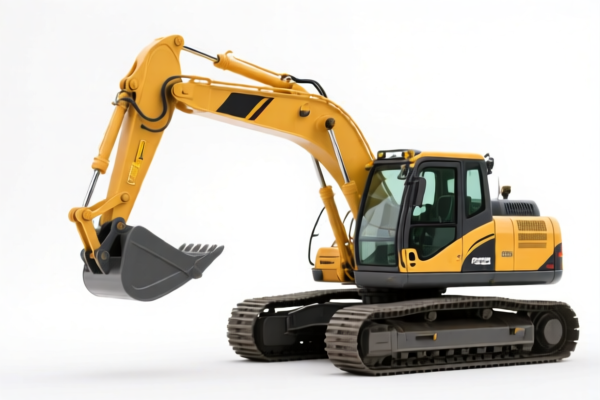
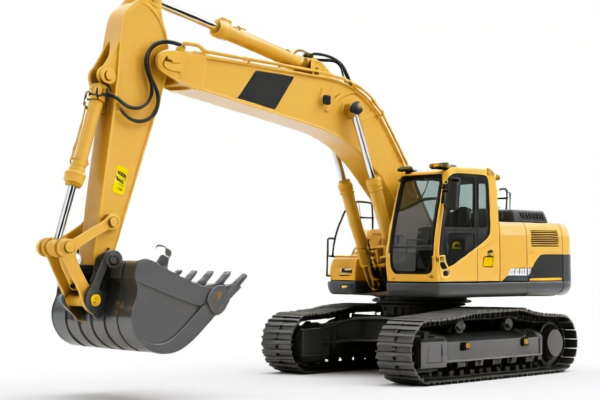
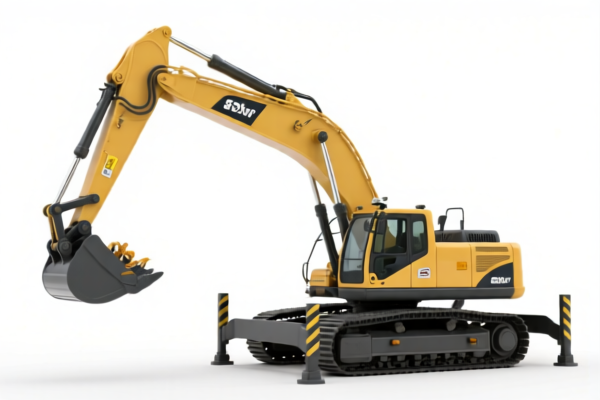
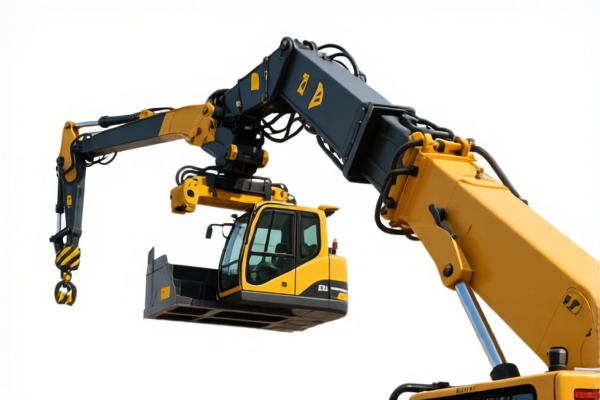
AI Analysis
🏗️ Lifting, Loading, and Handling Machinery (起重和搬运机械部件)
🌐 HS Code Reference & Customs Clearance Guide | 2026 Latest Tariff Analysis | Professional Clearance Strategy
📌 I. Product Definition and Classification: Understanding "Lifting and Handling Components"
"Lifting, Loading, and Handling Machinery" in international trade primarily refers to the components and spare parts of mechanical lifting equipment (such as winches, hoists, cranes, and weighing machines). Unlike complete machinery (which typically falls under HS 8425, 8426, or 8431), these items are classified based on their specific function and material composition within the machinery's ecosystem.
The classification logic depends heavily on: 1. Function: Is it part of a winch/hoist (8425) or a weighing scale (8423)? 2. Material: Is it made of steel, aluminum, or copper? (Crucial for "Section 122" additional duties). 3. Completeness: Is it a dedicated spare part or a general mechanical component?
⚠️ Key Distinction Points: - 8425.39.01.00: Dedicated components for lifting machinery (winches/hoists). - 8423.90.xx: Spare parts specifically for weighing machinery. - 8431.49.90.xx: General-purpose spare parts for lifting/handling machinery (Fallback category). High Risk: If made of Steel/Aluminum/Copper, subject to massive additional duties.
📦 II. HS Code Classification Details (2026 Latest Tariff Authority Cross-Reference)
| HS Code | Product Description | Application Scenario | Material Conflict? | Total Tax Rate |
|---|---|---|---|---|
8425.39.01.00 |
Parts of lifting machinery (excluding winches/hoists) | Matches winches, hoists, and lifting equipment categories. | ❌ No specific material penalty listed in tax detail | 35.0% |
8423.90.10.00 |
Parts of weighing machinery | Matching mechanical parts; classified as spare parts for scales. | ❌ No material penalty | 35.0% |
8423.90.90.00 |
Parts of weighing machinery (Other/N.E.S.) | Weighing equipment parts; form-based classification, no material conflict. | ❌ No material penalty | 37.8% |
8431.49.90.84 |
Other parts of machinery for lifting/handling (Specific) | Fallback logic for other categories. High Risk: Steel/Aluminum/Copper included. | ⚠️ Yes (Steel/Al/Cu) | 85.0% |
8431.49.90.90 |
Other parts of machinery for lifting/handling (General N.E.S.) | Fallback category for mechanical parts. High Risk: Steel/Aluminum/Copper included. | ⚠️ Yes (Steel/Al/Cu) | 85.0% |
🔍 Key Reminder: - Items falling under 8431.49.90.84 and 8431.49.90.90 are "N.E.S." (Not Elsewhere Specified) fallback codes. - CRITICAL WARNING: If these components are made of Steel, Aluminum, or Copper, they trigger an additional 50% tariff under Section 122, pushing the total tax to 85.0%. - Items under 8425 and 8423 do not show the material penalty in the provided tax details, keeping the rate significantly lower (35%-37.8%).
💰 III. 2026 Latest Tariff Rate Breakdown (Including Surtaxes & Policy Additions)
✅ Applicable Country: United States (US) ✅ Origin: China (CN) ✅ Effective Date: Based on current tariff structures (Section 301 & 122)
🎯 1. 8425.39.01.00 —— Parts of Lifting Machinery (Winches/Hoists)
| Item | Content |
|---|---|
| Base Tariff | 0.0% (ad valorem) |
| USITC Surtax (Section 301) | +25.0% |
| Section 122 Tariff | +10.0% |
| Material Surtax | N/A (Not applied in this specific tax detail) |
| Total Tax Rate | 35.0% |
| Calculation Basis | CIF Value × 35% |
| De Minimis Exemption | ❌ Not Eligible (Subject to strict scrutiny) |
| Legal Path | USITC:8425.39.01.00 → Section 301: 25% → Section 122: 10% |
📌 Explanation: - This code is specifically tied to lifting machinery parts like winches. - It avoids the heavy "Steel/Aluminum/Copper" penalty seen in the 8431 category. - Total Cost Impact: 35% is high, but manageable compared to the 85% alternative.
🎯 2. 8423.90.10.00 / 8423.90.90.00 —— Parts of Weighing Machinery
| Item | Content |
|---|---|
| Base Tariff | 0.0% (for .10) / 2.8% (for .90) |
| USITC Surtax (Section 301) | +25.0% |
| Section 122 Tariff | +10.0% |
| Material Surtax | N/A |
| Total Tax Rate | 35.0% (.10) / 37.8% (.90) |
| Calculation Basis | CIF Value × Rate |
| De Minimis Exemption | ❌ Not Eligible |
| Legal Path | USITC:8423.90.xx → Section 301: 25% → Section 122: 10% |
📌 Note: - Even with a 2.8% base rate for
.90, the addition of 35% in surtaxes makes the total 37.8%. - These codes are safer than 8431 codes if the item is strictly a spare part for a scale.
🎯 3. 8431.49.90.84 / 8431.49.90.90 —— Other Lifting/Handling Parts (HIGH RISK)
| Item | Content |
|---|---|
| Base Tariff | 0.0% |
| USITC Surtax (Section 301) | +25.0% |
| Section 122 Tariff | +10.0% |
| Material Surtax (Steel/Al/Cu) | +50.0% |
| Total Tax Rate | 85.0% |
| Calculation Basis | CIF Value × 85% |
| De Minimis Exemption | ❌ Not Eligible |
| Legal Path | USITC:8431.49.90.xx → Section 301: 25% → Section 122: 10% → Section 122: Steel/Al/Cu 50% |
📌 CRITICAL WARNING: - This is the "Fallback" category. Customs often defaults to this if the part doesn't fit neatly into 8425 or 8423. - MATERIAL TRAP: If your component is made of Steel, Aluminum, or Copper, you face a CATASTROPHIC 50% additional tax. - Total 85% makes this route extremely expensive. Avoid if possible.
🛠️ IV. Customs Clearance Practical Advice (Battle-Tested Pitfall Guide)
✅ 1. Preparation Checklist (Non-negotiable)
| Document | Required | Explanation |
|---|---|---|
| ✅ Product Specification Sheet | ✔️ | Must clearly state: "Part for [Specific Machine, e.g., Winch Model XYZ]", not just "Lifting Part". |
| ✅ Material Composition Certificate | ✔️ | Crucial for 8431. Prove if it is Steel, Al, Cu, Plastic, or Steel-plated. |
| ✅ Product Photos (Clear) | ✔️ | Show mounting holes, branding, and connections to prove it's a dedicated spare part. |
| ✅ Commercial Invoice | ✔️ | Use precise description: "Spare Part for Winch, HS 8425", avoid generic "Machinery Parts". |
| ✅ Packing List | ✔️ | List quantities clearly. Avoid mixing different HS codes in one shipment if possible. |
| ✅ Third-Party Report | ✔️ | If claiming non-steel/non-metal, provide material test reports. |
✅ 2. Declaration Tactics (Key Mantra)
🔥 “Specific Code First, Fallback Last, Material Matters!”
| Scenario | Correct Declaration | Wrong Practice | Consequence |
|---|---|---|---|
| Dedicated Winch Part | 8425.39.01.00 |
Declare as "General Machinery Part" | Risk of being downgraded to 8431 → 85% Tax! |
| Scale Spare Part | 8423.90.10.00 |
Declare as "8431" | Higher tax (35% vs 35%, but 8423 is safer/clearer) |
| Steel Component (General) | 8431.49.90.90 (If unavoidable) |
Hide material | Audit Trigger + Heavy Penalty |
| Plastic/Non-Metal Part | 8431.49.90.90 |
Declare as Steel | Lower Tax (35%) if correctly declared as non-metal |
✅ 3. Special Case Handling
| Scenario | Handling Advice |
|---|---|
| Mixed Material Parts | If a part is mostly steel but has aluminum components, Customs may still apply the 50% surtax. Best Practice: Declare as 8425 or 8423 if functionally dedicated. |
| Generic "Lifting Part" | Do not use this term. Be specific: "Pulley for Crane", "Hook for Hoist". Specificity helps push classification to 8425. |
| OEM Custom Parts | Provide the OEM kit list or assembly diagram to prove it is a dedicated spare part, not a general component. |
| Plastic/Nylon Parts | If the part is plastic (e.g., bushings, housings), it likely avoids the 50% Steel/Al/Cu surtax. Ensure material is clearly declared. |
🌍 V. Global Market Comparison (2026 Latest)
| Country/Region | Recommended HS Code | Tariff | Certification | Notes |
|---|---|---|---|---|
| 🇺🇸 USA | 8425.39.01.00 / 8423.90.xx |
35% - 37.8% | None Specific | Avoid 8431 if Steel/Al/Cu (85%) |
| 🇨🇳 China | 8425.39.01.00 |
5% - 8% | CCC (if applicable) | No Section 301/122 |
| 🇪🇺 EU | 8425.39.01.00 |
2.5% - 4.5% | CE | No additional US-style surtaxes |
| 🇬🇧 UK | 8425.39.01.00 |
0% - 4.5% | UKCA | Post-Brexit tariffs may vary |
📌 Conclusion: - The USA is the only market with these aggressive "Section 122" and "Section 301" layered surtaxes. - Classification Accuracy is Survival: Misclassifying a steel winch part as a "general part" (8431) costs you 50% more in taxes. - China-Origin Parts: Assume 35% minimum. If Steel/Al/Cu and misclassified, 85% is a real risk.
📌 VI. Common Errors & Pitfalls (Blood & Tears Lessons)
❌ Error 1: Declaring a Steel Winch Hook as 8431.49.90.90 ("Other Parts")
👉 Consequence: You pay 85% tax instead of 35%.
👉 Fix: Declare as 8425.39.01.00 (Part of Lifting Machinery).
❌ Error 2: Using generic description "Lifting Machine Part" in Invoice 👉 Consequence: Customs officer has no choice but to use the Fallback Code (8431) → High Risk of Audit & 85% Tax. 👉 Fix: Be specific! "Spare Pulley for Winch Model A".
❌ Error 3: Ignoring Material Composition for 8431
👉 Consequence: If you declare 8431 for a Plastic part, you might get lucky (35%), but if Customs inspects and finds Steel, they will reclassify and penalize.
👉 Fix: If it's not 8425 or 8423, ensure the material is NOT Steel/Al/Cu to avoid the 50% penalty.
✅ Correct Practice:
"Part for Winch, Model XYZ, Steel, HS 8425.39.01.00, Made in China"
🎯 VII. Conclusion: Professional Classification, Cost Savings!
🎯 Remember the Mantra:
🔹 "8425 & 8423 are Safe (35-37%). 8431 is Dangerous (85% if Metal)." 🔹 "Specific Function First, Material Second, Fallback Last." 🔹 "Steel/Al/Cu in 8431 = Financial Disaster!"
📌 Pro Tip:
If your parts are Plastic, Rubber, or Glass, they are exempt from the 50% Steel/Al/Cu surtax under 8431. However, it is still better to try and classify them under 8425 or 8423 for lower total tax (35% vs 35% base, but 8431 carries higher inspection risk).
📣 Immediate Action:
📞 Contact a professional customs broker BEFORE shipping. 📝 Provide Detailed Part Numbers and Material Specs. 🚀 Optimize your HS Code to avoid the 85% trap!
✨ Professional Clearance Starts with Accurate Classification! 💼 Every percent of tax saved is pure profit!
Customer Reviews
About HS Code Classification
The Harmonized System (HS) is an internationally standardized nomenclature developed by the World Customs Organization (WCO) to classify traded products. Over 200 countries use the HS system as the basis for customs tariffs, trade statistics, and import/export regulations.
Each HS code follows a hierarchical structure:
- Chapter (2 digits) — Broad category of goods (e.g., Chapter 84: Machinery and Mechanical Appliances)
- Heading (4 digits) — More specific grouping within the chapter
- Subheading (6 digits) — Internationally standardized breakdown, used by all WCO member countries
- National subdivisions (8-10 digits) — Country-specific extensions for further classification, such as US HTSUS 10-digit codes
Correct HS code classification is essential for smooth customs clearance, accurate duty payment, and compliance with trade regulations. Misclassification can lead to customs delays, overpayment of duties, or penalties.
When importing from CN to US, the applicable tariff rates may include:
- Most-Favored-Nation (MFN) rate — The standard duty rate applied to WTO members
- General rate — Applied to countries without trade agreements
- Trade remedy duties — Additional tariffs such as Section 301 (anti-dumping), Section 232 (national security), or countervailing duties
The information provided on this page is for reference purposes only. For official classification, please consult with your local customs authority or a licensed customs broker.