Lifting Equipment
CN → US| HS Code | Tariff Rate | Origin | Destination | Doc |
|---|---|---|---|---|
| 8426410010 | 35.0% | CN | US | Official Doc |
| 8426990000 | 35.0% | CN | US | Official Doc |
| 8425110000 | 35.0% | CN | US | Official Doc |
| 8425190000 | 35.0% | CN | US | Official Doc |
| 8428100000 | 17.5% | CN | US | Official Doc |
Product Images
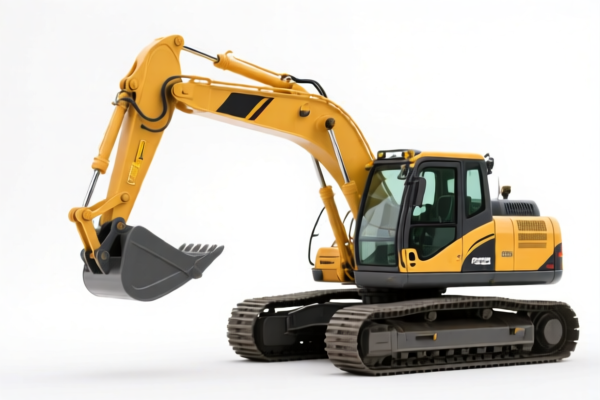
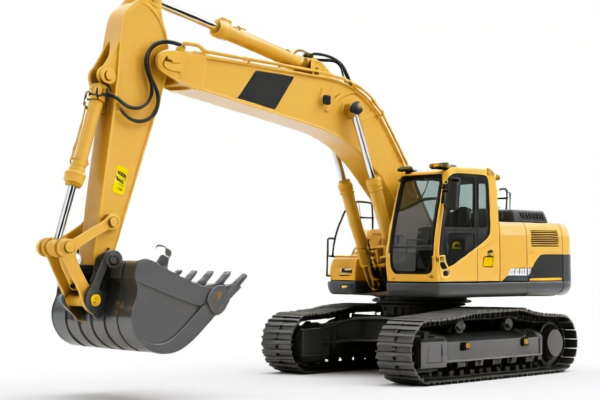
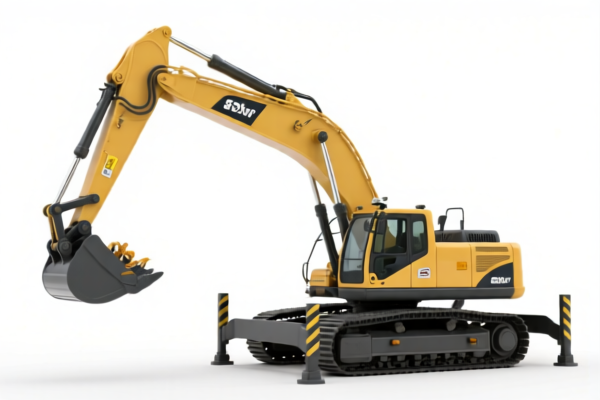
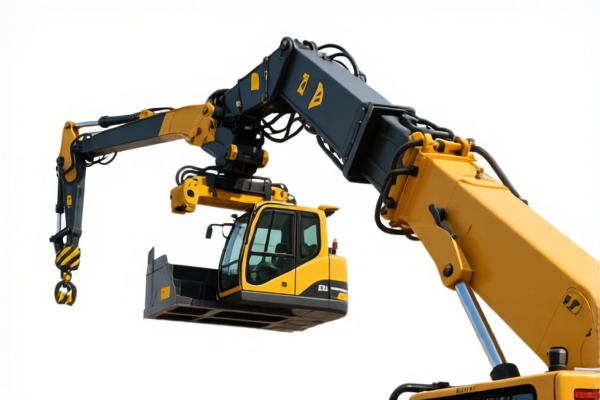
AI Analysis
🏗️ Lifting Equipment (起重设备)
🌐 HS Code Reference & Customs Clearance Guide | 2026 Latest Tariff Analysis | Professional Clearance Strategy
📌 I. Product Definition & Classification: What is "Lifting Equipment"?
In international trade, "Lifting Equipment" is a broad term encompassing machinery designed to raise, lower, or move heavy loads horizontally. However, for customs classification purposes, the specific mechanism of action (how it lifts) and application scope are critical.
The data provided identifies two main categories: 1. Winches, Pulleys, Hoists, and Elevating Gear (Chapter 8425): Devices that lift vertically using ropes, chains, or screws. 2. Other Lifting, Handling, Loading, or Unloading Machinery (Chapter 8428): Machinery such as cranes, conveyor systems, or forklifts that may lift or move loads.
⚠️ Key Distinction Point: * If the device primarily lifts vertically via a hoist/chain mechanism (electric or otherwise) → Typically falls under 8425. * If the device is a general-purpose crane or handling machinery not specifically covered by 8425 → Typically falls under 8428.
📦 II. HS Code Classification Details (Based on Provided Data)
| HS Code | Product Description | Application Scenario | Material/Shape Conflict? | Summary from Data |
|---|---|---|---|---|
8426.41.00.10 |
Ship’s derricks and similar cargo handling船舶吊机及类似装卸设备 | Marine cargo handling, ship-mounted cranes | ❌ No | Consistent with cranes, no material conflict, fits "fallback" category. |
8426.99.00.00 |
Other cranes and lifting gear (Other) | General crane parts or specialized non-standard cranes | ❌ No | High match with cranes/lifting frames, other fallback category. |
8425.11.00.00 |
Electrically operated winches; capstans; power tackles | Electric hoists, capstans, power tackles | ❌ No | Purpose matches lifting machines; initially determined to include motor-driven. |
8425.19.00.00 |
Other winches; capstans; power tackles | Non-electric or other types of winches/tackles | ❌ No | Purpose fully matches lifting machines; other fallback category. |
8428.10.00.00 |
Elevators and skip hoists; escalators and moving walkways | Elevators, lift systems | ❌ No | Purpose matches lifting/loading machinery; no material/shape conflict. |
8428.90.03.90 |
Other lifting, handling, loading, or unloading machinery (Other) | General industrial lifting equipment not elsewhere specified | ❌ No | Purpose fully matches; other fallback category; default tendency to match. |
🔍 Key Reminder: * All items in 8425 are specifically for winches, pulleys, and hoists. * All items in 8426 and 8428 relate to cranes and general handling machinery. * There are no material conflicts reported for any of these classifications in the provided data.
💰 III. 2026 Latest Tariff Rate Breakdown (Including Surcharge Policies)
✅ Applicable Country: United States (US)
✅ Origin: China (CN)
✅ Effective Date: Current rates apply (Includes subsequent imports)
🎯 1. Electrically Operated Winches (8425.11.00.00) & Other Winches (8425.19.00.00)
| Item | Content |
|---|---|
| Base Tariff | 0.0% |
| Section 301 Surcharge | +25.0% |
| Section 122 Tariff | +10.0% |
| Total Tariff Rate | 35.0% |
| Tax Calculation | CIF Value × 35% |
| De Minimis Exemption | ❌ Not Eligible (High surcharge applies) |
| Legal Basis Path | Base Rate → USITC Section 301 (25%) → IEEPA/Section 122 (10%) |
📌 Explanation:
- The 25% is the standard Section 301 tariff on Chinese-made lifting machinery.
- The 10% is the additional Section 122 tariff (often applied to steel/aluminum or specific strategic goods, here explicitly noted in the data).
- Total: 35%. This is a high-cost classification.
🎯 2. Ship’s Derricks (8426.41.00.10) & Other Cranes (8426.99.00.00)
| Item | Content |
|---|---|
| Base Tariff | 0.0% |
| Section 301 Surcharge | +25.0% |
| Section 122 Tariff | +10.0% |
| Total Tariff Rate | 35.0% |
| Tax Calculation | CIF Value × 35% |
| De Minimis Exemption | ❌ Not Eligible |
| Legal Basis Path | Base Rate → USITC Section 301 (25%) → IEEPA/Section 122 (10%) |
📌 Explanation:
- These are classified as "Cranes" or "Similar Cargo Handling Machinery."
- They face the same high tariff burden as electric winches due to the origin (China).
🎯 3. Other Lifting/Handling Machinery (8428.10.00.00)
| Item | Content |
|---|---|
| Base Tariff | 0.0% |
| Section 301 Surcharge | +7.5% |
| Section 122 Tariff | +10.0% |
| Total Tariff Rate | 17.5% |
| Tax Calculation | CIF Value × 17.5% |
| De Minimis Exemption | ❌ Not Eligible (Subject to specific rules) |
| Legal Basis Path | Base Rate → USITC Section 301 (7.5%) → IEEPA/Section 122 (10%) |
📌 Explanation:
- This rate is significantly lower (17.5%) compared to the 35% for 8425/8426.
- The Section 301 surcharge is only 7.5% (possibly due to different HTS sub-category rules or specific exclusions for certain handling equipment).
- This is the most cost-effective option if the product fits this description.
🎯 4. Other Lifting/Handling Machinery (Fallback) (8428.90.03.90)
| Item | Content |
|---|---|
| Base Tariff | 0.0% |
| Section 301 Surcharge | +25.0% |
| Section 122 Tariff | +10.0% |
| Total Tariff Rate | 35.0% |
| Tax Calculation | CIF Value × 35% |
| De Minimis Exemption | ❌ Not Eligible |
| Legal Basis Path | Base Rate → USITC Section 301 (25%) → IEEPA/Section 122 (10%) |
📌 Explanation:
- Despite being a "fallback" category, it still attracts the full 25% Section 301 tariff.
- Do not assume "fallback" means lower tax. It often means "generic" and thus subject to standard high tariffs.
🛠️ IV. Customs Clearance Practical Advice (Pitfall Avoidance Guide)
✅ 1. Documentation Checklist (Mandatory)
| Document | Required | Note |
|---|---|---|
| ✅ Product Specification Sheet | ✔️ | Must detail lifting capacity, voltage (for electric), power source, dimensions. |
| ✅ Technical Diagrams | ✔️ | To prove whether it is a "winch" (8425) or a "crane/handling machine" (8426/8428). |
| ✅ Product Photos (with Nameplate) | ✔️ | Must show model number, brand, and input/output specs. |
| ✅ Commercial Invoice | ✔️ | Clearly state "Lifting Equipment," "Electric Winch," or "Cranes." |
| ✅ Packing List | ✔️ | Show how components are packed; avoid splitting one machine into multiple boxes incorrectly. |
| ✅ Origin Certificate (CO) | ✔️ | Crucial for proving Chinese origin (which triggers tariffs) or checking for exemptions. |
✅ 2. Declaration Tips (Key Mnemonic)
🔥 "Identify Mechanism, Choose Chapter, Avoid Split!"
| Scenario | Correct Declaration | Wrong Practice |
|---|---|---|
| Electric Hoist | 8425.11.00.00 (35%) |
Misdeclare as "Machine Part" → Risk of penalty |
| Ship Derrick | 8426.41.00.10 (35%) |
Misdeclare as general machinery |
| General Crane | 8426.99.00.00 (35%) |
|
| Elevator/Lift | 8428.10.00.00 (17.5%) |
⚠️ Best Rate Option! |
| Other Handling Gear | 8428.90.03.90 (35%) |
Avoid if 8428.10 applies |
📌 Critical Insight:
If your "Lifting Equipment" can be classified as Elevators or Skip Hoists (8428.10.00.00), the tariff is 17.5% (only 7.5% surcharge + 10% Section 122).
However, if it is a Winch, Crane, or Derrick, the tariff jumps to 35% (25% + 10%).
Ensure the technical description matches the lower-tariff category if legally permissible.
✅ 3. Special Situations
| Situation | Handling Advice |
|---|---|
| OEM/Custom Machinery | Provide design drawings to prove function. If it functions as an elevator/lift, argue for 8428.10. |
| Parts vs. Whole Machine | Do not split a whole lifting machine into "parts" to lower tax. Customs will assess based on the principal function of the assembly. |
| Steel Content | Section 122 tariffs often target steel products. Ensure material certificates are available. |
| Pre-Ruling | Strongly recommended for high-value lifting equipment. Apply for an Advance Ruling from CBP to confirm HS Code and tariff liability. |
🌍 V. Global Market Comparison (2026)
| Country/Region | Recommended HS Code | Estimated Tariff (China Origin) | Certification Required | Notes |
|---|---|---|---|---|
| 🇺🇸 USA | 8425.11.00.00 / 8426.41.00.10 / 8428.10.00.00 |
17.5% - 35% | FCC, UL, OSHA (if for workplace) | High surcharges apply. |
| 🇨🇳 China | 8425.11.00.00 / 8426.41.00.10 / 8428.10.00.00 |
5% - 10% | CCC, ISO | No surcharges. |
| 🇪🇺 EU | 8425.11.00.00 / 8426.41.00.10 / 8428.10.00.00 |
0% - 5% | CE, Machinery Directive | No US-style surcharges. |
| 🇦🇺 Australia | 8425.11.00.00 / 8426.41.00.10 / 8428.10.00.00 |
5% - 10% | RCM, AS/NZS Standards | Generally stable tariffs. |
📌 Conclusion:
- USA is the most challenging market due to the Section 301 and Section 122 tariffs.
- Tariff Gap: The difference between 17.5% and 35% is 17.5 percentage points. For a $100,000 shipment, this is a $17,500 difference.
- Strategy: Carefully evaluate if your product can be technically justified as8428.10.00.00(Elevator/Lift) rather than a generic crane or winch.
📌 VI. Common Mistakes & Pitfall Guide (Lessons Learned)
❌ Mistake 1: Classifying all lifting gear under one generic "Lifting Machinery" code.
👉 Consequence: Misclassification leads to audits and back taxes. Different subheadings have different surcharges (7.5% vs 25%).
❌ Mistake 2: Ignoring the "Section 122" tariff.
👉 Consequence: Even if Section 301 is low, the additional 10% adds up. Always account for all surcharges.
❌ Mistake 3: Declaring "Parts" for a complete machine.
👉 Consequence: Customs will consolidate and tax the whole machine at the highest rate, plus penalties for false declaration.
❌ Mistake 4: Assuming "Fallback" categories mean lower taxes.
👉 Consequence: As seen with 8428.90.03.90, fallbacks often carry the maximum 25% surcharge.
✅ Correct Approach:
"Electric Hoist, 5 Ton Capacity, 3-Phase Power, Model XYZ, Compliant with ASME B30.16"
🎯 VII. Conclusion: Precise Classification Saves Money!
🎯 Remember the Mantra:
🔹 "Winch/Crane = 35% (Ouch!)"
🔹 "Elevator/Lift = 17.5% (Savings!)"
🔹 "Check Mechanism, Not Just Name!"
📌 Tips:
- If your product is a winch or crane, budget for 35% total tax.
- If it is an elevator or specific lift system, aim for 17.5%.
- Apply for Pre-Rulings to lock in your HS Code and avoid surprises at the border.
📣 Immediate Action:
📞 Contact a licensed customs broker + Provide technical datasheets + Request HS Code Pre-Ruling
🚀 Clear your Lifting Equipment smoothly, reduce costs, and maximize profit!
✨ Professional Clearance Starts with Accurate Classification!
💼 Every percentage point counts in your supply chain!
Customer Reviews
About HS Code Classification
The Harmonized System (HS) is an internationally standardized nomenclature developed by the World Customs Organization (WCO) to classify traded products. Over 200 countries use the HS system as the basis for customs tariffs, trade statistics, and import/export regulations.
Each HS code follows a hierarchical structure:
- Chapter (2 digits) — Broad category of goods (e.g., Chapter 84: Machinery and Mechanical Appliances)
- Heading (4 digits) — More specific grouping within the chapter
- Subheading (6 digits) — Internationally standardized breakdown, used by all WCO member countries
- National subdivisions (8-10 digits) — Country-specific extensions for further classification, such as US HTSUS 10-digit codes
Correct HS code classification is essential for smooth customs clearance, accurate duty payment, and compliance with trade regulations. Misclassification can lead to customs delays, overpayment of duties, or penalties.
When importing from CN to US, the applicable tariff rates may include:
- Most-Favored-Nation (MFN) rate — The standard duty rate applied to WTO members
- General rate — Applied to countries without trade agreements
- Trade remedy duties — Additional tariffs such as Section 301 (anti-dumping), Section 232 (national security), or countervailing duties
The information provided on this page is for reference purposes only. For official classification, please consult with your local customs authority or a licensed customs broker.