Lifting Telescopic Bracket
CN → US| HS Code | Tariff Rate | Origin | Destination | Doc |
|---|---|---|---|---|
| 7326908630 | 87.9% | CN | US | Official Doc |
| 9403200035 | 85.0% | CN | US | Official Doc |
| 9403200046 | 85.0% | CN | US | Official Doc |
| 7326908660 | 87.9% | CN | US | Official Doc |
| 7326908630 | 87.9% | CN | US | Official Doc |
Product Images
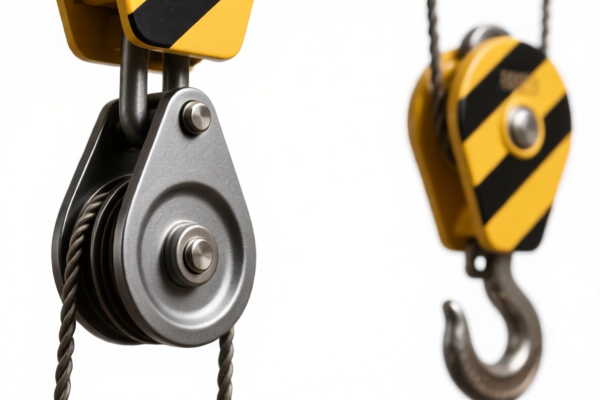
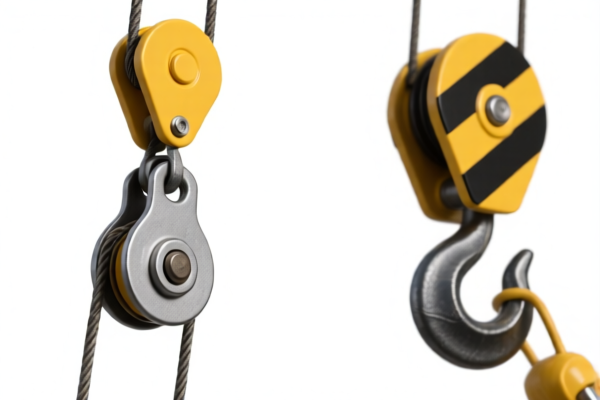
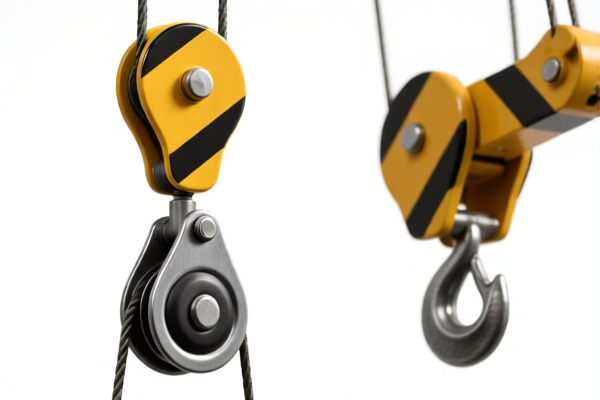
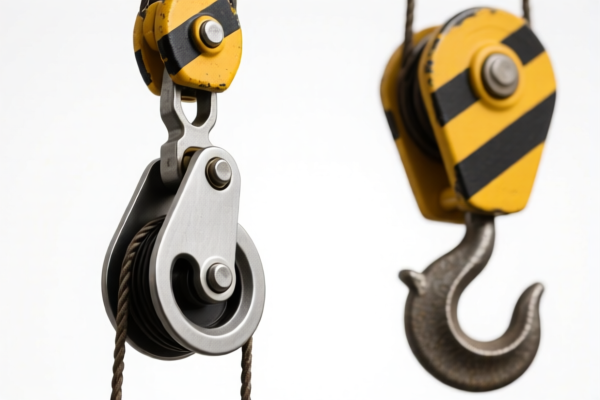
AI Analysis
📐 Lifting Telescopic Bracket (升降伸缩支架)
🌐 HS Code Reference & Customs Clearance Guide | 2026 Latest Tariff Analysis | Professional Clearance Strategy
📌 I. Product Definition and Classification: Do You Really Understand "Lifting Telescopic Brackets"?
A Lifting Telescopic Bracket is a mechanical support structure capable of extending, retracting, and elevating loads. In international trade, its classification depends heavily on its primary material (typically steel/metal) and its specific function (whether it is considered a standalone industrial part or a component of furniture).
There are two main classification pathways based on the provided data: 1. General Metal Articles (Steel/Aluminum products): Classified under Chapter 73 if viewed as a generic metal support or bracket. 2. Furniture Parts: Classified under Chapter 94 if viewed specifically as a part/accessory of metal furniture.
⚠️ Key Distinction Point: - If the bracket is primarily used as a furniture accessory (e.g., for a monitor stand, desk, or shelving unit) and made of metal → Consider 9403.20.00 (Furniture Parts). - If the bracket is viewed as a general industrial metal support or has broader applications beyond specific furniture → Consider 7326.90.86 (Other articles of iron/steel).
📦 II. HS Code Classification Details (2026 Latest Tariff Authority Comparison)
| HS Code | Product Description | Summary/Logic | Tax Rate (China Origin to US) |
|---|---|---|---|
7326.90.86.60 |
Iron/Steel Article, Not Elsewhere Specified | Summarized as "Iron/Steel product bracket." Matches morphology perfectly with no material conflict. | 87.9% |
7326.90.86.30 |
Other Iron/Steel Article (General Support) | Summarized as "Bracket category, similar support structure." Material inferred as metal. Note: Appears twice in data with slight summary differences. | 87.9% |
9403.20.00.35 |
Other Metal Furniture and Parts | Summarized as "Metal material bracket part," classified under "Other Furniture and Parts." | 85.0% |
9403.20.00.46 |
Other Metal Furniture (Bracket Category) | Summarized as "Other category of metal furniture, bracket part, no material conflict." | 85.0% |
🔍 Key Insight: - Chapter 73 (7326): Treats the item as a generic metal article. It attracts a higher base tariff (2.9%). - Chapter 94 (9403): Treats the item as a furniture part. It benefits from a 0% base tariff, making the total tax slightly lower (85.0% vs. 87.9%). - Material: Both categories assume the bracket is made of Metal (Steel/Aluminum).
💰 III. 2026 Latest Tariff Rate Breakdown (Including Surtaxes & Policy Surcharges)
✅ Applicable Country: United States (US) ✅ Country of Origin: China (CN) ✅ Effective Date: Post-November 10, 2025 (Includes subsequent imports)
🎯 1. 7326.90.86.60 & 7326.90.86.30 — Iron/Steel Brackets
| Item | Content |
|---|---|
| Base Tariff | 2.9% (Standard MFN rate for other articles of iron/steel) |
| Section 301 Surcharge | +25.0% (Additional duties for Chinese goods under Section 301) |
| Section 122 Surtax (Steel/Aluminum) | +50% (Specific surtax for Steel, Aluminum, and Copper products) |
| Total Tax Rate | 87.9% |
| Tax Calculation | CIF Value × 87.9% |
| De Minimis Exemption | ❌ Not Eligible (High duty rate disqualifies from de minimis thresholds in many contexts) |
| Legal Basis Path | General Tariff + USITC Footnote 301 + Section 122 Steel/Aluminum Surtax |
📌 Explanation: - The 2.9% is the standard customs duty. - The 25.0% is the widely known Section 301 tariff on Chinese goods. - The 50% is the specific Section 122 surcharge applied to Steel, Aluminum, and Copper products. Since the summary explicitly states "Steel, Aluminum, Copper Surtax 50%," this confirms the material is metallic. - Total: 87.9%. This is an extremely high cost burden.
🎯 2. 9403.20.00.35 & 9403.20.00.46 — Metal Furniture Parts
| Item | Content |
|---|---|
| Base Tariff | 0.0% (Furniture parts often have 0% base duty) |
| Section 301 Surcharge | +25.0% (Additional duties for Chinese goods) |
| Section 122 Surtax (Steel/Aluminum) | +50% (Specific surtax for Steel, Aluminum, and Copper products) |
| Total Tax Rate | 85.0% |
| Tax Calculation | CIF Value × 85.0% |
| De Minimis Exemption | ❌ Not Eligible |
| Legal Basis Path | 0% Base + USITC Footnote 301 + Section 122 Steel/Aluminum Surtax |
📌 Note: - Even with a 0% base tariff, the 75% combined surcharge (25% + 50%) results in an 85.0% total tax rate. - This is 2.9% cheaper than the Chapter 73 classification but still prohibitively high for most profit margins.
🛠️ IV. Customs Clearance Practical Advice (Battle-Tested Pitfall Guide)
✅ 1. Essential Documentation Checklist
| Document | Required? | Explanation |
|---|---|---|
| ✅ Product Specification Sheet | ✔️ | Must detail material (Steel/Aluminum), dimensions, load capacity, and function (lifting/telescopic). |
| ✅ Material Declaration | ✔️ | Crucial: Must explicitly state "Steel" or "Aluminum" to justify the 50% Section 122 surtax. |
| ✅ Product Photos (with Label) | ✔️ | Clear images showing the telescopic mechanism, mounting holes, and any brand/model tags. |
| ✅ Commercial Invoice | ✔️ | Describe as "Metal Telescopic Bracket for Furniture" or "Steel Support Bracket." Avoid vague terms like "Hardware." |
| ✅ Packing List | ✔️ | Ensure weight and dimensions are accurate for freight and duty calculation. |
✅ 2. Declaration Tips (Key Mantra)
🔥 “Material is King, Function is Queen, Chapter 94 Saves Pennies, Chapter 73 Costs More!”
| Scenario | Recommended Classification | Risk |
|---|---|---|
| Used for Monitor/Desk/Furniture | 9403.20.00.35 or .46 |
Lower Tax (85%) vs. 87.9%. Preferred if function is clearly furniture-related. |
| Used for Industrial/General Support | 7326.90.86.30 or .60 |
Higher Tax (87.9%). Use only if furniture classification is not defensible. |
| Non-Metal (e.g., Plastic/Composite) | Different HS Code Needed | Avoids 50% Steel Surtax. Note: Data assumes metal. If non-metal, Section 122 may not apply. |
⚠️ Critical Warning: - The data explicitly mentions "122条款关税10%钢,铝铜制品加征关税: 50%" (Section 122 Surtax 50% for Steel, Aluminum, Copper). - If your bracket is NOT made of steel, aluminum, or copper (e.g., it is plastic or wood), you MIGHT avoid the 50% surcharge. However, the provided data assumes metal. Verify material composition!
✅ 3. Special Case Handling
| Situation | Handling Advice |
|---|---|
| OEM Custom Brackets | Provide design drawings proving it is a part of a specific furniture item to support 9403 classification. |
| Mixed Packaging (Bracket + Furniture) | Declare together if shipped as a set. If shipped separately, declare as "Part." |
| Non-China Origin | If the bracket is sourced from Vietnam, Mexico, etc., Section 301 (25%) may not apply. Check for FTZ/USMCA benefits. |
🌍 V. Global Market Clearance Comparison (2026 Latest)
| Country/Region | Recommended HS Code | Estimated Total Tax (China Origin) | Key Certification | Notes |
|---|---|---|---|---|
| 🇺🇸 USA | 9403.20.00.35 |
85.0% | None typically | High due to Section 301 + Section 122. |
| 🇨🇳 China | 7326.90.86.60 |
Low (5-10%) | CCC (if applicable) | Import duties are standard; no US surtaxes. |
| 🇪🇺 EU | 7326.90.86 |
~4-6% | CE | No Section 301 or 122. Standard WTO rates. |
| 🇬🇧 UK | 7326.90.86 |
~4-6% | UKCA | Post-Brexit, separate from EU rules. |
📌 Conclusion: - USA is the highest cost market due to punitive tariffs (Section 301 + Section 122). - EU/UK/China have significantly lower duties. Consider supply chain diversification if targeting the US market.
📌 VI. Common Mistakes & Pitfalls (Lessons Learned)
❌ Mistake 1: Ignoring the Section 122 Steel/Aluminum Surtax. 👉 Consequence: Unexpected 50% duty hit. If the bracket is steel, this is unavoidable unless origin is not China.
❌ Mistake 2: Misclassifying as "General Hardware" without specifying Material. 👉 Consequence: Customs may classify under the highest possible steel category or request additional documentation, delaying clearance.
❌ Mistake 3: Assuming De Minimis applies. 👉 Consequence: With an 85%+ tax rate, the de minimis exemption (usually for low-value shipments under $800) is often denied or not cost-effective.
✅ Correct Approach:
"Steel Telescopic Bracket for Monitor Stand, Model XYZ, Made of Powder-Coated Steel"
🎯 VII. Conclusion: Professional Classification, Cost Optimization!
🎯 Remember the Mantra:
🔹 "Metal = 50% Surtax + 25% Section 301."
🔹 "Furniture Part (9403) saves 2.9% vs. General Steel (7326)."
🔹 "Check Origin: Non-China = No 301 Tax!"
📌 Pro Tip: If you are importing from China, the total tax will be 85.0% - 87.9%. - Strategy: If possible, source brackets from Vietnam, Mexico, or Malaysia to avoid Section 301 tariffs. - Strategy: If the bracket is non-metallic (e.g., plastic composite), investigate HS codes under Chapter 39 to potentially avoid the 50% Steel Surtax.
📣 Immediate Action:
📞 Consult a licensed customs broker. 📄 Provide material composition and end-use documentation. 🚀 Apply for Advance Rulings if feasible to lock in classification.
✨ Professional Clearance Starts with Accurate Classification! 💼 Every percentage point of tax matters!
Customer Reviews
About HS Code Classification
The Harmonized System (HS) is an internationally standardized nomenclature developed by the World Customs Organization (WCO) to classify traded products. Over 200 countries use the HS system as the basis for customs tariffs, trade statistics, and import/export regulations.
Each HS code follows a hierarchical structure:
- Chapter (2 digits) — Broad category of goods (e.g., Chapter 84: Machinery and Mechanical Appliances)
- Heading (4 digits) — More specific grouping within the chapter
- Subheading (6 digits) — Internationally standardized breakdown, used by all WCO member countries
- National subdivisions (8-10 digits) — Country-specific extensions for further classification, such as US HTSUS 10-digit codes
Correct HS code classification is essential for smooth customs clearance, accurate duty payment, and compliance with trade regulations. Misclassification can lead to customs delays, overpayment of duties, or penalties.
When importing from CN to US, the applicable tariff rates may include:
- Most-Favored-Nation (MFN) rate — The standard duty rate applied to WTO members
- General rate — Applied to countries without trade agreements
- Trade remedy duties — Additional tariffs such as Section 301 (anti-dumping), Section 232 (national security), or countervailing duties
The information provided on this page is for reference purposes only. For official classification, please consult with your local customs authority or a licensed customs broker.