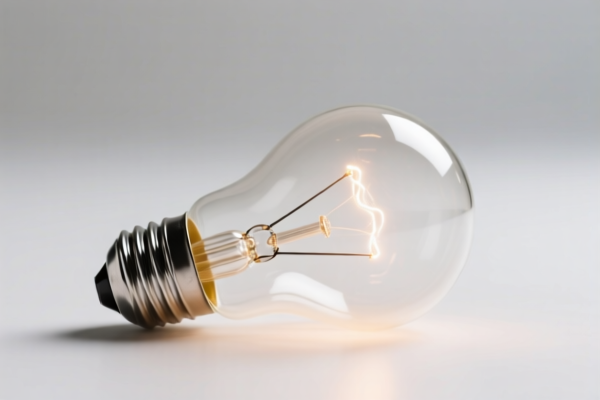
Light Bulb
CN → US| HS Code | Tariff Rate | Origin | Destination | Doc |
|---|---|---|---|---|
| 8541410000 | 35.0% | CN | US | Official Doc |
| 8539520020 | 12.0% | CN | US | Official Doc |
| 8539520091 | 12.0% | CN | US | Official Doc |
| 9405428440 | 38.9% | CN | US | Official Doc |
| 9405428410 | 38.9% | CN | US | Official Doc |
Product Images


AI Analysis
💡 LED Light Bulb Classification & Customs Strategy (2026 Update)
🌐 HS Code Master Guide | 2026 Tax Regime Decoded | Professional Clearance Tactics
📌 I. Product Definition: What Exactly is an "LED Light Bulb"?
In international trade, "LED Light Bulb" is not a single entity. It is a functional category that splits into two distinct customs destinies based on form and function:
-
The Standalone Source (Bulb/Source Only):
A self-contained lighting element with a base (E26/E27/E14), LED chips, and driver, designed to be screwed into a socket.- Classification: Goes to HS 8539.52 (Electric filament discharge lamps or tubes; Light Emitting Diodes (LED) lamps).
-
The Integrated Fixture (Lamp/Luminaire):
A complete lighting unit designed specifically to house only LED light sources (often includes the housing, heat sink, optical lens, and base).- Classification: Goes to HS 9405.42 (Lighting fittings for non-domestic use / LED luminaires).
⚠️ Critical Distinction:
- If it's a replacement bulb (looks like a standard bulb) → 8539.52 (Lower Risk).
- If it's a fixture designed for LEDs (e.g., recessed downlight, LED panel, street light head) → 9405.42 (Higher Risk due to Section 301/122).
📦 II. HS Code Classification Matrix (2026 Authority Reference)
| HS Code | Product Description (Based on Data) | Key Matching Logic | Tax Category |
|---|---|---|---|
| 8539.52.00.20 | LED Bulb / LED Lamp | Matches "Light Emitting Diode (LED) lamps" by material and use (Light Source). | 12.0% |
| 8539.52.00.91 | Other LED Lamps | Matches "Light-emitting diode (LED) lamps" under "Other" category; material attributes align with industry standards. | 12.0% |
| 8541.41.00.00 | LED Chips / Modules | Applies to the LED device itself (semiconductor), not the finished bulb. Often misdeclared when the product is a component. | 35.0% |
| 9405.42.84.10 | LED Lighting Fitting | Matches "Products designed specifically for Light Emitting Diode (LED) light sources". Includes housing/fixtures. | 38.9% |
| 9405.42.84.40 | LED Lighting Fitting | Matches "Luminaires for LED only". Specific classification for dedicated LED fixtures. | 38.9% |
🔍 Key Insight:
- 8539 Series = The Bulb (Source). Low tariff (12%).
- 9405 Series = The Fixture (Container). High tariff (38.9%).
- 8541 Series = The Component (Chip). 35% Tariff! (Do not use for finished bulbs).
💰 III. 2026 Tariff Rate Deep Dive (US Market Focus)
✅ Applicable Country: United States (US)
✅ Origin: China (CN)
✅ Effective Date: 2026 (Incorporating latest Section 301 & Section 122 measures)
🎯 Scenario A: Standalone LED Bulbs (8539.52.00.20 / 8539.52.00.91)
| Item | Detail |
|---|---|
| Base Duty Rate | 2.0% (Standard) |
| Section 301 Additional | 0.0% (No extra "Added Duty" for this sub-code in current data) |
| Section 122 Duty | 10.0% (Specific surcharge on Chinese LED/Lamps) |
| Total Effective Rate | 12.0% |
| Legal Basis | Base: 2.0% + Section 122: 10.0% |
📌 Strategy:
This is the most cost-effective classification for standard screw-in LED bulbs. Avoid classifying them as "fixtures" to save ~27% in taxes.
🎯 Scenario B: LED Components (8541.41.00.00)
| Item | Detail |
|---|---|
| Base Duty Rate | 0.0% |
| Section 301 Additional | 25.0% |
| Section 122 Duty | 10.0% |
| Total Effective Rate | 35.0% |
| Legal Basis | Base: 0.0% + Section 301: 25.0% + Section 122: 10.0% |
📌 Warning:
This rate applies if you ship loose LED chips, arrays, or bare modules, not finished bulbs. If you declare a finished bulb as an "LED Device", you will be hit with 35% instead of 12%.
🎯 Scenario C: LED Fixtures/Luminaires (9405.42.84.10 / 9405.42.84.40)
| Item | Detail |
|---|---|
| Base Duty Rate | 3.9% |
| Section 301 Additional | 25.0% |
| Section 122 Duty | 10.0% |
| Total Effective Rate | 38.9% |
| Legal Basis | Base: 3.9% + Section 301: 25.0% + Section 122: 10.0% |
📌 Warning:
This is the Highest Cost category. It applies to products like "LED Downlights," "LED Wall Sconces," or "LED Street Lamps" designed specifically for LEDs. Declaring a fixture as a "bulb" is a compliance violation.
🛠️ IV. Customs Clearance Practical Guide (Avoiding Fines)
✅ 1. Documentation Checklist (Must-Haves)
| Document | Requirement | Why It Matters |
|---|---|---|
| Commercial Invoice | Must explicitly state "LED Light Bulb" (for 8539) OR "LED Luminaire" (for 9405). | Prevents "Reasonable Suspicion" of misclassification. |
| Technical Spec Sheet | Shows Base Type (E26, etc.) vs. Housing Design. | Proves if it's a "replacement source" (8539) or "integrated unit" (9405). |
| Photos | Clear image of the bulb screwed in vs. the fixture mounted on wall. | Visual proof of form factor is critical for 8541 vs. 8539 distinction. |
| Bill of Materials (BOM) | Separates LED chips from drivers and housing. | Prevents accidental classification as "LED Devices" (8541) with 35% tax. |
✅ 2. Declaration Strategy (The "Golden Rules")
| Scenario | ✅ Correct Declaration | ❌ Wrong Declaration (Risk) |
|---|---|---|
| Standard Replacement Bulb | "LED Light Bulb, E26 Base, 10W, A19 Shape" → 8539.52.00.20 (12%) | "LED Device" or "LED Chip" → 8541.41.00.00 (35%) |
| LED Ceiling Light | "LED Recessed Luminaire, 5W, LED Only" → 9405.42.84.10 (38.9%) | "LED Bulb" → Penalty + 27% Tax Difference |
| LED Strip Light | "LED Strip with Controller" → Likely 9405.42 (Fixture) | "LED Component" → 8541 (35%) |
🔥 Pro Tip:
If your product is a bulb with a screw base, always claim 8539.
If your product is a fixture with a socket inside, claim 9405.
Never claim 8541 unless you are shipping raw semiconductor chips.
✅ 3. Special Circumstances
| Situation | Advice |
|---|---|
| Bulb + Socket Sold Together | If the socket is a separate fixture, declare as 9405 (Fixture). If the socket is part of the bulb base, still 8539. |
| OEM Custom Bulbs | Provide the client's design. If it looks like a standard bulb, it remains 8539. |
| Mixed Shipment | If a container has both bulbs and fixtures, split the invoice. Do not group them, or the whole shipment may be audited. |
🌍 V. Global Market Comparison (2026)
| Region | Primary HS Code for Bulbs | Tax Rate (China Origin) | Key Barrier |
|---|---|---|---|
| 🇺🇸 USA | 8539.52.00.20 | 12.0% | Section 122 (10%) is the killer. |
| 🇪🇺 EU | 8539.52 | ~5% - 10% | CE Mark + RoHS + Ecodesign |
| 🇯🇵 Japan | 8539.52 | 5% - 8% | PSE Mark (Mandatory) |
| 🇨🇦 Canada | 8539.52 | 0% - 5% | Canadian Energy Efficiency Standards |
📌 Conclusion:
The US market is the most complex due to the Section 122 (10%) and Section 301 (25%) layers.
- Bulbs (8539): 12% Total (Manageable).
- Fixtures (9405): 38.9% Total (Very High).
- Components (8541): 35% Total (High).
📌 VI. Common Errors & Pitfalls (Don't Get Caught!)
❌ Mistake 1: Declaring a LED Fixture (e.g., a downlight) as a "LED Bulb" to get 12% instead of 38.9%.
👉 Consequence: Customs audit, 27% tax shortfall + Penalties + Seizure.
❌ Mistake 2: Declaring a Finished Bulb as an "LED Device" (8541).
👉 Consequence: Paying 35% instead of 12%. Overpaying nearly 3x the tax.
❌ Mistake 3: Missing the "122 Clause" in the invoice.
👉 Consequence: Underpayment by 10%. The system flags it, leading to delays.
✅ Correct Declaration Example:
"LED Light Bulb, A19, E26 Base, 10W, 5000K, Not designed for use as a luminaire, Model: X100."
→ HS: 8539.52.00.20 | Rate: 12%
🎯 VII. Final Verdict: The Winning Strategy
🎯 For Standard LED Bulbs:
"Stay in 8539!"
Declare explicitly as "LED Lamp" or "LED Bulb". Avoid terms like "Device" or "Module" unless you mean the chip.
🎯 For LED Fixtures:
"Prepare for 38.9%!"
If it has a housing designed for LEDs, accept the 38.9% tariff. Trying to hide it as a bulb is risky.
🎯 For Components:
"Only for Chips!"
Reserve 8541.41.00.00 for raw semiconductor components. Using it for bulbs is a disaster.
📌 Action Item:
🚀 Audit your HS Codes Today!
- If you ship bulbs, verify you are using 8539.52.00.20 (12%).
- If you ship fixtures, ensure you have the budget for 9405.42.84.10 (38.9%).
- NEVER use 8541.41.00.00 for finished products!
✨ Smart Customs = Smart Profits.
💼 Don't let tax classification eat your margins.
📞 Consult your broker immediately to confirm your specific product form.
Customer Reviews
About HS Code Classification
The Harmonized System (HS) is an internationally standardized nomenclature developed by the World Customs Organization (WCO) to classify traded products. Over 200 countries use the HS system as the basis for customs tariffs, trade statistics, and import/export regulations.
Each HS code follows a hierarchical structure:
- Chapter (2 digits) — Broad category of goods (e.g., Chapter 84: Machinery and Mechanical Appliances)
- Heading (4 digits) — More specific grouping within the chapter
- Subheading (6 digits) — Internationally standardized breakdown, used by all WCO member countries
- National subdivisions (8-10 digits) — Country-specific extensions for further classification, such as US HTSUS 10-digit codes
Correct HS code classification is essential for smooth customs clearance, accurate duty payment, and compliance with trade regulations. Misclassification can lead to customs delays, overpayment of duties, or penalties.
When importing from CN to US, the applicable tariff rates may include:
- Most-Favored-Nation (MFN) rate — The standard duty rate applied to WTO members
- General rate — Applied to countries without trade agreements
- Trade remedy duties — Additional tariffs such as Section 301 (anti-dumping), Section 232 (national security), or countervailing duties
The information provided on this page is for reference purposes only. For official classification, please consult with your local customs authority or a licensed customs broker.