Light Bulb Set of 10
CN → US| HS Code | Tariff Rate | Origin | Destination | Doc |
|---|---|---|---|---|
| 8539520020 | 12.0% | CN | US | Official Doc |
| 8539228040 | 12.6% | CN | US | Official Doc |
| 8539520091 | 12.0% | CN | US | Official Doc |
Product Images
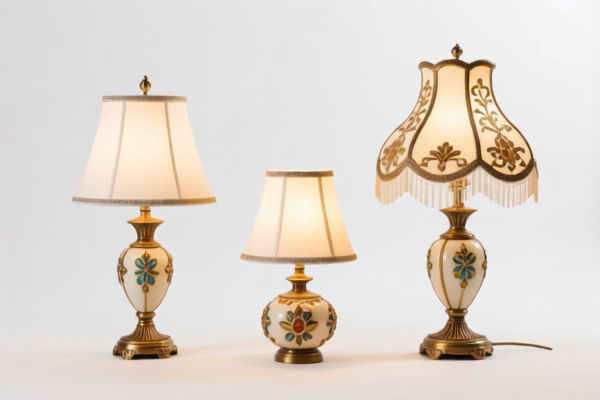

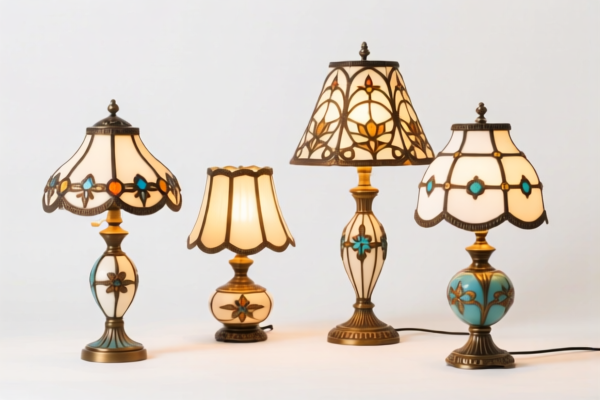
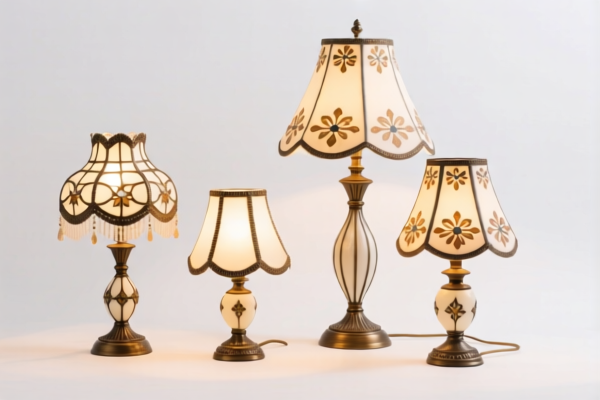
AI Analysis
💡 Light Bulbs & LED Lamps (General Lighting Equipment)
🌐 HS Code Reference & Customs Clearance Guide | 2026 Latest Tariff Analysis | Professional Clearance Strategy
📌 I. Product Definition & Classification: Do You Really Know "Light Bulbs"?
Light bulbs are the fundamental components of electrical lighting systems. In international trade, they are strictly categorized based on their technology type (Filament vs. LED) and technical specifications (Power and Voltage). The distinction is critical because the tariff rates and regulatory requirements differ significantly between traditional incandescent/halogen lamps and modern Light Emitting Diodes (LEDs).
⚠️ Key Distinction Points:
- Filament/Incandescent/Halogen Lamps: Use a heated filament. Subject to specific power (W) and voltage (V) thresholds.
- LED Light Sources: Use semiconductor technology. Often exempt from certain duties or subject to different statistical notes.
- Voltage & Power Limits: For filament lamps, exceeding 100V or 200W changes the HS Code classification entirely.
📦 II. HS Code Classification Details (2026 Latest Tariff Authority Comparison)
Based on the provided data, here are the two primary classifications for "Light Bulb Set of 10":
| HS Code | Product Description | Applicable Scenario | Tax Rate |
|---|---|---|---|
8539.22.80.40 |
Other Filament Lamps (Excluding UV/IR). Power: >15W but ≤150W; Voltage: >100V | Traditional incandescent, halogen, or similar filament-based bulbs. Must be in the specific power/voltage range. | 0.0% |
8539.52.00.20 |
Light-Emitting Diode (LED) Light Sources (Specific type per statistical note 7(b)) | Modern LED bulbs, downlights, or strips. Requires compliance with statistical note 7(b) to this chapter. | 0.0% |
🔍 Critical Note:
- Filament Lamps: If your bulbs are not LED and fall outside the 15W-150W range OR have voltage ≤100V, they may fall under a different HS Code not listed here (e.g.,8539.22.80.30or similar). Ensure your product matches the description exactly.
- LED Lamps: Must be "of a type specified in statistical note 7(b) to this chapter." If they don't meet this specific statistical definition, they may be misclassified.
💰 III. 2026 Latest Tariff Rate Details (With Additional Taxes)
✅ Applicable Country: United States (US)
✅ Origin: China (CN) [Assumed based on typical trade context, but verify if different]
✅ Effective Date: 2025/2026 Tariff Schedule
🎯 1. 8539.22.80.40 — Other Filament Lamps (Power 15W-150V, Voltage >100V)
| Item | Content |
|---|---|
| Base Tariff Rate | 0.0% (Ad valorem) |
| Section 301 Additional Tariff | 0.0% (As per provided data) |
| IEEPA Additional Tariff | 0.0% (As per provided data) |
| Total Tax Rate | 0.0% |
| Tax Calculation | CIF Value × 0% = $0 |
| De Minimis Eligibility | N/A (Since tax is 0%, de minimis is less relevant for cost, but still subject to inspection) |
| Legal Basis Path | USITC:8539.22.80.40 |
📌 Explanation:
- This specific filament lamp category currently enjoys a zero-duty status in the provided dataset.
- However, verify if other general Section 301 tariffs apply to other parts of the shipment (e.g., packaging, drivers if mixed).
- Caution: Many filament lamps have been phased out in some regions due to energy efficiency regulations. Ensure compliance with local energy standards (e.g., DOE regulations in the US).
🎯 2. 8539.52.00.20 — Light-Emitting Diode (LED) Light Sources
| Item | Content |
|---|---|
| Base Tariff Rate | 0.0% (Ad valorem) |
| Section 301 Additional Tariff | 0.0% (As per provided data) |
| IEEPA Additional Tariff | 0.0% (As per provided data) |
| Total Tax Rate | 0.0% |
| Tax Calculation | CIF Value × 0% = $0 |
| De Minimis Eligibility | N/A (Zero tax) |
| Legal Basis Path | USITC:8539.52.00.20 |
📌 Explanation:
- LED lamps, when meeting Statistical Note 7(b), are classified under this HS Code.
- Current Status: Zero duty under the provided data.
- Regulatory Note: LED products often require FCC Certification (for electronic components) and ENERGY STAR compliance for marketing claims.
🛠️ IV. Customs Clearance Practical Advice (Battle-Proven Pitfall Avoidance Guide)
✅ 1. Required Documentation Checklist (Non-Negotiable)
| Document | Must Provide | Explanation |
|---|---|---|
| ✅ Product Specifications Sheet | ✔️ | Must clearly state: Technology Type (LED vs. Filament), Power (Watts), Voltage (Volts), Lumens, Base Type (E26, B22, etc.). |
| ✅ Product Photos | ✔️ | Clear images of the bulb, packaging, and any labels showing W/V ratings. |
| ✅ Commercial Invoice | ✔️ | Must describe items as "LED Light Bulbs" or "Incandescent Filament Lamps" – DO NOT use vague terms like "Lighting Parts." |
| ✅ FCC Certification (For LED) | ✔️ | Mandatory for LEDs in the US. Without it, the shipment will be detained. |
| ✅ Energy Compliance Proof | ✔️ | For LED: ENERGY STAR test reports. For Filament: DOE compliance proof (if applicable). |
| ✅ Packing List | ✔️ | Specify quantity per box (e.g., "Set of 10") and total sets. |
✅ 2. Declaration Tips (Key Mantras)
🔥 “Know Your Tech, Match the Specs, Zero Duty is Sweet!”
| Scenario | Correct Declaration | Wrong Practice |
|---|---|---|
| LED Bulbs | 8539.52.00.20 + "LED Light Source" |
Using filiment HS Code → Classification Error |
| Filament Bulbs (15W-150W, >100V) | 8539.22.80.40 + "Incandescent Lamp" |
Using LED HS Code → Customs Delay |
| Filament Bulbs (≤100V or >150W) | Different HS Code (Not in provided data) | Using 8539.22.80.40 → Incorrect Classification |
| Mixed Sets (LED + Filament) | Split Declaration | Declaring as one HS Code → Penalty |
✅ 3. Special Cases Handling
| Case | Handling Advice |
|---|---|
| "Set of 10" Packaging | Declare as 10 individual units or 1 set depending on commercial practice. Ensure the invoice value is per unit or per set clearly. |
| Smart Bulbs (WiFi/Bluetooth) | If the LED bulb has integrated wireless communication, it MAY fall under 8517.62 (Machines for reception/conversion of data) instead of 8539. Consult a specialist. |
| Ultraviolet/Infrared Lamps | Excluded from 8539.22.80.40. Must use different HS Code (e.g., 8539.31). Do not misclassify. |
| LEDs Not Meeting Note 7(b) | May fall under 8539.52.00.10 or other subheadings with different duties. Verify statistical note compliance. |
🌍 V. Global Market Clearance Comparison (2026 Latest)
| Country/Region | Recommended HS Code | Tariff | Certification | Notes |
|---|---|---|---|---|
| 🇺🇸 USA | 8539.52.00.20 (LED)8539.22.80.40 (Filament) |
0.0% | FCC (LED), DOE (Energy) | Zero duty for these specific codes. |
| 🇨🇳 China | 8539.52.00.20 / 8539.22.80.40 |
Varies (Import) | CCC (if applicable) | Check if LED requires CCC. |
| 🇪🇺 EU | 8539.52.00 / 8539.22.80 |
Varies (0-4%) | CE, RoHS, ErP | ErP energy labeling is critical. |
| 🇬🇧 UK | 8539.52.00 / 8539.22.80 |
Varies | UKCA | Post-Brexit rules apply. |
| 🇨🇦 Canada | 8539.52.00 / 8539.22.80 |
Varies | IC (FCC Equivalent) | Energy Star recommended. |
📌 Conclusion:
- USA offers 0% duty for these specific classifications in the provided data.
- Certifications are the real barrier, not tariffs. FCC (for LED/electronic) and Energy Compliance are mandatory.
- Smart Bulbs are a high-risk area for misclassification.
📌 VI. Common Mistakes & Pitfall Guide (Lessons Learned)
❌ Mistake 1: Declaring "LED Bulbs" under Filament HS Code (8539.22...)
👉 Consequence: Customs rejects the entry, requires reclassification, delays shipment by 1-2 weeks.
❌ Mistake 2: Failing to provide FCC Certification for LED bulbs
👉 Consequence: Shipment seized or returned. FCC is non-negotiable for US import of electronic lighting.
❌ Mistake 3: Misstating Power/Voltage for Filament Lamps
👉 Consequence: If voltage is ≤100V, HS Code changes, potentially affecting duty (though currently 0% in data, general policy may vary).
❌ Mistake 4: Using "Light Source" as a generic description
👉 Consequence: Vague descriptions trigger manual review, increasing inspection risk.
✅ Correct Declaration Example:
"LED Light Bulbs, E26 Base, 10W, 120V, A19 Shape, FCC Certified, Model XYZ, Set of 10"
🎯 VII. Conclusion: Professional Declaration, Save Time, Reduce Costs!
🎯 Remember the Mantra:
🔹 "LED needs FCC, Filament needs Specs, Match the W and V, Zero Duty is Next!"
🔹 "HS Code Determines Duty, Description Determines Speed, Error Costs Delay!"
📌 Pro Tip:
If your light bulbs are "Smart" (WiFi/Zigbee), they may NOT qualify for 8539.52.00.20. They might be classified as telecommunications devices under 8517.62, which could have different tariffs and FCC rules. Always verify smart bulb classification!
📣 Immediate Action:
📞 Confirm FCC Status for LED Bulbs
📄 Ensure Invoice Lists Wattage & Voltage Clearly
🚀 Get Your Shipment Cleared Fast with Accurate Docs!
✨ Professional Clearance Starts with Accurate Classification!
💼 Your Profit Margin Depends on Correct HS Codes!
Customer Reviews
About HS Code Classification
The Harmonized System (HS) is an internationally standardized nomenclature developed by the World Customs Organization (WCO) to classify traded products. Over 200 countries use the HS system as the basis for customs tariffs, trade statistics, and import/export regulations.
Each HS code follows a hierarchical structure:
- Chapter (2 digits) — Broad category of goods (e.g., Chapter 84: Machinery and Mechanical Appliances)
- Heading (4 digits) — More specific grouping within the chapter
- Subheading (6 digits) — Internationally standardized breakdown, used by all WCO member countries
- National subdivisions (8-10 digits) — Country-specific extensions for further classification, such as US HTSUS 10-digit codes
Correct HS code classification is essential for smooth customs clearance, accurate duty payment, and compliance with trade regulations. Misclassification can lead to customs delays, overpayment of duties, or penalties.
When importing from CN to US, the applicable tariff rates may include:
- Most-Favored-Nation (MFN) rate — The standard duty rate applied to WTO members
- General rate — Applied to countries without trade agreements
- Trade remedy duties — Additional tariffs such as Section 301 (anti-dumping), Section 232 (national security), or countervailing duties
The information provided on this page is for reference purposes only. For official classification, please consult with your local customs authority or a licensed customs broker.