Light Coated Paper Roll
CN → US| HS Code | Tariff Rate | Origin | Destination | Doc |
|---|---|---|---|---|
| 4811512010 | 35.0% | CN | US | Official Doc |
| 4811516000 | 35.0% | CN | US | Official Doc |
| 4810131900 | 35.0% | CN | US | Official Doc |
| 4810132090 | 35.0% | CN | US | Official Doc |
| 4810221000 | 35.0% | CN | US | Official Doc |
Product Images



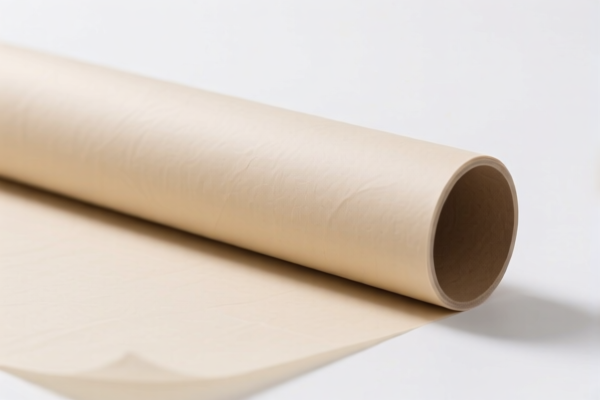
AI Analysis
📜 Light Coated Paper Rolls (Paper for Printing, Packaging & Industrial Use)
🌐 HS Code Reference & Customs Clearance Guide | 2026 Latest Tariff Analysis | Professional Clearance Strategy for US Imports
📌 1. Product Definition: What Exactly is "Light Coated Paper Roll"?
Light Coated Paper Rolls are high-quality paper products characterized by a smooth, glossy, or matte surface finish (coating) and a relatively low grammage (weight per square meter). They are primarily used for: * High-quality Printing: Magazines, catalogs, brochures, and packaging inserts. * Packaging Materials: Linerboards for corrugated boxes, paper bags, and cartons. * Industrial Applications: Base materials for labels, tapes, and specialized containers (e.g., beverage carton linings).
⚠️ Key Distinction Point:
- Coating Type: The coating can be clay, calcium carbonate, polymer, or composite. This determines if it falls under "Clay-Coated" (4810) or "Other Coated" (4811).
- Form: Must be in rolls (jumbo rolls) to qualify for the HS codes listed below. If cut into sheets, classification may change.
- Base Material: The core is newsprint, mechanical pulp, or chemical pulp, which affects the "Light" weight classification.
📦 2. HS Code Classification Details (2026 Latest Tariff Authority)
Based on the provided data, here are the precise HS Codes for Light Coated Paper Rolls imported into the United States:
| HS Code | Product Description | Application Scenario | Coating/Structure Characteristics |
|---|---|---|---|
4811.51.20.10 |
Coated Paper Rolls (Specific Use) | Beverage Container Base Material. Infered use for liquid-proof linings or specific packaging. | Coated paper, roll form, specific substrate for beverage containers. |
4811.51.60.00 |
Coated Paper Rolls (General) | General Coated Paper Products. Standard coated paper rolls for various industrial uses. | Coating and classification match; standard roll form, no conflicts. |
4810.13.19.00 |
Clay-Coated Paper Rolls (Printing) | Printing & Writing. High-quality printing papers, magazines, catalog stock. | Coating matches material features; roll form; inferred for printing/writing. |
4810.13.20.90 |
Clay-Coated Paper Rolls (General) | General Printing/Writing (Catch-all). For other coated papers not specifically listed. | Coated paper meets material reqs; roll form; fallback category for "Other". |
4810.22.10.00 |
Lightweight Printing Paper Rolls | Lightweight Printing. High-speed printing, catalogs, direct mail. | Lightweight + Printing purpose; roll form; contains inorganic coating. |
🔍 Critical Note:
- All listed codes are for ROLLS (Jumbo Rolls), not sheets.
- 4810 series typically refers to paper/base paper with clay or similar inorganic coatings.
- 4811 series refers to paper treated with plastics, oils, or other coatings (including certain polymer coatings) or laminated.
- "Lightweight" usually implies a lower basis weight (e.g., < 40 g/m² or specific trade definitions), but always verify with the specific commercial invoice description.
💰 3. 2026 Latest Tariff Rate Breakdown (Including Surcharges & Policies)
✅ Applicable Country: United States (US)
✅ Origin: China (CN)
✅ Effective Date: From November 10, 2025 (and subsequent imports)
All the HS codes below share the same tariff structure due to the ongoing trade measures against China.
🎯 Total Tariff Rate: 35.0%
| Component | Rate | Legal Basis | Description |
|---|---|---|---|
| Basic Tariff | 0.0% | HTSUS General | Standard Most-Favored-Nation (MFN) duty is often 0% for paper products. |
| Section 301 Surcharge | +25.0% | USITC Footnote 9903.88.01 | Additional tariff imposed on Chinese goods under Section 301 of the Trade Act. |
| IEEPA Surcharge | +10.0% | IEEPA:9903.01.25/24 | Tariff under the International Emergency Economic Powers Act targeting China. |
| Total Effective Rate | 35.0% | CIF Value × 35% |
📌 Interpretation:
- Despite the basic duty being 0%, the additional surcharges of 35% significantly increase the landed cost.
- This is a high-cost import category. Profit margins must account for this 35% duty burden.
- No De Minimis Exemption: These items cannot use the $800 de minimis threshold (Section 321). They must be formally entered.
🛠️ 4. Customs Clearance Operational Advice (Practical Pitfall Avoidance)
✅ 1. Required Documentation Checklist (Mandatory)
| Document | Mandatory? | Purpose/Notes |
|---|---|---|
| Commercial Invoice | ✅ | Must clearly state "Coated Paper Roll," HS Code, Origin, and CIF value. |
| Packing List | ✅ | Detail roll dimensions, weight, and quantity. Ensure consistency with invoice. |
| Product Specification Sheet | ✅ | Critical: Specify coating type (clay, polymer, etc.), basis weight, GSM, and end-use. |
| Certificate of Origin (CO) | ✅ | Required to prove Chinese origin (triggering the 35% tariff) or to claim exemptions if eligible (e.g., via third-country processing, though rare for simple coating). |
| Bill of Lading (B/L) | ✅ | Original B/L required for formal entry. |
| Importer Security Filing (ISF) | ✅ | Must be filed 24 hours before loading. |
| Customs Bond | ✅ | Single Transaction or Continuous Bond required for formal entry. |
✅ 2. Declaration Tips (Key Mantra)
🔥 "Be Specific: Coating Type + Form + Use = Correct Code"
| Scenario | Correct Declaration | Wrong Practice | Consequence |
|---|---|---|---|
| General Coated Paper | 4811.51.60.00 |
Vague: "Paper Roll" | CBP may reclassify, leading to delays & penalties. |
| For Beverage Containers | 4811.51.20.10 |
Generic: "Packaging Paper" | If end-use is provable, this code might be more accurate for specific linings. |
| Printing Paper | 4810.13.19.00 or 4810.22.10.00 |
"Light Paper" without coating detail | Must specify inorganic/clay coating to qualify for 4810. |
| Cut Sheets | NOT APPLICABLE | Declaring rolls as sheets | Sheets may fall under different HTS (e.g., 4802/4810 other parts), potentially different duties. |
✅ 3. Special Considerations
| Situation | Handling Advice |
|---|---|
| Coating Material Verification | Provide MSDS (Material Safety Data Sheet) if the coating contains specific chemicals. CBP may query the coating composition. |
| End-Use Proof | For 4811.51.20.10 (Beverage Container Base), have evidence (e.g., customer PO specifying end-use) to justify this specific subheading. |
| Origin Tracing | Ensure the pulp and coating process occurred in China. If coating is done in Vietnam, origin rules may change (Substantial Transformation). |
| Anti-Dumping/Countervailing Duties (AD/CVD) | Check separately! Paper products from China sometimes face AD/CVD orders. Confirm if your specific product type is excluded. |
🌍 5. Global Market Comparison (2026)
| Market | Recommended HS Code | Estimated Duty (China Origin) | Notes |
|---|---|---|---|
| 🇺🇸 USA | 4811.51.20.10 / 4810.13... |
35.0% | High due to 301 + IEEPA surcharges. |
| 🇨🇳 China | 4811.51.20.10 / 4810.13... |
Varies (0-10%) | Import duties may be lower; check latest PRC tariff schedule. |
| 🇪🇺 EU | 4811.51.20 / 4810.13... |
~0-6.5% | No 301-style surcharges, but VAT applies. |
| 🇨🇦 Canada | 4811.51.20 / 4810.13... |
~0-5% | USMCA may apply if originating in NA, but China origin faces MFN rates. |
📌 Conclusion:
- The US is the most expensive market for Chinese coated paper due to the 35% total tariff.
- Consider third-country processing (e.g., coating in Malaysia or Vietnam) to potentially bypass IEEPA/301 tariffs, if supply chain allows.
📌 6. Common Errors & Pitfalls (Blood & Tears Lessons)
❌ Error 1: Declaring "Paper Roll" without specifying "Coated"
👉 Consequence: CBP may classify under base paper (higher duty or different regulatory requirements) or reject the entry for misdescription.
❌ Error 2: Ignoring the "Roll" Form Requirement
👉 Consequence: If shipped as cut sheets, HS Code 4811/4810 may be incorrect. Sheets often fall under 4802 or 4803, which might have different duty rates.
❌ Error 3: Underestimating the 35% Tariff Impact
👉 Consequence: Pricing models that ignore the 35% surcharge will result in massive losses. Always build 35% into the CIF + Duty calculation.
❌ Error 4: No End-Use Documentation for Specific Codes (e.g., 4811.51.20.10)
👉 Consequence: If CBP audits and you cannot prove the "beverage container base" use, they may reclassify to a generic code, potentially altering the legal interpretation.
✅ Correct Practice:
"Jumbo Rolls, Clay-Coated Light Paper, 50 GSM, for Magazine Printing, HS 4810.13.19.00, Origin: China"
🎯 7. Conclusion: Professional Declaration for Cost Efficiency
🎯 Key Takeaways:
🔹 "35% is the number to remember." Basic duty is 0%, but surcharges make it 35%.
🔹 "Coating defines the code." Clay/Inorganic →4810. Polymer/Other →4811.
🔹 "Rolls vs. Sheets." Ensure your declaration matches the physical form (Jumbo Rolls).
🔹 "Origin is Key." Chinese origin triggers the surcharges.
📌 Pro Tip:
If you are exporting to the US, consider:
1. Pre-Ruling: Apply for a Customs Ruling Opinion to lock in the HS Code.
2. Supply Chain Diversification: Evaluate if coating can be done in a non-China country to mitigate the 35% tariff.
3. Pricing Strategy: Factor the 35% duty into your FOB/CIF quotes.
✨ Professional Customs Clearance Starts with Accurate Classification!
💼 Every percentage point of duty impacts your bottom line!
📣 Immediate Action:
📞 Consult a Licensed Customs Broker
📄 Verify Coating Composition & End-Use
🚀 Ensure Smooth Clearance & Cost Control!
Customer Reviews
About HS Code Classification
The Harmonized System (HS) is an internationally standardized nomenclature developed by the World Customs Organization (WCO) to classify traded products. Over 200 countries use the HS system as the basis for customs tariffs, trade statistics, and import/export regulations.
Each HS code follows a hierarchical structure:
- Chapter (2 digits) — Broad category of goods (e.g., Chapter 84: Machinery and Mechanical Appliances)
- Heading (4 digits) — More specific grouping within the chapter
- Subheading (6 digits) — Internationally standardized breakdown, used by all WCO member countries
- National subdivisions (8-10 digits) — Country-specific extensions for further classification, such as US HTSUS 10-digit codes
Correct HS code classification is essential for smooth customs clearance, accurate duty payment, and compliance with trade regulations. Misclassification can lead to customs delays, overpayment of duties, or penalties.
When importing from CN to US, the applicable tariff rates may include:
- Most-Favored-Nation (MFN) rate — The standard duty rate applied to WTO members
- General rate — Applied to countries without trade agreements
- Trade remedy duties — Additional tariffs such as Section 301 (anti-dumping), Section 232 (national security), or countervailing duties
The information provided on this page is for reference purposes only. For official classification, please consult with your local customs authority or a licensed customs broker.