Light Coated Paper Sheet For Photography
CN → US| HS Code | Tariff Rate | Origin | Destination | Doc |
|---|---|---|---|---|
| 4810226000 | 35.0% | CN | US | Official Doc |
| 4810227040 | 35.0% | CN | US | Official Doc |
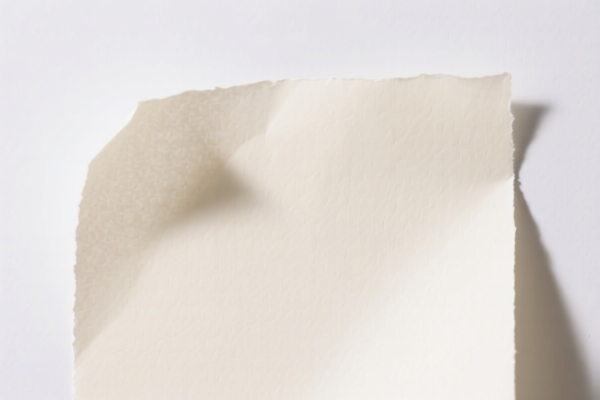
Product Images



AI Analysis
📸 Light Coated Paper Sheet For Photography
🌐 HS Code Reference & Customs Clearance Guide | 2026 Latest Tariff Analysis | Professional Clearance Strategy
📌 I. Product Definition & Classification: Are You Sure You Know "Light Coated Paper"?
Light coated paper for photography is a specialized type of paper and paperboard used primarily for photographic purposes. It is characterized by being coated with inorganic substances (such as kaolin or other white pigments) to enhance surface smoothness and brightness.
In international trade, it is critical to distinguish between photographic paper (which requires sensitization) and general printed/coated paper (used for graphics or writing). The key differentiator lies in the intended use and processing stage:
- Photographic Paper (Sensitized or To Be Sensitized): Specifically prepared for use in photography. This falls under a specific sub-category within the HS code structure.
- General Coated Paper: Used for writing, printing, or graphic purposes. Even if coated, if it is not destined for photographic sensitization, it falls under "Other" categories.
⚠️ Key Distinction Point:
- If the paper is specifically designed to be sensitized for photographic use → It belongs to4810.22.60.00.
- If the paper is coated but intended for general graphic purposes, printing, or writing (not photography) → It belongs to4810.22.70.40.
- Note: Both codes share the same tariff rate in this context, but the classification logic is vital for compliance.
📦 II. HS Code Classification Details (2026 Latest Tariff Authority Comparison)
| HS Code | Product Description | Applicable Scenario | Key Feature |
|---|---|---|---|
4810.22.60.00 |
Light-weight coated paper: Other: Other: Basic paper to be sensitized for use in photography | Photographic papers, silver halide papers, papers ready for chemical sensitization | ✅ For Photography |
4810.22.70.40 |
Light-weight coated paper: Other: Other: Other Other | General coated papers, high-grade printing papers, graphic arts papers | ❌ Not for Photography |
🔍 Critical Reminder:
- Both codes fall under Chapter 48, Heading 4810 (Paper/paperboard coated with kaolin/inorganic substances).
- Specifically, they are sub-headings for Light-weight coated paper where >10% of fibers are mechanical/chemi-mechanical.
- Do not confuse with uncoated photographic paper (which might fall under 4809 or 4811 depending on treatment).
- Even though the HS codes differ, the tariff impact is identical in the provided dataset.
💰 III. 2026 Latest Tariff Rate Details (Detailed Breakdown)
✅ Applicable Country: United States (US)
✅ Origin: China (CN)
✅ Effective Date: Current as of latest USITC data
🎯 1. 4810.22.60.00 —— Basic Paper to Be Sensitized for Use in Photography
| Item | Content |
|---|---|
| Base Tariff Rate | 0.0% (ad valorem) |
| Section 301 Additional Tariff | +25.0% |
| Total Tariff Rate | 25.0% |
| Tax Calculation | CIF Value × 25% |
| De Minimis Exemption | ❌ Not Applicable (High-risk category for small shipments) |
| Legal Basis Path | USITC:4810.22.60.00 → FOOTNOTE:301 |
📌 Explanation:
- The 0% base rate reflects the standard Most Favored Nation (MFN) treatment for coated paper.
- The +25% additional tariff is imposed under Section 301 of the Trade Act of 1974, targeting Chinese-origin goods.
- Total Duty: 25%. This is a significant cost factor that must be factored into landed cost calculations.
🎯 2. 4810.22.70.40 —— Other Light-Weight Coated Paper (Non-Photographic)
| Item | Content |
|---|---|
| Base Tariff Rate | 0.0% (ad valorem) |
| Section 301 Additional Tariff | +25.0% |
| Total Tariff Rate | 25.0% |
| Tax Calculation | CIF Value × 25% |
| De Minimis Exemption | ❌ Not Applicable |
| Legal Basis Path | USITC:4810.22.70.40 → FOOTNOTE:301 |
📌 Note:
- Although this code is for "Other" coated papers, the tariff structure is identical to photographic base paper.
- Whether it is for photography or general high-end printing, the 25% duty burden remains the same.
- Misclassification does not save money here but can lead to customs penalties if the product description does not match the HS code intent.
🛠️ IV. Customs Clearance Practical Advice (Pitfall Avoidance Guide)
✅ 1. Required Documentation Checklist (Mandatory)
| Document | Must Provide | Description |
|---|---|---|
| ✅ Product Specification Sheet | ✔️ | Must state: Coating material (Kaolin/Inorganic), Fiber content (>10% mechanical), Weight, GSM, Roll/Sheet size. |
| ✅ Commercial Invoice | ✔️ | Must clearly state: "Light-Weight Coated Paper for Photography" or "Coated Paper for Graphic Purposes". Avoid vague terms like "Paper". |
| ✅ Packaging List | ✔️ | Detail roll lengths, sheet dimensions, and packaging type. |
| ✅ Certificate of Origin (CO) | ✔️ | Essential to prove origin. If non-China origin, 25% tariff may be avoided. |
| ✅ Photographs | ✔️ | Show the paper surface, coating, and any branding/packaging. |
✅ 2. Declaration Techniques (Key Mnemonics)
🔥 “Specify Use, Describe Coating, Avoid Ambiguity!”
| Scenario | Correct Declaration | Incorrect Practice |
|---|---|---|
| Photographic Base Paper | "Basic paper to be sensitized for use in photography, light-weight coated, kaolin coated" | "Photographic Paper" (Too vague, may trigger scrutiny) |
| General Coated Paper | "Light-weight coated paper, kaolin coated, for printing/graphic purposes" | "Coated Paper" (Missing "Light-weight" or coating type) |
| Mixed Shipment | Separate lines for 4810.22.60.00 and 4810.22.70.40 if both types are present. |
Combining into one line item → Classification Error Risk |
✅ 3. Special Case Handling
| Situation | Handling Advice |
|---|---|
| Paper intended for Photography but Not Yet Sensitized | Use 4810.22.60.00. Provide a letter of intent stating it is "basic paper to be sensitized." |
| Paper for General High-End Printing | Use 4810.22.70.40. Emphasize "graphic purposes" in description. |
| Paper with Other Coatings (e.g., Plastic, Wax) | NOT 4810. Check Heading 4811 (Coated with plastic/wax). Misclassification leads to major penalties. |
| Uncoated Paper | NOT 4810. Check Heading 4802 or 4809. |
🌍 V. Global Market Comparison (2026 Latest)
| Country/Region | Recommended HS Code | Tariff (China Origin) | Notes |
|---|---|---|---|
| 🇺🇸 USA | 4810.22.60.00 / 4810.22.70.40 |
25% | Section 301 tariff applies. Base rate 0%. |
| 🇨🇳 China | 4810.22.60.00 / 4810.22.70.40 |
Varies (Import Duty) | No Section 301. Check current Chinese MFN rate. |
| 🇪🇺 EU | 4810.22 |
~5-6% | No additional punitive tariffs. Check CE/RoHS if applicable. |
| 🇬🇧 UK | 4810.22 |
~5-6% | Post-Brexit tariff regime applies. |
| 🇦🇺 Australia | 4810.22 |
~5% | Free Trade Agreement with China may reduce to 0%. |
📌 Conclusion:
- USA is the only major market imposing a 25% additional tariff on this product from China.
- Cost Planning: Ensure the 25% duty is included in your CIF pricing strategy.
- Risk Mitigation: If possible, source from non-China origins (e.g., Vietnam, Malaysia) to avoid Section 301, provided the origin rules are strictly met.
📌 VI. Common Errors & Pitfall Guide (Lessons Learned)
❌ Error 1: Declaring "Photographic Paper" without specifying "Basic Paper to be Sensitized"
👉 Consequence: Customs may misclassify as 4810.22.70.40 or demand further inspection, causing delays.
👉 Fix: Use the exact legal text: "Basic paper to be sensitized for use in photography."
❌ Error 2: Ignoring the "Light-Weight" requirement
👉 Consequence: If the paper is not "light-weight" (as defined in HS 4810.22), it may fall under 4810.21 or 4810.29, which might have different tariff implications.
👉 Fix: Verify if >10% fibers are mechanical/chemi-mechanical and if it meets the "light-weight" criteria.
❌ Error 3: Assuming all coated paper is the same
👉 Consequence: Using 4810.22.70.40 for photographic paper is technically incorrect, even if the rate is the same. It creates compliance risk.
👉 Fix: Always match the product description to the specific HS sub-heading intent.
✅ Correct Declaration Example:
"Light-weight coated paper, coated on one side with kaolin, 105gsm, in rolls, basic paper to be sensitized for use in photography, Model XYZ, Made in China"
🎯 VII. Conclusion: Professional Declaration, Smooth Clearance!
🎯 Remember the Mnemonic:
🔹 "Photography Base: 60.70. Graph: 70.40. Rate: 25%. Origin: China."
🔹 "HS Code defines the tax, 25% is the burden, declare accurately to avoid delays."
📌 Pro Tip:
If your paper is originally from Vietnam, Indonesia, or Thailand, you may avoid the 25% Section 301 tariff.
However, ensure you have proper Proof of Origin and that no substantial transformation occurred in China.
Always apply for an Advance Ruling if the product's classification is ambiguous.
📣 Immediate Action:
📞 Contact a licensed customs broker + Provide Product Specs + Confirm Origin
🚀 Let your coated paper clear customs efficiently, minimize costs, and boost profits!
✨ Professional Clearance Starts with Precise Classification!
💼 Every cent of duty matters! Calculate wisely!
Customer Reviews
About HS Code Classification
The Harmonized System (HS) is an internationally standardized nomenclature developed by the World Customs Organization (WCO) to classify traded products. Over 200 countries use the HS system as the basis for customs tariffs, trade statistics, and import/export regulations.
Each HS code follows a hierarchical structure:
- Chapter (2 digits) — Broad category of goods (e.g., Chapter 84: Machinery and Mechanical Appliances)
- Heading (4 digits) — More specific grouping within the chapter
- Subheading (6 digits) — Internationally standardized breakdown, used by all WCO member countries
- National subdivisions (8-10 digits) — Country-specific extensions for further classification, such as US HTSUS 10-digit codes
Correct HS code classification is essential for smooth customs clearance, accurate duty payment, and compliance with trade regulations. Misclassification can lead to customs delays, overpayment of duties, or penalties.
When importing from CN to US, the applicable tariff rates may include:
- Most-Favored-Nation (MFN) rate — The standard duty rate applied to WTO members
- General rate — Applied to countries without trade agreements
- Trade remedy duties — Additional tariffs such as Section 301 (anti-dumping), Section 232 (national security), or countervailing duties
The information provided on this page is for reference purposes only. For official classification, please consult with your local customs authority or a licensed customs broker.