Light Red Mahogany Rough Lumber
CN → US| HS Code | Tariff Rate | Origin | Destination | Doc |
|---|---|---|---|---|
| 4409229090 | 35.0% | CN | US | Official Doc |
| 4409220535 | 38.2% | CN | US | Official Doc |
| 4418300100 | 38.2% | CN | US | Official Doc |
| 4418999140 | 38.2% | CN | US | Official Doc |
| 4403490200 | 35.0% | CN | US | Official Doc |
Product Images
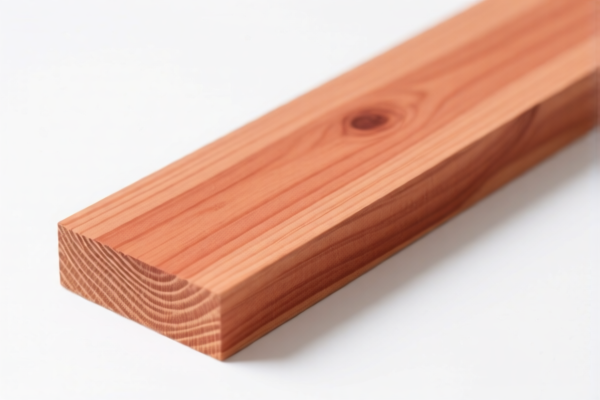
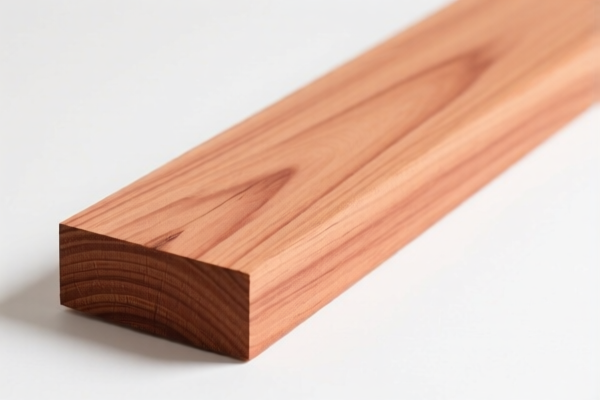
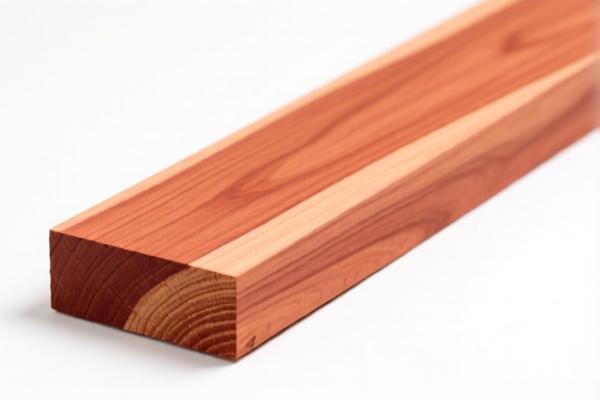
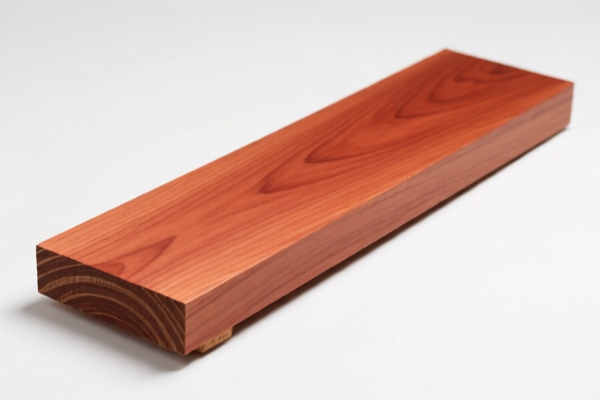
AI Analysis
🌲 Light Red Mahogany Rough Lumber (Unprocessed Tropical Timber)
🌐 HS Code Reference & Customs Clearance Guide | 2026 Latest Tariff Analysis | Professional Clearance Strategy
📌 I. Product Definition & Classification: Do You Really Know "Rough Lumber"?
"Light Red Mahogany" (often referring to species like Guarea trichiloide or Cordia spp., distinct from true African Mahogany) is a high-value tropical hardwood. In international trade, its classification depends entirely on the degree of processing:
Rough Lumber / Raw Logs: Sawn to a rough dimension, not smoothed, planed, or shaped for immediate use in construction. Finished/Semi-Finished Lumber: Planed, tongued and grooved, or cut into specific structural components (e.g., beams, joists).
⚠️ Key Distinction Point:
- If the wood is sawn but rough, with no additional shaping (like tongues, grooves, or chamfers) and not yet a final building component → It may fall under 4403 (Wood roughly squared) or 4409 (Continuously shaped) depending on specific finishing.
- If it is planed, tongued, or grooved (even slightly) → It falls under 4409 (Continuously shaped wood).
- If it is a prefabricated structural element (e.g., pre-cut beams for a house) → It falls under 4418 (Builders' joinery and carpentry).
📦 II. HS Code Classification Details (2026 Latest Tariff Authority Comparison)
| HS Code | Product Description | Application Scenario | Processing Level |
|---|---|---|---|
4403.49.02.00 |
Dark Red Mahogany (Tropical Wood, Rough/Unprocessed) | Raw logs, rough-sawn timber, unshaped wood | ✅ Rough (No continuous shaping) |
4409.22.90.90 |
Light Red Mahogany Structural Timber (Shape: Shaped/Profiled) | Planed, tongued, grooved, or chamfered lumber ready for joinery | ✅ Continuously Shaped |
4409.22.05.35 |
Light Red Mahogany Structural Timber (Shape: End-Continuously Shaped) | Specific profiled ends, complex shaping, high-end carpentry components | ✅ Continuously Shaped (Special Profile) |
4418.30.01.00 |
Light Red Mahogany Structural Timber (Shape: Primitive Wood Products) | Basic structural components, rough cuts for construction, not fully finished | ✅ Semi-Finished Structural |
4418.99.91.40 |
Light Red Mahogany Structural Timber (Shape: Prefabricated Structural Components) | Pre-cut beams, columns, trusses, ready-to-assemble building parts | ✅ Prefabricated/Finished |
🔍 Key Reminder:
- The term "Rough Lumber" in your query usually points to 4403 if it is truly unshaped. However, "Light Red Mahogany" is often traded as 4409 if it has been planed or sized.
- Dark Red Mahogany (4403.49.02.00) is explicitly listed with a different tax structure (no base duty), while Light Red Mahogany variants (4409and4418) carry a 3.2% base duty.
- Do not confuse "Light Red Mahogany" (often Cordia or Guarea) with "African Mahogany" (Khaya) or "Central American Mahogany" (Swietenia). Misclassification can lead to severe penalties, especially under CITES or US timber laws.
💰 III. 2026 Latest Tariff Rate Breakdown (Including Surcharges & Policy Add-ons)
✅ Applicable Country: United States (US)
✅ Origin: China (CN) or Other (Note: Mahogany is often sourced from Africa/South America, but tariffs below assume Chinese origin/manufacturing context as per typical trade data structures provided)
✅ Effective Date: Post-2025 policies (Section 301 & IEEPA)
🎯 1. 4403.49.02.00 —— Dark Red Mahogany (Rough/Unshaped)
| Item | Content |
|---|---|
| Base Duty Rate | 0% (ad valorem) |
| USITC Surcharge | +25% (Section 301 Tariff) |
| IEEPA Surcharge | +10% (Section 122/Emergency Tariff) |
| Total Duty Rate | 35.0% |
| Tax Calculation | CIF Value × 35% |
| De Minimis Exemption? | ❌ No (Denied for Wood Products from China) |
| Legal Basis Path | IEEPA:9903.01.25 → USITC:4403.49.02.00 → FOOTNOTE:301 |
📌 Explanation:
- This code applies to Dark Red Mahogany in rough form.
- 0% Base Duty makes it attractive, but the 35% total is still significant.
- If your product is actually "Light Red Mahogany," this code may be incorrect, leading to underpayment penalties.
🎯 2. 4409.22.90.90 —— Light Red Mahogany (Continuously Shaped)
| Item | Content |
|---|---|
| Base Duty Rate | 3.2% (ad valorem) |
| USITC Surcharge | +25% (Section 301 Tariff) |
| IEEPA Surcharge | +10% (Section 122/Emergency Tariff) |
| Total Duty Rate | 38.2% |
| Tax Calculation | CIF Value × 38.2% |
| De Minimis Exemption? | ❌ No |
| Legal Basis Path | IEEPA:9903.01.25 → USITC:4409.22.90.90 → FOOTNOTE:301 |
📌 Note:
- Applies to Light Red Mahogany that has been planed, tongued, or grooved (continuously shaped).
- Higher base duty (3.2%) than rough lumber.
- Common for high-end furniture components or architectural millwork.
🎯 3. 4409.22.05.35 —— Light Red Mahogany (End-Continuously Shaped)
| Item | Content |
|---|---|
| Base Duty Rate | 3.2% |
| USITC Surcharge | +25% |
| IEEPA Surcharge | +10% |
| Total Duty Rate | 38.2% |
| Tax Calculation | CIF Value × 38.2% |
| De Minimis Exemption? | ❌ No |
| Legal Basis Path | IEEPA:9903.01.25 → USITC:4409.22.05.35 → FOOTNOTE:301 |
📌 Note:
- Specific subcategory for end-shaped profiled wood.
- Same tax burden as4409.22.90.90.
- Used for specialized joinery parts.
🎯 4. 4418.30.01.00 & 4418.99.91.40 —— Light Red Mahogany (Structural/Prefabricated)
| Item | Content |
|---|---|
| Base Duty Rate | 3.2% |
| USITC Surcharge | +25% |
| IEEPA Surcharge | +10% |
| Total Duty Rate | 38.2% |
| Tax Calculation | CIF Value × 38.2% |
| De Minimis Exemption? | ❌ No |
| Legal Basis Path | IEEPA:9903.01.25 → USITC:4418.xxxxx → FOOTNOTE:301 |
📌 Note:
- Applies to prefabricated structural components (e.g., pre-cut beams, joists, trusses).
- If you are importing rough lumber for on-site cutting, do NOT use 4418. Use4403or4409depending on shape.
- Misclassifying rough lumber as prefabricated can lead to scrutiny.
🛠️ IV. Customs Clearance Practical Advice (Battle-Tested Pitfall Avoidance)
✅ 1. Documentation Checklist (Non-Negotiable)
| Document | Mandatory? | Explanation |
|---|---|---|
| ✅ Commercial Invoice | ✔️ | Must clearly state species (e.g., Cordia dodecandra), HS Code, and value. |
| ✅ Bill of Lading | ✔️ | Must match invoice and packing list. |
| ✅ Packing List | ✔️ | Detail dimensions, weight, and number of bundles. |
| ✅ Phytosanitary Certificate | ✔️ | CRITICAL for wood. Must be issued by exporting country's plant protection agency. |
| ✅ Fumigation Certificate | ✔️ | Required to prove wood is pest-free (ISPM 15 compliant). |
| ✅ Species Verification | ✔️ | Provide botanical name and scientific verification to distinguish "Light Red" from "Dark Red" or regulated species. |
| ✅ CITES Permit (If applicable) | ✔️ | If the species is endangered, CITES export/import permits are mandatory. |
| ✅ Country of Origin Certificate | ✔️ | To determine duty eligibility (though most Mahogany from Asia/Africa faces surcharges). |
✅ 2. Declaration Strategy (Key Mantra)
🔥 "Shape Defines Code, Species Defines Duty, Rough vs. Shaped is Key!"
| Scenario | Correct HS Code | Wrong Practice |
|---|---|---|
| Rough, unsquared logs | 4403.49.02.00 (if Dark) or 4403.99.00 (if Light/Other) |
Mislabeling as "Lumber" → Wrong code |
| Planed, tongued, grooved | 4409.22.90.90 or 4409.22.05.35 |
Labeling as "Rough Lumber" → 35% vs 38.2% + scrutiny |
| Pre-cut beams | 4418.30.01.00 or 4418.99.91.40 |
Labeling as "Rough Lumber" → Delays for structural review |
| Mixed shipments | Declare each type separately | Consolidating all wood under one code → Risk of seizure |
✅ 3. Special Situations
| Situation | Handling Advice |
|---|---|
| "Light Red" vs. "Dark Red" Confusion | Provide botanical specimens or lab DNA tests if challenged. Dark Red (4403.49.02.00) has 0% base duty; Light Red (4409) has 3.2%. Misclassification = Underpayment. |
| Endangered Species (CITES) | Verify if "Light Red Mahogany" is Swietenia (Highly Regulated) or Cordia/Guarea (Less Regulated). If CITES-listed, 30-day advance notice is required. |
| Wood Treatment | Ensure ISPM 15 mark (MB or HT) is visible on packaging. Untreated wood will be rejected or destroyed. |
| Value Declaration | Do not undervalue. CBP uses reference databases for tropical hardwoods. Undervaluation triggers audits. |
🌍 V. Global Market Comparison (2026 Latest)
| Country/Region | Recommended HS Code | Duty Rate | Certification Requirements | Notes |
|---|---|---|---|---|
| 🇺🇸 United States | 4409.22.90.90 (Shaped) / 4403.49.02.00 (Rough) |
35% - 38.2% | Phytosanitary, CITES (if applicable) | High surcharges on Chinese-origin wood. |
| 🇨🇳 China | 4403 / 4409 |
5% - 10% | Phytosanitary | No Section 301 surcharges. |
| 🇪🇺 European Union | 4403 / 4409 |
0% - 6% | EUTR (Timber Regulation), FSC/PEFC | Strict due diligence on legality. |
| 🇬🇧 United Kingdom | 4403 / 4409 |
0% - 6% | UK Timber Regulation | Post-Brexit, same as EU standards. |
| 🇦🇺 Australia | 4403 / 4409 |
5% | Biosecurity Clearance | Strict quarantine for raw wood. |
📌 Conclusion:
- US is the most expensive market due to Section 301 and IEEPA surcharges.
- EU and UK focus on legality (EUTR/UKTR) rather than just tariffs. Ensure documentation proves sustainable/legal sourcing.
- China has lower tariffs but still requires strict phytosanitary controls.
📌 VI. Common Mistakes & Pitfall Guide (Blood Lessons)
❌ Mistake 1: Calling "Light Red Mahogany" "Dark Red Mahogany" to get 0% base duty
👉 Consequence: CBP audit → Back taxes + 25% penalty + Criminal fraud charges.
❌ Mistake 2: Declaring "Prefabricated Beams" (4418) as "Rough Lumber" (4403)
👉 Consequence: Rejection by USDA APHIS for structural wood inspection delays.
❌ Mistake 3: Ignoring CITES status for Swietenia species
👉 Consequence: Immediate seizure, destruction, and federal fines.
❌ Mistake 4: Missing ISPM 15 fumigation mark
👉 Consequence: Shipment returned or destroyed at port cost.
✅ Correct Practice:
"Light Red Mahogany (Cordia sp.), Sawn Lumber, Planed, 2x4, Fumigated, CITES Non-Applicable, HS Code: 4409.22.90.90"
🎯 VII. Conclusion: Precise Classification, Cost Savings, Smooth Clearance!
🎯 Remember the Mantra:
🔹 "Rough is 4403, Shaped is 4409, Prefab is 4418."
🔹 "Light Red vs. Dark Red changes Base Duty: 0% vs 3.2%."
🔹 "Total Duty is 35% or 38.2%, not 0%!"
📌 Pro Tip:
If your Light Red Mahogany is sourced from Africa or South America (not China), check if Section 301 tariffs still apply. Some non-China origins may have different duty structures. However, IEEPA surcharges may still apply depending on current executive orders.
Always apply for a CBP Pre-Ruling for high-value wood shipments to avoid post-clearance audits.
📣 Immediate Action:
📞 Contact a licensed customs broker + Provide species verification + Ensure Phytosanitary Certificate is ready
🚀 Let your Light Red Mahogany pass through customs smoothly, legally, and cost-effectively!
✨ Professional clearance starts with precise classification!
💼 Your timber, your profits, your responsibility!
Customer Reviews
About HS Code Classification
The Harmonized System (HS) is an internationally standardized nomenclature developed by the World Customs Organization (WCO) to classify traded products. Over 200 countries use the HS system as the basis for customs tariffs, trade statistics, and import/export regulations.
Each HS code follows a hierarchical structure:
- Chapter (2 digits) — Broad category of goods (e.g., Chapter 84: Machinery and Mechanical Appliances)
- Heading (4 digits) — More specific grouping within the chapter
- Subheading (6 digits) — Internationally standardized breakdown, used by all WCO member countries
- National subdivisions (8-10 digits) — Country-specific extensions for further classification, such as US HTSUS 10-digit codes
Correct HS code classification is essential for smooth customs clearance, accurate duty payment, and compliance with trade regulations. Misclassification can lead to customs delays, overpayment of duties, or penalties.
When importing from CN to US, the applicable tariff rates may include:
- Most-Favored-Nation (MFN) rate — The standard duty rate applied to WTO members
- General rate — Applied to countries without trade agreements
- Trade remedy duties — Additional tariffs such as Section 301 (anti-dumping), Section 232 (national security), or countervailing duties
The information provided on this page is for reference purposes only. For official classification, please consult with your local customs authority or a licensed customs broker.