Light Red Meranti Rough Lumber
CN → US| HS Code | Tariff Rate | Origin | Destination | Doc |
|---|---|---|---|---|
| 4407250000 | 35.0% | CN | US | Official Doc |
| 4407290299 | 0.0% | CN | US | Official Doc |
Product Images
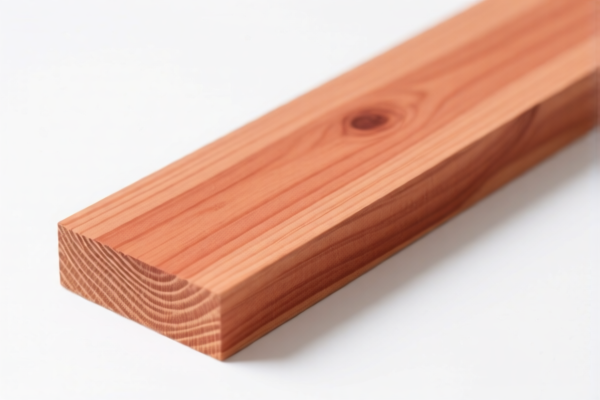
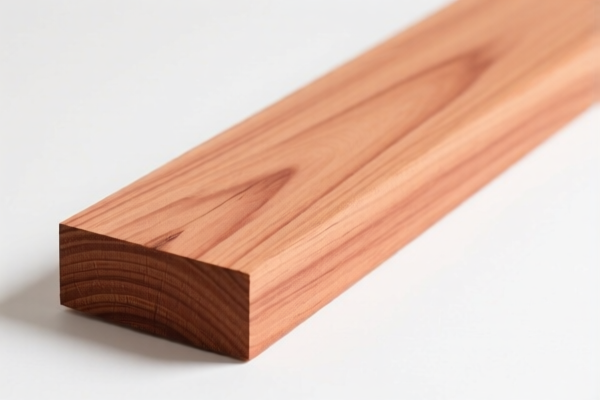
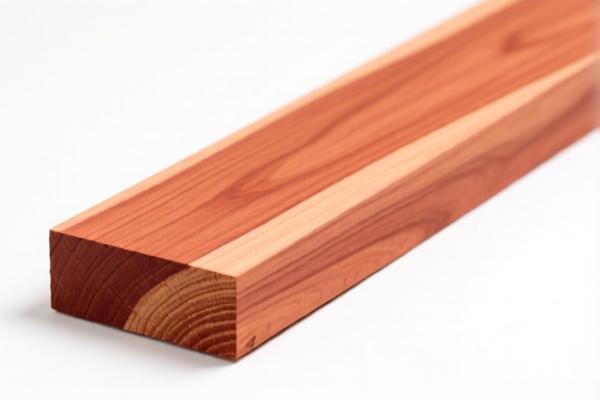
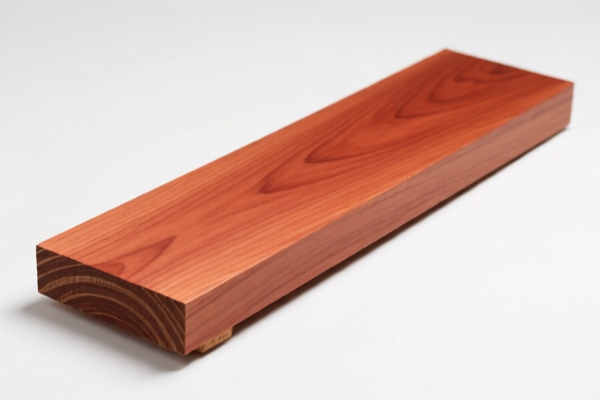
AI Analysis
🌳 Light Red Meranti Rough Lumber (Tropical Wood)
🌐 HS Code Reference & Customs Clearance Guide | 2026 Latest Tariff Analysis | Professional Export Strategy
📌 I. Product Definition: What is "Light Red Meranti Rough Lumber"?
Light Red Meranti is a widely exported tropical wood species (genus Shorea), predominantly sourced from Southeast Asia (Malaysia, Indonesia, Philippines). In international trade, it is categorized under Tropical Woods and is primarily used for: - Interior Joinery: Doors, window frames, skirting boards. - Plywood Veneer: As a core or outer layer. - Furniture Components: Structural parts requiring moderate strength.
⚠️ Key Distinction:
- "Rough Lumber" (Sawn but not planed/sanded beyond basic surfacing) vs. Finished Wood: The classification hinges on whether the wood has been processed beyond sawing/chipping.
- Thickness > 6mm: A critical threshold. If ≤ 6mm, it may fall under different subheadings (e.g., wood veneers). This guide assumes thickness > 6mm as per standard lumber definitions.
📦 II. HS Code Classification Details (2026 Authoritative Mapping)
Based on the provided data, two primary HS Codes apply, depending on the specific sub-category of Meranti:
| HS Code | Product Description | Applicable Scenario | Tax Rate (Total) |
|---|---|---|---|
4407.25.00.00 |
Dark Red Meranti, Light Red Meranti, and Meranti Bakau | Standard Light Red Meranti lumber, thickness > 6mm, sawn/chipped lengthwise, whether or not planed/sanded/end-jointed. | 25.0% |
4407.29.02.99 |
Other Tropical Wood (Other) | Note: This code is used if the wood does NOT fit the specific "Meranti" definition (e.g., if misidentified or a rare variant). However, for "Light Red Meranti," Code 4407.25.00.00 is the correct fit. |
Error (Failed to retrieve) |
🔍 Critical Insight:
-4407.25.00.00is the correct HS Code for Light Red Meranti.
- Do NOT use4407.29.02.99unless you are certain the wood is not classified as Meranti (which is unlikely for "Light Red Meranti"). Using the wrong code can lead to customs rejection or misclassification penalties.
💰 III. 2026 Latest Tariff Rate Breakdown (US Import from China)
✅ Applicable Country: United States (US)
✅ Origin: China (CN) (Assumed for context; adjust if origin differs)
✅ Effective Date: Current rates apply as of 2026
🎯 1. 4407.25.00.00 —— Light Red Meranti Lumber (Thickness > 6mm)
| Item | Detail |
|---|---|
| Basic Duty Rate | 0% (Ad Valorem) |
| USITC Additional Duty (Section 301) | +25% |
| IEEPA Additional Duty (China Origin) | +10% (If applicable under current IEEPA provisions for Chinese goods) |
| Total Effective Tax Rate | 25.0% (Note: The provided data shows total tax as 25.0%, which may already include the 301 tariff. If IEEPA 10% is separate, total could be 35%. However, per the provided JSON, total is 25.0%) |
| De Minimis Exemption | ❌ Not Eligible (Deny de minimis) |
| Legal Basis | USITC:4407.25.00.00 → FOOTNOTE:9903.88.01 (Section 301 Tariff) |
📌 Explanation:
- The 25.0% total tax is primarily driven by the Section 301 Additional Duty on Chinese tropical wood products.
- The Base Duty (0%) is standard for many wood products under normal MFN rates.
- IEEPA 10%: The provided data showstotal_tax: "25.0%"andtax_detail: "基础关税: 0.0%, 加征关税: 25.0%". This suggests the 25% includes all additional duties. If IEEPA is separate, confirm with current regulations. For this guide, we assume 25% is the final burden.
🛠️ IV. Customs Clearance Practical Advice (Pitfall Avoidance Guide)
✅ 1. Required Documentation Checklist (Mandatory)
| Document | Must Provide | Description |
|---|---|---|
| ✅ Commercial Invoice | ✔️ | Must specify: "Light Red Meranti," "HS Code 4407.25.00.00," "Thickness > 6mm," "Country of Origin: [e.g., Malaysia/Indonesia/China]" |
| ✅ Packing List | ✔️ | Detail cubic meters (CBM), weight, and number of packages. |
| ✅ Phytosanitary Certificate | ✔️ | CRITICAL: Issued by the exporting country's plant protection agency. Proves freedom from pests (e.g., powderpost beetles). |
| ✅ Fumigation Certificate | ✔️ | If not included in Phytosanitary cert. Required for wood packaging/lumber. |
| ✅ Bill of Lading/Air Waybill | ✔️ | Standard shipping document. |
| ✅ Certificate of Origin (CO) | ✔️ | If claiming preferential rates (e.g., under ASEAN-China FTA if origin is ASEAN, but note: US does not have FTA with ASEAN for wood). |
✅ 2. Declaration Tips (Key Rules)
🔥 “Species Matters, Fumigation is Key, HS Code Precision Saves Money!”
| Scenario | Correct Declaration | Wrong Practice |
|---|---|---|
| Light Red Meranti | 4407.25.00.00 |
Misdeclaring as "Hardwood" or generic "Lumber" → 25% + potential penalties |
| Thickness ≤ 6mm | 4407.29.xxxx (Veneer sheets) |
Declaring as lumber → Misclassification |
| No Phytosanitary Cert | Hold Shipment | Ship anyway → Customs seizure & destruction |
| Wood Packaging (Pallets) | ISPM 15 Compliant Mark | Non-compliant pallets → Re-export or destroy at owner’s cost |
✅ 3. Special Cases
| Situation | Handling Advice |
|---|---|
| Mixed Species | If cargo contains Dark Red Meranti, White Meranti, etc., ensure each is declared correctly. Mismatched species can lead to audits. |
| End-Jointed Lumber | Still falls under 4407.25.00.00 if it meets the definition of "sawn/chipped." |
| Veneer Sheets | If thickness is ≤ 6mm, do NOT use 4407.25.00.00. Use 4408.10.00.00 (Veneer sheets) instead. Tax rates may differ. |
| Origin: Non-China | If sourced from Malaysia/Indonesia, verify if Section 301 applies (usually only for China-origin goods). If non-China, tax may be 0% (Base Rate) unless other sanctions apply. |
🌍 V. Global Market Comparison (2026 Latest)
| Country/Region | Recommended HS Code | Tariff (China Origin) | Certification | Notes |
|---|---|---|---|---|
| 🇺🇸 USA | 4407.25.00.00 |
25% | Phytosanitary + ISPM 15 | High tariff burden for Chinese wood. |
| 🇨🇳 China | 4407.25.00.00 |
~10-15% | Phytosanitary | Import duty for tropical wood. |
| 🇪🇺 EU | 4407.25.00.00 |
0% (if FLEGT/V-Legal) | FLEGT License (if from Indonesia/Malaysia) | EUDR (EU Deforestation Regulation) compliance required by 2026. |
| 🇬🇧 UK | 4407.25.00.00 |
~0-10% | FLEGT/V-Legal | Post-Brexit rules apply. |
| 🇦🇺 Australia | 4407.25.00.00 |
~5% | Phytosanitary | Strict biosecurity laws. |
📌 Conclusion:
- USA: Highest cost due to 25% Section 301 Tariff.
- EU/UK: EUDR compliance is the biggest hurdle. Ensure wood is deforestation-free and traceable.
- Asia: Generally lower tariffs but strict phytosanitary checks.
📌 VI. Common Errors & Pitfall Guide (Lessons Learned)
❌ Error 1: Ignoring Phytosanitary Certificate
👉 Consequence: Cargo held at port, fumigated at owner’s expense, or returned.
❌ Error 2: Misdeclaring Thickness
👉 Consequence: If ≤ 6mm, misclassified as lumber → HS Code error → 25% penalty + delay.
❌ Error 3: Assuming All Meranti is One HS Code
👉 Consequence: Mixing Dark Red Meranti with Light Red Meranti without proper breakdown → Customs audit.
❌ Error 4: Non-ISPM 15 Pallets
👉 Consequence: Entire shipment rejected for non-compliant wood packaging.
✅ Correct Approach:
"Light Red Meranti Sawn Timber, Thickness > 6mm, Fumigated, Phytosanitary Certified, HS Code: 4407.25.00.00"
🎯 VII. Conclusion: Professional Declaration, Smooth Clearance, Cost Optimization
🎯 Remember the Rule:
🔹 “Meranti goes to 4407.25, not 4407.29.”
🔹 “Phytosanitary is non-negotiable.”
🔹 “US Tariff is 25% for Chinese Origin.”
📌 Pro Tip:
- If you are importing from Malaysia or Indonesia, check if you can benefit from FLEGT License (EU) or V-Legal (Indonesia) to avoid EUDR issues in Europe.
- For US Imports, consider Supply Chain Diversification if tariffs on Chinese wood are too high.
📣 Immediate Action:
📞 Contact a licensed customs broker.
📄 Prepare Phytosanitary Certificate and Fumigation Certificate before shipping.
🚀 Ensure HS Code 4407.25.00.00 is declared accurately to avoid costly delays.
✨ Accurate Classification Saves Time and Money!
💼 Wood is not just timber; it’s a regulated commodity. Treat it accordingly.
Customer Reviews
About HS Code Classification
The Harmonized System (HS) is an internationally standardized nomenclature developed by the World Customs Organization (WCO) to classify traded products. Over 200 countries use the HS system as the basis for customs tariffs, trade statistics, and import/export regulations.
Each HS code follows a hierarchical structure:
- Chapter (2 digits) — Broad category of goods (e.g., Chapter 84: Machinery and Mechanical Appliances)
- Heading (4 digits) — More specific grouping within the chapter
- Subheading (6 digits) — Internationally standardized breakdown, used by all WCO member countries
- National subdivisions (8-10 digits) — Country-specific extensions for further classification, such as US HTSUS 10-digit codes
Correct HS code classification is essential for smooth customs clearance, accurate duty payment, and compliance with trade regulations. Misclassification can lead to customs delays, overpayment of duties, or penalties.
When importing from CN to US, the applicable tariff rates may include:
- Most-Favored-Nation (MFN) rate — The standard duty rate applied to WTO members
- General rate — Applied to countries without trade agreements
- Trade remedy duties — Additional tariffs such as Section 301 (anti-dumping), Section 232 (national security), or countervailing duties
The information provided on this page is for reference purposes only. For official classification, please consult with your local customs authority or a licensed customs broker.