Light Red Meranti Unprocessed Wood
CN → US| HS Code | Tariff Rate | Origin | Destination | Doc |
|---|---|---|---|---|
| 4407250000 | 35.0% | CN | US | Official Doc |
| 4407290216 | 35.0% | CN | US | Official Doc |
Product Images
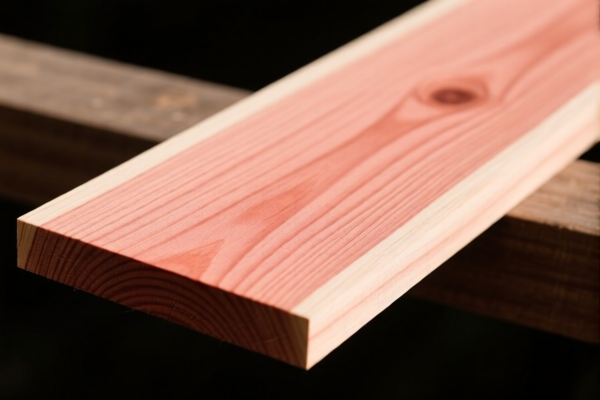
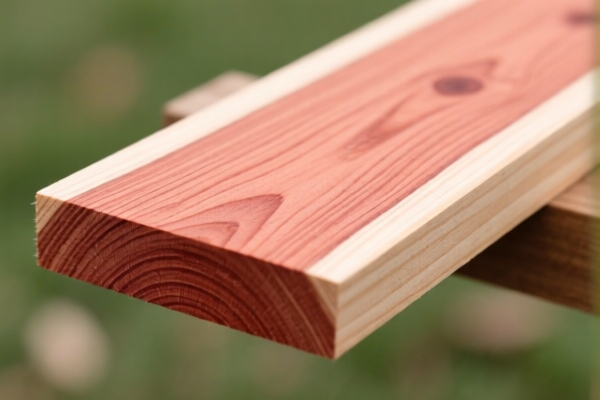
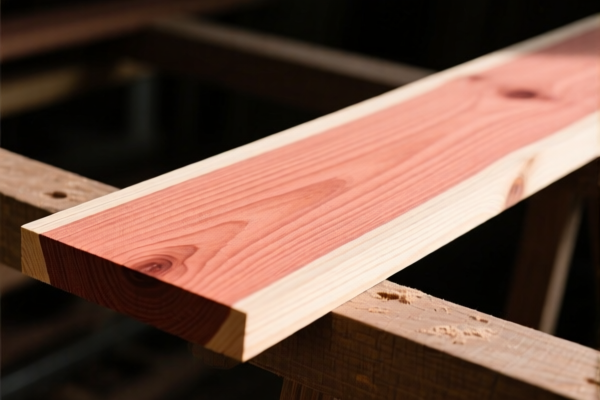
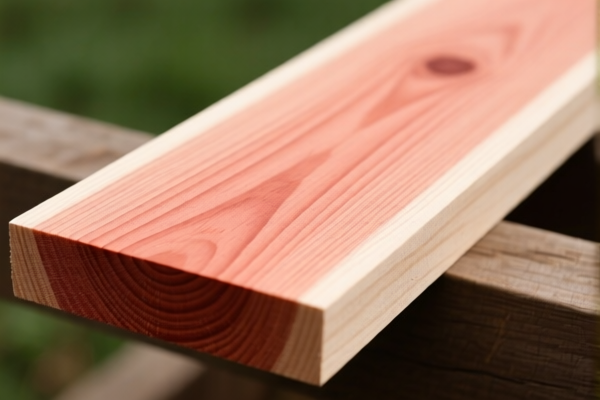
AI Analysis
🌲 Light Red Meranti (Unprocessed Wood)
🌐 HS Code Reference & Customs Clearance Guide | 2026 Latest Tariff Analysis | Professional Compliance Strategy
📌 I. Product Definition & Classification: What Exactly Is "Light Red Meranti"?
Light Red Meranti is a specific type of tropical hardwood belonging to the Shorea genus (part of the Dipterocarpaceae family). It is widely used in construction, furniture making, and plywood production. In international trade, it is strictly categorized under "Tropical Wood" products, specifically distinguished from other Meranti types (Dark Red, White) and other tropical woods (Keruing).
⚠️ Key Distinction:
- Process State: The description specifies "Unprocessed" or simply "Sawn/Chipped/Peeled" wood. This falls under Chapter 44 (Wood and wood articles), not Chapter 45 (Cork) or Chapter 39 (Plastics).
- Species Specificity: "Light Red Meranti" is a specific sub-category. It must not be confused with Dark Red Meranti or Meranti Bakau, although they share similar HS codes under the 8-digit level, they are distinct biological and trade entities.
- Thickness: For HS Code 4407, the wood must generally be of a thickness exceeding 6 mm. If it is chips or shavings (<6mm), it would fall under HS 4401. Assuming standard lumber/planks, we look at 4407**.
📦 II. HS Code Classification Details (2026 Latest Tariff Authority)
Based on the provided data, Light Red Meranti falls under two potential HS codes depending on the specific processing nuance or regional tariff line precision, but primarily maps to the 4407.25 and 4407.29 structure. However, the specific code for "Light Red Meranti" is explicitly listed as:
| HS Code | Product Description | Applicable Scenario | Key Differentiator |
|---|---|---|---|
4407.25.00.00 |
Of tropical wood: Dark Red Meranti, Light Red Meranti and Meranti Bakau | Sawn wood, sliced, or peeled tropical wood (thickness >6mm) | Explicitly includes "Light Red Meranti" in the description |
4407.29.02.16 |
Of tropical wood: Other Keruing (Dipterocarpus spp.) | Other specific tropical woods not listed in 4407.25 | Do NOT use for Light Red Meranti. This is for other Dipterocarpus species like Keruing |
🔍 Critical Reminder:
- Light Red Meranti is explicitly covered under4407.25.00.00.
- DO NOT misclassify Light Red Meranti under "Other Keruing" (4407.29...) or "Other Tropical Woods" (4407.29...). While biologically related, tariff lines distinguish specific Meranti groups.
- If the wood is peeled (for veneer) or sawn (for lumber), it still falls under 4407 if thickness >6mm.
💰 III. 2026 Latest Tariff Rate Breakdown (Including Additional Duties)
✅ Applicable Country: United States (US)
✅ Origin: China (CN) (Assuming standard export context from Asia)
✅ Effective Time: Current US Tariff Structure (Section 301)
🎯 1. 4407.25.00.00 —— Light Red Meranti, Dark Red Meranti, Meranti Bakau
| Item | Content |
|---|---|
| Base Tariff Rate | 0.0% (ad valorem) |
| Section 301 Additional Duty | +25.0% |
| Total Tax Rate | 25.0% |
| Tax Calculation | CIF Value × 25% |
| De Minimis Eligibility | ❌ No (Wood products generally not eligible for $800 de minimis exemption under current enforcement trends for Chinese goods) |
| Legal Basis Path | HTSUS: 4407.25.00.00 → USITC Footnote 301 → Section 301 Tariff List 4 |
📌 Explanation:
- Base Rate: 0% because there is a general free trade allowance or zero-duty baseline for many wood products.
- Additional Duty: The 25% is a punitive tariff under Section 301 of the Trade Act of 1974, specifically targeting Chinese-made goods in this category.
- Total Liability: You pay 25% of the declared value. There are no additional IEEPA or other surcharges listed in the provided data for this specific HS code (unlike electronics which may have 10% IEEPA + 25% USITC).
🎯 2. 4407.29.02.16 —— Other Keruing (For Comparison Only)
| Item | Content |
|---|---|
| Base Tariff Rate | 0.0% |
| Section 301 Additional Duty | +25.0% |
| Total Tax Rate | 25.0% |
| Tax Calculation | CIF Value × 25% |
| De Minimis Eligibility | ❌ No |
📌 Note: Even if misclassified, the rate is the same. However, misclassification is risky for Customs audits. Always use
4407.25.00.00for Light Red Meranti.
🛠️ IV. Customs Clearance Operational Advice (Practical Pitfall Guide)
✅ 1. Required Documentation Checklist
| Document | Mandatory? | Explanation |
|---|---|---|
| ✅ Commercial Invoice | ✔️ | Must clearly state "Light Red Meranti Lumber/Planks" |
| ✅ Packing List | ✔️ | Detail dimensions, volume (CBM), weight, and packaging type |
| ✅ Phytosanitary Certificate | ✔️ | Crucial for wood. Issued by the country of origin to prove pest-free status. |
| ✅ Wood Species Declaration | ✔️ | Explicitly state: "Shorea spp. (Light Red Meranti)" |
| ✅ Fumigation Certificate | ✔️ | If applicable, proof of treatment (e.g., MB or HT mark) |
| ✅ Bill of Lading/Air Waybill | ✔️ | Standard shipping docs |
✅ 2. Declaration Tips (Key Mnemonics)
🔥 "Species Specific, Phytosanitary Check, 25% Duty, No Surprises!"
| Situation | Correct Declaration | Error to Avoid |
|---|---|---|
| Light Red Meranti Planks | HS: 4407.25.00.00 Desc: Light Red Meranti, Sawn Wood |
❌ Use "Other Tropical Wood" or "Keruing" |
| Unprocessed Logs (if <6mm or raw) | HS: 4403 or 4401 |
❌ Using 4407 for chips/shavings |
| Wood with Pests/Damage | Declare damage, request inspection | ❌ Hiding defects → Rejection/Fines |
✅ 3. Special Considerations
| Situation | Handling Advice |
|---|---|
| End-Use Identification | Specify if for construction, furniture, or plywood. This does not change HS but affects phytosanitary requirements. |
| Tropical Wood Regulations | Ensure compliance with Lacey Act (if importing to US) – declaration of botanical name and value is mandatory. |
| Volume Measurement | Customs may verify CBM vs. Weight. Ensure invoice reflects accurate volume for duty calculation if ad valorem. |
🌍 V. Global Market Clearance Comparison (2026)
| Country/Region | Recommended HS Code | Tariff Rate | Certification Requirements | Remarks |
|---|---|---|---|---|
| 🇺🇸 USA | 4407.25.00.00 |
25% | Lacey Act Declaration, Phytosanitary | High duty due to Section 301 |
| 🇨🇳 China | 4407.25.00.00 |
0%* | Fumigation Certificate | Import duty may be 0%, but check anti-dumping if applicable |
| 🇪🇺 EU | 4407.25.00 |
~6-12% | FSC/PEFC Certification (often required by buyers) | EUDR (EUDR) compliance coming soon |
| 🇬🇧 UK | 4407.25.00 |
~6-12% | FSC/PEFC | Post-Brexit rules apply |
| 🇦🇺 Australia | 4407.25.00 |
~5% | IPPC Mark (ISPM 15) | Strict biosecurity |
📌 Conclusion:
- The US market is the most expensive for Light Red Meranti from China due to the 25% Section 301 tariff.
- Phytosanitary compliance is as important as the tariff. Failure to provide a valid Phytosanitary Certificate will result in quarantine or destruction of goods, regardless of duty payment.
📌 VI. Common Mistakes & Pitfall Guide (Lessons from the Field)
❌ Mistake 1: Confusing "Light Red Meranti" with "Dark Red Meranti"
👉 Consequence: While both fall under 4407.25.00.00 in the provided data, mislabeling can trigger customs audits for botanical accuracy.
👉 Solution: Provide a botanical name (Shorea spp.) and common name on the invoice.
❌ Mistake 2: Omitting the Phytosanitary Certificate
👉 Consequence: Goods held at port for fumigation or destroyed. Delay costs >> Duty costs.
👉 Solution: Ensure origin country issues a valid Phytosanitary Certificate before shipment.
❌ Mistake 3: Misclassifying as "Other Tropical Wood" (4407.29)
👉 Consequence: While the tax rate is similar (25%), it creates inconsistency in trade data and may flag your supply chain for scrutiny.
👉 Solution: Use 4407.25.00.00 which explicitly lists Light Red Meranti.
❌ Mistake 4: Ignoring Lacey Act Requirements (for US imports)
👉 Consequence: Civil or criminal penalties for false declaration.
👉 Solution: File a Lacey Act Declaration with CBP, stating the scientific name and value of the wood.
🎯 VII. Conclusion: Professional Clearance, Cost Control, Compliance!
🎯 Remember the Mantra:
🔹 "Light Red Meranti goes to 4407.25.00.00"
🔹 "25% Duty is Fixed, 0% Base Rate"
🔹 "Phytosanitary is Key, Lacey Act is Mandatory"
📌 Pro Tip:
- For US imports, ensure the Lacey Act Declaration is submitted via ACE (Automated Commercial Environment) with accuracy.
- If sourcing from non-China countries (e.g., Malaysia, Indonesia), the 25% Section 301 duty may not apply, but check for other regional trade agreements.
📣 Immediate Action:
📞 Consult a licensed customs broker for Lacey Act compliance.
🚀 Ensure Phytosanitary Certificate is issued before shipment departure.
✨ Professional Customs Clearance Starts with Accurate Classification!
💼 Your Timber Investment Deserves Precision Compliance!
Customer Reviews
About HS Code Classification
The Harmonized System (HS) is an internationally standardized nomenclature developed by the World Customs Organization (WCO) to classify traded products. Over 200 countries use the HS system as the basis for customs tariffs, trade statistics, and import/export regulations.
Each HS code follows a hierarchical structure:
- Chapter (2 digits) — Broad category of goods (e.g., Chapter 84: Machinery and Mechanical Appliances)
- Heading (4 digits) — More specific grouping within the chapter
- Subheading (6 digits) — Internationally standardized breakdown, used by all WCO member countries
- National subdivisions (8-10 digits) — Country-specific extensions for further classification, such as US HTSUS 10-digit codes
Correct HS code classification is essential for smooth customs clearance, accurate duty payment, and compliance with trade regulations. Misclassification can lead to customs delays, overpayment of duties, or penalties.
When importing from CN to US, the applicable tariff rates may include:
- Most-Favored-Nation (MFN) rate — The standard duty rate applied to WTO members
- General rate — Applied to countries without trade agreements
- Trade remedy duties — Additional tariffs such as Section 301 (anti-dumping), Section 232 (national security), or countervailing duties
The information provided on this page is for reference purposes only. For official classification, please consult with your local customs authority or a licensed customs broker.