Light Red Meranti Wood
CN → US| HS Code | Tariff Rate | Origin | Destination | Doc |
|---|---|---|---|---|
| 4407250000 | 35.0% | CN | US | Official Doc |
| 4407290216 | 35.0% | CN | US | Official Doc |
Product Images
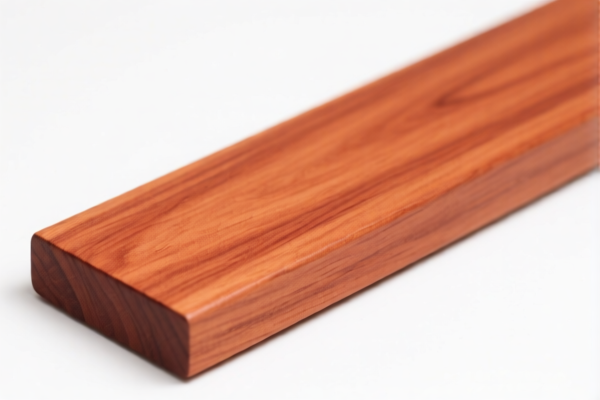
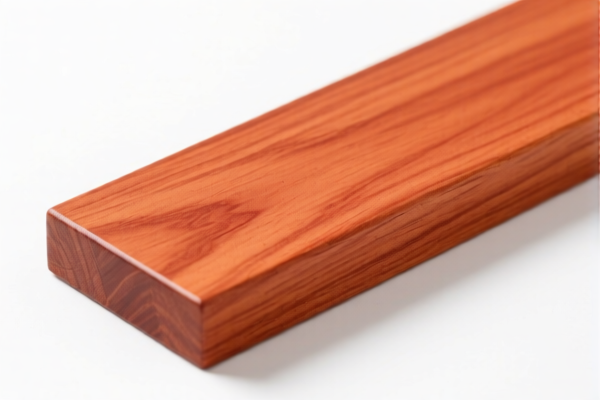
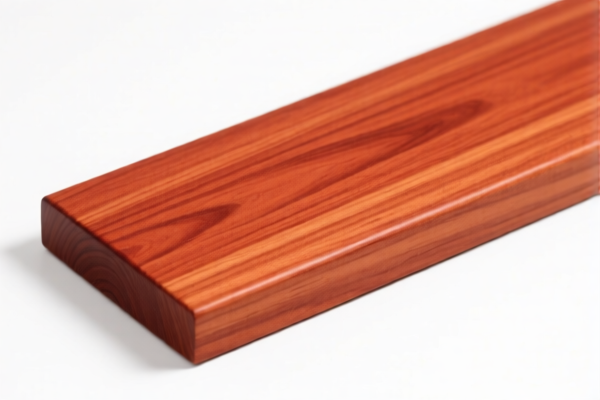
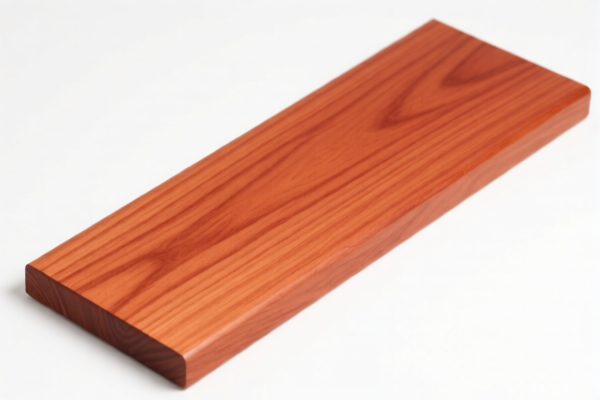
AI Analysis
🌲 Light Red Meranti Wood (Tropical Timber)
🌐 HS Code Reference & Customs Clearance Guide | 2026 Latest Tariff Analysis | Professional Tier-1 Clearance Strategy
📌 I. Product Definition & Classification: Do You Really Know "Light Red Meranti"?
Light Red Meranti is a premium grade of tropical timber derived from the Shorea genus (family Dipterocarpaceae). In international trade, it is highly valued for its fine texture, moderate strength, and excellent workability, making it ideal for furniture, joinery, plywood, and interior finishing.
In the Harmonized System (HS), this wood is strictly categorized under Chapter 44, specifically within the subheading for sawn wood of tropical wood. Crucially, it must be distinguished from other Meranti types (like Dark Red Meranti) and other tropical woods (like Keruing) to ensure accurate tariff application.
⚠️ Key Distinction Points:
- Light Red Meranti vs. Dark Red Meranti: Both fall under HS 4407.25.00.00, but physical color and density may vary. Documentation must explicitly state "Light Red."
- Light Red Meranti vs. Other Meranti (Shorea spp.): If the wood cannot be definitively identified as "Light," "Dark," or "Bakau," it may default to other subheadings, risking misclassification.
- Thickness Requirement: The wood must be of a thickness exceeding 6 mm. Slices or veneers thinner than 6 mm belong to HS 4408.
📦 II. HS Code Classification Details (2026 Latest Tariff Authority对照)
| HS Code | Product Description | Applicable Scenarios | Key Identification Criteria |
|---|---|---|---|
4407.25.00.00 |
Sawn wood of tropical wood: Dark Red Meranti, Light Red Meranti and Meranti Bakau | Structural lumber, furniture components, plywood cores, millwork | - Specifically labeled as "Light Red Meranti" - Thickness > 6mm - Sliced, planed, or end-joined |
4407.29.02.16 |
Sawn wood of tropical wood: Other Keruing (Dipterocarpus spp.) | Alternative tropical timber, construction lumber, pallets | - Must be Dipterocarpus genus (Keruing) - NOT Meranti (Shorea) - If misidentified as Keruing when it is Meranti, severe penalties apply |
🔍 Critical Warning:
- Do NOT confuse Light Red Meranti (Shorea) with Keruing (Dipterocarpus). Although both are tropical hardwoods, they belong to different genera and have different HS codes.
-4407.25.00.00is the correct classification for Light Red Meranti.
-4407.29.02.16is for Other Keruing and should NOT be used for Light Red Meranti. Misclassification here is a common customs violation.
💰 III. 2026 Latest Tariff Rate Breakdown (Including Surtaxes & Policy Add-ons)
✅ Applicable Country: United States (US)
✅ Origin: China (CN)
✅ Effective Date: From November 10, 2025 (and subsequent imports)
🎯 1. 4407.25.00.00 —— Light Red Meranti Wood
| Item | Content |
|---|---|
| Base Tariff Rate | 0.0% (ad valorem) |
| USITC Surtax | +25.0% (Under USITC Footnote 9903.88.01) |
| Total Tax Rate | 25.0% |
| Tax Calculation | CIF Value × 25.0% |
| De Minimis Exemption Available? | ❌ NO (deny_de_minimis) |
| Legal Basis Path | USITC:4407.25.00.00 → FOOTNOTE:9903.88.01 |
📌 Explanation:
- Although the base MFN tariff for wood is 0%, Section 301 tariffs impose an additional 25% on most Chinese-origin wood products.
- There is no IEEPA 10% surtax specifically listed for this wood code in the provided data (unlike electronics), but the 25% Section 301 tariff is fully applicable.
- Total Duty: 25%. This is a significant cost factor for bulk timber imports.
🎯 2. 4407.29.02.16 —— Other Keruing Wood (For Comparison Only)
| Item | Content |
|---|---|
| Base Tariff Rate | 0.0% |
| USITC Surtax | +25.0% |
| Total Tax Rate | 25.0% |
| Tax Calculation | CIF Value × 25.0% |
| De Minimis Exemption Available? | ❌ NO |
| Legal Basis Path | USITC:4407.29.02.16 → FOOTNOTE:9903.88.01 |
📌 Note:
- While this code is for Keruing, it shares the same 25% total duty rate as Light Red Meranti.
- However, using this code for Light Red Meranti is a customs error and can lead to audits, back-taxes, and penalties if the species is proven to be Meranti.
🛠️ IV. Customs Clearance Practical Advice (Battle-Tested Pitfall Guide)
✅ 1. Documentation Checklist (Mandatory)
| Document | Required? | Description |
|---|---|---|
| ✅ Commercial Invoice | ✔️ | Must explicitly state: "Light Red Meranti (Shorea spp.)" |
| ✅ Packing List | ✔️ | Detail dimensions, thickness (>6mm), and quantity |
| ✅ Species Certificate | ✔️ | Issued by a recognized botanical expert or supplier, confirming Shorea genus and "Light Red" variety |
| ✅ Fumigation Certificate | ✔️ | Required for all raw wood imports (ISPM 15 standard) |
| ✅ Lacey Act Declaration | ✔️ | Mandatory for US imports of wood products (detailing country of harvest) |
| ✅ Phytosanitary Certificate | ✔️ | Issued by the exporting country’s plant protection agency |
✅ 2. Declaration Tactics (Key Mnemonics)
🔥 “Species Must Be Exact, Thickness Must Be >6mm, Fumigation is Key!”
| Situation | Correct Declaration | Wrong Practice |
|---|---|---|
| Light Red Meranti | 4407.25.00.00 with species proof |
Reporting as generic "Tropical Wood" → Risk of audit |
| Dark Red Meranti | 4407.25.00.00 |
Misreporting as Light Red → Acceptable under same code, but be honest |
| Keruing Wood | 4407.29.02.16 |
Misreporting Meranti as Keruing → Customs Violation |
| Wood Veneers (<6mm) | 4408.xxxxxx |
Reporting as Sawn Wood (4407) → Wrong Classification |
| Unfired/Pallets | 4421.99 (if used as pallets) |
Reporting as lumber → Different duty structure |
✅ 3. Special Case Handling
| Situation | Handling Advice |
|---|---|
| Mixed Containers (Meranti + Keruing) | Separate Bills of Lading or Clear Segregation. Do not mix codes. If mixed, the entire shipment may be scrutinized, and duties calculated on the highest rate or rejected. |
| End-Jointed Wood | Still classified under 4407.25.00.00 if thickness >6mm. Declare as "End-Jointed Light Red Meranti Lumber." |
| Planed/Sanded Wood | Still 4407.25.00.00. Processing (planing/sanding) does not change the HS code as long as it remains sawn/chipped wood. |
| Lacey Act Compliance | Ensure the Country of Harvest is accurately declared. Failure to declare results in seizure of goods. |
🌍 V. Global Market Clearance Comparison (2026 Latest)
| Country/Region | Recommended HS Code | Tariff (China Origin) | Certification Requirements | Notes |
|---|---|---|---|---|
| 🇺🇸 USA | 4407.25.00.00 |
25% (Section 301) | Lacey Act + Fumigation + Phytosanitary | High duty, strict species verification |
| 🇨🇳 China | 4407.25.00.00 |
0% - 5% (depending on trade agreement) | Fumigation Certificate | Import duty may be reduced under ASEAN-China FTA |
| 🇪🇺 EU | 4407.25.00 |
0% (if EUTR compliant) | EUTR Due Diligence System | Strict anti-deforestation regulations |
| 🇬🇧 UK | 4407.25.00 |
0% (if UKGC compliant) | UK Government Guidance on Timber | Post-Brexit due diligence requirements |
| 🇯🇵 Japan | 4407.25.00 |
0% | Phytosanitary Certificate | Generally low tariffs for tropical wood |
📌 Conclusion:
- The USA imposes a 25% tariff on Light Red Meranti from China. This is a significant cost driver.
- EU and UK require strict due diligence (EUTR/UKGC) to prove legality and sustainability, but duty is often 0%.
- Species accuracy is critical across all markets. Mislabeling Meranti as Keruing or generic "Tropical Wood" leads to severe penalties in all regions.
📌 VI. Common Mistakes & Pitfall Guide (Blood & Tears Lessons)
❌ Mistake 1: Using "Tropical Wood" as the product description
👉 Consequence: Customs will query the species. If you cannot prove it is Light Red Meranti, they may assign a generic higher-rate code or reject the entry.
❌ Mistake 2: Mixing Light Red Meranti and Keruing in one container without clear separation
👉 Consequence: The entire shipment may be held for inspection. If species cannot be verified for all boards, the whole load may be denied.
❌ Mistake 3: Ignoring the Lacey Act (USA)
👉 Consequence: Seizure and forfeiture of goods, plus civil penalties up to $10,000 per violation.
❌ Mistake 4: Declaring wood thinner than 6mm as Sawn Wood (4407)
👉 Consequence: Wrong HS Code. Should be 4408 (Veneer/Slices). Penalty for misclassification.
✅ Correct Practice:
"Light Red Meranti (Shorea spp.) Sawn Lumber, Planed, 25mm Thick, Fumigated, Lacey Act Compliant, Country of Harvest: Malaysia"
🎯 VII. Conclusion: Precision in Classification Saves Money!
🎯 Remember the Mantra:
🔹 "Species Exact, Thickness >6mm, Fumigation Done, Lacey Act Signed!"
🔹 "HS Code 4407.25.00.00 for Meranti, 25% Tax in USA, Don't Mix with Keruing!"
📌 Pro Tip:
- If your Light Red Meranti is sourced from ASEAN countries (e.g., Malaysia, Indonesia), check if you can apply for Certificate of Origin (Form E for China, ATIGA for ASEAN) to potentially reduce import duties in non-US markets.
- For US imports, pre-classification rulings are recommended if the wood type is borderline between Meranti and other tropical woods.
📣 Immediate Action:
📞 Verify species with botanical expert + Obtain Fumigation Certificate + File Lacey Act Declaration
🚀 Ensure smooth clearance, no delays, and accurate 25% duty calculation!
✨ Professional Customs Clearance Starts with Precise Classification!
💼 Your Timber Investment Deserves Accurate Tariff Calculation!
Customer Reviews
About HS Code Classification
The Harmonized System (HS) is an internationally standardized nomenclature developed by the World Customs Organization (WCO) to classify traded products. Over 200 countries use the HS system as the basis for customs tariffs, trade statistics, and import/export regulations.
Each HS code follows a hierarchical structure:
- Chapter (2 digits) — Broad category of goods (e.g., Chapter 84: Machinery and Mechanical Appliances)
- Heading (4 digits) — More specific grouping within the chapter
- Subheading (6 digits) — Internationally standardized breakdown, used by all WCO member countries
- National subdivisions (8-10 digits) — Country-specific extensions for further classification, such as US HTSUS 10-digit codes
Correct HS code classification is essential for smooth customs clearance, accurate duty payment, and compliance with trade regulations. Misclassification can lead to customs delays, overpayment of duties, or penalties.
When importing from CN to US, the applicable tariff rates may include:
- Most-Favored-Nation (MFN) rate — The standard duty rate applied to WTO members
- General rate — Applied to countries without trade agreements
- Trade remedy duties — Additional tariffs such as Section 301 (anti-dumping), Section 232 (national security), or countervailing duties
The information provided on this page is for reference purposes only. For official classification, please consult with your local customs authority or a licensed customs broker.