Light Truck Tire
CN → US| HS Code | Tariff Rate | Origin | Destination | Doc |
|---|---|---|---|---|
| 4012128019 | 38.4% | CN | US | Official Doc |
| 4011201005 | 39.0% | CN | US | Official Doc |
| 4011205010 | 38.4% | CN | US | Official Doc |
| 4012124015 | 39.0% | CN | US | Official Doc |
Product Images
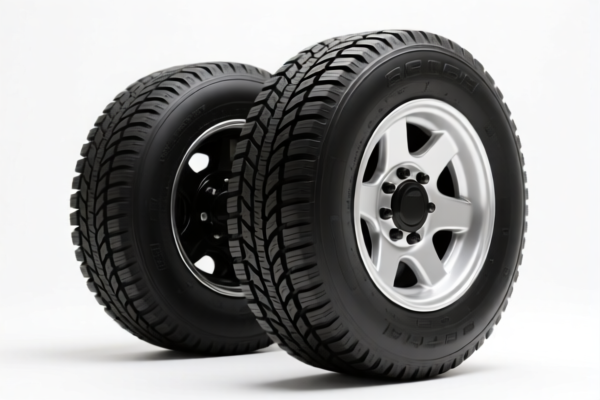
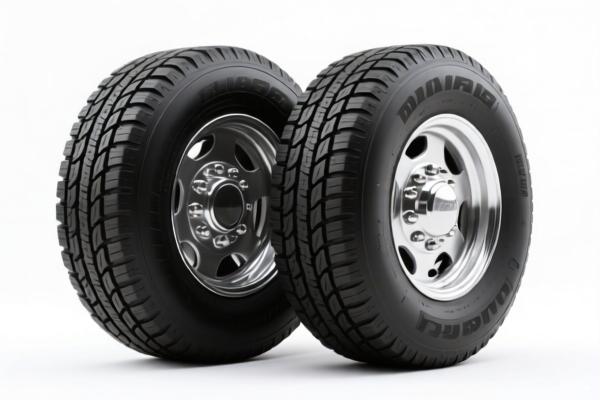
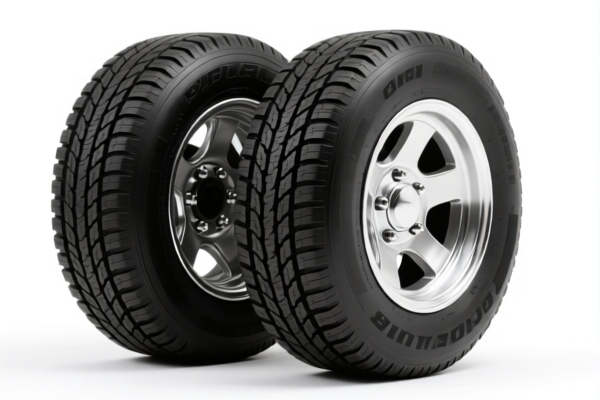
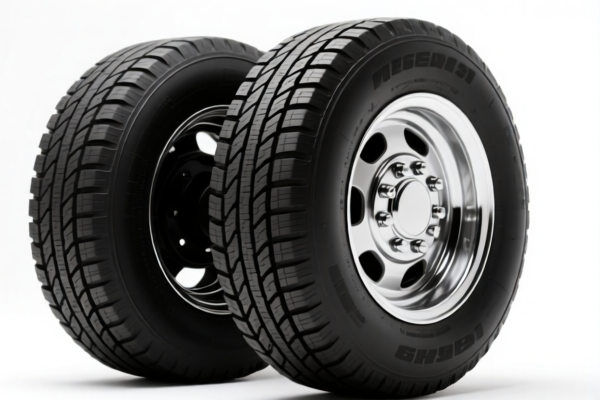
AI Analysis
🚚 Light Truck Tires: The High-Cost Trap for US Imports
🌐 HS Code Reference & Customs Guide | 2026 Latest Tariff Full Analysis | Professional Clearance Strategy
📌 I. Product Definition & Classification: Do You Really Understand "Light Truck Tires"?
Light Truck Tires are critical components for commercial logistics, last-mile delivery, and light utility vehicles. In international trade, classification hinges strictly on the vehicle weight class and tire construction. Unlike passenger car tires (PC) or heavy-duty truck/bus tires (HT/B), Light Truck tires serve a specific niche.
Key Classification Logic: * By Vehicle Type: If designed for "Light Trucks" (GVWR typically between 8,501 lbs and 10,000 lbs in the US context, or similar weight classes globally), they fall under Chapter 40, Heading 4011. * By Sub-Category: The HS Code splits based on specific width, aspect ratio, and rim diameter nuances, leading to slightly different base duty rates.
⚠️ Critical Distinction:
- If it is for a Passenger Car → Go to 4011.20 (but check specific sub-headings).
- If it is for a Light Truck → Go to 4011.20 or 4012.12 (depending on exact specification and national sub-heading rules).
- Note: The provided data indicates multiple valid HS Codes for "Light Truck Tires," suggesting nuanced classification based on specific dimensions or manufacturing standards.
📦 II. HS Code Classification Details (2026 Latest Tariff Authority Comparison)
| HS Code | Product Description | Application Scenario | Base Duty Rate |
|---|---|---|---|
4011.20.10.05 |
Light Truck Tires | Designed for light trucks, material inferred as rubber | 4.0% |
4011.20.50.10 |
Light Truck Tires | Specific shape/form, material inferred as rubber | 3.4% |
4012.12.40.15 |
Light Truck Tires | Retreaded or specific subtype? (See Note) | 4.0% |
4012.12.80.19 |
Light Truck Tires | Other specified subtypes | 3.4% |
🔍 Key Insight:
- All listed codes are for Light Truck Tires.
- The Base Duty varies slightly: 3.4% vs 4.0%, depending on the exact sub-heading interpretation (e.g., size, tread pattern, or whether it's new vs. retreaded, though the summary says "material inferred as rubber").
- Crucially, the Total Tax is heavily influenced by Section 301 and Section 122 tariffs, pushing the effective rate to ~38-39%.
💰 III. 2026 Latest Tariff Rate Breakdown (Including Surcharges & Policy Add-ons)
✅ Applicable Country: United States (US)
✅ Country of Origin: China (CN)
✅ Effective Date: Current active rates (Section 301 & Section 122)
🎯 1. 4011.20.10.05 & 4012.12.40.15 —— Standard Light Truck Tires
| Item | Content |
|---|---|
| Base MFN Duty | 4.0% (Ad Valorem) |
| Section 301 Surcharge | +25.0% (Trump/Biden Era Trade War Tariff) |
| Section 122 Tariff | +10.0% (Additional surcharge on certain industrial goods) |
| Total Effective Rate | 39.0% |
| Tax Calculation | CIF Value × 39.0% |
| De Minimis Exemption | ❌ NOT ELIGIBLE (Section 301 & 122 goods are excluded from 80/800/2500 USD de minimis) |
| Legal Basis Path | USITC:4011.20.10.05 → SECTION301:9903.03.99 → SECTION122 |
📌 Explanation:
- Base Duty (4%): The standard Most Favored Nation (MFN) rate for rubber tires.
- Section 301 (25%): Applies to Chinese-origin tires. This is the biggest cost driver.
- Section 122 (10%): An additional levy on specific imports, further increasing the burden.
- Total: 39%. This is an EXTREMELY HIGH tariff for a commodity import. Profit margins will be severely impacted unless priced accordingly.
🎯 2. 4011.20.50.10 & 4012.12.80.19 —— Alternative Sub-classifications
| Item | Content |
|---|---|
| Base MFN Duty | 3.4% (Ad Valorem) |
| Section 301 Surcharge | +25.0% |
| Section 122 Tariff | +10.0% |
| Total Effective Rate | 38.4% |
| Tax Calculation | CIF Value × 38.4% |
| De Minimis Exemption | ❌ NOT ELIGIBLE |
| Legal Basis Path | USITC:4011.20.50.10 → SECTION301:9903.03.99 → SECTION122 |
📌 Note:
- The base duty is slightly lower (3.4% vs 4.0%), resulting in a 0.6% total rate difference.
- However, the Section 301 and 122 rates are fixed at 25% and 10% respectively.
- Do not assume lower base duty means significant savings when the majority of the tariff is punitive.
🛠️ IV. Customs Clearance Practical Advice (Battle-Tested Pitfall Avoidance)
✅ 1. Documentation Checklist (Non-Negotiable)
| Document | Must Provide | Explanation |
|---|---|---|
| ✅ Product Specification Sheet | ✔️ | Must state "Light Truck Tire," dimensions, load index, speed rating, and "Made in China." |
| ✅ Commercial Invoice | ✔️ | Clearly describe goods as "Light Truck Tire," NOT "Rubber Part" or "General Tire." Mislabeling leads to penalties. |
| ✅ Packing List | ✔️ | Include net/gross weight, number of units per pallet. |
| ✅ Country of Origin Certificate | ✔️ | Essential for Section 301 application. If origin is not China, different rates may apply. |
| ✅ Labeling/Stenciling | ✔️ | Each tire must have visible country of origin marking ("Made in China") as per US Customs regulations. |
✅ 2. Classification Strategy (Key Mantras)
🔥 "Define the Vehicle, Define the Tire, Pay the 39%!"
| Scenario | Correct HS Code Strategy | Wrong Approach |
|---|---|---|
| New Light Truck Tire | 4011.20.xxxx or 4012.12.xxxx |
Classify as Passenger Car Tire (4011.10) → Risk of Misclassification Penalty |
| Retreaded Tire | 4012.12.xxxx (Check if 4012 is for retreads) |
Classify as New Tire → Over/Under Payment |
| Tire + Rim Assembly | Separate | Declare as one item → Complex Valuation Issues |
| De Minimis Shipment | NOT ELIGIBLE | Use 80/800/2500 USD exemption → Seizure & Penalty (Section 301 goods are excluded) |
⚠️ Critical Warning:
- Section 301 and Section 122 goods are EXCLUDED from de minimis treatment (Section 321). You cannot ship small quantities of these tires through informal entry without paying duties.
- Always declare formally and pay the 38.4%-39.0% tariff upfront.
✅ 3. Special Cases
| Case | Handling Advice |
|---|---|
| OEM Brand Tires | Provide OEM authorization letters if claiming brand-specific attributes, but origin matters most for tariffs. |
| Warehouse in Mexico/Central America | If transshipped, Proof of Origin is critical. Transshipment does NOT change the origin if the goods remain "Chinese." |
| Sample vs. Commercial | Both are taxable. No duty-free samples for Section 301/122 goods. |
🌍 V. Global Market Comparison (2026 Latest)
| Country/Region | Recommended HS Code | Tariff (China Origin) | Notes |
|---|---|---|---|
| 🇺🇸 USA | 4011.20.10.05 etc. |
38.4% - 39.0% | Includes 301 (25%) + 122 (10%). Highest barrier. |
| 🇨🇳 China | Same | ~5-10% | Export duty may apply, but lower than US import duty. |
| 🇪🇺 EU | 4011.20 | 0% (mostly) | No Section 301 equivalent, but check CE marking. |
| 🇯🇵 Japan | 4011.20 | 0-3% | FTA benefits may apply if rules of origin met. |
📌 Conclusion:
- The US is the most expensive market for Chinese light truck tires due to overlapping punitive tariffs.
- Supply Chain Diversification is highly recommended: Consider sourcing from Vietnam, Thailand, or Indonesia to avoid Section 301, if available.
- If sourcing from China, price elasticity is low; you must absorb or pass on the ~39% cost.
📌 VI. Common Errors & Pitfall Guide (Lessons from Blood & Tears)
❌ Error 1: Using "Rubber Product" or "Auto Part" as the description.
👉 Consequence: Customs may reclassify, delay shipment, or impose fines for misdeclaration.
👉 Correct: Always use "Light Truck Tire".
❌ Error 2: Assuming de minimis (Section 321) applies to small shipments.
👉 Consequence: 100% Seizure. Section 301 and 122 goods are explicitly excluded from de minimis.
👉 Correct: Pay full duty for every single shipment.
❌ Error 3: Confusing "Light Truck" with "Passenger Car" tires.
👉 Consequence: If classified incorrectly, you may underpay duty, leading to post-entry audits and back-taxes + interest.
👉 Correct: Verify the vehicle GVWR and tire load index.
🎯 VII. Conclusion: Professional Declaration, Cost Control, Risk Mitigation!
🎯 Remember the Mantra:
🔹 "301 + 122 = 35% Penalty on Top of Base Duty."
🔹 "No De Minimis for Tires from China."
🔹 "Classify Precisely: 4011.20 or 4012.12, Base 3.4-4.0%, Total ~39%."
📌 Pro Tip:
If your volume is high, consider Bonded Warehousing in the US to defer duty payment until sale.
For long-term cost reduction, explore non-Chinese origins (Vietnam/Thailand) to bypass the 25% Section 301 tariff, potentially reducing total duty to <15%.
📣 Immediate Action:
📞 Engage a Licensed US Customs Broker
📄 Verify HS Code with CBP Ruling if unsure
🚀 Factor 39% into your landed cost calculation NOW
✨ Professional Clearance, Starts with Accurate Classification!
💼 Your Profit Margin Depends on Every Percentage Point!
Customer Reviews
About HS Code Classification
The Harmonized System (HS) is an internationally standardized nomenclature developed by the World Customs Organization (WCO) to classify traded products. Over 200 countries use the HS system as the basis for customs tariffs, trade statistics, and import/export regulations.
Each HS code follows a hierarchical structure:
- Chapter (2 digits) — Broad category of goods (e.g., Chapter 84: Machinery and Mechanical Appliances)
- Heading (4 digits) — More specific grouping within the chapter
- Subheading (6 digits) — Internationally standardized breakdown, used by all WCO member countries
- National subdivisions (8-10 digits) — Country-specific extensions for further classification, such as US HTSUS 10-digit codes
Correct HS code classification is essential for smooth customs clearance, accurate duty payment, and compliance with trade regulations. Misclassification can lead to customs delays, overpayment of duties, or penalties.
When importing from CN to US, the applicable tariff rates may include:
- Most-Favored-Nation (MFN) rate — The standard duty rate applied to WTO members
- General rate — Applied to countries without trade agreements
- Trade remedy duties — Additional tariffs such as Section 301 (anti-dumping), Section 232 (national security), or countervailing duties
The information provided on this page is for reference purposes only. For official classification, please consult with your local customs authority or a licensed customs broker.