Light absorbing film
CN → US| HS Code | Tariff Rate | Origin | Destination | Doc |
|---|---|---|---|---|
| 3920991000 | 41.0% | CN | US | Official Doc |
| 3920992000 | 39.2% | CN | US | Official Doc |
| 3919905060 | 40.8% | CN | US | Official Doc |
| 3919102055 | 40.8% | CN | US | Official Doc |
| 3926909989 | 22.8% | CN | US | Official Doc |
| 3926909400 | 35.0% | CN | US | Official Doc |
Product Images
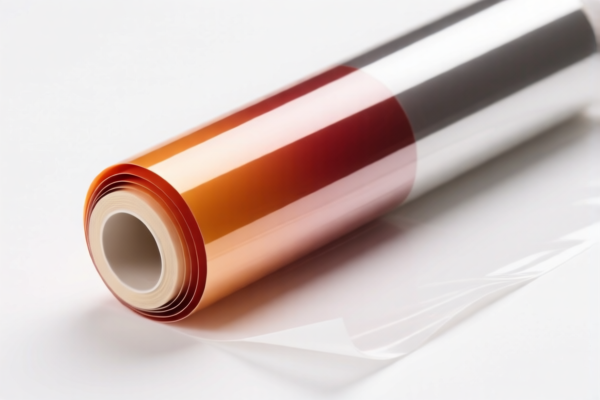
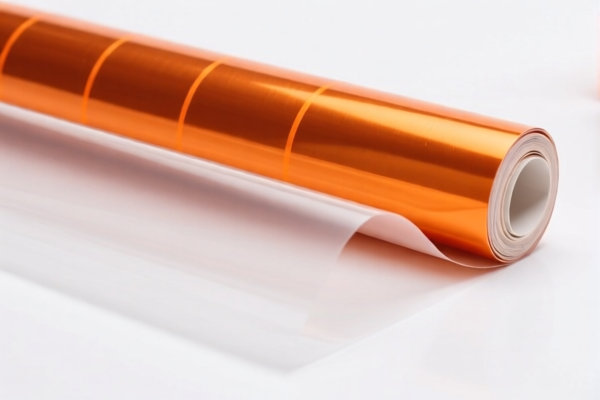
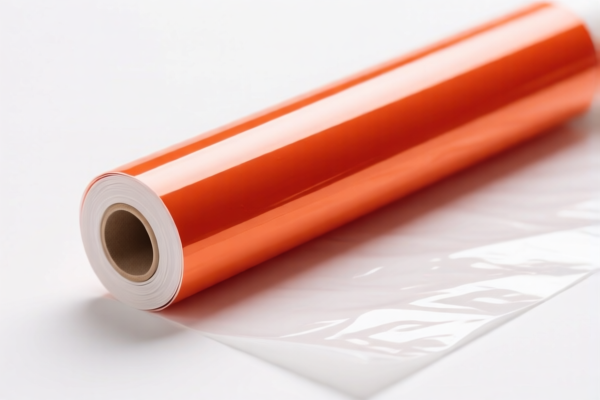
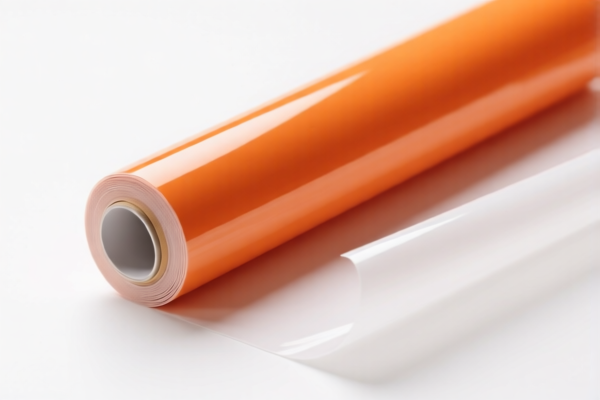
AI Analysis
🌑 Light Absorbing Film: The Ultimate Guide to HS Codes & US Tariffs (2026 Edition)
🌐 Global Trade Compliance & Customs Clearance Strategy | 2026 Latest Tariff Breakdown | Professional Logistics Solutions
📌 I. Product Definition & Classification: Do You Really Understand "Light Absorbing Film"?
Light Absorbing Film is a specialized optical polymer film designed to absorb specific wavelengths of light, commonly used in solar control, display technology, anti-glare coatings, and industrial shielding applications.
In international trade, the classification depends on composition, function, and form:
- Absorptive Films: Polymers (PET, PVB, etc.) treated or blended to absorb light → Often falls under Chapter 39 (Plastics).
- Self-Adhesive Films: If the film has a backing that makes it adhesive, it may fall under 3919.
- Non-Adhesive Flat Sheets/Plates: If purely a structural film without adhesives → Often 3920 or 3926.
⚠️ Critical Differentiation Point:
- Is it adhesive? → Check 3919.
- Is it a plain plastic film (non-adhesive)? → Check 3920.
- Is it a "finished plastic article" (e.g., cut to size, with complex shapes)? → Check 3926.
📦 II. HS Code Classification Matrix (2026 US Tariff Authority)
| HS Code | Product Description | Material & Form | Typical Application |
|---|---|---|---|
| 3920.99.10.00 | Light Absorbing Film, Plastic | Plastic film, inferred as polymer | Optical filters, solar control |
| 3920.99.20.00 | Light Absorbing Film, Polymer | High-molecular polymer plastic film | Industrial shielding, display layers |
| 3919.90.50.60 | Light Absorbing Film, Adhesive | Plastic polymer film, inferred adhesive | Self-adhesive optical films |
| 3919.10.20.55 | Light Absorbing Film, Self-Adhesive | Plastic (e.g., PET/PVB) with adhesive backing | Window films, anti-glare tapes |
| 3926.90.99.89 | Light Absorbing Plastic Article | Plastic or polymer "other" article | Custom-cut optical parts, finished components |
🔍 Key Insight:
- 3919 codes imply the film is self-adhesive (sticky backing).
- 3920 codes are for plain films (no adhesive).
- 3926 is a "catch-all" for finished plastic articles that don't fit strictly into film categories.
💰 III. 2026 US Tariff Rate Breakdown (Detailed Tax Clauses)
✅ Applicable Country: United States (US)
✅ Origin: China (CN)
✅ Effective Date: November 10, 2025 (including subsequent imports)
🎯 1. HS Code: 3920.99.10.00
Description: Light Absorbing Film (Plastic, inferred)
| Item | Content |
|---|---|
| Base Tariff | 6.0% |
| Section 301 (Additional Tariff) | +25.0% |
| Section 122 Tariff (China-Specific) | +10.0% |
| Total Effective Rate | 41.0% |
| Calculation | CIF Value × 41.0% |
| De Minimis Exemption? | ❌ No (Deny de minimis) |
| Legal Pathway | Section 301 → Section 122 → HTSUS 3920.99.10.00 |
📌 Explanation:
- 6.0% is the standard MFN (Most Favored Nation) rate.
- +25.0% is the Section 301 tariff (US-China trade war).
- +10.0% is the Section 122 tariff (specific to Chinese imports).
- Total: 41.0% is extremely high, requiring careful cost planning.
🎯 2. HS Code: 3920.99.20.00
Description: Light Absorbing Film (High-Molecular Polymer)
| Item | Content |
|---|---|
| Base Tariff | 4.2% |
| Section 301 (Additional Tariff) | +25.0% |
| Section 122 Tariff (China-Specific) | +10.0% |
| Total Effective Rate | 39.2% |
| Calculation | CIF Value × 39.2% |
| De Minimis Exemption? | ❌ No |
| Legal Pathway | Section 301 → Section 122 → HTSUS 3920.99.20.00 |
📌 Note:
- Slightly lower base rate (4.2%) than 3920.99.10.00, but same additional tariffs.
- Applies to films made of high-molecular polymer (e.g., specialized optical plastics).
🎯 3. HS Code: 3919.90.50.60
Description: Light Absorbing Film (Self-Adhesive)
| Item | Content |
|---|---|
| Base Tariff | 5.8% |
| Section 301 (Additional Tariff) | +25.0% |
| Section 122 Tariff (China-Specific) | +10.0% |
| Total Effective Rate | 40.8% |
| Calculation | CIF Value × 40.8% |
| De Minimis Exemption? | ❌ No |
| Legal Pathway | Section 301 → Section 122 → HTSUS 3919.90.50.60 |
📌 Key Point:
- If your film has an adhesive backing, this is the correct code.
- 40.8% is the total burden; no exemption available.
🎯 4. HS Code: 3919.10.20.55
Description: Light Absorbing Film (PET/PVB with Adhesive)
| Item | Content |
|---|---|
| Base Tariff | 5.8% |
| Section 301 (Additional Tariff) | +25.0% |
| Section 122 Tariff (China-Specific) | +10.0% |
| Total Effective Rate | 40.8% |
| Calculation | CIF Value × 40.8% |
| De Minimis Exemption? | ❌ No |
| Legal Pathway | Section 301 → Section 122 → HTSUS 3919.10.20.55 |
📌 Note:
- Specifically for PET or PVB based adhesive films.
- Same total tariff as 3919.90.50.60, but different material specification.
🎯 5. HS Code: 3926.90.99.89
Description: Light Absorbing Plastic Article (Finished)
| Item | Content |
|---|---|
| Base Tariff | 5.3% |
| Section 301 (Additional Tariff) | +7.5% |
| Section 122 Tariff (China-Specific) | +10.0% |
| Total Effective Rate | 22.8% |
| Calculation | CIF Value × 22.8% |
| De Minimis Exemption? | ❌ No |
| Legal Pathway | Section 301 → Section 122 → HTSUS 3926.90.99.89 |
📌 Strategic Advantage:
- Lowest total tariff (22.8%) among all listed codes!
- Applicable only if the product is a finished plastic article (not just a roll of film).
- 7.5% Section 301 (vs 25% for films) makes this a highly preferred classification if eligible.
🛠️ IV. Customs Clearance Practical Advice (Avoid Pitfalls)
✅ 1. Required Documentation Checklist
| Document | Mandatory? | Purpose |
|---|---|---|
| ✅ Product Spec Sheet | ✔️ | Define material (PET/PVB/Plastic), thickness, light absorption range |
| ✅ Technical Diagram | ✔️ | Show layer structure, adhesive presence, and dimensions |
| ✅ Photos (Unpacked & Labeled) | ✔️ | Confirm "film" vs "article" shape |
| ✅ Commercial Invoice | ✔️ | Must explicitly state "Light Absorbing Film" + HS Code |
| ✅ Packing List | ✔️ | Clarify if sold as rolls, sheets, or pre-cut articles |
| ✅ Certificate of Origin (CO) | ✔️ | Required for Section 122/301 exemption checks (if applicable) |
✅ 2. Declaration Strategy (Golden Rules)
🔥 Rule #1: "Adhesive = 3919, Plain Film = 3920, Finished Article = 3926"
| Scenario | Correct HS Code | Risk if Misclassified |
|---|---|---|
| Roll of adhesive film | 3919.90.50.60 or 3919.10.20.55 |
40.8% + potential audit |
| Roll of plain film (no adhesive) | 3920.99.10.00 or 3920.99.20.00 |
41.0% or 39.2% |
| Pre-cut, shaped optical part | 3926.90.99.89 |
22.8% (Savings!) |
| Film + Adhesive + Backing | 3919 |
40.8% |
| Simple plastic sheet, cut to size | 3926 |
22.8% |
⚠️ Warning:
- Do not declare pre-cut parts as "rolls of film" (3919/3920) to avoid 40%+ tariffs.
- If the product is cut, punched, or shaped, argue for 3926.
✅ 3. Special Scenarios
| Scenario | Handling Tip |
|---|---|
| OEM Custom Light Absorbing Film | Provide client design + technical drawing to prove "finished article" status. |
| Film used in Medical Devices | If part of a medical device, consider 8523/8524 (if electronic) or 3926 (if standalone part). |
| Multi-layer Coated Film | If complex layers (e.g., PET/Adhesive/Anti-glare), declare as 3919 or 3920. |
| Sample/Prototype | May qualify for Section 321 (De Minimis) only if < $800 value; otherwise taxed. |
🌍 V. Global Market Comparison (2026)
| Country/Region | Recommended HS Code | Total Tariff | Notes |
|---|---|---|---|
| 🇺🇸 USA | 3926.90.99.89 |
22.8% | Best option for finished articles. |
| 🇺🇸 USA | 3919/3920 |
39.2% – 41.0% | High cost for rolls/films. |
| 🇪🇺 EU | 3920/3919 |
~5-10% | No Section 301/122; lower burden. |
| 🇯🇵 Japan | 3926 |
~3-6% | Favorable for finished goods. |
| 🇨🇳 China | 3926 |
0-5% | No US Section 301/122. |
📌 Conclusion:
- USA is the most expensive market for light-absorbing films due to Section 301/122.
- Opt for3926.90.99.89if your product is a finished article to save 18-19% in tariffs.
📌 VI. Common Errors & Pitfalls (Lessons Learned)
❌ Error 1: Declaring pre-cut sheets as "rolls of film" (3919/3920)
👉 Result: Pay 40%+ tariffs instead of 22.8%.
❌ Error 2: Not disclosing adhesive backing
👉 Result: Misclassification → Audit + Penalties.
❌ Error 3: Using generic "Plastic Film" on invoice
👉 Result: Customs may reject → Delay + Storage Fees.
✅ Correct Approach:
"Light Absorbing Film, Pre-Cut, 2mm Thick, PET Base, Optical Grade, Model XYZ"
🎯 VII. Final Verdict: Optimize Your Tariff Strategy
🔹 Key Takeaway:
- "If it's a roll/film → 40%+ tax."
- "If it's a finished article → 22.8% tax."
- "Adhesive = 3919, Plain = 3920, Article = 3926."🔹 Action Plan:
1. Audit your product: Is it a roll, or a pre-cut article?
2. Choose HS Code wisely:3926.90.99.89is the cheapest option.
3. Prepare documentation: Specs, diagrams, photos.
4. Consult a Customs Broker: Apply for Binding Ruling if unsure.
📣 Call to Action:
📞 Contact a licensed Customs Broker + Submit Product Photos + Technical Specs
🚀 Unlock 22.8% tariff, not 41.0%!
💼 Your profit margin depends on the right HS Code!
✨ Professional Customs Compliance Starts with Precision Classification!
💡 Save Thousands: Choose the Right HS Code Today!
Customer Reviews
About HS Code Classification
The Harmonized System (HS) is an internationally standardized nomenclature developed by the World Customs Organization (WCO) to classify traded products. Over 200 countries use the HS system as the basis for customs tariffs, trade statistics, and import/export regulations.
Each HS code follows a hierarchical structure:
- Chapter (2 digits) — Broad category of goods (e.g., Chapter 84: Machinery and Mechanical Appliances)
- Heading (4 digits) — More specific grouping within the chapter
- Subheading (6 digits) — Internationally standardized breakdown, used by all WCO member countries
- National subdivisions (8-10 digits) — Country-specific extensions for further classification, such as US HTSUS 10-digit codes
Correct HS code classification is essential for smooth customs clearance, accurate duty payment, and compliance with trade regulations. Misclassification can lead to customs delays, overpayment of duties, or penalties.
When importing from CN to US, the applicable tariff rates may include:
- Most-Favored-Nation (MFN) rate — The standard duty rate applied to WTO members
- General rate — Applied to countries without trade agreements
- Trade remedy duties — Additional tariffs such as Section 301 (anti-dumping), Section 232 (national security), or countervailing duties
The information provided on this page is for reference purposes only. For official classification, please consult with your local customs authority or a licensed customs broker.