Light bulb glass envelope
CN → US| HS Code | Tariff Rate | Origin | Destination | Doc |
|---|---|---|---|---|
| 7020006000 | 40.0% | CN | US | Official Doc |
| 7020004000 | 41.6% | CN | US | Official Doc |
| 7011101000 | 35.0% | CN | US | Official Doc |
| 7011105000 | 39.6% | CN | US | Official Doc |
| 9018200080 | 35.0% | CN | US | Official Doc |
Product Images
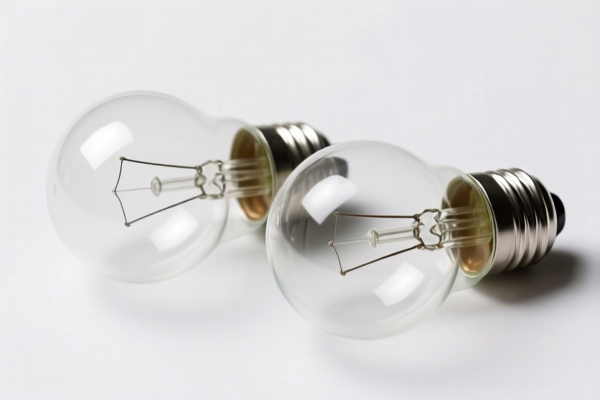


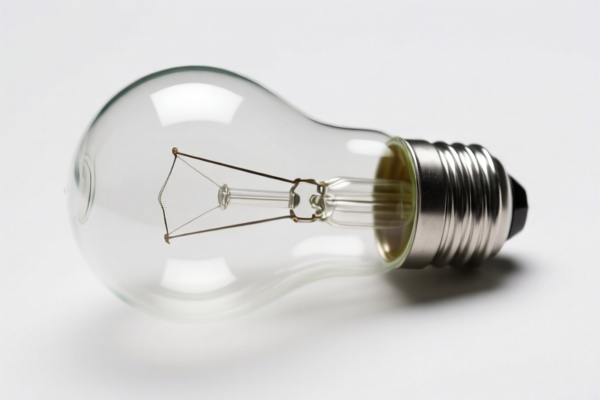
AI Analysis
💡 Light Bulb Glass Envelope (Glass Shell for Lamps)
🌐 HS Code Reference & Clearance Guide | 2026 Latest Tariff Analysis | Professional Clearance Strategy
📌 1. Product Definition & Classification: What Exactly is a "Glass Envelope"?
The Glass Envelope (or Glass Shell) is the fundamental protective housing for electric lamps and light sources. In international trade, its classification depends strictly on its specific application and structural characteristics. It is not a one-size-fits-all category; misclassification can lead to significant tax discrepancies.
The product is primarily categorized into two main groups:
- General Glass Articles: Glass shells that do not fit specific technical definitions for lamp sockets or are generic in nature.
- Specific Lamp Parts: Glass envelopes specifically designed for electric lamps (incandescent, LED, etc.) or as parts of ray-generating equipment.
⚠️ Key Distinction Point:
- If the glass envelope is a generic glass container without specific optical/electrical precision for lighting →归入 7020.00 series.
- If it is specifically shaped/processed for electric lighting (luminaires) → 归入 7011.10 series.
- If it serves as a protective housing for X-ray/Cathode Ray tubes → 归入 9018.20 series.
📦 2. HS Code Classification Details (Latest 2026 Tariff Reference)
| HS Code | Product Description | Application Scenario | Total Tax Rate (China Origin → US) |
|---|---|---|---|
7020.00.60.00 |
Other Glass Articles (Generic Glass Shells) | Generic glass bulbs, non-specific industrial glass containers | 40.0% |
7020.00.40.00 |
Glassware, Other Forms (General Glass Articles) | General-purpose glass items, non-specific shapes | 41.6% |
7011.10.10.00 |
Glass Envelopes for Electric Lamps (Specifically for Lighting) | Envelopes for incandescent, halogen, or LED lamps; specifically shaped for luminaires | 35.0% |
7011.10.50.00 |
Glass Envelopes for Electric Lighting (Other Specific Types) | Specialized glass shells for electric lighting applications (e.g., specific UV/IR filters or shapes) | 39.6% |
9018.20.00.80 |
Parts of Ray-Generating Apparatus (X-ray/Cathode Ray) | Glass envelopes for X-ray tubes, cathode ray tubes, or other medical/industrial ray equipment | 35.0% |
🔍 Critical Reminder:
- Do not generalize: If the envelope is specifically molded for a light bulb (e.g., A-shape, B-shape for LEDs), it generally falls under 7011, not the generic 7020.
- Medical/Industrial Use: If the "light bulb" is actually a vacuum tube for X-rays or electron beams, it must be classified under 9018, not 7011 or 7020.
- Tax Variance: The difference between 35.0% and 41.6% is significant. Correct classification is vital for cost control.
💰 3. Detailed Tariff Breakdown (Including Surtaxes & Policy Add-ons)
✅ Applicable Country: United States (US)
✅ Origin: China (CN)
✅ Effective Date: Taxes apply to imports from China (subject to current trade policies, including Section 301 and IEEPA surcharges as per data provided).
🎯 1. 7020.00.60.00 —— Other Glass Articles (Generic)
| Item | Details |
|---|---|
| Base Tariff | 5.0% |
| Surtax (Section 301/USITC) | +25.0% |
| IEEPA Surcharge | +10.0% |
| Total Tax Rate | 40.0% |
| Tax Calculation | CIF Value × 40.0% |
| De Minimis Exemption | ❌ Not Eligible (High duty rate exceeds threshold) |
| Legal Basis Path | USITC:7020.00.60.00 → FOOTNOTE:301.88.01 → IEEPA:9903.01.25 |
📌 Explanation:
- This code is for generic glass items. If your product is a "glass envelope" but lacks specific lighting engineering specs, customs may default here.
- Cost Impact: High. Avoid if the product is specifically for lighting.
🎯 2. 7020.00.40.00 —— Other Glassware (General Forms)
| Item | Details |
|---|---|
| Base Tariff | 6.6% |
| Surtax (Section 301/USITC) | +25.0% |
| IEEPA Surcharge | +10.0% |
| Total Tax Rate | 41.6% |
| Tax Calculation | CIF Value × 41.6% |
| De Minimis Exemption | ❌ Not Eligible |
| Legal Basis Path | USITC:7020.00.40.00 → FOOTNOTE:301.88.01 → IEEPA:9903.01.24 |
📌 Note:
- This is the highest tax bracket in the provided data.
- Use only if the product is not a lamp part and not a generic "other glass article" under 7020.60.
- Risk: Misclassifying a lamp envelope here increases costs unnecessarily.
🎯 3. 7011.10.10.00 —— Glass Envelopes for Electric Lamps (Lighting)
| Item | Details |
|---|---|
| Base Tariff | 0.0% |
| Surtax (Section 301/USITC) | +25.0% |
| IEEPA Surcharge | +10.0% |
| Total Tax Rate | 35.0% |
| Tax Calculation | CIF Value × 35.0% |
| De Minimis Exemption | ❌ Not Eligible |
| Legal Basis Path | IEEPA:9903.01.25 → USITC:7011.10.10.00 |
📌 Key Advantage:
- Zero Base Tariff! Only surcharges apply.
- Recommended for standard LED/Incandescent bulb glass envelopes.
- Cost Saving: 5-6% lower than generic glass categories.
🎯 4. 7011.10.50.00 —— Glass Envelopes for Electric Lighting (Other)
| Item | Details |
|---|---|
| Base Tariff | 4.6% |
| Surtax (Section 301/USITC) | +25.0% |
| IEEPA Surcharge | +10.0% |
| Total Tax Rate | 39.6% |
| Tax Calculation | CIF Value × 39.6% |
| De Minimis Exemption | ❌ Not Eligible |
| Legal Basis Path | IEEPA:9903.01.24 → USITC:7011.10.50.00 |
📌 Note:
- Used for specialized lighting envelopes (e.g., specific UV/IR transmitting glass, non-standard shapes for industrial lighting).
- Higher base tariff than7011.10.10.00due to "other" classification.
🎯 5. 9018.20.00.80 —— Parts of Ray-Generating Apparatus (X-Ray/CRT)
| Item | Details |
|---|---|
| Base Tariff | 0.0% |
| Surtax (Section 301/USITC) | +25.0% |
| IEEPA Surcharge | +10.0% |
| Total Tax Rate | 35.0% |
| Tax Calculation | CIF Value × 35.0% |
| De Minimis Exemption | ❌ Not Eligible |
| Legal Basis Path | IEEPA:9903.01.25 → USITC:9018.20.00.80 |
📌 Special Case:
- Strictly for Medical/Industrial Use: Only applies if the glass envelope is part of an X-ray tube, cathode ray tube, or similar ray-generating device.
- Not for Household Lighting: Do NOT use this code for standard light bulbs. Customs will flag it as misdeclaration.
🛠️ 4. Practical Clearance Advice (Avoiding Pitfalls)
✅ 1. Required Documentation Checklist
| Document | Mandatory? | Description |
|---|---|---|
| ✅ Product Specification Sheet | ✔️ | Must specify: Material (Borosilicate/Soda-Lime), Shape, Dimensions, Application (Lighting vs. X-ray). |
| ✅ Technical Drawing/Blueprint | ✔️ | Crucial for distinguishing between 7020 (generic) and 7011 (specific lamp part). |
| ✅ Product Photos (Clear) | ✔️ | Show the envelope's shape, base threads (if any), and any markings. |
| ✅ Commercial Invoice | ✔️ | Description must be precise: e.g., "Glass Envelope for LED Bulb, Model X" vs. "Glass Container". |
| ✅ Certificate of Origin | ✔️ | Required for origin verification and surcharge application. |
| ✅ Declaration of End-Use | ✔️ | Explicitly state: "For use in electric lighting" or "For use in X-ray equipment". |
✅ 2. Declaration Tips (Golden Rules)
🔥 "Specific Use Dictates Code: Lighting = 7011, X-Ray = 9018, Generic = 7020!"
| Scenario | Correct HS Code | Incorrect Practice | Consequence |
|---|---|---|---|
| Standard LED/Incandescent Bulb Shell | 7011.10.10.00 (35%) |
Reporting as 7020.00.60.00 |
Overpaying by 5% |
| Special Industrial Lighting Shell | 7011.10.50.00 (39.6%) |
Reporting as 7020.00.40.00 |
Overpaying by 2% |
| X-Ray Tube Glass Envelope | 9018.20.00.80 (35%) |
Reporting as 7011.10.10.00 |
Customs rejection (Wrong End-Use) |
| Generic Glass Jars/Bulbs (No Lighting) | 7020.00.60.00 (40%) |
Reporting as 7011.10.10.00 |
Audit risk (Misclassification) |
✅ 3. Special Case Handling
| Situation | Handling Advice |
|---|---|
| OEM Custom Shells | Provide design files and customer PO proving it is for a specific lamp model. This supports 7011 classification. |
| Mixed Containers (Lighting + Generic) | Must Split Declaration. Do not mix 7011 and 7020 in one line item. Separate SKUs required. |
| X-Ray Tubes | Must include FDA/CE Medical Device Certification (if applicable) to justify 9018. |
| Unclear Application | If the envelope can be used for both lighting and generic purposes, customs may default to 7020 (higher tax). Prove Specificity to use 7011. |
🌍 5. Global Market Clearance Comparison (2026 Latest)
| Country/Region | Recommended HS Code | Tariff (China Origin) | Certification Requirements | Remarks |
|---|---|---|---|---|
| 🇺🇸 USA | 7011.10.10.00 |
35.0% | N/A | 35-41% range depending on classification. High risk of audit. |
| 🇨🇳 China | 7011.10.10.00 |
~10% | CCC (if finished lamp) | No surtaxes. |
| 🇪🇺 EU | 7011.10.10.00 |
~6% | CE + RoHS | No Section 301/IEEPA surtaxes. |
| 🇬🇧 UK | 7011.10.10.00 |
~6% | UKCA + RoHS | Post-Brexit rules apply. |
| 🇯🇵 Japan | 7011.10.10.00 |
~5-6% | PSE (if finished lamp) | Low base tariffs, no surtaxes. |
📌 Conclusion:
- The US market is the most challenging due to high surcharges (25% + 10%).
- Accurate classification is critical: A 5% difference (35% vs 40%) can wipe out profit margins on low-margin glass products.
- China Origin: All products listed are subject to USITC Section 301 and IEEPA surcharges. No exemptions apply for standard glass envelopes.
📌 6. Common Errors & Pitfall Avoidance (Lessons Learned)
❌ Error 1: Classifying LED Glass Envelopes as 7020.00.60.00 (40%) instead of 7011.10.10.00 (35%).
👉 Consequence: Overpaying 5% on every container. For a $100k shipment, that’s $5,000 lost.
❌ Error 2: Declaring X-Ray Tubes as 7011.10.10.00.
👉 Consequence: Customs will reject the declaration because the end-use is medical/industrial, not lighting. Delay in clearance.
❌ Error 3: Using vague descriptions like "Glass Bulb".
👉 Consequence: Customs officers may default to the highest tax rate (7020.00.40.00 at 41.6%) due to lack of specificity.
❌ Error 4: Mixing finished lamps and glass envelopes in one shipment without clear separation.
👉 Consequence: Confusion in classification. Finished lamps have different HS codes (e.g., 8539). Ensure Glass Envelopes are clearly identified as parts.
✅ Correct Practice:
"Glass Envelope for LED Lamp, Borosilicate Glass, Shape A19, For US Market Only, Model XYZ, OEM for Client ABC"
🎯 7. Conclusion: Precision Saves Money!
🎯 Remember the Golden Rule:
🔹 "Lighting = 7011 (35-40%), X-Ray = 9018 (35%), Generic = 7020 (40-41.6%)"
🔹 "Prove Specificity to Get 35%, Vagueness Leads to 41.6%"
📌 Pro Tip:
If your glass envelopes are critical components for high-value LED or medical devices, consider applying for a USITC Exclusion (if applicable) or Advance Ruling to secure the 35% rate and avoid future disputes.
📣 Immediate Action:
📞 Contact your customs broker with technical drawings and end-use declarations.
🚀 Optimize your supply chain by classifying correctly to save 5-6.6% in duties.
💼 Your bottom line depends on precise HS Codes!
✨ Professional Clearance, Start with Accurate Classification!
💼 Every percentage point counts!
Customer Reviews
About HS Code Classification
The Harmonized System (HS) is an internationally standardized nomenclature developed by the World Customs Organization (WCO) to classify traded products. Over 200 countries use the HS system as the basis for customs tariffs, trade statistics, and import/export regulations.
Each HS code follows a hierarchical structure:
- Chapter (2 digits) — Broad category of goods (e.g., Chapter 84: Machinery and Mechanical Appliances)
- Heading (4 digits) — More specific grouping within the chapter
- Subheading (6 digits) — Internationally standardized breakdown, used by all WCO member countries
- National subdivisions (8-10 digits) — Country-specific extensions for further classification, such as US HTSUS 10-digit codes
Correct HS code classification is essential for smooth customs clearance, accurate duty payment, and compliance with trade regulations. Misclassification can lead to customs delays, overpayment of duties, or penalties.
When importing from CN to US, the applicable tariff rates may include:
- Most-Favored-Nation (MFN) rate — The standard duty rate applied to WTO members
- General rate — Applied to countries without trade agreements
- Trade remedy duties — Additional tariffs such as Section 301 (anti-dumping), Section 232 (national security), or countervailing duties
The information provided on this page is for reference purposes only. For official classification, please consult with your local customs authority or a licensed customs broker.