Light colored Aviation Pillow
CN → US| HS Code | Tariff Rate | Origin | Destination | Doc |
|---|---|---|---|---|
| 6304996030 | 20.7% | CN | US | Official Doc |
| 9404901030 | 22.8% | CN | US | Official Doc |
| 3926907500 | 14.2% | CN | US | Official Doc |
| 3926909989 | 22.8% | CN | US | Official Doc |
| 9404902030 | 23.5% | CN | US | Official Doc |
Product Images



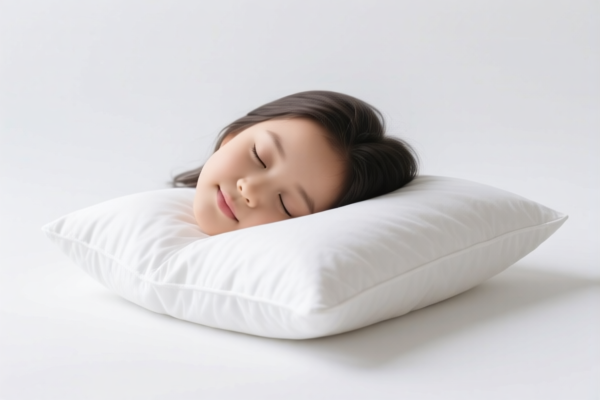
AI Analysis
🛫🧳 Aviation Pillow (Light Colored)
HS Code Classification & Tariff Analysis | 2026 Latest Harmonized System | Professional Clearance Strategy
📌 I. Product Definition & Core Characteristics: What is an "Aviation Pillow"?
An Aviation Pillow is a specialized travel accessory designed to provide neck support and comfort during long-haul flights, road trips, or office naps. While marketed for "aviation" use, it is functionally a pillow or textile accessory.
In international trade (specifically under US Customs regulations), the classification depends heavily on: 1. Material Composition (e.g., Cotton, Polyester, Memory Foam, PVC, Silk). 2. Structure (e.g., Inflatable, Solid Foam, Textile Cover only). 3. Intended Use (Decorative vs. Functional Support).
⚠️ Critical Distinction for US Customs: - If it is a standard pillow with a fabric cover and filling → It falls under Chapter 94. - If it is primarily a textile accessory (e.g., silk scarf-like, decorative) → It falls under Chapter 63. - If it is made of Plastics/PVC (e.g., inflatable, synthetic polymer shell) → It falls under Chapter 39.
📦 II. HS Code Classification Matrix (Based on Provided Data)
The following table details the five possible HS Code classifications for a "Light Colored Aviation Pillow" based on material and structural assumptions. Note: The final classification must match the actual physical composition of the goods.
| HS Code | Product Description & Logic | Primary Material | Functional Nature |
|---|---|---|---|
6304.99.60.30 |
Textile Decor/Accessory: Classified as other textile articles. Likely a pillow with a silk or silk-blend cover, treated as a decorative/home item. | Silk / Silk Fiber | Textile/Decorative |
9404.90.10.30 |
Pillow/Foam Product: Classified as a pillow (Pillows) with cotton/fabric cover and foam filling. Most common for memory foam neck pillows. | Cotton/Fabric + Foam | Functional Pillow |
3926.90.75.00 |
Inflatable Plastic Item: Classified as other plastic articles, specifically air cushions or inflatable products. | PVC / Synthetic Plastic | Inflatable/Plastic |
3926.90.99.89 |
Other Plastic Articles: Classified as other articles of plastic/synthetic materials (e.g., polyurethane shell). | Polyurethane / Synthetic | Solid Plastic/Synthetic |
9404.90.20.30 |
Bedding Pillow: Classified as other bedding pillows (foam/like materials). Similar to 9404.90.10 but may differ in specific foam type or subtype. | Foam / Latex | Bedding/Support |
💰 III. 2026 Tariff Rate Breakdown (US Imports from China)
All tariffs below apply to US Imports from China (CN). The total tax rate includes: 1. Base Duty: Standard MFN rate. 2. Section 301 (Add-on Tariff): Typically 7.5% for most consumer goods. 3. Section 122 (or IEEPA) Surcharge: A fixed 10% surcharge often applied to specific categories.
🎯 1. 6304.99.60.30 – Textile Decor / Silk-like
- Base Duty: 3.2%
- Add-on Tariff (Sec 301): 7.5%
- Surcharge (Sec 122): 10.0%
- 🔴 TOTAL TAX RATE: 20.7%
- Logic: Lower base duty due to textile classification, but still subject to high surcharges.
🎯 2. 9404.90.10.30 – Standard Foam Pillow (Most Likely for Memory Foam)
- Base Duty: 5.3%
- Add-on Tariff (Sec 301): 7.5%
- Surcharge (Sec 122): 10.0%
- 🔴 TOTAL TAX RATE: 22.8%
- Logic: Standard pillow classification. Common for U-shaped neck pillows with cotton/polyester covers.
🎯 3. 3926.90.75.00 – Inflatable Plastic Pillow
- Base Duty: 4.2%
- Add-on Tariff (Sec 301): 0.0% (Note: Some plastic inflatable items may have lower Sec 301 rates depending on specific sub-lists, but per data: 0.0%)
- Surcharge (Sec 122): 10.0%
- 🟢 TOTAL TAX RATE: 14.2% (Lowest Potential Rate)
- Logic: If the pillow is PVC inflatable (blow-up type), it benefits from a 0% Sec 301 rate, making it the most cost-effective if material matches.
🎯 4. 3926.90.99.89 – Other Plastic/Synthetic (e.g., Rigid Shell)
- Base Duty: 5.3%
- Add-on Tariff (Sec 301): 7.5%
- Surcharge (Sec 122): 10.0%
- 🔴 TOTAL TAX RATE: 22.8%
- Logic: Polyurethane or synthetic polymer shells that do not fit the "inflatable" category fall into "other plastic articles."
🎯 5. 9404.90.20.30 – Other Bedding Pillow (Foam/Latex)
- Base Duty: 6.0%
- Add-on Tariff (Sec 301): 7.5%
- Surcharge (Sec 122): 10.0%
- 🔴 TOTAL TAX RATE: 23.5% (Highest Rate)
- Logic: This is the most expensive classification, often used for generic foam pillows not explicitly listed as "pillows" in other subheadings.
🛠️ IV. Customs Clearance Recommendations (Strategic Advice)
✅ 1. Material Verification is Key
Before shipping, you MUST confirm the primary material:
- Is it Inflatable? → Aim for 3926.90.75.00 (14.2% total). This saves ~8-9% in taxes compared to textile or foam pillows.
- Is it Memory Foam with Fabric Cover? → Aim for 9404.90.10.30 (22.8% total).
- Is it Silk/Textile Decor? → Aim for 6304.99.60.30 (20.7% total).
💡 Pro Tip: If your pillow is soft foam + fabric, do NOT declare it as "Plastic" to avoid fraud penalties. If it is PVC Inflatable, ensure the air valve and material sheet are clearly plastic to qualify for
3926.90.75.00.
✅ 2. Documentation Requirements
| Document | Requirement | Why? |
|---|---|---|
| Commercial Invoice | Must state "Material: PVC" or "Material: Cotton/Foam" | To support HS Code selection. |
| Product Photos | Show air valve (if inflatable) OR fabric texture/filling (if pillow) | Customs brokers need visual proof of classification. |
| Specification Sheet | List dimensions, weight, and filling material% | Crucial for "Essential Character" determination. |
✅ 3. Declaration Strategy
- For
3926.90.75.00: Declare as "Inflatable Travel Pillow, PVC Material, for Air Travel Use."- Avoid terms like "Pillow" if possible; use "Air Cushion" or "Inflatable Support" to steer toward Chapter 39.
- For
9404.90.10.30: Declare as "Neck Pillow, Cotton Cover, Foam Filling, for Travel Use." - For
6304.99.60.30: Declare as "Textile Travel Accessory, Silk Blend, Decorative Function."
✅ 4. Risk Warning
- Misclassification Penalty: Declaring a foam pillow as "Plastic" to save tax can lead to seizure and fines.
- "Light Colored" Irrelevance: Color does not affect HS Code in this context. Focus on material.
- 122 Surcharge: The 10% surcharge applies to all listed codes in the provided data. Ensure your landed cost calculation includes this fixed cost.
🌍 V. Market-Specific Notes (2026)
| Market | Recommended HS Code | Total Tax (Est.) | Note |
|---|---|---|---|
| 🇺🇸 USA | 3926.90.75.00 (if PVC) |
14.2% | Best rate for inflatables. |
| 🇺🇸 USA | 9404.90.10.30 (if Foam) |
22.8% | Standard for memory foam. |
| 🇪🇺 EU | N/A (EU uses different HS) | Varies | EU does not have Section 301/122 surcharges. |
| 🇨🇳 China Export | N/A | 0% | Export duty is 0%. Focus on import duty in destination. |
📌 VI. Common Mistakes & Pitfalls
❌ Mistake 1: Using "Pillow" for all inflatables.
- Consequence: Customs may reclassify to 9404 (Pillows) → Higher tax if 3926 was available.
- Fix: Always highlight "Inflatable" and "PVC/Plastic" in description.
❌ Mistake 2: Ignoring the "122 Clause" Surcharge. - Consequence: Underestimating landed cost by 10%. - Fix: Always add 10% to your tariff calculation for US imports from China.
❌ Mistake 3: Mixing Materials without Disclosure. - Consequence: If a pillow has a plastic shell AND fabric cover, customs may classify based on "Essential Character." If the shell is dominant, it might go to Chapter 39. If fabric is dominant, Chapter 94 or 63. - Fix: Be transparent. If it’s 50/50, consult a broker for a pre-ruling.
🎯 VII. Conclusion: Optimize Your Landed Cost
🎯 Key Takeaway:
If your Aviation Pillow is INFLATABLE (PVC), use
3926.90.75.00→ 14.2% Tax.
If it is FOAM/FABRIC, use9404.90.10.30→ 22.8% Tax.
If it is SILK/TEXTILE, use6304.99.60.30→ 20.7% Tax.
📞 Action Item: 1. Confirm Material with your supplier. 2. Choose HS Code based on material. 3. Declare Accurately to avoid delays. 4. Budget for 10% Surcharge + Base Duty + Sec 301.
✨ Professional Clearance Starts with Accurate Classification! 💼 Save up to 9% on tariffs by choosing the right HS Code for your material!
Customer Reviews
About HS Code Classification
The Harmonized System (HS) is an internationally standardized nomenclature developed by the World Customs Organization (WCO) to classify traded products. Over 200 countries use the HS system as the basis for customs tariffs, trade statistics, and import/export regulations.
Each HS code follows a hierarchical structure:
- Chapter (2 digits) — Broad category of goods (e.g., Chapter 84: Machinery and Mechanical Appliances)
- Heading (4 digits) — More specific grouping within the chapter
- Subheading (6 digits) — Internationally standardized breakdown, used by all WCO member countries
- National subdivisions (8-10 digits) — Country-specific extensions for further classification, such as US HTSUS 10-digit codes
Correct HS code classification is essential for smooth customs clearance, accurate duty payment, and compliance with trade regulations. Misclassification can lead to customs delays, overpayment of duties, or penalties.
When importing from CN to US, the applicable tariff rates may include:
- Most-Favored-Nation (MFN) rate — The standard duty rate applied to WTO members
- General rate — Applied to countries without trade agreements
- Trade remedy duties — Additional tariffs such as Section 301 (anti-dumping), Section 232 (national security), or countervailing duties
The information provided on this page is for reference purposes only. For official classification, please consult with your local customs authority or a licensed customs broker.