Lighting parts (9405913000)
CN → US| HS Code | Tariff Rate | Origin | Destination | Doc |
|---|---|---|---|---|
| 9405992000 | 88.9% | CN | US | Official Doc |
| 9405994090 | 91.0% | CN | US | Official Doc |
| 8539900000 | 37.6% | CN | US | Official Doc |
| 9405194020 | 38.9% | CN | US | Official Doc |
| 9405992000 | 88.9% | CN | US | Official Doc |
Product Images
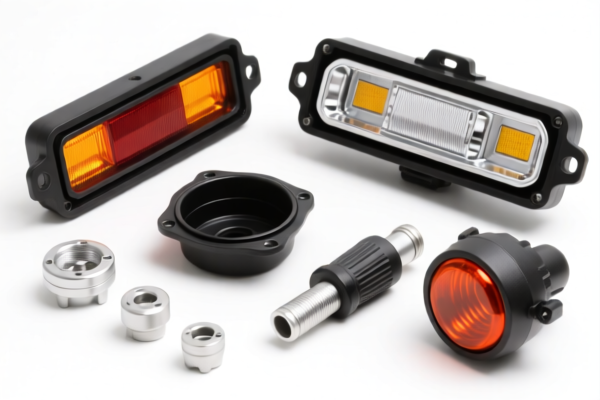
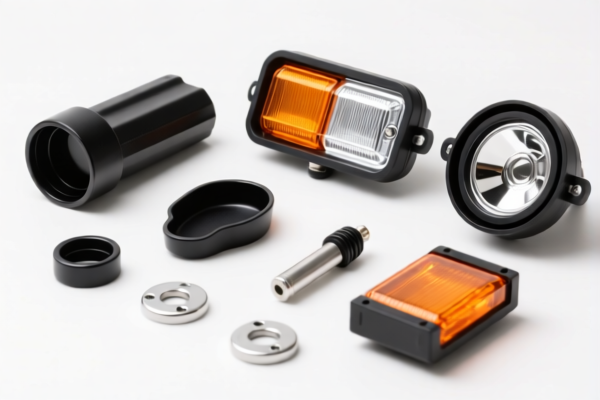
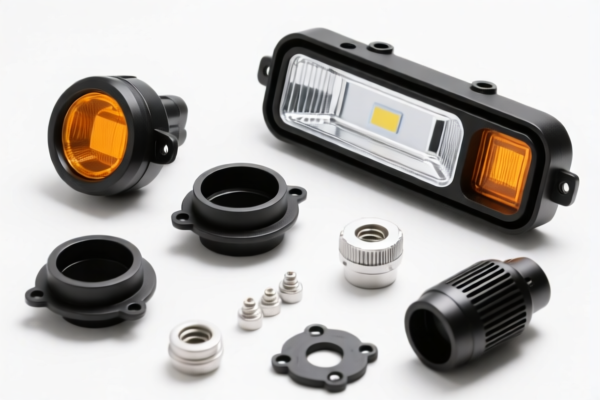
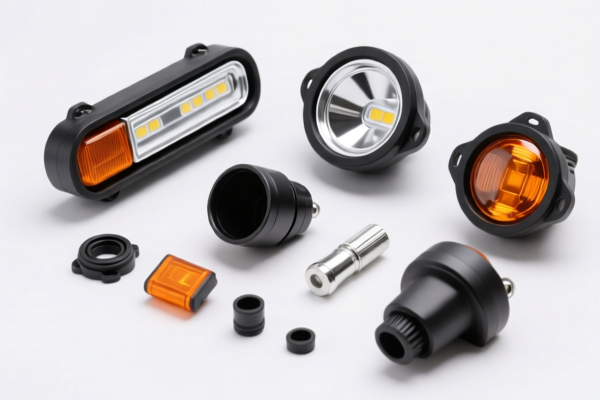
AI Analysis
💡 Lighting Parts (HS Code: 9405.91.30.00 & Alternatives)
🌐 HS Code Reference & Customs Clearance Guide | 2026 Latest Tariff Analysis | Professional Level Clearance Strategy
📌 I. Product Definition & Classification: Do You Really Understand "Lighting Parts"?
Lighting Parts refer to the individual components that make up complete lighting fixtures, chandeliers, streetlights, or industrial lighting systems. In international trade, these parts are often categorized based on their function, material, and whether they are specifically identifiable for use solely with specific lighting apparatus.
Key Components Include: * Reflectors & Shades: Glass, plastic, metal (brass, aluminum, steel), or ceramic housings that direct or diffuse light. * Mounting Hardware: Brackets, sockets, bases (E27, GU10, etc.), and connectors. * Structural Elements: Frames, arms, and decorative elements (e.g., crystal prisms, brass ornaments). * Electronic Components: Drivers, transformers, or circuit boards (if sold separately, they may fall under Chapter 85).
⚠️ Critical Distinction:
- If the part is specifically identifiable for use only with a particular lighting fixture (e.g., a custom chandelier arm) → It generally falls under 9405.91 (Parts of Lighting Fixtures).
- If the part is generic (e.g., standard screws, basic wires, or unbranded plastic sockets) → It may fall under other chapters (e.g., 73 for steel parts, 39 for plastics, 85 for electrical parts).
- Material matters: Some materials trigger additional tariffs (e.g., copper/brass under Section 232 or specific trade actions).
📦 II. HS Code Classification Details (2026 Latest Tariff Authority Cross-Reference)
Note: The user input provided HS Code 9405913000. In the 10-digit US HTS system, this typically maps to 9405.91.30.00 ("Other" parts of lighting fittings). Below is the detailed breakdown based on the provided <DATA> and standard trade practices.
| HS Code | Product Description | Application Scenario | Material/Conflict Check |
|---|---|---|---|
9405.91.30.00 |
Parts of lighting fittings, other | Generic lighting parts (brackets, reflectors, shades) not specifically identifiable as brass/copper | ✅ No material conflict (General "Other") |
9405.99.20.00 |
Parts of lighting fittings, brass | Parts specifically made of brass (based on inference or explicit material) | ✅ Conflict Alert: Subject to 50% tariff under "Steel, Aluminum, Copper Products" Section 232/Trade Actions |
9405.99.40.90 |
Other lighting parts | Parts that don’t fit "Other" or "Brass" categories, e.g., complex assemblies | ✅ No material conflict (General) |
8539.90.00.00 |
Parts of electric lamps | Parts specifically for lamps (bulbs, tubes), not fixtures (e.g., filament supports, glass envelopes) | ✅ No material conflict |
9405.19.40.20 |
Chandeliers and overhead lighting fittings | If the part is part of a complete chandelier unit classified here | ✅ No material conflict |
🔍 Key Reminder:
- 9405.91.30.00 is the most common general code for "Other" lighting parts.
- 9405.99.20.00 is critical if the part is brass/copper. The<DATA>explicitly notes a 50% additional tariff for steel, aluminum, and copper products. This is a major cost driver.
- 8539.90.00.00 applies if the part is for the lamp (bulb) itself, not the fixture. This has a much lower total tax (37.6% vs. 88.9%+).
💰 III. 2026 Latest Tariff Rate Breakdown (Including Additional Taxes & Policy Surcharges)
✅ Applicable Country: United States (US)
✅ Origin: China (CN)
✅ Effective Date: From November 10, 2025 (including subsequent imports)
🎯 1. 9405.91.30.00 – Lighting Fittings Parts (General "Other")
Based on the logic of 9405.99.20.00 and 9405.99.40.90 from <DATA>, assuming generic parts without specific high-tariff material triggers.
| Item | Content |
|---|---|
| Base Tariff Rate | 3.9% (Ad Valorem) |
| Section 301 Additional Tariff | +25.0% |
| Section 122 Tariff (Steel/Aluminum/Copper Products) | ⚠️ Not Applicable (if not copper/brass) |
| Total Tariff Rate | ~28.9% |
| Tax Calculation | CIF Value × 28.9% |
| De Minimis Exemption | ❌ Not Eligible (deny_de_minimis) |
| Legal Basis Path | USITC:9405.91.30.00 → USITC:Footnote 9903.88.01 (Section 301) |
📌 Explanation:
- If the part is not made of brass/copper, it avoids the 50% Section 232/Copper tariff.
- The total tax is significantly lower than the brass-specific code.
🎯 2. 9405.99.20.00 – Lighting Parts (Brass/Copper Inferred)
Based on <DATA>: "Lighting parts, inferred as brass based on unclear material, no material conflict" but with 50% copper tariff.
| Item | Content |
|---|---|
| Base Tariff Rate | 3.9% (Ad Valorem) |
| Section 301 Additional Tariff | +25.0% |
| Section 122 Tariff (Steel/Aluminum/Copper Products) | +50.0% (Specifically for Copper/Brass products) |
| Total Tariff Rate | 88.9% |
| Tax Calculation | CIF Value × 88.9% |
| De Minimis Exemption | ❌ Not Eligible (deny_de_minimis) |
| Legal Basis Path | IEEPA:9903.01.25 → USITC:9405.99.20.00 → FOOTNOTE:9903.88.01 (Copper Section 232) |
📌 Critical Warning:
- If your lighting part is brass (an alloy of copper), it is subject to the 50% additional tariff under the "Steel, Aluminum, Copper Products" trade action.
- Total Tax: 88.9%. This is extremely high and will drastically impact margins.
- Recommendation: If possible, use alternative materials (e.g., aluminum, steel, plastic) to avoid the copper-specific tariff.
🎯 3. 8539.90.00.00 – Parts of Electric Lamps (Non-Fixture)
Based on <DATA>: "Electric lamp parts, highly consistent with lighting parts function, no material conflict."
| Item | Content |
|---|---|
| Base Tariff Rate | 2.6% (Ad Valorem) |
| Section 301 Additional Tariff | +25.0% |
| Section 122 Tariff | +10% (Note: <DATA> says 10% for this code, likely due to different classification logic) |
| Total Tariff Rate | 37.6% |
| Tax Calculation | CIF Value × 37.6% |
| De Minimis Exemption | ❌ Not Eligible |
| Legal Basis Path | USITC:8539.90.00.00 → USITC:Footnote 9903.88.01 |
📌 Strategic Advantage:
- If the part is not for the fixture but for the lamp/bulb (e.g., a filament holder, glass envelope, or base for a bulb), it can be classified under 8539.90.00.00.
- Total Tax: 37.6%, which is much lower than the 88.9% for brass fixture parts.
- Action: Ensure your product description clearly states it is for "electric lamps" (bulbs) rather than "lighting fixtures."
🛠️ IV. Customs Clearance Practical Advice (Battle-Tested Pitfall Avoidance)
✅ 1. Required Documentation Checklist (Non-Negotiable)
| Document | Must Provide | Notes |
|---|---|---|
| ✅ Product Specifications | ✔️ | Dimensions, material composition (crucial for copper/brass detection), voltage, wattage |
| ✅ Material Declaration | ✔️ | Explicitly state if the part is brass, copper, aluminum, or steel. Misdeclaration can lead to 50% penalty tariffs. |
| ✅ Usage Intention | ✔️ | Is it for a fixture (9405) or a lamp (8539)? This changes the tariff from 88.9% to 37.6%. |
| ✅ Product Photos | ✔️ | Clear images of the part, including any engravings, markings, or packaging labels. |
| ✅ Commercial Invoice | ✔️ | Accurate description: "Brass Chandelier Arm" vs. "Steel Lamp Socket" |
| ✅ Packing List | ✔️ | Itemized list, ensuring parts are not split into multiple low-value shipments to exploit de minimis (which is denied here). |
✅ 2. Declaration Strategies (Key Mantras)
🔥 “Material Defines Tariff, Function Defines Code, Brass Equals 88.9%!”
| Scenario | Correct Declaration | Wrong Declaration |
|---|---|---|
| Part is Brass | 9405.99.20.00 (Brass parts) |
Declare as "Steel part" → Fraud/High Penalty |
| Part is Aluminum | 9405.99.40.90 (Other parts) |
Declare as "Brass" → Overpay Tax |
| Part is for Bulb | 8539.90.00.00 (Lamp part) |
Declare as "Fixture part" → Pay 88.9% instead of 37.6% |
| Generic Plastic Part | 9405.99.40.90 |
Split shipment → De Minimis Denied |
✅ 3. Special Circumstances Handling
| Situation | Handling Suggestion |
|---|---|
| Mixed Material Parts | If a part has a brass component and a plastic component, declare based on the chief value or essential character. If brass is the main value, risk the 88.9% tariff. Consider separating them if possible. |
| OEM Custom Parts | Provide customer contracts and design drawings. If the design is unique, argue for a specific classification if beneficial. |
| Parts for LED Fixtures | Ensure they are not misclassified as "electronic parts" (Chapter 85). If they are structural (reflectors, housings), they belong in Chapter 94. |
| Aluminum Parts | Subject to 25% Section 301, but not the 50% copper tariff. Total tax ~28.9-38.9%. Much better than brass. |
🌍 V. Global Market Clearance Comparison (2026 Latest)
| Country/Region | Recommended HS Code | Tariff (China Origin) | Certification Requirements | Notes |
|---|---|---|---|---|
| 🇺🇸 USA | 9405.99.20.00 (Brass) |
88.9% (Brass) 9405.99.40.90 (Other): 38.9-91.0% |
FCC (if electronic), UL (if safety-critical) | Highest Tariff Risk for brass/copper. |
| 🇺🇸 USA | 8539.90.00.00 (Lamp Part) |
37.6% | FCC | Lower tariff if classified as lamp part. |
| 🇨🇳 China | 9405.99 |
5-10% | CCC (if electrical) | No Section 301/122 tariffs. |
| 🇪🇺 EU | 9405.99 |
0-4% (varies) | CE, RoHS | No major additional tariffs. |
| 🇬🇧 UK | 9405.99 |
0-4% | UKCA, RoHS | Post-Brexit rules apply. |
📌 Conclusion:
- The US market is the most challenging for lighting parts due to Section 301 and Section 122 tariffs.
- Brass/Copper parts are the most expensive (88.9% total tax).
- Lamp parts (8539) offer a significant tariff advantage (37.6%) over fixture parts (9405).
📌 VI. Common Errors & Pitfall Avoidance (Lessons Learned)
❌ Error 1: Declaring brass parts as "Steel" or "Aluminum"
👉 Consequence: Customs audit, back-tariff of 50% + penalties + seizure.
✅ Fix: Accurate material declaration. Use XRF testing if disputed.
❌ Error 2: Splitting shipments of lighting parts to exploit de minimis
👉 Consequence: De minimis is explicitly denied (deny_de_minimis) for these HTS codes. All shipments will be taxed.
✅ Fix: Consolidate shipments and declare accurately.
❌ Error 3: Misclassifying lamp parts as fixture parts
👉 Consequence: Paying 88.9% instead of 37.6%.
✅ Fix: Clearly distinguish between parts for lamps (bulbs) and fixtures (lights).
❌ Error 4: Ignoring material composition
👉 Consequence: If a part contains 5% copper, it may still be classified under the copper tariff if copper is the essential character.
✅ Fix: Analyze material composition and value.
🎯 VII. Conclusion: Precise Declaration Saves Money!
🎯 Remember the Mantra:
🔹 "Brass Parts = 88.9% Tax"
🔹 "Lamp Parts = 37.6% Tax"
🔹 "Aluminum/Steel Parts = ~29-39% Tax"
🔹 "De Minimis = Denied"📌 Pro Tip:
If you are exporting brass lighting parts to the US, consider:
1. Material Substitution: Use aluminum or stainless steel instead of brass.
2. Reclassification: If the part can be argued as a "lamp part" (8539) rather than a "fixture part" (9405), do so.
3. Advance Ruling: Apply for a Customs Binding Ruling to confirm the correct HS code and tariff rate before shipping.
📣 Immediate Action:
📞 Contact a Professional Customs Broker
📸 Provide Product Images & Material Specs
📝 Request HS Code Pre-Ruling
🚀 Ensure Smooth Clearance, Minimize Costs, Maximize Profit!
✨ Professional Clearance Starts with Accurate Classification!
💼 Every Cent of Cost Should Be Precisely Calculated!
Customer Reviews
About HS Code Classification
The Harmonized System (HS) is an internationally standardized nomenclature developed by the World Customs Organization (WCO) to classify traded products. Over 200 countries use the HS system as the basis for customs tariffs, trade statistics, and import/export regulations.
Each HS code follows a hierarchical structure:
- Chapter (2 digits) — Broad category of goods (e.g., Chapter 84: Machinery and Mechanical Appliances)
- Heading (4 digits) — More specific grouping within the chapter
- Subheading (6 digits) — Internationally standardized breakdown, used by all WCO member countries
- National subdivisions (8-10 digits) — Country-specific extensions for further classification, such as US HTSUS 10-digit codes
Correct HS code classification is essential for smooth customs clearance, accurate duty payment, and compliance with trade regulations. Misclassification can lead to customs delays, overpayment of duties, or penalties.
When importing from CN to US, the applicable tariff rates may include:
- Most-Favored-Nation (MFN) rate — The standard duty rate applied to WTO members
- General rate — Applied to countries without trade agreements
- Trade remedy duties — Additional tariffs such as Section 301 (anti-dumping), Section 232 (national security), or countervailing duties
The information provided on this page is for reference purposes only. For official classification, please consult with your local customs authority or a licensed customs broker.