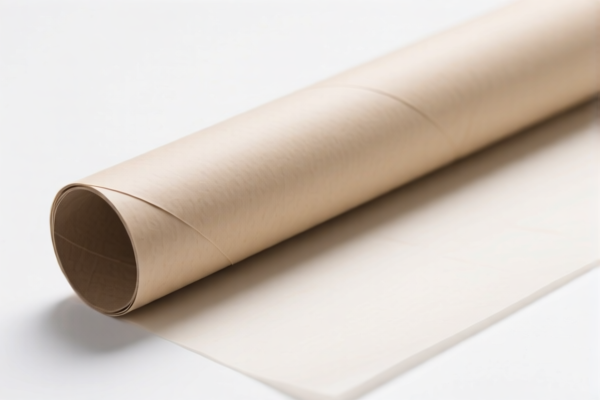
Lightly Coated Cover Paper Roll
CN → US| HS Code | Tariff Rate | Origin | Destination | Doc |
|---|---|---|---|---|
| 4811512010 | 35.0% | CN | US | Official Doc |
| 4811516000 | 35.0% | CN | US | Official Doc |
| 4810131900 | 35.0% | CN | US | Official Doc |
| 4810132090 | 35.0% | CN | US | Official Doc |
| 4810221000 | 35.0% | CN | US | Official Doc |
Product Images



AI Analysis
📜 Lightly Coated Cover Paper Roll (Coated Paper Rolls)
🌐 HS Code Reference & Customs Clearance Guide | 2026 Latest Tariff Analysis | Professional Strategy for US Imports
📌 I. Product Definition & Classification: What is "Lightly Coated Cover Paper"?
"Lightly Coated Cover Paper Roll" refers to paper rolls with a specific coating treatment, typically used as a substrate for beverage containers, packaging, or high-quality printing. In international trade, classification depends on the coating material, physical form (rolls), and intended use.
The provided data identifies five potential HS Codes, all sharing the same tax structure but differing slightly in specific classification logic (e.g., whether it’s classified under specific coated paper headings or general coating categories).
⚠️ Key Distinction Points:
- Material: Paper base with inorganic coatings (clay, silica, etc.). - Form: Must be in Rolls (not cut sheets). - Usage: Often inferred as beverage container substrate or general printing/writing stock. - Conflict Check: The data confirms "coating matches material characteristics" and "rolls match physical form," minimizing classification conflict.
📦 II. HS Code Classification Details (2026 Latest Tariff Authority Comparison)
| HS Code | Product Description | Classification Logic | Tax Rate |
|---|---|---|---|
4811.51.20.10 |
Coated Paper Rolls, Substrate for Beverage Containers | Inferred Use: Specifically identified as a substrate for beverage containers. | 35.0% |
4811.51.60.00 |
Coated Paper Rolls, General Classification | Consistency: Coating and classification are consistent; standard paper roll format. | 35.0% |
4810.13.19.00 |
Coated Paper Rolls, Printing/Writing Use | Material Match: Coating matches material features; rolls match form; inferred for printing/writing. | 35.0% |
4810.13.20.90 |
Coated Paper Rolls, General Catch-all | Fallback Principle: Based on other categories; no specific conflicting features found. | 35.0% |
4810.22.10.00 |
Light Printing Paper Rolls, Light Weight | Specific Type: Identified as "lightweight printing paper"; includes inorganic coating; rolls match form. | 35.0% |
🔍 Important Note:
- All listed HS Codes result in the same total tax rate of 35.0%. - The variation lies in the specific subheading logic (e.g.,4811vs4810), which may affect regulatory compliance or quota restrictions depending on the specific product attributes (e.g., weight, brightness). - "Lightly Coated" implies a low amount of coating, which might influence whether it falls under4810(coated paper) or4811(processing paper). The data suggests both are viable, but4810.22.10.00explicitly mentions "lightweight printing paper."
💰 III. 2026 Latest Tariff Rate Details (Including Surcharges & Policy Add-ons)
✅ Applicable Country: United States (US)
✅ Origin: China (CN)
✅ Effective Date: Ongoing (Subject to current US-China trade policies)
🎯 Universal Tax Structure for All Listed HS Codes
| Item | Content |
|---|---|
| Base Tariff | 0.0% (Ad Valorem) |
| Section 301 Additional Tariff | +25.0% (Under US Trade Law Section 301) |
| Section 122 Tariff | +10.0% (Specific additional tariff, possibly related to trade remedies) |
| Total Tax Rate | 35.0% |
| Tax Calculation | CIF Value × 35% |
| De Minimis Exemption | ❌ Not Applicable (High tariff rate usually excludes de minimis benefits for commercial shipments) |
| Legal Basis Path | USITC:4811.51.20.10 → Footnote: Section 301 → IEEPA: Section 122 |
📌 Explanation:
- The Base Tariff is 0%, meaning the paper itself is not heavily taxed under standard MFN (Most Favored Nation) rates. - However, Section 301 tariffs (+25%) and Section 122 tariffs (+10%) are applied to Chinese-origin coated paper products. - Total Effective Rate: 35%. This is a significant cost driver. - Warning: These tariffs are not waived for small shipments. All imports are subject to this rate.
🛠️ IV. Customs Clearance Practical Advice (Pitfall Avoidance Guide)
✅ 1. Required Documentation Checklist (All Mandatory)
| Document | Must Provide? | Description |
|---|---|---|
| ✅ Product Specification Sheet | ✔️ | Must detail: Paper weight (gsm), coating type (inorganic/organic), gloss level, core size. |
| ✅ Commercial Invoice | ✔️ | Clearly state: "Lightly Coated Cover Paper Roll, Origin: China." |
| ✅ Packing List | ✔️ | Specify gross/net weight, number of rolls, and packaging material. |
| ✅ Certificate of Origin (CO) | ✔️ | Essential for proving Chinese origin (which triggers tariffs). |
| ✅ HS Code Pre-Ruling | ✔️ | Strongly Recommended: Due to multiple possible HS codes, obtain a binding ruling from US CBP. |
| ✅ Product Photos | ✔️ | Show roll ends, coating surface, and packaging to confirm "roll" form. |
✅ 2. Declaration Tips (Key Mnemonics)
🔥 “Rolls, Not Sheets; Coating, Not Plain; Name Precision, Tariff Clarity!”
| Scenario | Correct Declaration | Incorrect Practice |
|---|---|---|
| Product in Rolls | Declare as "Paper Rolls" | Declare as "Paper Sheets" → Wrong HS Code, potential penalties |
| Lightly Coated | Specify "Lightly Coated" or "Coated Paper" | Declare as "Uncoated Paper" → Under-declaration of value/classification |
| Specific Use | If for beverage containers, mention "Substrate for Beverage Containers" | Ignore use → May lose benefit of specific subheading if applicable |
| Chinese Origin | Declare "Made in China" | Attempt to misdeclare origin → Severe penalties, seizure |
✅ 3. Special Case Handling
| Scenario | Handling Advice |
|---|---|
| OEM Custom Coating | Provide coating formula details to CBP to justify 4810 vs 4811 classification. |
| Mixed Shipments | If mixed with uncoated paper, separate declarations are required to avoid misclassification. |
| Disputed Use | If use is unclear, default to 4810.13.20.90 (general other) but ensure documentation supports this. |
| Tariff Engineering | Consider if product can be classified under 4810.22.10.00 (Lightweight) for potential regulatory benefits, though tax rate is same. |
🌍 V. Global Market Customs Comparison (2026 Latest)
| Country/Region | Recommended HS Code | Tariff (China Origin) | Certification Requirements | Remarks |
|---|---|---|---|---|
| 🇺🇸 USA | 4811.51.20.10 / 4810.22.10.00 |
35% (0% Base + 25% Sec 301 + 10% Sec 122) | FDA (if food contact), SDS | High tariff impact; pre-ruling advised. |
| 🇨🇳 China | 4811.51.20.10 |
Varies (Import duties apply) | CCC (if applicable) | Domestic trade not affected by US tariffs. |
| 🇪🇺 EU | 4811.51.20 |
0-6.5% (Standard MFN) | REACH, Ecolabel | No Section 301 tariffs; more favorable. |
| 🇯🇵 Japan | 4811.51.20 |
0-5% (JEEPA Agreement) | JIS Standards | Preferential tariffs under Japan-EPA. |
📌 Conclusion:
- USA is the most challenging market for Chinese coated paper due to the 35% total tariff. - EU and Japan offer significantly lower tariff burdens. - Strategy: For US imports, consider supply chain diversification (e.g., sourcing from Vietnam or Mexico) if possible, or absorb costs if margin allows.
📌 VI. Common Errors & Pitfall Guide (Lessons Learned)
❌ Error 1: Declaring "Paper Rolls" without specifying "Coated"
👉 Consequence: HS Code misclassification → Potential duty evasion penalties + back taxes.
❌ Error 2: Ignoring "Section 122" tariff component
👉 Consequence: Underpayment of 10% → CBP audit, fines, and seizure of goods.
❌ Error 3: Using generic terms like "Packaging Paper"
👉 Consequence: CBP may reject declaration or assign a higher-risk HS code → Delays at port.
❌ Error 4: Failing to provide Proof of Origin
👉 Consequence: Unable to verify Chinese origin → Tariff calculation errors, potential dispute.
✅ Correct Practice:
"Lightly Coated Cover Paper Roll, Inorganic Coating, 120 GSM, Roll Diameter 100cm, Core 76mm, Made in China, for Beverage Container Substrate"
🎯 VII. Conclusion: Professional Declaration, Risk Mitigation, Cost Control!
🎯 Remember the Mnemonics:
🔹 “Rolls, Not Sheets; Coated, Not Plain; 35% is the Cost, Don’t Ignore the Detail!”
🔹 “HS Code Determines Duty, 35% Adds Up Fast, Declare Precisely, Avoid Delays!”
📌 Pro Tip:
- Apply for an Advance Ruling from US CBP to confirm the exact HS Code (4811.51.20.10 vs 4810.22.10.00) before shipment. This provides legal certainty.
- If your paper is exempt from Section 122 (check current exclusions), you may save 10%. Verify this with a customs broker.
- For beverage container substrate, ensure FDA compliance if in contact with food/drink.
📣 Immediate Action:
📞 Contact a Licensed Customs Broker
📄 Prepare Product Specifications & Origin Docs
🚀 Secure CBP Advance Ruling
💼 Ensure Your Paper Rolls Clear US Customs Smoothly, On Time, and Within Budget!
✨ Professional Customs Clearance Starts with Accurate Classification!
💼 Every Cent in Tariffs is Calculated Precisely!
Customer Reviews
About HS Code Classification
The Harmonized System (HS) is an internationally standardized nomenclature developed by the World Customs Organization (WCO) to classify traded products. Over 200 countries use the HS system as the basis for customs tariffs, trade statistics, and import/export regulations.
Each HS code follows a hierarchical structure:
- Chapter (2 digits) — Broad category of goods (e.g., Chapter 84: Machinery and Mechanical Appliances)
- Heading (4 digits) — More specific grouping within the chapter
- Subheading (6 digits) — Internationally standardized breakdown, used by all WCO member countries
- National subdivisions (8-10 digits) — Country-specific extensions for further classification, such as US HTSUS 10-digit codes
Correct HS code classification is essential for smooth customs clearance, accurate duty payment, and compliance with trade regulations. Misclassification can lead to customs delays, overpayment of duties, or penalties.
When importing from CN to US, the applicable tariff rates may include:
- Most-Favored-Nation (MFN) rate — The standard duty rate applied to WTO members
- General rate — Applied to countries without trade agreements
- Trade remedy duties — Additional tariffs such as Section 301 (anti-dumping), Section 232 (national security), or countervailing duties
The information provided on this page is for reference purposes only. For official classification, please consult with your local customs authority or a licensed customs broker.