Lightweight Cardboard Support
CN → US| HS Code | Tariff Rate | Origin | Destination | Doc |
|---|---|---|---|---|
| 4821904000 | 35.0% | CN | US | Official Doc |
| 4819504040 | 35.0% | CN | US | Official Doc |
| 4823908000 | 35.0% | CN | US | Official Doc |
| 4821902000 | 35.0% | CN | US | Official Doc |
| 4819600000 | 35.0% | CN | US | Official Doc |
Product Images
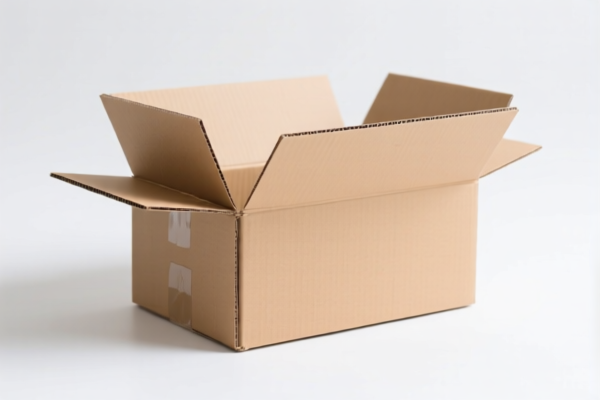
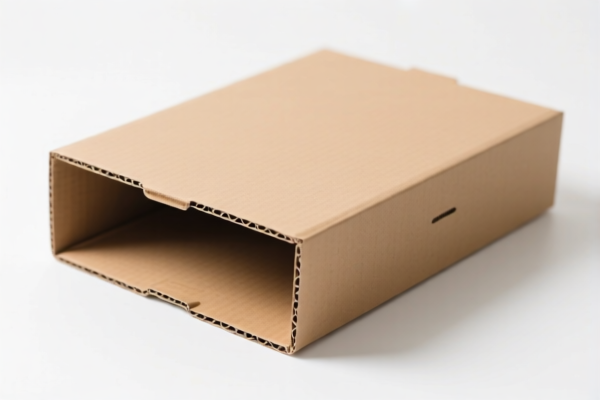
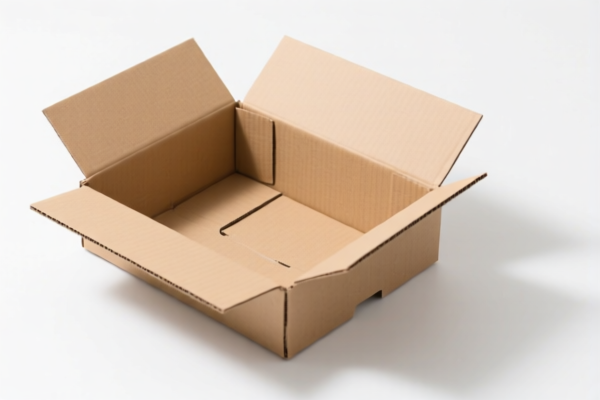
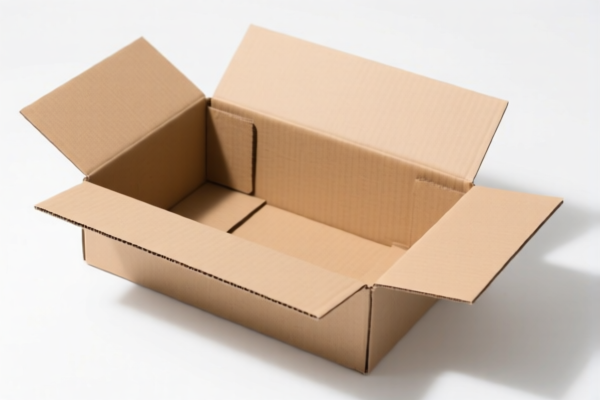
AI Analysis
📦 Lightweight Cardboard Support
🌐 HS Code Classification & Customs Clearance Guide | 2026 Tariff Analysis | Structural Paper Products
📌 I. Product Definition: What is a "Lightweight Cardboard Support"?
A Lightweight Cardboard Support refers to a structural component made primarily from paper-based materials (corrugated board, solid board, or pulp-molded cardboard) designed to hold, brace, or stabilize other goods. Unlike packaging containers (like boxes), these are often internal structures, shims, bracing blocks, or display fixtures.
In international trade, the classification hinges on two factors: 1. Material: Is it purely paper/cardboard? 2. Form/Function: Is it a simple sheet, a shaped structural support, or a container part?
⚠️ Key Distinction:
- If it is a simple flat sheet used for spacing → Often4823(Other paper articles).
- If it is a structured shape (braces, inserts) → Often4821(Paper labels/symbols) or4819(Cartons/boxes).
- If it is part of a box structure →4819.
📊 II. HS Code Classification Matrix (2026 Latest Tariff Data)
Based on the provided data, here are the 5 most relevant HS Codes for "Lightweight Cardboard Support," ordered by classification logic:
| HS Code | Product Description & Logic | Primary Function | Tax Implication (US/China) |
|---|---|---|---|
| 4821.90.40.00 | Other Paper Supports/Components | Generic structural supports; categorized under "Other" paper products due to non-standard form. | 35% (High Risk) |
| 4819.50.40.40 | Cardboard Containers/Parts | Supports that function as internal components of cardboard packaging systems. | 35% (High Risk) |
| 4823.90.80.00 | Paper Gaskets/Seals/Shims | Treated as structured shims, seals, or flat/semi-flat supports. | 35% (High Risk) |
| 4821.90.20.00 | Paper Labels & Other Items | Supports classified under "Other" items if used in labeling/display contexts. | 35% (High Risk) |
| 4819.60.00.00 | Paper Office/Shop Supplies | Supports used in office or retail settings for storage/display. | 35% (High Risk) |
🔍 Critical Note:
All five HS Codes listed above carry an identical total tax rate of 35% for goods originating from China entering the US. The difference lies in customs interpretation and risk of reclassification during inspection.
💰 III. 2026 Tariff Rate Breakdown (Detailed Explanation)
✅ Applicable Market: United States (US)
✅ Country of Origin: China (CN)
✅ Effective Date: Post-2025 Policy Adjustments
All five HS Codes share the same composite tariff structure:
| Component | Rate | Legal Basis | Explanation |
|---|---|---|---|
| Base Tariff | 0.0% | HTSUS General Rate | Paper products often have low or zero base duties under normal trade. |
| Section 301 Tariff | +25.0% | USITC Footnote 9903.88.01 | Added on many Chinese paper/cardboard items as part of trade war measures. |
| IEEPA Tariff (122 Clause) | +10.0% | IEPPA 9903.01.24/25 | Additional penalty tariff for specific Chinese imports under emergency powers. |
| TOTAL EFFECTIVE RATE | 35.0% | - | Non-negotiable for most lightweight cardboard supports from China. |
📌 Why 35%?
- The 25% is standard for many cardboard/paper items under Section 301. - The 10% is a specific "122 clause" add-on often applied to paper-based structural goods to prevent circumvention. - No De Minimis Exemption: Unlike small gifts, industrial/support cardboard items do not qualify for the $800 de minimis exemption if declared as commercial goods.
🛠️ IV. Customs Clearance Strategy & Risk Mitigation
✅ 1. Documentation Checklist (Must-Haves)
| Document | Purpose | Tip |
|---|---|---|
| Product Specification Sheet | Proves "Lightweight" and "Cardboard" material | Include GSM (grams per square meter) and layer count. |
| 3D Renderings/Photos | Shows "Support" vs. "Container" | Clearly show it’s not a box but a brace/insert. |
| Bill of Materials (BOM) | Confirms no mixed materials | Ensure no plastic hinges or metal brackets (which would change HS). |
| Commercial Invoice | Declares value accurately | Use "Lightweight Cardboard Support" as description, NOT "Packaging Material" (too vague). |
| Origin Certificate | Proves Chinese Origin | Required for IEEPA assessment. |
✅ 2. Classification Optimization Strategy
Although all 5 codes result in 35%, choosing the most accurate code reduces the risk of customs delays, audits, or penalties.
| Strategy | Recommended HS Code | Reasoning |
|---|---|---|
| Best for Structural Braces | 4821.90.40.00 | "Other" category captures unique shapes that don't fit boxes or labels. Most defensible for non-standard supports. |
| Best for Packaging Inserts | 4819.50.40.40 | If the support is part of a box kit (e.g., corrugated divider), this is technically accurate. |
| Best for Flat Shims/Gaskets | 4823.90.80.00 | If the support is flat and used for spacing/sealing, this is the strongest technical fit. |
| Avoid | 4819.60.00.00 | "Office/Shop Supplies" is too broad and may trigger scrutiny if not clearly for office use. |
🚫 Red Flag: Do not misdeclare as "Paper Bags" (4819.10) or "Cartons" (4819.10/20) if the item is a support structure. Misclassification can lead to 200% penalties.
✅ 3. Clearance Tips for "Lightweight" Items
- Weight Disclosure: Clearly state net weight on the invoice. "Lightweight" is subjective; customs needs kg/lbs.
- No Mixed Materials: If the support has plastic clips, metal screws, or adhesive backing, the HS code MUST change (likely to Chapter 39 or 73). Ensure it’s 100% paper/cardboard.
- Pre-Ruling Application: Given the 35% tax, apply for a Binding Tariff Information (BTI) or US CBP Ruling before shipping. This locks in the classification and protects against future audits.
🌍 V. Global Market Comparison (Cardboard Supports)
| Market | Typical HS Code | Base Duty | Extra Tariffs (China) | Total Rate | Notes |
|---|---|---|---|---|---|
| 🇺🇸 USA | 4821.90.40.00 | 0% | +25% (301) +10% (IEEPA) | 35% | High Risk |
| 🇨🇳 China | 4823.90.80.00 | 0% | N/A | 0% | Import into China is tax-free for many paper goods. |
| 🇪🇺 EU | 4823.90.80.00 | 0% | N/A | 0% | No additional tariffs for paper supports. |
| 🇬🇧 UK | 4823.90.80.00 | 0% | N/A | 0% | Post-Brexit, UK follows similar paper tariff structures. |
| 🇨🇦 Canada | 4821.90.40.00 | 0% | N/A | 0% | CUSMA/USMCA benefits may apply if origin is North American. |
📌 Insight:
Only the USA imposes the 35% punitive tariff on Chinese cardboard supports. For other markets, this product is duty-free. Consider transshipment or third-country assembly (e.g., Vietnam, Mexico) if shipping to the US is not feasible, but beware of Rules of Origin enforcement.
📌 VI. Common Mistakes & Pitfalls
❌ Mistake 1: Calling it "Packaging Material"
👉 Result: Customs may classify it as 4819.10 (Cartons), which might have a different tax rate, but if found to be a "support," you face reclassification penalties.
❌ Mistake 2: Ignoring the 10% IEEPA Clause
👉 Result: Underpaying duties by 10% → Back taxes + Interest + Penalties.
❌ Mistake 3: Mixing Materials
👉 Result: If the support has any plastic, it may fall under Chapter 39 (Plastics), which has different tariffs. Ensure 100% paper.
❌ Mistake 4: Using Generic Descriptions
👉 Result: "Cardboard Piece" is too vague. Use "Structural Cardboard Support for [Product Name]" to clarify function.
✅ Best Practice:
"Lightweight Corrugated Cardboard Support, Model XYZ, 100% Paper, No Plastic Components"
🎯 VII. Conclusion: Maximize Profit, Minimize Risk
🎯 Key Takeaway:
- Tariff is 35% for US-bound Chinese cardboard supports.
- Accuracy is critical: Choose 4821.90.40.00 for unique supports or 4823.90.80.00 for flat shims.
- Documentation must prove the item is structural and 100% paper.
🚀 Action Plan:
1. Photograph the support from all angles.
2. Specify material composition (100% cardboard).
3. Apply for a CBP Ruling if shipping large volumes.
4. Declare accurately as "Lightweight Cardboard Support" under 4821.90.40.00.
✨ Smart Customs, Smarter Business!
💼 Don’t let 35% tariffs erase your margin — classify correctly!
Customer Reviews
About HS Code Classification
The Harmonized System (HS) is an internationally standardized nomenclature developed by the World Customs Organization (WCO) to classify traded products. Over 200 countries use the HS system as the basis for customs tariffs, trade statistics, and import/export regulations.
Each HS code follows a hierarchical structure:
- Chapter (2 digits) — Broad category of goods (e.g., Chapter 84: Machinery and Mechanical Appliances)
- Heading (4 digits) — More specific grouping within the chapter
- Subheading (6 digits) — Internationally standardized breakdown, used by all WCO member countries
- National subdivisions (8-10 digits) — Country-specific extensions for further classification, such as US HTSUS 10-digit codes
Correct HS code classification is essential for smooth customs clearance, accurate duty payment, and compliance with trade regulations. Misclassification can lead to customs delays, overpayment of duties, or penalties.
When importing from CN to US, the applicable tariff rates may include:
- Most-Favored-Nation (MFN) rate — The standard duty rate applied to WTO members
- General rate — Applied to countries without trade agreements
- Trade remedy duties — Additional tariffs such as Section 301 (anti-dumping), Section 232 (national security), or countervailing duties
The information provided on this page is for reference purposes only. For official classification, please consult with your local customs authority or a licensed customs broker.