Lightweight Coated Cardboard Sheets
CN → US| HS Code | Tariff Rate | Origin | Destination | Doc |
|---|---|---|---|---|
| 4811904090 | 35.0% | CN | US | Official Doc |
| 4810221000 | 35.0% | CN | US | Official Doc |
| 4810131900 | 35.0% | CN | US | Official Doc |
| 4811592000 | 35.0% | CN | US | Official Doc |
| 4909002000 | 17.5% | CN | US | Official Doc |
Product Images
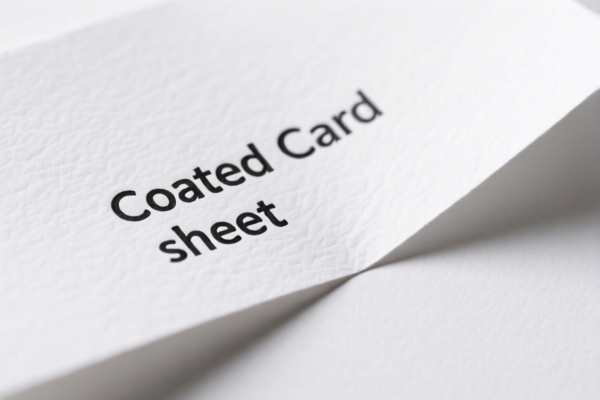

AI Analysis
📄 Lightweight Coated Cardboard Sheets / Postcards
🌐 HS Code Reference & Customs Clearance Guide | 2026 Latest Tariff Analysis | Professional Entry Strategy
📌 I. Product Definition & Classification: Do You Really Understand "Coated Paper"?
Lightweight Coated Cardboard Sheets, often referred to in trade as coated postcards, drawing paper, or graphic paper, are paper products with a fine mineral coating on one or both sides. They are characterized by their smooth surface, high opacity, and specific weight (usually under 150 g/m² for "lightweight" classification).
In international trade, the classification hinges on two critical factors: 1. Form Factor: Is it a finished "card/postcard" shape, or is it raw "paper sheets"? 2. Weight & Usage: Is it specifically for drawing/graphic use, or general printing?
⚠️ Key Distinction Points:
- Finished Shape (Postcards/Cards): If the paper is cut into a specific card/postcard shape with rounded corners or pre-printed formats intended for mailing/collecting, it leans towards Chapter 49 (Printed Matter) → 4909.
- Raw Material (Paper Sheets): If it is sold as raw sheets or rolls for further printing/cutting by the buyer, it falls under Chapter 48 (Paper/Paperboard) → 4811/4810.
- "Lightweight" Attribute: Typically refers to grammage ≤ 150 g/m². This is crucial for distinguishing from heavy cardboard or packaging board.
📦 II. HS Code Classification Details (2026 Latest Tariff Authority对照)
Based on the provided data, here are the specific HS Codes for Lightweight Coated Cardboard Sheets and why they are categorized this way.
| HS Code | Product Description | Why This Code? (Classification Logic) | Total Tax Rate |
|---|---|---|---|
| 4909.00.20.00 | Lightweight Coated Postcard Paper (Matches Printing Card Form & Coated Material) |
Reason: The product is defined by its final shape (Postcard/Card). Even if made of coated paper, once it is in a "card" form for printing/mailing, it is considered "Printed Matter" or "Stationery" rather than raw paper. | 17.5% |
| 4811.59.20.00 | Lightweight Coated Paper (Matches Coated Material & Paper Form) |
Reason: Classified as processed paper. This code applies if the item is viewed as a coated paper product (e.g., coated rolls or sheets) used for general purposes, not specifically as a finished "card" item. It falls under "Other coated paper." | 35.0% |
| 4811.90.40.90 | Lightweight Coated Paper (For Drawing) (Matches Paper Material, Coated Form & Drawing Use) |
Reason: Specific use-case classification. If the paper is explicitly marketed and used for artistic drawing or graphic illustration, and comes in sheet form, it falls here. The "Drawing Use" drives the sub-heading. | 35.0% |
| 4810.22.10.00 | Lightweight Coated Paper (For Drawing) (Matches Coated Paper Material & Drawing Use) |
Reason: Similar to above but emphasizes the material type (Coated Paper in Chapter 48) combined with Drawing Use. It’s a broader coating classification than 4811 for graphic materials. | 35.0% |
| 4810.13.19.00 | Lightweight Coated Paper (For Drawing) (Matches Coated Paper, Paper Form & ≤150g/m² Lightweight Attribute) |
Reason: Highly specific. It requires: 1) Coated paper material, 2) Sheet/Roll form, 3) ≤150g/m² weight, 4) Drawing application. This is the most detailed "raw material" classification for light graphic paper. | 35.0% |
🔍 Critical Analysis:
- The 17.5% vs. 35.0% Gap: The difference lies in whether the product is considered a finished printed item (4909) or a raw paper commodity (48xx).
- Shape Matters: If your product has standardized postcard dimensions, is pre-gummed, or sold as "postcards," 4909.00.20.00 is the correct and cheaper option.
- Usage Matters: If sold as blank sheets for artists to draw on, it falls under the 35% bracket (4811/4810).
💰 III. 2026 Latest Tariff Rate Breakdown (Including Additional Taxes)
✅ Applicable Country: United States (US)
✅ Origin: China (CN)
✅ Effective Date: November 10, 2025 (and subsequent imports)
🎯 1. 4909.00.20.00 —— Lightweight Coated Postcard Paper (Lowest Risk)
| Item | Content |
|---|---|
| Base Rate | 0% (ad valorem) |
| USITC Additional Tax | +7.5% (Section 301 Tariff) |
| IEEPA Additional Tax | +10% (122 Clause Tariff for China) |
| Total Tax Rate | 17.5% |
| Calculation | CIF Value × 17.5% |
| De Minimis Exemption? | ❌ No (Not eligible for Section 321 de minimis exemption due to Section 301/IEEPA applicability) |
| Legal Basis Path | IEEPA:122 → USITC:4909.00.20.00 → FOOTNOTE:Section301 |
📌 Explanation:
- This is the most favorable classification for coated postcards.
- The "7.5%" is likely a specific sub-rate for postcards under the broader 301 tariffs, or a reduced rate compared to general paper.
- Total 17.5% is significantly lower than the 35% for other coated papers.
🎯 2. 4811.59.20.00 —— Coated Paper (General)
| Item | Content |
|---|---|
| Base Rate | 0% |
| USITC Additional Tax | +25% (Standard Section 301 Tariff for Paper Products) |
| IEEPA Additional Tax | +10% (122 Clause Tariff for China) |
| Total Tax Rate | 35.0% |
| Calculation | CIF Value × 35.0% |
| De Minimis Exemption? | ❌ No |
| Legal Basis Path | IEEPA:122 → USITC:4811.59.20.00 → FOOTNOTE:9903.88.01 |
📌 Warning:
- This is the standard high-tariff bracket for coated paper sheets.
- Misclassifying postcards as "paper sheets" here results in double the tax (35% vs 17.5%).
🎯 3. 4811.90.40.90 / 4810.22.10.00 / 4810.13.19.00 —— Coated Paper for Drawing
| Item | Content |
|---|---|
| Base Rate | 0% |
| USITC Additional Tax | +25% |
| IEEPA Additional Tax | +10% |
| Total Tax Rate | 35.0% |
| Calculation | CIF Value × 35.0% |
| De Minimis Exemption? | ❌ No |
| Legal Basis Path | IEEPA:122 → USITC:481x.1x.1x → FOOTNOTE:9903.88.01 |
📌 Note:
- All three codes under Chapter 48 (4811, 4810) for coated paper currently attract the full 25% Section 301 tariff + 10% IEEPA tariff.
- The distinction between these three codes is primarily for statistical and specific material definition purposes, but the tax outcome is identical.
🛠️ IV. Customs Clearance Practical Advice (Pitfall Avoidance Guide)
✅ 1. Preparation Checklist (Required Documents)
| Document | Required | Explanation |
|---|---|---|
| ✅ Product Specification Sheet | ✔️ | Must clearly state: "Coated Paper," "Grammage (g/m²)," "Dimensions," and "Form (Postcard/Sheet)." |
| ✅ Photos (Front/Back/Edge) | ✔️ | Show coating texture, edge finish (glossy/matte), and any printed text/logos. |
| ✅ Commercial Invoice | ✔️ | Description must match HS Code logic. - For 4909: Use "Coated Postcards." - For 48xx: Use "Coated Paper Sheets for Drawing." |
| ✅ Packing List | ✔️ | Detail weight, quantity, and package dimensions. |
| ✅ Certified Manufacturer Info | ✔️ | Needed for origin verification and potential IEEPA scrutiny. |
| ✅ HS Code Pre-Ruling (Optional but Recommended) | ✔️ | If unsure between 4909 and 48xx, file for an advance ruling to lock in the 17.5% rate. |
✅ 2. Declaration Strategy (Key Rules)
🔥 "Shape Determines Code, Use Determines Detail, Tax Differs by 17.5%!"
| Situation | Correct Declaration | Common Mistake | Result |
|---|---|---|---|
| Postcards (Cut to size, mailing format) | 4909.00.20.00 |
Declaring as "Paper Sheets" | ❌ Risk of Audit: Customs may reclassify to 48xx → Tax jumps to 35%. |
| Blank Coated Sheets (For artists) | 4810.13.19.00 or 4811.59.20.00 |
Declaring as "Postcards" | ❌ Rejection: No postcard shape → Detention. |
| Coated Paper Rolls | 4811.xxxx.xxxx |
Declaring as "Sheets" | ❌ Discrepancy: Packaging mismatch → Delay. |
| Mixed Shipment (Postcards + Blank Sheets) | Separate Lines | Mixing in one line | ❌ Confusion: Clearing agent may apply highest rate to all → Overpayment. |
✅ 3. Special Cases & Handling
| Scenario | Recommendation |
|---|---|
| Pre-printed Postcards | Strongly recommend 4909.00.20.00. Even if pre-printed, the "Card" form is dominant. |
| Bulk Unprinted Coated Sheets | Must use Chapter 48 codes (35% tax). No way around it unless reprocessed into cards before entry. |
| "Lightweight" Proof | Provide test reports showing GSM ≤ 150 if using 4810.13.19.00. Customs may request weight verification. |
| Origin Marking | Ensure products and packaging are clearly marked "Made in China" to comply with IEEPA labeling. |
🌍 V. Global Market Comparison (2026 Latest)
| Country/Region | Recommended HS Code | Total Tax (China Origin) | Notes |
|---|---|---|---|
| 🇺🇸 USA | 4909.00.20.00 |
17.5% | Best option for postcards. |
| 🇺🇸 USA | 4811/4810 Codes |
35.0% | Higher tax for raw paper. |
| 🇨🇳 China | 4909.00.20.00 |
13% (Import VAT + Duty) | Standard import duty + 13% VAT. |
| 🇪🇺 EU | 4909.00.10 |
0% Duty | Free trade agreement applies. 21% VAT. |
| 🇬🇧 UK | 4909.00.10 |
0% Duty | Post-Brexit tariff. 20% VAT. |
| 🇦🇺 Australia | 4909.00.20 |
5% Duty | Lower duty than US. 10% GST. |
📌 Conclusion:
- The US market is the most expensive due to Section 301 + IEEPA tariffs.
- Classification as Postcards (4909) saves 17.5% in tax compared to classifying as paper sheets.
- If exporting to EU/UK, tariffs are minimal, but VAT is the main cost driver.
📌 VI. Common Errors & Pitfalls (Lessons Learned)
❌ Error 1: Declaring "Coated Paper" for finished postcards
👉 Consequence: Customs reclassifies to 48xx → 35% Tax instead of 17.5%.
💡 Fix: Always use "Postcard" or "Card" in the description if the shape is distinct.
❌ Error 2: Mixing "Drawing Paper" and "Mail Postcards" in one invoice
👉 Consequence: Confusion over intended use → Audit Risk.
💡 Fix: Split into two separate line items with different HS Codes.
❌ Error 3: Ignoring the "122 Clause" (IEEPA)
👉 Consequence: Underpayment of 10% → Penalties + Back Taxes.
💡 Fix: Ensure invoice clearly states origin and product type to match 122 Clause requirements.
❌ Error 4: Assuming "Lightweight" means any low-weight paper
👉 Consequence: Misclassification of heavy coated board.
💡 Fix: Provide GSM test reports if challenged.
✅ Correct Declaration Example:
"Coated Postcards, Lightweight, 150gsm, Glossy Finish, Printed on Front, Blank on Back, Model PC-2026, HS Code 4909.00.20.00"
🎯 VII. Conclusion: Professional Declaration, Cost Efficiency!
🎯 Remember the Golden Rule:
🔹 "If it looks like a Postcard, declare as Postcard (4909) → 17.5% Tax."
🔹 "If it’s just a Sheet, declare as Paper (48xx) → 35% Tax."
🔹 "17.5% Savings = Huge Profit Margin Boost!"
📌 Pro Tip:
If you are unsure whether your product qualifies as a "Postcard" (4909) or "Paper" (48xx), consider modifying the product before export.
- Option A: Sell as raw coated paper sheets (Higher Tax, but simpler logistics).
- Option B: Pre-print and cut into postcard shapes before shipping to the US (Lower Tax, but higher handling cost).
Evaluate your supply chain: Is the cost of pre-processing lower than the 17.5% tax saving? In many cases, yes.
📣 Immediate Action:
📞 Consult a US Customs Broker + Provide Product Photos + Apply for HS Code Pre-Ruling
🚀 Clear your goods smoothly, avoid audits, and maximize profits!
✨ Professional Customs Clearance Starts with Accurate Classification!
💼 Every Percent of Tax Saved is Pure Profit!
Customer Reviews
About HS Code Classification
The Harmonized System (HS) is an internationally standardized nomenclature developed by the World Customs Organization (WCO) to classify traded products. Over 200 countries use the HS system as the basis for customs tariffs, trade statistics, and import/export regulations.
Each HS code follows a hierarchical structure:
- Chapter (2 digits) — Broad category of goods (e.g., Chapter 84: Machinery and Mechanical Appliances)
- Heading (4 digits) — More specific grouping within the chapter
- Subheading (6 digits) — Internationally standardized breakdown, used by all WCO member countries
- National subdivisions (8-10 digits) — Country-specific extensions for further classification, such as US HTSUS 10-digit codes
Correct HS code classification is essential for smooth customs clearance, accurate duty payment, and compliance with trade regulations. Misclassification can lead to customs delays, overpayment of duties, or penalties.
When importing from CN to US, the applicable tariff rates may include:
- Most-Favored-Nation (MFN) rate — The standard duty rate applied to WTO members
- General rate — Applied to countries without trade agreements
- Trade remedy duties — Additional tariffs such as Section 301 (anti-dumping), Section 232 (national security), or countervailing duties
The information provided on this page is for reference purposes only. For official classification, please consult with your local customs authority or a licensed customs broker.