Lightweight Coated Folder Paper
CN → US| HS Code | Tariff Rate | Origin | Destination | Doc |
|---|---|---|---|---|
| 4811594020 | 35.0% | CN | US | Official Doc |
| 4820300040 | 35.0% | CN | US | Official Doc |
| 4820104000 | 35.0% | CN | US | Official Doc |
Product Images
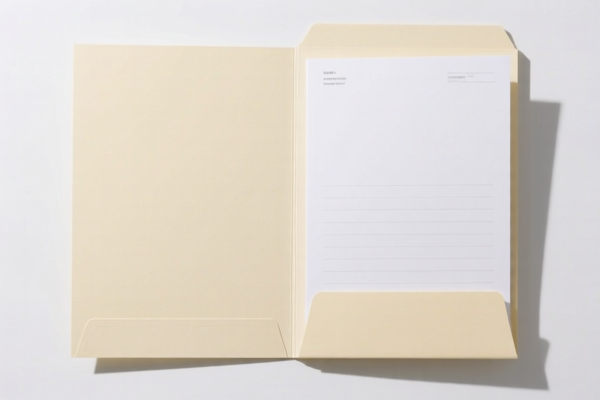

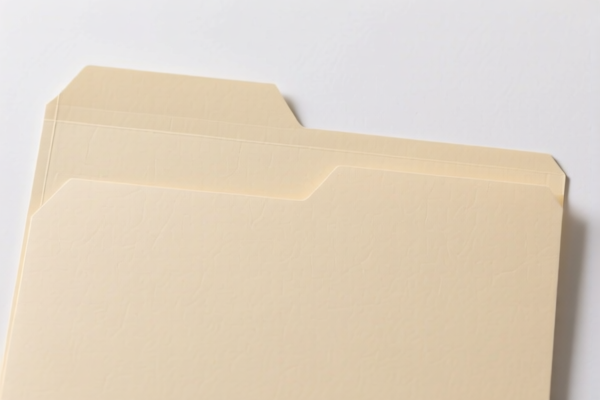

AI Analysis
📄 Lightweight Coated Folder Paper
🌐 HS Code Reference & Clearance Guide | 2026 Latest Tariff Analysis | Professional Customs Strategy
📌 I. Product Definition & Classification: Is it "Stationery" or "Paper"?
Lightweight Coated Folder Paper is a versatile paper product used primarily for printing folded brochures, booklets, and documents. In international trade, the classification depends heavily on the final form and specific use of the paper.
Key Distinction: * Unconverted Paper (Raw Material): If the paper is sold in rolls or large sheets, primarily for further processing (printing/folding) by the buyer, it is classified as Coated Paper (Heading 4811). * Finished Stationery (Ready-to-Use): If the paper is pre-cut, folded, or designed specifically as a "folder" or "binder" accessory, it falls under Paper Stationery (Heading 4820).
⚠️ Critical Classification Point:
- If the product is "Folding Carton Stock" (paperboard for making boxes/folders) and is coated, it is classified under 4811.
- If the product is classified as "Folders" (the actual stationery item, like a document folder), it is classified under 4820.
- Note: "Lightweight Coated Paper" often refers to thin paper (like 100-150gsm). If sold as loose sheets/rolls for printing, it is 4811. If sold as pre-made folders, it is 4820.
📦 II. HS Code Classification Details (2026 Latest Tariff Authority)
Based on the provided data, here are the specific HS Codes for "Lightweight Coated Folder Paper" depending on its physical state and intended use:
| HS Code | Product Description | Application Scenario | Status |
|---|---|---|---|
4811.59.40.20 |
Folding carton stock, coated with plastics, in strips/rolls (>15cm width) | Raw material for manufacturing folders, brochures, or lightweight packaging boxes | 📦 Raw Material / Semi-finished |
4820.30.00.40 |
Folders, file covers (other than book covers), of paper or paperboard | Finished stationery items; pre-made document folders, letter folders | 📂 Finished Goods |
4820.10.40.00 |
Registers, account books, notebooks, diaries and similar articles | If the "folder" is part of a bound set, diary, or account book | 📖 Bound Stationery |
🔍 Key Reminder:
- 4811.59.40.20 is for coated paper/board intended to be made into folders or cartons. It is a material.
- 4820.30.00.40 is for finished folders. If you are importing pre-made folders, use this code.
- 4820.10.40.00 is for notebooks/binders. If the item is a loose-leaf binder or notebook cover, use this code.
💰 III. 2026 Latest Tariff Rate Details (Including Additional Duties)
✅ Applicable Country: United States (US)
✅ Origin: China (CN)
✅ Effective Date: From November 10, 2025 (and subsequent imports)
🎯 1. 4811.59.40.20 —— Folding Carton Stock (Coated Paper)
| Item | Content |
|---|---|
| Base Tariff Rate | 0.0% (ad valorem) |
| Section 301 Additional Tariff | +25.0% |
| Total Tax Rate | 25.0% |
| Tax Calculation | CIF Value × 25% |
| De Minimis Exemption | ❌ Not Applicable (High tariff items are generally excluded from de minimis benefits depending on current enforcement) |
| Legal Basis | HTSUS 4811.59.40.20 → USITC Footnote 9903.88.01 (Section 301) |
📌 Explanation:
- The base tariff for coated paper is 0%.
- However, due to Section 301 tariffs on Chinese goods, an additional 25% is applied.
- This applies to coated paper/cardboard in rolls or sheets used for folding cartons or light packaging.
🎯 2. 4820.30.00.40 —— Folders & File Covers (Finished Stationery)
| Item | Content |
|---|---|
| Base Tariff Rate | 0.0% (ad valorem) |
| Section 301 Additional Tariff | +25.0% |
| Total Tax Rate | 25.0% |
| Tax Calculation | CIF Value × 25% |
| De Minimis Exemption | ❌ Not Applicable |
| Legal Basis | HTSUS 4820.30.00.40 → USITC Footnote 9903.88.01 (Section 301) |
📌 Explanation:
- Even though the base rate is 0%, the 25% Section 301 tariff applies to all stationery imports from China.
- This includes pre-made folders, file covers, and loose-leaf binders.
🎯 3. 4820.10.40.00 —— Registers, Notebooks, Diaries
| Item | Content |
|---|---|
| Base Tariff Rate | 0.0% (ad valorem) |
| Section 301 Additional Tariff | +25.0% |
| Total Tax Rate | 25.0% |
| Tax Calculation | CIF Value × 25% |
| De Minimis Exemption | ❌ Not Applicable |
| Legal Basis | HTSUS 4820.10.40.00 → USITC Footnote 9903.88.01 (Section 301) |
📌 Explanation:
- Applies to notebooks, diaries, and similar articles.
- If your "Lightweight Coated Folder Paper" is sold as part of a notebook or diary set, use this code.
- The 25% total tax remains the same.
🛠️ IV. Clearance Practical Advice (Avoiding Pitfalls)
✅ 1. Essential Documentation Checklist
| Document | Required? | Notes |
|---|---|---|
| ✅ Commercial Invoice | ✔️ | Must clearly state: "Coated Paper," "Folders," or "Notebooks" as applicable. Avoid vague terms like "Paper Goods." |
| ✅ Packing List | ✔️ | Specify dimensions: Rolls vs. Sheets. Width >15cm is key for 4811.59.40.20. |
| ✅ Product Specification | ✔️ | Include GSM (grammage), coating type (plastic/polymer), and finished state (raw vs. pre-made). |
| ✅ Certificate of Origin | ✔️ | To confirm CN origin and apply correct Section 301 rates. |
| ✅ HS Code Pre-Ruling | ✅ Recommended | Highly recommended to avoid misclassification between 4811 (material) and 4820 (finished good). |
✅ 2. Declaration Tips (Key Rules)
🔥 "Material or Finished? Know the State!"
| Scenario | Correct HS Code | Wrong Code | Consequence |
|---|---|---|---|
| Rolls of coated paper for printing | 4811.59.40.20 |
4820.30.00.40 |
Risk of audit; may be reclassified, but tax rate is same (25%). |
| Pre-made document folders | 4820.30.00.40 |
4811.59.40.20 |
Risk of seizure if declared as raw material; customs may demand proof of "finished state." |
| Notebooks/Diaries | 4820.10.40.00 |
4811.59.40.20 |
Misclassification may lead to delays; ensure binding/stitching is declared. |
📌 Important Note:
- All three HS Codes have the same total tax rate (25%).
- However, misclassification can still lead to:
- Delays at customs for additional review.
- Penalties if the item is deemed "restricted" under wrong heading.
- Inability to claim duty drawbacks or exemptions if incorrectly declared.
✅ 3. Special Cases
| Scenario | Advice |
|---|---|
| Sample vs. Commercial | Even for samples, if value exceeds $800 (de minimis), tariffs apply. If under $800, check current US CBP rules on Section 301 applicability to de minimis (often excluded). |
| Plastic Coating Type | Ensure the coating is declared as "plastics" for 4811.59.40.20. If it's wax or ink only, it may fall under different 4811 subheadings. |
| Width of Paper | For 4811.59.40.20, the paper must be in rolls >15cm width or sheets >36x15cm. Smaller sheets may be classified differently. |
🌍 V. Global Market Comparison (2026)
| Country | Recommended HS Code | Total Tariff (China Origin) | Notes |
|---|---|---|---|
| 🇺🇸 USA | 4811.59.40.20 / 4820.30.00.40 / 4820.10.40.00 |
25% | Section 301 applies to all. Base rate is 0%. |
| 🇨🇳 China | 4811.59.40.20 / 4820.30.00.40 |
~0-13% | Import duties vary. Base rates are often 0% for paper. |
| 🇪🇺 EU | 4811.59 / 4820.10 |
~0-6.5% | No Section 301. Standard EU Common Customs Tariff applies. |
| 🇬🇧 UK | 4811.59 / 4820.10 |
~0-6.5% | Post-Brexit tariffs. No additional Section 301. |
| 🇨🇦 Canada | 4811.59 / 4820.10 |
~0-5% | CUSMA/USMCA may apply if from US/Mexico. China origin: standard MFN. |
📌 Conclusion:
- The US is the only major market with a high 25% additional tariff on these items due to Section 301.
- If possible, consider third-country manufacturing (e.g., Vietnam, India) to avoid the 25% US tariff, provided rules of origin are met.
📌 VI. Common Mistakes & Pitfalls
❌ Mistake 1: Declaring "Coated Paper" as "Uncoated Paper" to avoid classification scrutiny.
👉 Consequence: Customs will test the coating. If found coated, penalties + back taxes.
❌ Mistake 2: Using "Paper" as a generic description on the invoice.
👉 Consequence: Customs may request a detailed description. Delays of 1-2 weeks.
❌ Mistake 3: Confusing "Folders" (4820) with "Folding Carton Stock" (4811).
👉 Consequence: If you import raw paper and declare it as "finished folders," customs may question the value and origin. If you import finished folders and declare as "raw paper," you may face import restrictions on finished goods.
✅ Correct Approach:
"Lightweight Coated Paper, 120gsm, Poly-Coated, Rolls 20cm Width, for Printing"
OR
"Paper Folders, A4 Size, 3-Ring Binder, Pre-Perforated"
🎯 VII. Conclusion: Professional Classification Saves Money
🎯 Remember:
🔹 "Base Rate is 0%, but Section 301 Adds 25%."
🔹 "Material (4811) vs. Finished (4820): Same Tax, Different Compliance."
🔹 "Always Declare Coating Type and Physical Form."
📌 Pro Tip:
If you are importing large volumes, consider applying for a Section 301 Exclusion (if available for your specific product type) or explore supply chain diversification to countries not subject to Section 301 tariffs.
📣 Next Steps:
📞 Consult with a customs broker to confirm the exact physical state of your goods.
🚀 Ensure your HS Code matches the physical product (raw vs. finished) to avoid clearance delays.
✨ Accurate Classification is the First Step to Smooth Clearance!
💼 25% Tariff is Significant; Plan Ahead!
Customer Reviews
About HS Code Classification
The Harmonized System (HS) is an internationally standardized nomenclature developed by the World Customs Organization (WCO) to classify traded products. Over 200 countries use the HS system as the basis for customs tariffs, trade statistics, and import/export regulations.
Each HS code follows a hierarchical structure:
- Chapter (2 digits) — Broad category of goods (e.g., Chapter 84: Machinery and Mechanical Appliances)
- Heading (4 digits) — More specific grouping within the chapter
- Subheading (6 digits) — Internationally standardized breakdown, used by all WCO member countries
- National subdivisions (8-10 digits) — Country-specific extensions for further classification, such as US HTSUS 10-digit codes
Correct HS code classification is essential for smooth customs clearance, accurate duty payment, and compliance with trade regulations. Misclassification can lead to customs delays, overpayment of duties, or penalties.
When importing from CN to US, the applicable tariff rates may include:
- Most-Favored-Nation (MFN) rate — The standard duty rate applied to WTO members
- General rate — Applied to countries without trade agreements
- Trade remedy duties — Additional tariffs such as Section 301 (anti-dumping), Section 232 (national security), or countervailing duties
The information provided on this page is for reference purposes only. For official classification, please consult with your local customs authority or a licensed customs broker.