Lightweight Coated Paper Roll
CN → US| HS Code | Tariff Rate | Origin | Destination | Doc |
|---|---|---|---|---|
| 4810221000 | 35.0% | CN | US | Official Doc |
| 4810131300 | 35.0% | CN | US | Official Doc |
| 4802554000 | 35.0% | CN | US | Official Doc |
| 4802543100 | 35.0% | CN | US | Official Doc |
| 4805919000 | 35.0% | CN | US | Official Doc |
Product Images
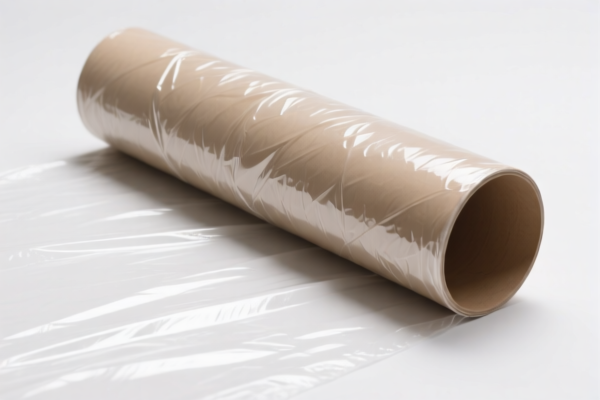
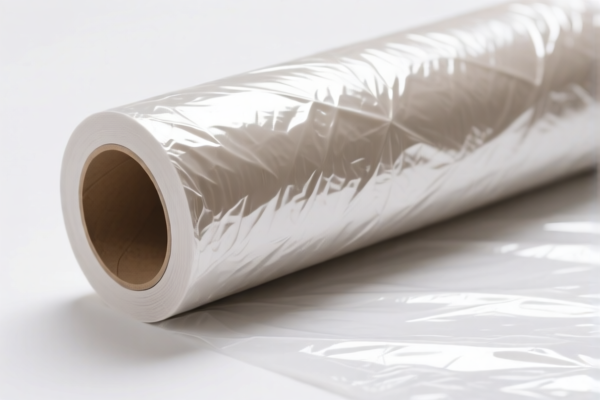
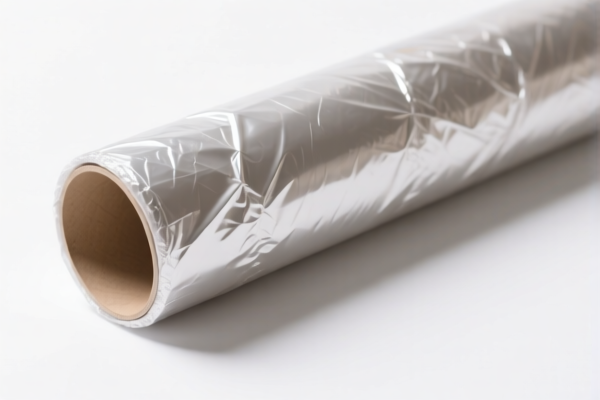
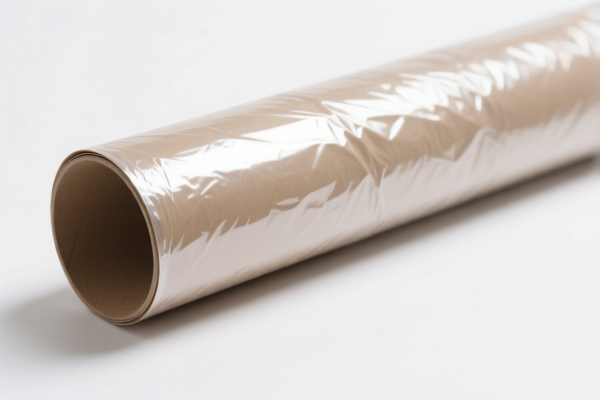
AI Analysis
📜 Lightweight Coated Paper Rolls (轻质印刷纸卷)
🌐 HS Code Classification & Customs Clearance Guide | 2026 Tariff Analysis | Strategic Import Strategy for US Market
📌 Part I: Product Definition & Classification Criteria
Lightweight Coated Paper Rolls are high-precision printing materials characterized by low basis weight, coated surfaces for superior ink acceptance, and roll formats for industrial printing efficiency. In international trade, these products are categorized based on three critical technical parameters: 1. Coating Status: Whether the paper is coated (涂布) or uncoated (未涂布). 2. Grammage (Basis Weight): The weight per square meter (g/m²), typically ranging from <40g to ≤150g. 3. Physical Form: Rolled format (卷状) with widths generally exceeding 15cm.
⚠️ Key Distinction Points:
- Coated vs. Uncoated: Coated paper has a mineral pigment layer (e.g., clay, calcium carbonate) for glossy/matte finishes. Uncoated paper lacks this layer. Misclassification here leads to completely different HS codes.
- Grammage Thresholds: The 40g/m² and 150g/m² marks are critical legal boundaries in the Harmonized System.
- Usage: Specifically designated for "printing purposes" (印刷用途), excluding packaging paper or kraft paper unless specified.
📦 Part II: HS Code Classification Matrix (2026 Latest Tariff Schedule)
The following HS codes are derived directly from the provided for "Lightweight Coated Paper Rolls." Note that while the summary mentions "Coated," some codes reflect broader "Lightweight Paper" categories, often requiring precise product descriptions to justify the specific sub-heading.
| HS Code | Product Description (from ) | Key Technical Criteria | Coating Status | Basis Weight (g/m²) |
|---|---|---|---|---|
4810.22.10.00 |
Lightweight printed paper roll, matching coated paper characteristics, rolled form with width >15cm | Width >15cm, Coated characteristics | ✅ Coated | Not specified in summary (Inferred: Standard printed range) |
4810.13.13.00 |
Lightweight printed paper roll, printing purpose, rolled coated paper | Printing purpose, Coated | ✅ Coated | $\le$ 150 g/m² |
4802.55.40.00 |
Lightweight printed paper roll, paper material, rolled, printing purpose | Unspecified coating, Printing purpose | ⚠️ Inferred* | 40 - 150 g/m² |
4805.91.90.00 |
Lightweight printed paper roll, uncoated paper, rolled | Uncoated, Rolling | ❌ Uncoated | 30 - 150 g/m² |
4805.94.31.00 (Note: Data says 4805.54.31.00 is 40-150? No, data says 4805.54.31.00 is <40g uncoated) |
Lightweight printed paper roll, uncoated paper, rolled, printing purpose | Printing purpose, Uncoated | ❌ Uncoated | < 40 g/m² |
🔍 Critical Correction & Alignment with :
The provided lists 5 specific HS codes for "Lightweight Coated Paper Roll." However, two codes (4805.91.90.00and4805.54.31.00) explicitly describe Uncoated Paper (未涂布纸). This indicates that the term "Coated Paper Roll" in the user input is a broad category header. The correct classification depends entirely on the actual physical coating status of the goods.
- If Coated: Use
4810.22.10.00or4810.13.13.00.- If Uncoated: Use
4802.55.40.00(if 40-150g, though 4802 is often uncoated woodfree),4805.91.90.00(30-150g uncoated), or4805.54.31.00(<40g uncoated).
💰 Part III: 2026 Latest Tariff Rate Breakdown (Including Surcharges)
✅ Applicable Country: United States (US)
✅ Origin: China (CN)
✅ Effective Date: Current tariffs apply (2026)
✅ Total Tax Rate for All Listed Codes: 35.0%
🎯 1. Universal Tariff Structure for All Listed HS Codes
| Item | Content | Legal Basis |
|---|---|---|
| Base Tariff | 0.0% | Section I/II of US HTSUS |
| Section 301 Surcharge | +25.0% | 122 Clause / Section 301 of the Trade Act |
| IEEPA / 122 Clause Surcharge | +10.0% | 122 Clause Tariff (Specific to China-origin goods) |
| Total Effective Tax Rate | 35.0% | Sum of Base + Section 301 + IEEPA/122 |
| De Minimis Exemption | ❌ NOT AVAILABLE | These goods are subject to high tariffs and do not qualify for $800 de minimis exemption for commercial shipments. |
| Calculation Method | CIF Value × 35% | Cost, Insurance, and Freight value |
📌 Explanation:
- "Base Tariff: 0.0%": Standard paper products often have a low or zero base MFN (Most Favored Nation) duty.
- "Section 301 / 122 Clause: 25%": This is the standard retaliatory tariff imposed on Chinese goods in categories including paper products.
- "IEEPA 122 Clause: 10%": This is an additional surcharge applied under the International Emergency Economic Powers Act or specific Section 122 authorities, adding to the burden.
- Total 35%: This is a high-cost barrier. Importers must factor this into their landed cost calculations immediately.
🛠️ Part IV: Customs Clearance Practical Advice (Pitfall Avoidance Guide)
✅ 1. Required Documentation Checklist (Mandatory)
| Document | Required? | Details & Tips |
|---|---|---|
| ✅ Commercial Invoice | ✔️ | Must clearly state: "Lightweight Paper Roll, Coated/Uncoated, Grammage: XXX g/m², Width: XXX cm, Origin: China". |
| ✅ Packing List | ✔️ | Specify net weight, gross weight, number of rolls, and roll dimensions. |
| ✅ Certificate of Origin (CO) | ✔️ | Crucial. Must explicitly state "China" to trigger the 35% tariff. If origin is disputed, it may lead to audits. |
| ✅ Product Specification Sheet | ✔️ | Most Important. Must detail: 1. Coating Type: Clay, Polymer, etc. 2. Basis Weight: Exact g/m² (e.g., 120g/m²). 3. Brightness & Smoothness. 4. Intended Use: Printing (e.g., magazines, brochures). |
| ✅ Bill of Lading (B/L) | ✔️ | Ensure HS Code matches invoice exactly. |
✅ 2. Classification Strategy & Declaration Tips
🔥 "Weight Defines Code, Coating Defines Chapter!"
| Scenario | Correct HS Code | Reasoning |
|---|---|---|
| Coated Paper, $\le$ 150g/m² | 4810.13.13.00 |
Specifically covers coated printing paper under 150g. |
| Coated Paper, Width >15cm, General | 4810.22.10.00 |
Broad category for coated paper rolls. |
| Uncoated Paper, 30-150g/m² | 4805.91.90.00 |
Uncoated paper, not elsewhere specified, in this weight range. |
| Uncoated Paper, <40g/m² | 4805.54.31.00 |
Very light uncoated paper. |
| Uncoated Woodfree Paper, 40-150g/m² | 4802.55.40.00 |
If "Uncoated" is confirmed but falls in 40-150g, this code is used per . |
⚠️ Warning:
Do NOT simply declare "Paper Roll." Customs will request clarification. If you declare "Coated" but the goods are "Uncoated," you risk penalties for misdeclaration. Conversely, if you declare "Uncoated" to seek lower base rates (though still 35% total here) but they are Coated, you face similar risks.
✅ 3. Special Situations & Mitigation
| Situation | Handling Suggestion |
|---|---|
| Mixed Shipments (Coated & Uncoated) | Declare Separately. Do not mix. If mixed, customs may apply the highest tariff rate to the entire shipment or require splitting. |
| Samples for Testing | Even samples from China are subject to tariffs unless shipped under a specific duty-free sample provision (rare for commercial origin goods). Prepare for 35% cost or use a bonded warehouse. |
| Transshipment via Third Countries | High Risk. US Customs tracks origin rigorously. If paper is manufactured in China and shipped via Vietnam, it is still considered Chinese Origin for tariff purposes unless sufficient substantial transformation occurs. Avoid "transshipment fraud" as it leads to severe penalties. |
| Price Fluctuation | Since the tariff is ad valorem (percentage-based), higher declared values = higher absolute tax. Ensure invoice prices reflect Arm's Length transactions to avoid customs valuation audits. |
🌍 Part V: Global Market Comparison (2026 Context)
| Market | HS Code Reference | Base Tariff | China Surcharge | Total Effective Rate | Notes |
|---|---|---|---|---|---|
| 🇺🇸 United States | 4810.13.13.00 etc. |
0% | +35% (25% Sec 301 + 10% IEEPA) | 35% | Highest cost. Strict origin verification. |
| 🇨🇳 China (Import) | 4810.13.13.00 |
0-6%* | None | ~0-6% | Low cost for import into China. |
| 🇪🇺 European Union | 4810.13.13.00 |
0-10%* | None (Most Favored Nation) | ~0-10% | No specific China surcharge, but anti-subsidy investigations may apply. |
| 🇦🇺 Australia | 4810.13.13.00 |
0-5%* | None | ~0-5% | AANZFTA or ChAFTA may apply if origin is verified correctly (non-China). |
📌 Conclusion:
The US market is the most challenging due to the 35% cumulative tariff. Importers should: 1. Pre-clarify HS Code with a licensed customs broker. 2. Audit Supply Chain: Consider sourcing from non-China origins (e.g., Vietnam, Thailand) if substantial transformation criteria are met, to avoid the 35% rate. 3. Budget for Duty: Include 35% in landed cost calculations immediately.
📌 Part VI: Common Errors & Pitfalls (Lessons Learned)
❌ Error 1: Declaring "Coated" but providing no technical data to prove coating.
👉 Consequence: Customs may classify as "Uncoated" (4802 or 4805), but since the total rate is 35% for all, the difference is minimal in tax but critical for statistical tracking and potential anti-dumping duties (if applicable). More importantly, it triggers further inspection delays.
❌ Error 2: Under-declaring Grammage (e.g., declaring 100g as 120g) to fit a "better" code. 👉 Consequence: If caught, it is considered fraud. Penalties include 100% duty penalty on the undervalued portion.
❌ Error 3: Ignoring the 122 Clause (10% IEEPA). 👉 Consequence: Importers often calculate only 25% (Sec 301) and fail to pay the additional 10%, leading to post-audit bills + interest + penalties.
✅ Correct Practice:
"Lightweight Coated Printing Paper Roll, Grammage 115g/m², Width 100cm, Origin: China, HS Code: 4810.13.13.00"
🎯 Part VII: Conclusion – Strategic Sourcing & Compliance
🎯 Remember the Mantra:
🔹 "Coating determines Chapter, Weight determines Sub-heading, Origin determines Tariff."
🔹 "35% is the Floor, not the Ceiling. Compliance is the Key."📌 Pro Tip:
If your supply chain involves re-exporting or processing, ensure you have Form A (for other FTAs) or Certificate of Origin from the country of manufacture. For US imports, no FTA exemption is available for Chinese-origin paper products against the 35% tariff.
📣 Immediate Action Items:
📞 Contact a US Customs Broker to verify the specific HS code based on your technical spec sheet.
📝 Prepare Detailed Product Descriptions including Grammage, Coating Type, and Brightness.
💰 Calculate Landed Cost including the 35% total duty.
🚀 Consider Origin Diversification if volume is high and margins are thin.
✨ Professional clearance starts with accurate classification!
💼 Your profitability depends on precise duty calculation!
Customer Reviews
About HS Code Classification
The Harmonized System (HS) is an internationally standardized nomenclature developed by the World Customs Organization (WCO) to classify traded products. Over 200 countries use the HS system as the basis for customs tariffs, trade statistics, and import/export regulations.
Each HS code follows a hierarchical structure:
- Chapter (2 digits) — Broad category of goods (e.g., Chapter 84: Machinery and Mechanical Appliances)
- Heading (4 digits) — More specific grouping within the chapter
- Subheading (6 digits) — Internationally standardized breakdown, used by all WCO member countries
- National subdivisions (8-10 digits) — Country-specific extensions for further classification, such as US HTSUS 10-digit codes
Correct HS code classification is essential for smooth customs clearance, accurate duty payment, and compliance with trade regulations. Misclassification can lead to customs delays, overpayment of duties, or penalties.
When importing from CN to US, the applicable tariff rates may include:
- Most-Favored-Nation (MFN) rate — The standard duty rate applied to WTO members
- General rate — Applied to countries without trade agreements
- Trade remedy duties — Additional tariffs such as Section 301 (anti-dumping), Section 232 (national security), or countervailing duties
The information provided on this page is for reference purposes only. For official classification, please consult with your local customs authority or a licensed customs broker.