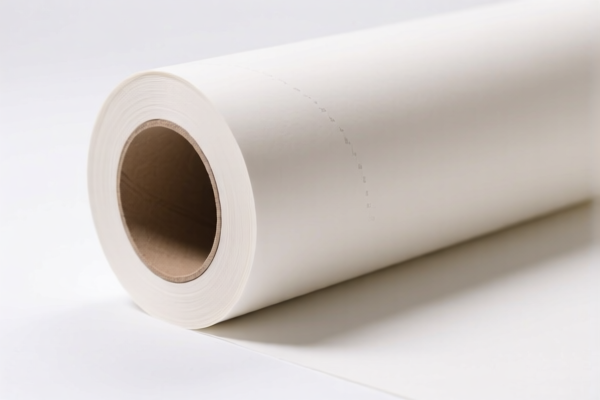
Lightweight Coated Printing Paper Roll
CN → US| HS Code | Tariff Rate | Origin | Destination | Doc |
|---|---|---|---|---|
| 4810221000 | 35.0% | CN | US | Official Doc |
| 4810131300 | 35.0% | CN | US | Official Doc |
| 4802554000 | 35.0% | CN | US | Official Doc |
| 4802543100 | 35.0% | CN | US | Official Doc |
| 4805919000 | 35.0% | CN | US | Official Doc |
Product Images



AI Analysis
🧻 Lightweight Coated Printing Paper Roll (LCPPR)
🌐 HS Code Reference & Customs Clearance Guide | 2026 Latest Tariff Analysis | Professional Clearance Strategy
📌 I. Product Definition: What is "Lightweight Coated Printing Paper Roll"?
Lightweight Coated Printing Paper is a specialized paper product widely used in high-volume printing (magazines, catalogs, brochures). In international trade, classification depends on three key factors: 1. Surface Treatment: Is it Coated (covered with clay/pigment) or Uncoated (natural pulp)? 2. Weight (Basis Weight): "Lightweight" generally refers to a basis weight of ≤ 150 g/m². Specific subheadings often distinguish between < 40 g/m² and 40–150 g/m². 3. Form Factor: It must be in rolls (not sheets).
⚠️ Critical Distinction:
- If the paper has a visible coating layer (smoother, brighter) → Chapter 48, Heading 4810 (Coated) or 4802 (Uncoated but described as such in summary). Note: The provided data suggests some uncoated papers are classified under 4802 based on specific weight ranges, while coated ones go to 4810. - If the paper is Uncoated → Chapter 48, Heading 4802 or 4805. - Weight Thresholds:
- < 40 g/m²: Often falls under lighter weight categories (e.g.,4805.91.90.00or4802.54.31.00).
- 40–150 g/m²: Standard lightweight coated/uncoated range (e.g.,4802.55.40.00or4810.*).
📦 II. HS Code Classification Details (Based on Provided Data)
| HS Code | Product Description & Logic | Tax Rate | Tax Breakdown |
|---|---|---|---|
4810.22.10.00 |
Lightweight Coated Printing Paper Roll • Material: Inorganic-coated paper. • Form: Rolls. • Usage: Printing. • Key Logic: Explicitly identified as "Coated" (implied by HS 4810). |
35.0% | Base: 0% Section 301: 25% Section 122: 10% |
4810.13.13.00 |
Lightweight Coated Printing Paper Roll • Material: Coated paper. • Weight: ≤ 150 g/m² (Lightweight). • Form: Rolls. • Key Logic: Coated paper with weight ≤ 150g/m². |
35.0% | Base: 0% Section 301: 25% Section 122: 10% |
4802.55.40.00 |
Lightweight Printing Paper Roll (Uncoated) • Material: Uncoated paper (inferred from HS 4802 context in data). • Weight: 40–150 g/m². • Form: Rolls. • Key Logic: Uncoated paper, weight 40-150g/m². |
35.0% | Base: 0% Section 301: 25% Section 122: 10% |
4802.54.31.00 |
Lightweight Printing Paper Roll (<40g/m²) • Material: Uncoated paper. • Weight: < 40 g/m². • Form: Rolls. • Key Logic: Uncoated paper, very lightweight (<40g/m²). |
35.0% | Base: 0% Section 301: 25% Section 122: 10% |
4805.91.90.00 |
Other Uncoated Paper Rolls (30-150g/m²) • Material: Uncoated paper. • Weight: 30–150 g/m². • Form: Rolls. • Key Logic: Uncoated paper, broader weight range (30-150g/m²). |
35.0% | Base: 0% Section 301: 25% Section 122: 10% |
🔍 Important Note on Classification:
- HS 4810 codes (4810.22.10.00,4810.13.13.00) are for Coated papers.
- HS 4802/4805 codes (4802.55.40.00,4802.54.31.00,4805.91.90.00) are for Uncoated papers.
- Misclassification Risk: Declaring coated paper as uncoated (or vice versa) can lead to severe penalties. Verify the surface finish and coating composition.
💰 III. 2026 Latest Tariff Rate Breakdown (USA Import from China)
✅ Applicable Country: United States (US)
✅ Origin: China (CN)
✅ Effective Date: From November 10, 2025 (and subsequent imports)
🎯 Common Tax Structure for All Listed HS Codes
| Item | Content |
|---|---|
| Base Tariff Rate | 0% (Ad Valorem) |
| USITC Additional Tariff (Section 301) | +25% |
| IEEPA Additional Tariff (Section 122) | +10% |
| Total Effective Tariff Rate | 35.0% |
| Tax Calculation Basis | CIF Value × 35% |
| De Minimis Exemption Eligibility | ❌ NOT ELIGIBLE |
| Legal Authority Path | IEEPA:9903.01.24/25 → USITC:4810/4802/4805 → FOOTNOTE:9903.88.01 |
📌 Explanation of Tax Components:
- 0% Base Rate: Paper products generally have low base tariffs.
- 25% Section 301 Tariff: Imposed on specific Chinese imports under the US Trade Act.
- 10% IEEPA Tariff (Section 122): Specifically targets Chinese paper products as of late 2025.
- Total 35%: This is a high-cost import. Profit margins must account for this duty burden.
🛠️ IV. Customs Clearance Practical Advice (Pitfall Avoidance Guide)
✅ 1. Required Documentation Checklist
| Document | Must Provide? | Notes |
|---|---|---|
| ✅ Product Specification Sheet | ✔️ | Must include: Basis Weight (g/m²), Coating Type (Coated/Uncoated), Roll Dimensions, Paper Type. |
| ✅ Material Safety Data Sheet (MSDS) | ✔️ | If coatings contain chemicals. |
| ✅ Commercial Invoice | ✔️ | Must clearly state: "Lightweight Paper Roll, Coated/Uncoated, Weight: XX g/m²". |
| ✅ Packing List | ✔️ | List gross/net weight, number of rolls, core material. |
| ✅ Certificate of Origin | ✔️ | Essential for confirming CN origin to apply correct tariffs. |
| ✅ Bill of Lading/Air Waybill | ✔️ | Standard shipping documents. |
✅ 2. Declaration Strategy (Key Mnemonics)
🔥 "Check Coating! Check Weight! Match HS Code!"
| Scenario | Correct Declaration | Common Mistake |
|---|---|---|
| Coated Paper | HS 4810.xxxx | Misclassified as 4802 (Uncoated) → Audit Risk |
| Uncoated, 40-150g/m² | HS 4802.55.40.00 | Misclassified as 4810 → Over/Under Payment |
| Uncoated, <40g/m² | HS 4802.54.31.00 | Misclassified as 4805 → Incorrect Weight Bracket |
| Uncoated, 30-150g/m² (Other) | HS 4805.91.90.00 | General "Paper" description → Vague Declaration |
✅ 3. Special Considerations
| Situation | Handling Advice |
|---|---|
| Mixed Shipments | Separate Coated and Uncoated papers into different lines/items in the invoice. |
| Re-Export | If re-exported, ensure the original CN origin is documented to avoid "Transshipment" penalties. |
| Anti-Dumping | Verify if specific paper types are subject to additional anti-dumping duties (AD/CVD) beyond the 35%. |
| Pre-Ruling | For large volumes, apply for a CBP Advance Ruling to lock in the HS Code and avoid post-entry audits. |
🌍 V. Global Market Comparison (2026)
| Country/Region | Recommended HS Code | Tariff (China Origin) | Notes |
|---|---|---|---|
| 🇺🇸 USA | 4810 / 4802 / 4805 |
35% | High duties due to Sec 301 & 122. |
| 🇨🇳 China | Same HS Codes | ~5-10% | Low duty for domestic or regional trade. |
| 🇪🇺 EU | 4810 / 4802 |
0% (often) | Check for specific carbon border taxes or anti-subsidy measures. |
| 🇬🇧 UK | 4810 / 4802 |
0-5% | Post-Brexit tariff structures. |
| 🇻🇳 Vietnam | 4810 / 4802 |
0% (under EAF/TEPA) | Potential for lower duties if processed locally. |
📌 Conclusion:
The USA market is the most challenging due to the 35% combined tariff. Importers should consider: 1. Supply Chain Diversification: Sourcing from non-CN countries (e.g., Vietnam, Thailand) to mitigate tariffs. 2. Cost Absorption: Negotiating price adjustments with buyers to share the duty burden. 3. Accurate Classification: Ensuring the HS Code matches the exact coating and weight to avoid penalties.
📌 VI. Common Errors & Pitfalls (Lessons Learned)
❌ Error 1: Declaring "Paper" without specifying "Coated" vs. "Uncoated".
👉 Consequence: CBP may reclassify, leading to 35% penalty + back duties.
❌ Error 2: Misstating the Basis Weight (g/m²).
👉 Consequence: Wrong subheading selection (e.g., 4802.54 vs. 4802.55), even if the total tax is 35%, it triggers audit flags.
❌ Error 3: Ignoring Section 122 Tariff.
👉 Consequence: Many importers forget the 10% IEEPA duty for paper, resulting in unexpected costs and underpayment.
❌ Error 4: Declaring "Printing Paper" generically.
👉 Consequence: CBP may reject the declaration for vagueness, causing customs holds.
✅ Correct Practice:
"Coated Paper Rolls, Basis Weight 120 g/m², 100% Wood Pulp, Width 1200mm, Length 5000m per Roll"
🎯 VII. Conclusion: Precision is Profit
🎯 Key Takeaways:
🔹 "Coated? Go to 4810. Uncoated? Go to 4802/4805."
🔹 "Weight matters: <40, 40-150, 30-150."
🔹 "35% Total Tariff: Don't forget the 10% IEEPA!"
🔹 "Clear Documentation Saves Money!"
📌 Pro Tip:
If you are importing large volumes, consider Bonded Warehousing or FTZ (Free Trade Zone) storage to defer duties until the goods are sold or exported.
For ongoing shipments, apply for a CBP Advance Ruling to secure classification certainty.
📣 Action Required:
📞 Consult a Customs Broker to verify the exact coating composition.
📄 Prepare detailed specs for every shipment.
🚀 Optimize your supply chain to manage the 35% tariff impact.
✨ Professional Customs Clearance Starts with Accurate Classification!
💼 Your Bottom Line Depends on Every Detail!
Customer Reviews
About HS Code Classification
The Harmonized System (HS) is an internationally standardized nomenclature developed by the World Customs Organization (WCO) to classify traded products. Over 200 countries use the HS system as the basis for customs tariffs, trade statistics, and import/export regulations.
Each HS code follows a hierarchical structure:
- Chapter (2 digits) — Broad category of goods (e.g., Chapter 84: Machinery and Mechanical Appliances)
- Heading (4 digits) — More specific grouping within the chapter
- Subheading (6 digits) — Internationally standardized breakdown, used by all WCO member countries
- National subdivisions (8-10 digits) — Country-specific extensions for further classification, such as US HTSUS 10-digit codes
Correct HS code classification is essential for smooth customs clearance, accurate duty payment, and compliance with trade regulations. Misclassification can lead to customs delays, overpayment of duties, or penalties.
When importing from CN to US, the applicable tariff rates may include:
- Most-Favored-Nation (MFN) rate — The standard duty rate applied to WTO members
- General rate — Applied to countries without trade agreements
- Trade remedy duties — Additional tariffs such as Section 301 (anti-dumping), Section 232 (national security), or countervailing duties
The information provided on this page is for reference purposes only. For official classification, please consult with your local customs authority or a licensed customs broker.