Lightweight Drawing Paper Rolls
CN → US| HS Code | Tariff Rate | Origin | Destination | Doc |
|---|---|---|---|---|
| 4810221000 | 35.0% | CN | US | Official Doc |
| 4805919000 | 35.0% | CN | US | Official Doc |
| 4802554000 | 35.0% | CN | US | Official Doc |
| 4805917000 | 35.0% | CN | US | Official Doc |
| 4802543100 | 35.0% | CN | US | Official Doc |
Product Images


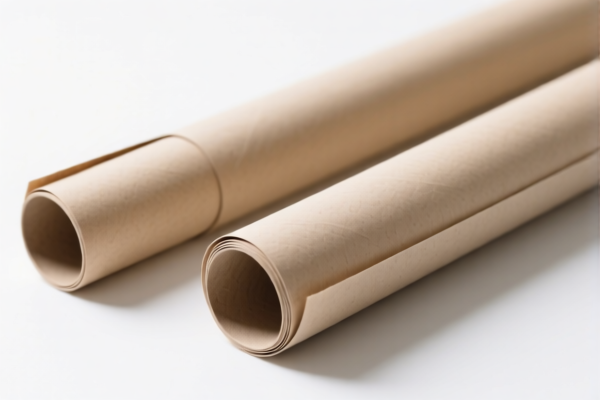
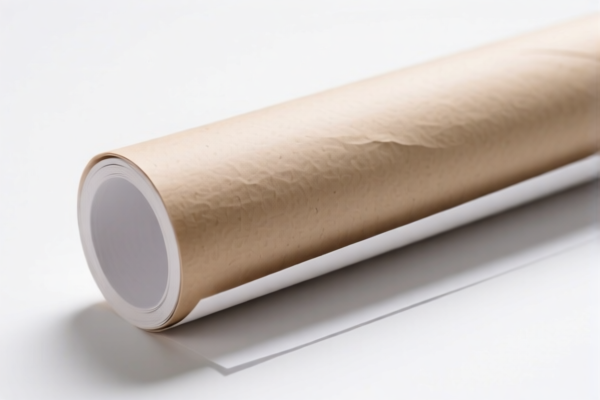
AI Analysis
📜 Lightweight Drawing Paper Rolls (Coated & Uncoated)
🌐 HS Code Reference & Customs Clearance Guide | 2026 Tariff Breakdown | Professional Entry Strategy
📌 I. Product Definition & Classification: Do You Understand "Lightweight Paper"?
Lightweight drawing paper rolls are essential materials in the printing and packaging industry. In international trade, they are categorized not just by weight, but by surface treatment (coated vs. uncoated) and primary application. Confusing these categories can lead to severe customs penalties or duty miscalculations.
Key Distinctions: * Coated Paper (涂布纸): Surface treated with clay or polymer for high-print quality (magazines, brochures). * Uncoated Paper (未涂布纸): Raw surface, used for standard printing, writing, or lightweight packaging. * Form Factor: Must be in rolls (not sheets) to fit the referenced HS codes.
⚠️ Critical Differentiator:
- If the paper is coated → It generally falls under 4810 or 4802 series depending on basis weight.
- If the paper is uncoated → It falls under 4805 or 4802 series.
- Do NOT mix coated and uncoated classifications; the tariff details are identical in this dataset but the HS codes differ significantly.
📦 II. HS Code Classification Details (2026 Latest Tariff Authority)
| HS Code | Product Description | Application Scenario | Surface Type | Roll State |
|---|---|---|---|---|
4810.22.10.00 |
Lightweight Drawing Paper Rolls, Matched to Coated Paper Use & Roll Form | High-quality brochures, catalogs, coated printing materials | ✅ Coated (涂布) | ✅ Roll (卷筒) |
4805.91.90.00 |
Lightweight Drawing Paper Rolls, Matched to Uncoated Paper & Roll Form | Standard office paper, basic printing, lightweight packaging | ❌ Uncoated (未涂布) | ✅ Roll (卷状) |
4802.55.40.00 |
Lightweight Drawing Paper Rolls, Matched to Paper Material, Roll State & Printing Use | General purpose printing paper, high-speed printing rolls | ❌ Uncoated (General) | ✅ Roll (卷状) |
4805.91.70.00 |
Lightweight Drawing Paper Rolls, Matched to Uncoated Paper, Roll State & Lightweight Features | Ultra-lightweight packaging, specialty uncoated applications | ❌ Uncoated (Specific) | ✅ Roll (卷状) |
4802.54.31.00 |
Lightweight Drawing Paper Rolls, Matched to Uncoated Paper, Roll State, Printing Use & Low Basis Weight | High-volume newsprint-style, very light weight, standard printing | ❌ Uncoated (Low Basis Weight) | ✅ Roll (卷状) |
🔍 Key Reminder:
- All listed HS codes share the same total tariff rate (35%) in this specific dataset, but the HS Code accuracy is critical for customs declaration.
- Misclassifying Coated paper as Uncoated (or vice versa) is a common error that triggers audits.
- Ensure the product is strictly in Roll Form. If cut into sheets, these codes may not apply.
💰 III. 2026 Latest Tariff Rate Breakdown (Including Surcharges & Policy Add-ons)
✅ Applicable Country: United States (US)
✅ Origin: China (CN)
✅ Total Tax Rate: 35.0%
✅ Effective Time: Current regulations
🎯 1. Universal Tariff Structure for All Listed Codes (4810.22.10.00 to 4802.54.31.00)
| Item | Content |
|---|---|
| Base Tariff (MFN) | 0.0% (ad valorem) |
| Section 301 Surcharge | +25.0% (Added by USITC) |
| Section 122 Clause Tariff | +10.0% (Specific policy surcharge) |
| Total Tax Rate | 35.0% |
| Tax Calculation | CIF Value × 35% |
| De Minimis Exemption | ❌ Not Applicable (Section 301/122 goods are generally excluded from low-value exemptions) |
| Legal Basis Path | USITC:4810/4805/4802 → Section 301: 25% → Clause 122: 10% |
📌 Explanation:
- "Base Tariff: 0.0%": Most paper products enjoy a zero base duty under MFN (Most Favored Nation) status.
- "Section 301: 25%": This is the standard retaliatory tariff on Chinese goods.
- "Clause 122: 10%": A specific additional surcharge applied to certain paper and packaging materials.
- Total 35%: This is a high tariff rate. Importers must budget accordingly. There are no reductions or partial exemptions visible in this dataset.
🛠️ IV. Customs Clearance Practical Advice (Real-World Pitfall Avoidance)
✅ 1. Required Documentation Checklist (Non-Negotiable)
| Document | Mandatory? | Notes |
|---|---|---|
| ✅ Product Specification Sheet | ✔️ | Must clearly state: Weight (gsm), Width, Coated vs. Uncoated, Material Composition. |
| ✅ Commercial Invoice | ✔️ | Must explicitly state: "Lightweight Drawing Paper Rolls, [Coated/Uncoated], HS Code [XXXX.XX.XX.XX]". |
| ✅ Packing List | ✔️ | Must confirm items are in Roll Form (not cut). |
| ✅ Certificate of Origin (CO) | ✔️ | Proves Chinese origin (triggers the 35% tariff). |
| ✅ Test Report | ✔️ | Optional but recommended: Prove basis weight and coating status if disputed. |
✅ 2. Declaration Tips (Key Mantras)
🔥 “Coated is 4810, Uncoated is 4805/4802. Rolls only! 35% is the price!”
| Scenario | Correct Declaration | Error to Avoid |
|---|---|---|
| Coated Paper Rolls | 4810.22.10.00 |
Declare as Uncoated (4805) → Misclassification Risk |
| Uncoated Paper Rolls (General) | 4805.91.90.00 or 4802.55.40.00 |
Declare as Coated → Audit Trigger |
| Lightweight Uncoated (Low Weight) | 4802.54.31.00 |
Declare as General Uncoated → Potential Duty Dispute |
| Paper in Sheets | DO NOT USE THESE CODES | These codes are for Rolls. Sheets require different classification (e.g., 4802.56.xxxx). |
✅ 3. Special Handling Cases
| Case | Handling Advice |
|---|---|
| Mixed Coated/Uncoated in One Shipment | Separate Declarations. Do not combine. Each HS code has a 35% rate, but accuracy prevents delays. |
| Custom Size Rolls | Ensure the "Lightweight" claim is supported by gsm (grams per square meter) data in the spec sheet. |
| Transshipment via Third Country | High Risk. Section 301 tariffs apply to Chinese origin goods regardless of transit unless substantial transformation occurs. Do not attempt false origin declaration. |
| Discounted Goods | Tariffs are based on CIF Value (Cost + Insurance + Freight). Do not declare artificially low values; customs assesses market value. |
🌍 V. Global Market Comparison (2026 Update)
| Country/Region | Recommended HS Code | Tariff Rate | Notes |
|---|---|---|---|
| 🇺🇸 USA | 4810.22.10.00 / 4805... |
35% | Includes 25% Sec 301 + 10% Clause 122. |
| 🇨🇳 China | 4810.22.10.00 / 4805... |
~6-10% | Lower base tariff, no Section 301. |
| 🇪🇺 EU | 4802 / 4810 Series |
~6.5% | Standard MFN rate. No 25% surcharge. |
| 🇬🇧 UK | 4802 / 4810 Series |
~6.5% | Post-Brexit MFN. |
| 🇦🇺 Australia | 4802 / 4810 Series |
~5% | Lower overall tariff burden. |
📌 Conclusion:
- USA is the most expensive market for these goods due to the 35% cumulative tariff.
- Importers should consider cost-benefit analysis: Is the margin sufficient to absorb 35%?
- Explore Duty Drawback programs if the goods are re-exported (if applicable).
📌 VI. Common Errors & Pitfall Guide (Lessons Learned)
❌ Error 1: Declaring "Paper" generically without specifying "Coated" or "Uncoated".
👉 Consequence: Customs may detain the shipment for classification review, causing delay penalties.
❌ Error 2: Assuming "Lightweight" means "Low Duty".
👉 Consequence: 35% is flat. Weight does not reduce the tariff rate in this specific dataset.
❌ Error 3: Shipping rolls in boxes but declaring as "Sheets".
👉 Consequence: Wrong HS Code → False Declaration → Fines + Back Duties.
❌ Error 4: Ignoring the "Clause 122" 10% surcharge.
👉 Consequence: Budgeting only for 25% leads to cash flow shock at customs.
✅ Correct Practice:
"Lightweight Drawing Paper Rolls, Coated, for Printing, 200mm Width, 10kg Roll, HS Code: 4810.22.10.00, Origin: China, Total Duty: 35%."
🎯 VII. Conclusion: Precision in Classification Saves Money
🎯 Key Takeaways:
🔹 "Coated is 4810, Uncoated is 4805/4802."
🔹 "Rolls Only. No Sheets."
🔹 "35% Total Tax: 0% Base + 25% Sec 301 + 10% Clause 122."
🔹 "Budget for 35%, not 25%."
📌 Pro Tip:
If your volume is high, consider applying for an Advance Ruling with US Customs and Border Protection (CBP) to confirm the HS Code before shipment. This provides legal certainty against the 35% tariff assessment.
📣 Immediate Action:
📞 Consult your customs broker with the exact HS Code and specification sheet.
🚀 Plan your landed cost at 35% tariff to ensure profitability.
✨ Accurate declaration is the first step to smooth clearance!
💼 Your supply chain efficiency depends on precise HS Code selection.
💡 Don’t let misclassification eat your margins!
Customer Reviews
About HS Code Classification
The Harmonized System (HS) is an internationally standardized nomenclature developed by the World Customs Organization (WCO) to classify traded products. Over 200 countries use the HS system as the basis for customs tariffs, trade statistics, and import/export regulations.
Each HS code follows a hierarchical structure:
- Chapter (2 digits) — Broad category of goods (e.g., Chapter 84: Machinery and Mechanical Appliances)
- Heading (4 digits) — More specific grouping within the chapter
- Subheading (6 digits) — Internationally standardized breakdown, used by all WCO member countries
- National subdivisions (8-10 digits) — Country-specific extensions for further classification, such as US HTSUS 10-digit codes
Correct HS code classification is essential for smooth customs clearance, accurate duty payment, and compliance with trade regulations. Misclassification can lead to customs delays, overpayment of duties, or penalties.
When importing from CN to US, the applicable tariff rates may include:
- Most-Favored-Nation (MFN) rate — The standard duty rate applied to WTO members
- General rate — Applied to countries without trade agreements
- Trade remedy duties — Additional tariffs such as Section 301 (anti-dumping), Section 232 (national security), or countervailing duties
The information provided on this page is for reference purposes only. For official classification, please consult with your local customs authority or a licensed customs broker.