Lightweight Grinding Tools
CN → US| HS Code | Tariff Rate | Origin | Destination | Doc |
|---|---|---|---|---|
| 6804300000 | 35.0% | CN | US | Official Doc |
| 8205517500 | 38.7% | CN | US | Official Doc |
| 8205595560 | 40.3% | CN | US | Official Doc |
Product Images
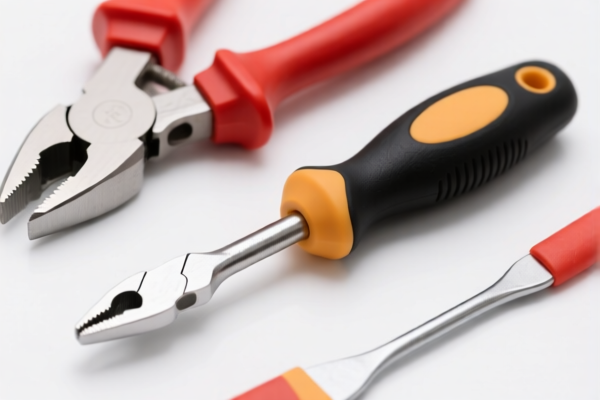
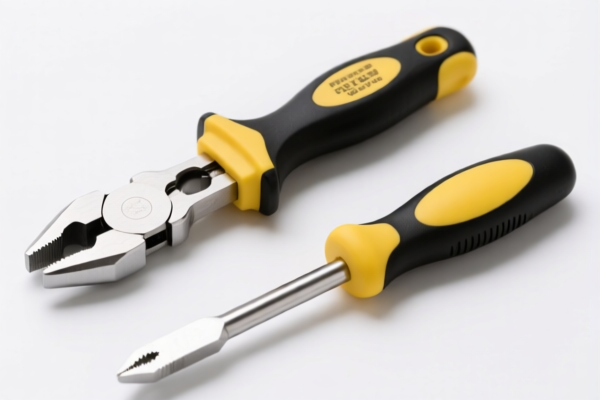
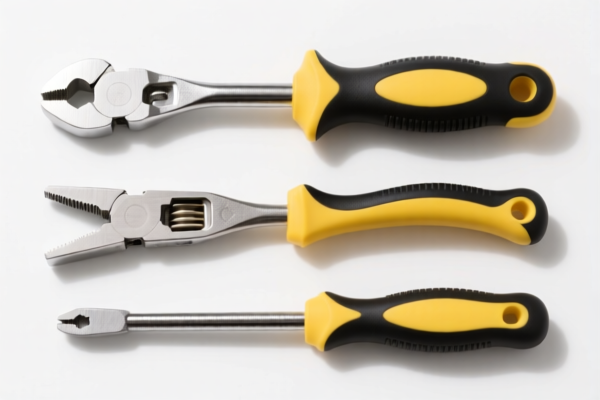
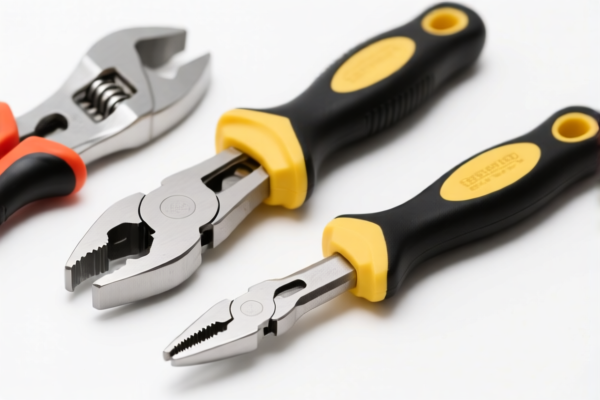
AI Analysis
🪨 Lightweight Grinding Tools (Grinding/Sharpening Tools)
🌐 HS Code Reference & Customs Clearance Guide | 2026 Latest Tariff Analysis | Professional Entry Strategy
📌 I. Product Definition & Classification: Do You Really Understand "Lightweight Grinding Tools"?
Lightweight grinding tools are essential instruments for abrasive, sharpening, and polishing purposes. In international trade, these items are typically categorized based on their material composition and structural form. They generally fall into two main categories:
Abrasive Stones/Wheels (Grinding Media): Raw or semi-finished abrasive materials (e.g., whetstones, sharpening wheels) that act directly on the surface to grind. Hand Tools (Holding Devices): Handle-based instruments where the abrasive or grinding component is attached or integrated, designed for manual operation (DIY or professional).
⚠️ Key Distinction Point:
- If the item is a standalone stone, block, or wheel without a handheld handle structure → Classify under Chapter 68 (Articles of Stone).
- If the item is a handheld tool with a handle or specific tool body, used for light grinding/sharpening → Classify under Chapter 82 (Tools, Implements...).
📦 II. HS Code Classification Details (2026 Latest Tariff Authority Comparison)
| HS Code | Product Description | Applicable Scenario | Key Characteristic |
|---|---|---|---|
6804.30.00.00 |
Stones for grinding, sharpening, or polishing; similar products (e.g., grinding wheels) | Industrial or DIY abrasive stones, sharpening blocks | ✅ No handle, acts as abrasive media |
8205.51.75.00 |
Hand tools (incl. glaziers' diamonds) for light grinding/sharpening, for personal/home use | DIY sharpening tools, household abrasive hand tools | ✅ Handheld, DIY/Home focus |
8205.59.55.60 |
Other hand tools; metal core components, not edged tools | Professional hand grinding tools, metal-bodied abrasive tools | ✅ Handheld, Metal core, Professional/General |
🔍 Important Reminder:
- Chapter 68 (6804.30.00.00) is for the abrasive material itself (the "stone"). If you sell just the whetstone, this is your code.
- Chapter 82 (8205...) is for the tool as a whole (the "handle + abrasive"). If it’s a handheld stick/tool with an abrasive tip, this is your code.
- Do not mix "abrasive material" with "tool handle" in classification. The presence of a handle shifts it to Chapter 82.
💰 III. 2026 Latest Tariff Rate Details (Including Additional Taxes & Policy Surcharges)
✅ Applicable Country: United States (US)
✅ Country of Origin: China (CN)
✅ Effective Date: November 10, 2025 (and subsequent imports)
🎯 1. 6804.30.00.00 —— Abrasive Stones / Grinding Wheels (No Handle)
| Item | Content |
|---|---|
| Base Tariff | 0.0% (ad valorem) |
| USITC Additional Tariff | +25.0% (Under USITC Footnote regarding Section 301) |
| IEEPA Additional Tariff | +10.0% (Targeting Chinese/Hong Kong products, effective Nov 10, 2025) |
| Total Tariff Rate | 35.0% |
| Tax Calculation | CIF Value × 35% |
| De Minimis Eligibility | ❌ Not Eligible (deny_de_minimis) |
| Legal Basis Path | IEEPA:9903.01.25 → IEEPA:9903.01.24 → USITC:6804.30.00.00 → FOOTNOTE:301_Abrasive |
📌 Explanation:
- Although the Base Tariff is 0%, this category is heavily penalized by trade policies.
- The +25% comes from the Section 301 investigation on specific industrial goods.
- The +10% is the new IEEPA surcharge on Chinese-origin goods effective Nov 2025.
- Total: 35%. High cost, but lower than the hand tool category.
🎯 2. 8205.51.75.00 —— Hand Tools for Light Grinding (DIY/Home Use)
| Item | Content |
|---|---|
| Base Tariff | 3.7% (ad valorem) |
| USITC Additional Tariff | +25.0% |
| IEEPA Additional Tariff | +10.0% |
| Total Tariff Rate | 38.7% |
| Tax Calculation | CIF Value × 38.7% |
| De Minimis Eligibility | ❌ Not Eligible (deny_de_minimis) |
| Legal Basis Path | IEEPA:9903.01.25 → IEEPA:9903.01.24 → USITC:8205.51.75.00 |
📌 Note:
- Specifically targets DIY and Household tools.
- The base tariff is higher (3.7%) than stones, adding to the total burden.
- Suitable for consumer-facing Amazon/Etsy sales of handheld sharpening sticks.
🎯 3. 8205.59.55.60 —— Other Hand Tools (Metal Core, Non-Edged)
| Item | Content |
|---|---|
| Base Tariff | 5.3% (ad valorem) |
| USITC Additional Tariff | +25.0% |
| IEEPA Additional Tariff | +10.0% |
| Total Tariff Rate | 40.3% |
| Tax Calculation | CIF Value × 40.3% |
| De Minimis Eligibility | ❌ Not Eligible (deny_de_minimis) |
| Legal Basis Path | IEEPA:9903.01.25 → IEEPA:9903.01.24 → USITC:8205.59.55.60 |
📌 Warning:
- This is the highest tariff category (40.3%).
- Applies to professional or general-purpose hand tools with metal bodies or complex structures that don’t fit the "DIY/Home" definition.
- Core component is inferred as metal. If your tool is primarily plastic with a small abrasive tip, argue for8205.51to save ~1.6%.
🛠️ IV. Customs Clearance Practical Advice (Battle-Tested Pitfall Guide)
✅ 1. Document Checklist (Essential Documents)
| Document | Mandatory? | Explanation |
|---|---|---|
| ✅ Product Specifications | ✔️ | Must clearly state: Material (Stone vs. Metal Core), Use (DIY vs. Industrial), and Weight. |
| ✅ Product Photos (Clear) | ✔️ | Show the handle, abrasive part, and any branding. Crucial for distinguishing Chapter 68 vs. 82. |
| ✅ Commercial Invoice | ✔️ | Description must be precise: e.g., "Ceramic Whetstone for Sharpening" vs. "Handheld Diamond Sharpening Tool". |
| ✅ Material Declaration | ✔️ | Confirm if the core is metal (for 8205.59) or non-metal (for 8205.51 or 6804). |
| ✅ Packing List | ✔️ | Ensure no loose parts that could be misinterpreted as separate "parts" (which have huge duties). |
✅ 2. Declaration Strategy (Key Mantra)
🔥 "Stone is Stone, Handle is Tool. Don't Mix Materials, Don't Split Shipments!"
| Scenario | Correct Declaration | Incorrect Practice |
|---|---|---|
| Selling just a Whetstone | 6804.30.00.00 (35%) |
Labeling as "Sharpening Tool" → Risk of reclassification to 8205 (38.7%+) |
| Selling a Handheld Sharpening Stick (Plastic Handle) | 8205.51.75.00 (38.7%) |
Calling it "Industrial Tool" → Risk of 8205.59 (40.3%) |
| Selling a Metal-Body Sharpening Tool | 8205.59.55.60 (40.3%) |
Trying to claim "DIY" status without proof |
| Tool + Spare Stone Packaged Together | Declare as Set (Primary Character) | Splitting into two HS Codes → Disruption + Delays |
✅ 3. Special Handling Cases
| Situation | Handling Advice |
|---|---|
| OEM Custom Tools | Provide design drawings to prove the "Core Material" (Metal vs. Plastic) to secure the lower 8205.51 rate if possible. |
| Mixed Shipments (Stones + Handles) | If sold as a kit, declare the principal component. If it’s a tool with a replaceable stone, declare as the Tool (Chapter 82). |
| "Lightweight" vs. "Industrial" | Use terms like "DIY", "Household", "Personal Care" in the description to justify 8205.51. Avoid "Industrial Grade" if aiming for the lower rate. |
| Origin Marking | Ensure the product itself is marked "Made in China" as per US Customs requirements. Unmarked goods face fines. |
🌍 V. Global Market Customs Comparison (2026 Latest)
| Country/Region | Recommended HS Code | Tariff (China Origin) | Certification Required | Remarks |
|---|---|---|---|---|
| 🇺🇸 USA | 6804.30.00.00 / 8205.51.75.00 |
35% / 38.7% | None specific (General) | High tariffs due to 301 + IEEPA. Most expensive market. |
| 🇨🇳 China | 6804.30.00.00 |
0% - 5% | CCC (if applicable) | No additional surcharges. |
| 🇪🇺 EU | 6804.21.00 / 8205.51 |
0% - 6.5% | CE (if electrical) | Lower base rates, but VAT applies. |
| 🇯🇵 Japan | 6804.30 / 8205.51 |
0% - 6% | PSE (if powered) | Moderate tariffs. |
| 🇨🇦 Canada | 6804.30 / 8205.51 |
0% - 5% | Various Safety Standards | NAFTA/USMCA benefits may apply if produced in NA. |
📌 Conclusion:
- The US market is the most challenging due to the combination of Base Tariffs + Section 301 (25%) + IEEPA (10%).
- Choose6804.30.00.00if you are selling stones only to save ~3.7-5.3% compared to hand tools.
- Avoid declaring hand tools as "Industrial" if they are for Home Use to prevent the 40.3% rate.
📌 VI. Common Errors & Pitfall Guide (Lessons Learned)
❌ Error 1: Labeling a Whetstone as a "Hand Tool"
👉 Consequence: Tariff jumps from 35% to 38.7%+. You pay more for no reason.
👉 Fix: Clearly state "Abrasive Stone" or "Grinding Wheel" in the description.
❌ Error 2: Labeling a Handheld Sharpening Stick as a "Stone"
👉 Consequence: Customs may reclassify based on the handle, leading to Audit & Delay.
👉 Fix: Describe the handle material and overall structure. Use "Hand Tool" HS Code.
❌ Error 3: Ignoring the IEEPA 10% Surcharge
👉 Consequence: Underestimating landed cost by 10%. Profit margin evaporates.
👉 Fix: Factor in the Total 35-40% tax burden in your pricing model.
❌ Error 4: Splitting a Tool + Stone Kit into Two Line Items
👉 Consequence: High duty on the "Stone" part if not declared as a set, or complex compliance issues.
👉 Fix: Declare as a Single Set under the primary character (usually the tool).
✅ Correct Description Example:
"Ceramic Whetstone, 1000 Grit, for Knife Sharpening, No Handle, Made in China" →
6804.30.00.00
"Handheld Diamond Sharpening Tool for Kitchen Knives, Plastic Handle, DIY Use, Made in China" →8205.51.75.00
🎯 VII. Conclusion: Precision in Classification, Savings in Execution!
🎯 Remember the Mantra:
🔹 "Stone is 35%, Hand Tool is 39%, Metal Core is 40%. Choose wisely!"
🔹 "Base Tariff is small, but the 35% Add-on is the killer. Don't ignore it!"
📌 Pro Tip:
If you are shipping small quantities for personal use (under De Minimis threshold, usually $800 for US), note that these HS Codes are EXCLUDED from De Minimis (deny_de_minimis).
👉 You MUST pay duties even on small parcels. Do not use direct-to-consumer small packet lines without accounting for duty collection.
📣 Immediate Action:
📞 Consult your customs broker for Advance Ruling if your product is on the boundary.
🚀 Calculate Landed Cost including 35-40% duty before listing on US platforms.
✨ Professional Clearance Starts with Accurate Classification!
💼 Every Percent Counts in Cross-Border Trade!
Customer Reviews
About HS Code Classification
The Harmonized System (HS) is an internationally standardized nomenclature developed by the World Customs Organization (WCO) to classify traded products. Over 200 countries use the HS system as the basis for customs tariffs, trade statistics, and import/export regulations.
Each HS code follows a hierarchical structure:
- Chapter (2 digits) — Broad category of goods (e.g., Chapter 84: Machinery and Mechanical Appliances)
- Heading (4 digits) — More specific grouping within the chapter
- Subheading (6 digits) — Internationally standardized breakdown, used by all WCO member countries
- National subdivisions (8-10 digits) — Country-specific extensions for further classification, such as US HTSUS 10-digit codes
Correct HS code classification is essential for smooth customs clearance, accurate duty payment, and compliance with trade regulations. Misclassification can lead to customs delays, overpayment of duties, or penalties.
When importing from CN to US, the applicable tariff rates may include:
- Most-Favored-Nation (MFN) rate — The standard duty rate applied to WTO members
- General rate — Applied to countries without trade agreements
- Trade remedy duties — Additional tariffs such as Section 301 (anti-dumping), Section 232 (national security), or countervailing duties
The information provided on this page is for reference purposes only. For official classification, please consult with your local customs authority or a licensed customs broker.