Lightweight Handheld Grinding Tool
CN → US| HS Code | Tariff Rate | Origin | Destination | Doc |
|---|---|---|---|---|
| 8465930055 | 38.0% | CN | US | Official Doc |
| 8209000060 | 39.6% | CN | US | Official Doc |
| 8467290010 | 17.5% | CN | US | Official Doc |
| 8467290015 | 17.5% | CN | US | Official Doc |
| 6804300000 | 35.0% | CN | US | Official Doc |
Product Images
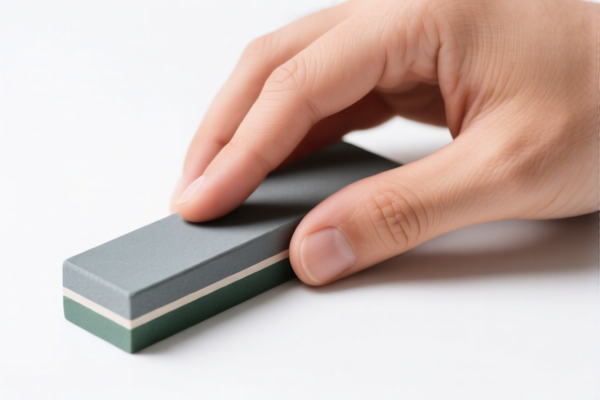
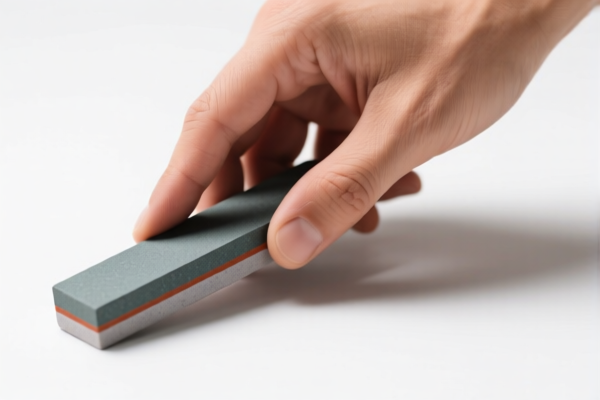
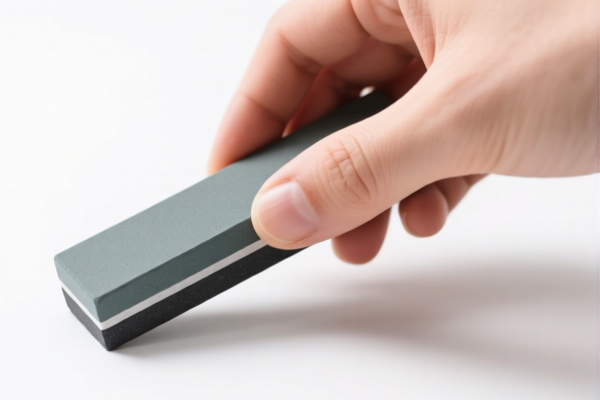
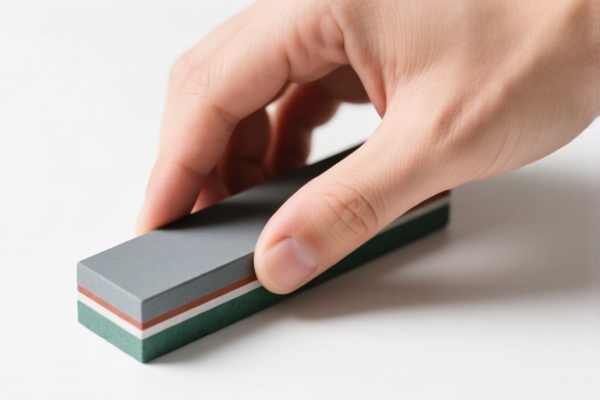
AI Analysis
🛠️ Lightweight Handheld Grinding Tool (DIY Power Tools)
🌐 HS Code Reference & Clearance Guide | 2026 Latest Tariff Analysis | Professional Entry Strategy
📌 I. Product Definition & Classification: What is a "Grinding Tool"?
A Lightweight Handheld Grinding Tool is a versatile DIY instrument designed for grinding, sanding, or polishing surfaces. In international trade, its classification is critical because it sits at the intersection of machinery parts, power tools, and abrasive articles. The correct HS Code depends heavily on whether the tool is considered a complete machine, a part of a machine, or an abrasive article itself.
⚠️ Key Classification Distinction:
- Is it a complete handheld power tool with a motor? → Look at Chapter 84 (Machinery) or 82 (Tools).
- Is it an abrasive stone/stone wheel without a motor? → Look at Chapter 68 (Mineral Products).
- Is it a part/accessory for a larger machine? → Look at Chapter 84 Parts.
📦 II. HS Code Classification Details (2026 Latest Tariff Authority Comparison)
Based on the input data, here are the five most likely HS Code classifications for this product, ranked by logical fit and tax implication.
| HS Code | Product Description | Logic for Classification | Tax Implication |
|---|---|---|---|
8465.93.00.55 |
Parts of Woodworking Machinery (Grinding/Sanding) | Inferred for DIY/Lightweight use on wood or hard materials. Matches the function of grinding/sanding machines. | 38.0% |
8209.00.00.60 |
Prepared Abrasives (Metal-Ceramic/Carbide) | Based on common sense: grinding tools often involve metal-ceramic or carbide materials. Fits if classified as a prepared abrasive tool/part. | 39.6% |
8467.29.00.10 |
Hand-Held Tools for Working on Metal (Grinding) | Matches the "Handheld" form factor and "Grinding" function. No material conflict for metalworking or general use. | 17.5% |
8467.29.00.15 |
Other Hand-Held Tools (General/Pocketing) | Fallback Category. Matches grinding/polishing function with no obvious material/shape conflict. Applies to general DIY handheld tools. | 17.5% |
6804.30.00.00 |
Whetstones, Grinding Stones, etc. | If the item is primarily an abrasive stone/wheel for light grinding/sharpening, not a powered machine. | 35.0% |
🔍 Critical Reminder:
- If the tool has an electric motor and is handheld,8467is the strongest candidate for low tariffs.
- If the tool is non-powered (e.g., a rotary bit or stone),6804may apply.
- Misclassification as8209(Abrasive Parts) or8465(Woodworking Parts) results in significantly higher taxes.
💰 III. 2026 Latest Tariff Rate Breakdown (Including Surcharges & Policy Add-ons)
✅ Applicable Country: United States (US)
✅ Origin: China (CN)
✅ Effective Time: Post-November 2025 (Current Trade War Context)
🎯 1. 8467.29.00.10 & 8467.29.00.15 —— Hand-Held Power Tools (Lowest Risk)
| Item | Content |
|---|---|
| Base Tariff | 0.0% (Ad valorem) |
| Section 301 Surcharge | +7.5% (USITC Footnote 9903.71.01) |
| IEEPA Surcharge | +10% (针对中国/香港产品,自2025年11月10日起) |
| Total Tax Rate | 17.5% |
| Calculation Method | CIF Value × 17.5% |
| De Minimis Eligibility | ❌ No (Denied under current US-China trade rules for many tool categories) |
| Legal Basis Path | IEEPA:9903.01.24 → USITC:8467.29.00.10 → FOOTNOTE:9903.71.01 |
📌 Explanation:
- 0% Base: Hand-held power tools often have low base MFN rates.
- 7.5% Section 301: This is the critical differentiator. Many "hand-held" tools are listed in List 4A with a 7.5% rate, not the full 25%.
- 10% IEEPA: Additional surcharge on Chinese goods.
- Total: 17.5%. This is the most cost-effective classification if the tool is electric/handheld.
🎯 2. 8465.93.00.55 —— Parts for Woodworking Machinery
| Item | Content |
|---|---|
| Base Tariff | 3.0% |
| Section 301 Surcharge | +25.0% (Full List 4 Rate) |
| IEEPA Surcharge | +10% |
| Total Tax Rate | 38.0% |
| Calculation Method | CIF Value × 38.0% |
| De Minimis Eligibility | ❌ No |
| Legal Basis Path | IEEPA:9903.01.25 → USITC:8465.93.00.55 → FOOTNOTE:9903.88.01 |
📌 Explanation:
- If customs determines the tool is a part of a woodworking machine (even if handheld), it falls under8465.
- 3.0% Base + 25% 301 + 10% IEEPA = 38%.
- Risk: High. Only use if the tool is clearly a spare part (e.g., a grinding head sold separately for a bench grinder), not a complete DIY tool.
🎯 3. 8209.00.00.60 —— Prepared Abrasives (Metal-Ceramic)
| Item | Content |
|---|---|
| Base Tariff | 4.6% |
| Section 301 Surcharge | +25.0% |
| IEEPA Surcharge | +10% |
| Total Tax Rate | 39.6% |
| Calculation Method | CIF Value × 39.6% |
| De Minimis Eligibility | ❌ No |
| Legal Basis Path | IEEPA:9903.01.24 → USITC:8209.00.00.60 → FOOTNOTE:9903.88.01 |
📌 Explanation:
- Classified if the item is viewed as a prepared abrasive (e.g., a diamond grinding bit, ceramic sanding block).
- Total: 39.6%. This is the highest tax bracket. Avoid unless the product is purely an abrasive component without motor/power features.
🎯 4. 6804.30.00.00 —— Whetstones / Grinding Stones
| Item | Content |
|---|---|
| Base Tariff | 0.0% |
| Section 301 Surcharge | +25.0% |
| IEEPA Surcharge | +10% |
| Total Tax Rate | 35.0% |
| Calculation Method | CIF Value × 35.0% |
| De Minimis Eligibility | ❌ No |
| Legal Basis Path | IEEPA:9903.01.24 → USITC:6804.30.00.00 → FOOTNOTE:9903.88.01 |
📌 Explanation:
- Applies if the item is a non-powered grinding stone or sharpening wheel.
- Total: 35.0%. Higher than the8467handheld tool rate. Only use for non-electric abrasive stones.
🛠️ IV. Customs Clearance Practical Advice (Battle-Tested Pitfall Guide)
✅ 1. Document Checklist (Non-Negotiable)
| Document | Mandatory? | Explanation |
|---|---|---|
| ✅ Product Specification Sheet | ✔️ | Must specify: Motor Power (Watts), Handheld Form Factor, Intended Use (Wood/Metal/General). |
| ✅ Product Photos | ✔️ | Show the tool as a complete handheld unit with grip, trigger, and grinding head. |
| ✅ Commercial Invoice | ✔️ | Description must match HS Code: e.g., "Electric Handheld Grinder for DIY Woodworking" vs. "Woodworking Machine Part". |
| ✅ Origin Certificate (CO) | ✔️ | Essential for determining IEEPA surcharge applicability. |
| ✅ Third-Party Certification | ✔️ | UL/ETL (Electrical Safety) is often required for power tools in the US. |
✅ 2. Declaration Strategy (Key Mantras)
🔥 “Handheld = Power Tool (8467), Not Part (8465)!”
🔥 “Abrasive Bit = 8209/6804, Not Complete Tool!”
| Scenario | Correct Declaration | Wrong Declaration | Consequence |
|---|---|---|---|
| Electric Handheld Grinder | 8467.29.00.10/15 (17.5%) |
8465.93.00.55 (38.0%) |
Overpay 20.5% |
| Grinding Head Sold Alone | 8209.00.00.60 or 8465.93.00.55 (38-39.6%) |
8467.29.00.10 (17.5%) |
Underpay → Penalty + Back Taxes |
| Non-Powered Stone | 6804.30.00.00 (35.0%) |
8467.29.00.10 (17.5%) |
Underpay → Penalty |
📌 Critical Tip:
- If you are shipping a complete DIY tool (motor + body + head), ALWAYS use8467.29.00.10or8467.29.00.15.
- Do NOT try to classify a complete powered tool as a "part" (8465) to save tax; customs will reject it.
- Do NOT classify a powered tool as an "abrasive" (8209) just because it has a grinding bit.
✅ 3. Special Case Handling
| Case | Handling Advice |
|---|---|
| OEM Custom Tools | Provide client order + design specs. Ensure the primary function (grinding) is clear to avoid being classified as a "machine part." |
| Kit Packaging (Tool + Spare Bits) | Declare as one unit under 8467.29.00.10. Do not split the tool and bits; the main component dictates the classification. |
| Battery-Powered (Cordless) | Still classified under 8467.29.00.10 (Hand-Held Power Tool). Battery is an integral part. |
| Lithium Battery Included | Ensure compliance with UN38.3 and MSDS for shipping. Customs may request battery specs. |
🌍 V. Global Market Comparison (2026 Latest)
| Country/Region | Recommended HS Code | Tariff (China Origin) | Certification Required | Notes |
|---|---|---|---|---|
| 🇺🇸 USA | 8467.29.00.10 |
17.5% (17.5% Total) | UL/ETL + FCC | Lowest US Tariff. Avoid 8465 (38%) and 8209 (39.6%). |
| 🇨🇳 China | 8467.29.00.10 |
~10-15% | CCC | No Section 301/IEEPA. |
| 🇪🇺 EU | 8467.29.00.00 |
0-4.5% | CE + RoHS | Generally low tariffs for power tools. |
| 🇬🇧 UK | 8467.29.00.00 |
0-4.5% | UKCA + CE | Post-Brexit rules apply. |
| 🇯🇵 Japan | 8467.29.00.00 |
0-3.5% | PSE (Electric) | Low tariffs, strict safety certs. |
📌 Conclusion:
- USA is the most complex market due to Section 301 and IEEPA tariffs.
-8467.29.00.10/15is the Golden Ticket for handheld power tools, saving you ~20-22% in taxes compared to other classifications.
- EU and Japan are easier with lower base tariffs and no US-style surcharges.
📌 VI. Common Errors & Pitfalls (Lessons Learned)
❌ Error 1: Classifying a complete electric grinder as 8465.93.00.55 (Woodworking Machine Part)
👉 Consequence: Tax jumps from 17.5% to 38.0%. You lose 20.5% profit margin.
👉 Fix: Emphasize "Hand-Held," "Portable," "DIY" in the description.
❌ Error 2: Classifying a powered tool as 8209.00.00.60 (Prepared Abrasive)
👉 Consequence: Tax jumps to 39.6%. Customs may reject as "incorrect functional classification."
👉 Fix: Ensure the motor/power source is visible in photos.
❌ Error 3: Ignoring Lithium Battery Regulations for cordless tools
👉 Consequence: Shipment held at US Customs. Delay of 2-4 weeks.
👉 Fix: Provide UN38.3 test reports and MSDS.
✅ Correct Declaration Example:
"Electric Handheld Angle Grinder, 600W, 110V, for DIY Wood/Metal, Model XYZ, UL Certified"
HS Code:8467.29.00.10
Tariff: 17.5%
🎯 VII. Conclusion: Smart Classification, Maximum Profit!
🎯 Remember the Mantra:
🔹 "Handheld + Powered = 8467 (17.5%)"
🔹 "Part Only = 8465 (38%)"
🔹 "Abrasive Only = 8209 (39.6%)"
🔹 "Wrong Code = Costly Penalty!"🔹 "HS Code determines your fate, 20% difference means thousands in savings!"
📌 Pro Tip:
- If your tool is originating from Vietnam, Mexico, or Thailand, you may qualify for IEEPA exemptions or lower Section 301 rates.
- Apply for a US Customs Advance Ruling before shipping to lock in the 17.5% rate for 8467.29.00.10.
📣 Take Action Now:
📞 Contact a professional customs broker
📤 Submit product images + specs
🚀 Clear customs smoothly, maximize profits, dominate the DIY market!
✨ Professional clearance starts with accurate classification!
💼 Every cent of tax saved is pure profit!
Customer Reviews
About HS Code Classification
The Harmonized System (HS) is an internationally standardized nomenclature developed by the World Customs Organization (WCO) to classify traded products. Over 200 countries use the HS system as the basis for customs tariffs, trade statistics, and import/export regulations.
Each HS code follows a hierarchical structure:
- Chapter (2 digits) — Broad category of goods (e.g., Chapter 84: Machinery and Mechanical Appliances)
- Heading (4 digits) — More specific grouping within the chapter
- Subheading (6 digits) — Internationally standardized breakdown, used by all WCO member countries
- National subdivisions (8-10 digits) — Country-specific extensions for further classification, such as US HTSUS 10-digit codes
Correct HS code classification is essential for smooth customs clearance, accurate duty payment, and compliance with trade regulations. Misclassification can lead to customs delays, overpayment of duties, or penalties.
When importing from CN to US, the applicable tariff rates may include:
- Most-Favored-Nation (MFN) rate — The standard duty rate applied to WTO members
- General rate — Applied to countries without trade agreements
- Trade remedy duties — Additional tariffs such as Section 301 (anti-dumping), Section 232 (national security), or countervailing duties
The information provided on this page is for reference purposes only. For official classification, please consult with your local customs authority or a licensed customs broker.