Lightweight Paper Handbag
CN → US| HS Code | Tariff Rate | Origin | Destination | Doc |
|---|---|---|---|---|
| 4819400040 | 35.0% | CN | US | Official Doc |
| 4202991000 | 38.4% | CN | US | Official Doc |
| 4819400020 | 35.0% | CN | US | Official Doc |
| 3923210085 | 38.0% | CN | US | Official Doc |
| 4202221500 | 51.0% | CN | US | Official Doc |
Product Images
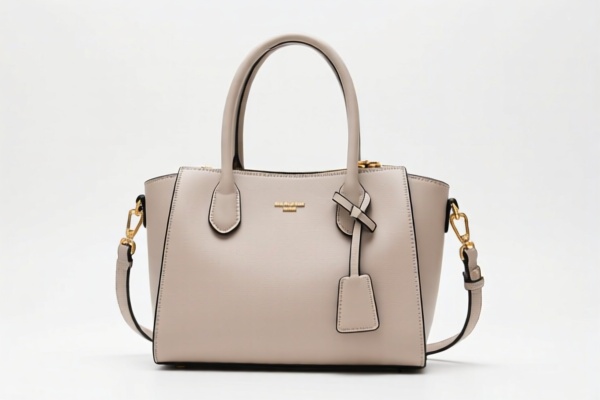
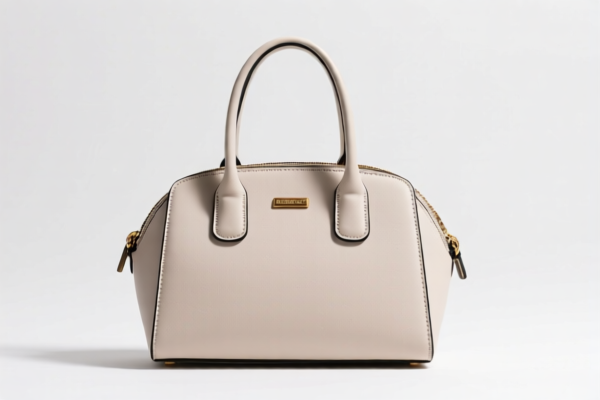
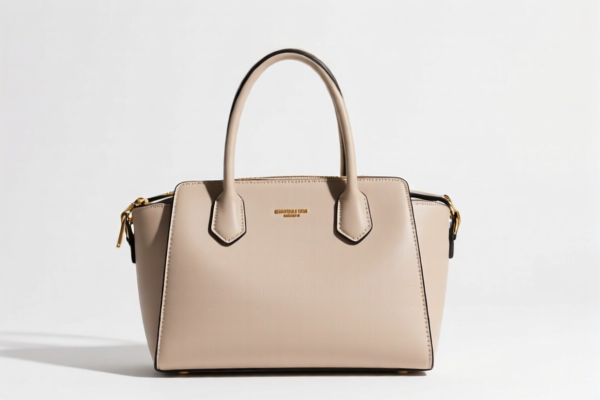
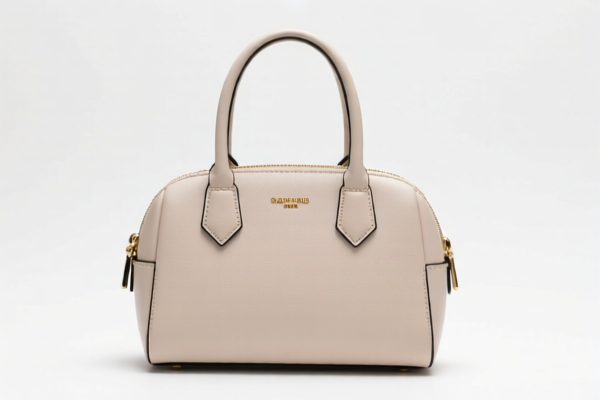
AI Analysis
🛍️ Lightweight Paper Handbag (Paper Handbags)
🌐 HS Code Reference & Customs Clearance Guide | 2026 Latest Tariff Analysis | Professional Clearance Strategy
📌 I. Product Definition & Classification: Do You Truly Understand "Paper Handbags"?
A Lightweight Paper Handbag is a versatile container used for retail, gifting, or daily carry. In international trade, its classification hinges on two critical factors:
1. Material Composition: Is it purely paper, or is it coated/laminated with plastic or other materials?
2. Structural Nature: Is it a simple disposable bag or a more structured "bag" resembling leather/plastic goods?
⚠️ Key Distinction Points:
- Pure Paper Bags: Made entirely of paper, non-woven, or simple woven paper structures → Classified under Chapter 48.
- Coated/Laminated Bags: Paper covered with plastic, leather, or textile layers, often with a more durable "bag" structure → Classified under Chapter 42 or Chapter 39 (if dominated by plastic characteristics).
📦 II. HS Code Classification Details (2026 Latest Tariff Authority Comparison)
| HS Code | Product Description | Applicable Scenario | Key Characteristics |
|---|---|---|---|
4819.40.00.40 |
Paper lightweight handbags, consistent with non-woven paper bag categories | Simple paper bags, kraft bags, non-woven paper carriers | ✅ Pure Paper / Non-woven |
4819.40.00.20 |
Paper handbags, preliminary consistency based on material and shape | Basic paper shopping bags, standard retail paper bags | ✅ Pure Paper |
4202.99.10.00 |
Paper handbags, featuring coverage by paper but non-leather/plastic/textile container features | Structured paper bags, gift bags with complex lining, "bag-like" appearance | ✅ Paper-covered, structured |
3923.21.00.85 |
Plastic handbags, consistent with vinyl polymer material and retail shopping bag features | Paper bags heavily laminated with plastic, or plastic-coated paper dominating as "plastic bag" | ✅ Dominated by Plastic/Vinyl |
3923.21.00.80 |
Plastic handbags, consistent with vinyl polymer plastic bag classification features | Similar to above, strict vinyl polymer classification | ✅ Dominated by Plastic/Vinyl |
🔍 Key Reminder:
- Chapter 48 applies to pure paper or non-woven paper bags. These are the most common "lightweight paper handbags."
- Chapter 42 applies to paper bags that have a more complex structure, often treated as "containers" rather than simple sacks.
- Chapter 39 applies if the bag is primarily a plastic bag (even if paper is used in lamination, if the plastic character dominates, it may fall here).
💰 III. 2026 Latest Tariff Rate Details (Including Additional Taxes, Policy Surcharges)
✅ Applicable Country: United States (US)
✅ Origin: China (CN)
✅ Effective Date: Current rates apply (including Section 301 and IEEPA surcharges)
🎯 1. 4819.40.00.40 & 4819.40.00.20 —— Pure Paper Handbags (Non-woven/Standard Paper)
| Item | Content |
|---|---|
| Base Tariff Rate | 0% (ad valorem) |
| Section 301 Additional Tariff | +25% (from USITC Footnote related to Chapter 48/301 lists) |
| IEEPA Additional Tariff | +10% (for China/HK products, effective from Nov 10, 2025) |
| Total Tariff Rate | 35.0% |
| Tax Calculation | CIF Value × 35% |
| De Minimis Eligibility | ❌ Not Eligible (deny_de_minimis) |
| Legal Basis Path | Base Tariff 0% → Section 301: +25% → IEEPA: +10% → Total: 35% |
📌 Explanation:
- "Base Tariff 0%": Paper products often have low base duties.
- "Section 301 +25%": This is the major trade war tariff affecting most Chinese goods, including paper products.
- "IEEPA +10%": An additional surcharge for Chinese-origin goods.
- Total 35%: A significant cost impact. Pure paper bags are not exempt from these surcharges.
🎯 2. 4202.99.10.00 —— Structured Paper Handbags (Chapter 42 - Articles of Leather/Plastic/Paper)
| Item | Content |
|---|---|
| Base Tariff Rate | 3.4% (ad valorem) |
| Section 301 Additional Tariff | +25% |
| IEEPA Additional Tariff | +10% |
| Total Tariff Rate | 38.4% |
| Tax Calculation | CIF Value × 38.4% |
| De Minimis Eligibility | ❌ Not Eligible (deny_de_minimis) |
| Legal Basis Path | Base Tariff 3.4% → Section 301: +25% → IEEPA: +10% → Total: 38.4% |
📌 Note:
- If your paper bag is structured, lined, or treated to resemble a leather/plastic bag, it may fall here.
- The base rate is higher (3.4%), but the surcharges are the same.
- Total 38.4% is higher than pure paper bags. Misclassification here increases costs.
🎯 3. 3923.21.00.85 & 3923.21.00.80 —— Plastic-Laminated/Plastic-Dominated Handbags (Chapter 39 - Articles of Plastics)
| Item | Content |
|---|---|
| Base Tariff Rate | 3.0% (ad valorem) |
| Section 301 Additional Tariff | +25% |
| IEEPA Additional Tariff | +10% |
| Total Tariff Rate | 38.0% |
| Tax Calculation | CIF Value × 38.0% |
| De Minimis Eligibility | ❌ Not Eligible (deny_de_minimis) |
| Legal Basis Path | Base Tariff 3.0% → Section 301: +25% → IEEPA: +10% → Total: 38.0% |
📌 Note:
- If the bag is primarily plastic (e.g., plastic-coated paper with heavy plastic lamination), it falls here.
- Total 38.0% is slightly lower than structured paper bags but higher than pure paper bags.
- Crucial: If you claim it's a "paper bag" but customs determines it's "plastic," you face misclassification penalties.
🛠️ IV. Customs Clearance Practical Advice (实战避坑指南)
✅ 1. Required Documentation Checklist (Missing Items = Delays)
| Document | Mandatory? | Description |
|---|---|---|
| ✅ Product Specifications | ✔️ | Material composition (paper % vs. plastic %), dimensions, weight. |
| ✅ Product Photos | ✔️ | Clear images of the bag, including handles, lining, and any coatings. |
| ✅ Commercial Invoice | ✔️ | Must clearly state "Paper Handbag" or "Paper Shopping Bag." |
| ✅ Packing List | ✔️ | Details quantity, weight, and packaging type. |
| ✅ Certificate of Origin | ✔️ | If applicable for other markets, but for US, origin is key for tariffs. |
| ✅ Material Declaration | ✔️ | Explicitly state if the bag is pure paper or plastic-coated. |
✅ 2. Declaration Tips (Key Mantra)
🔥 "Pure Paper is 35%, Structured is 38.4%, Plastic is 38%. Be Accurate!"
| Scenario | Correct Declaration | Incorrect Practice |
|---|---|---|
| Simple Paper Bag (Kraft, White) | 4819.40.00.40 or 4819.40.00.20 |
Declaring as "Plastic Bag" → 38% (Higher) |
| Structured Gift Bag (Lined, Stiff) | 4202.99.10.00 |
Declaring as "Simple Paper Bag" → 35% (Under-declaration Risk) |
| Plastic-Coated Paper Bag | 3923.21.00.85 |
Declaring as "Paper Bag" → 35% (Risk of Penalty if Customs Agrees it's Plastic) |
| Mixed Materials | Determine dominant material | Vague description like "Bag" → Uncertainty & Delays |
✅ 3. Special Situation Handling
| Scenario | Handling Advice |
|---|---|
| Paper Bag with Plastic Handles | If handles are minor, still Paper Bag. If handles dominate structure, may be Plastic. |
| Paper Bag with Plastic Lining | If lining is thin and incidental, still Paper. If lining makes it waterproof/structural, may be Plastic or Structured Paper. |
| Sample vs. Bulk | Tariff rates are the same. Ensure samples match bulk material description. |
| OEM Custom Bags | Provide design specs. If custom design uses unusual materials, Advance Ruling is recommended. |
🌍 V. Global Major Market Comparison (2026 Latest)
| Country/Region | Recommended HS Code | Tariff | Certification Requirements | Notes |
|---|---|---|---|---|
| 🇺🇸 USA | 4819.40.00.40 |
35.0% (China Origin) | None specific | High tariffs due to Section 301 + IEEPA. |
| 🇨🇳 China | 4819.40.00.40 |
~5-10% | FSC (if sustainable) | Lower tariffs, growing demand for eco-friendly bags. |
| 🇪🇺 EU | 4819.40.00.40 |
0-6% (depending on FSC) | CE (if printed inks), FSC | Strong preference for recycled paper and FSC-certified bags. |
| 🇬🇧 UK | 4819.40.00.40 |
0-6% | FSC | Similar to EU post-Brexit. |
| 🇦🇺 Australia | 4819.40.00.40 |
5% | None specific | Moderate tariffs. |
📌 Conclusion:
- USA is the most expensive market due to 35-38.4% total tariffs.
- EU/UK favor sustainable/recycled paper bags with FSC certification for potential duty reductions or market preference.
- Always verify material composition to avoid misclassification penalties.
📌 VI. Common Mistakes & Pitfalls (Blood & Tears Lessons)
❌ Mistake 1: Declaring a plastic-coated paper bag as a pure paper bag (4819.40.00.40)
👉 Consequence: If customs determines it's plastic-dominated, you may face penalties or corrective tariffs (38% vs 35%). Also, risk of misdeclaration fines.
❌ Mistake 2: Declaring a structured paper bag as a simple paper bag
👉 Consequence: Under-declaration of base tariff (3.4% vs 0%). Customs may audit and charge back taxes + interest.
❌ Mistake 3: Vague description "Handbag"
👉 Consequence: Customs may classify it as 4202.92.00.00 (Plastic bags) or 4202.99.00.00 (Other), leading to higher scrutiny and delays.
❌ Mistake 4: Ignoring Section 301 and IEEPA surcharges
👉 Consequence: Budgeting error. 35% is not just base tariff. Plan for total landed cost.
✅ Correct Practice:
"Paper Handbag, 100% Recycled Paper, Kraft Color, No Plastic Coating, Model XYZ, FSC Certified"
🎯 VII. Conclusion: Precise Declaration, Cost Savings, Efficient Clearance!
🎯 Remember the Mantra:
🔹 "Pure Paper 35%, Structured 38.4%, Plastic 38%. Be Precise!"
🔹 "Section 301 + IEEPA = High Tariffs. Plan Your Supply Chain!"
📌 Pro Tip:
- If your paper bags are made from 100% recycled content and FSC-certified, highlight this in marketing and documentation for EU/UK markets.
- For US imports, pre-classify with a customs broker to confirm if your specific bag design falls under
4819.40.00.40or4202.99.10.00.- Consider supply chain diversification if tariffs impact profitability.
📣 Take Action Now:
📞 Consult a Customs Broker + Provide Product Photos + Apply for Pre-Ruling if Unsure
🚀 Clear Customs Smoothly, Reduce Costs, Maximize Profits!
✨ Professional Clearance Starts with Accurate Classification!
💼 Every Cent of Cost Deserves Precision!
Customer Reviews
About HS Code Classification
The Harmonized System (HS) is an internationally standardized nomenclature developed by the World Customs Organization (WCO) to classify traded products. Over 200 countries use the HS system as the basis for customs tariffs, trade statistics, and import/export regulations.
Each HS code follows a hierarchical structure:
- Chapter (2 digits) — Broad category of goods (e.g., Chapter 84: Machinery and Mechanical Appliances)
- Heading (4 digits) — More specific grouping within the chapter
- Subheading (6 digits) — Internationally standardized breakdown, used by all WCO member countries
- National subdivisions (8-10 digits) — Country-specific extensions for further classification, such as US HTSUS 10-digit codes
Correct HS code classification is essential for smooth customs clearance, accurate duty payment, and compliance with trade regulations. Misclassification can lead to customs delays, overpayment of duties, or penalties.
When importing from CN to US, the applicable tariff rates may include:
- Most-Favored-Nation (MFN) rate — The standard duty rate applied to WTO members
- General rate — Applied to countries without trade agreements
- Trade remedy duties — Additional tariffs such as Section 301 (anti-dumping), Section 232 (national security), or countervailing duties
The information provided on this page is for reference purposes only. For official classification, please consult with your local customs authority or a licensed customs broker.