Lightweight Plant Fiber Plastic Board
CN → US| HS Code | Tariff Rate | Origin | Destination | Doc |
|---|---|---|---|---|
| 9403704003 | 35.0% | CN | US | Official Doc |
| 9403704031 | 35.0% | CN | US | Official Doc |
| 3925900000 | 40.3% | CN | US | Official Doc |
| 3925200091 | 22.8% | CN | US | Official Doc |
Product Images
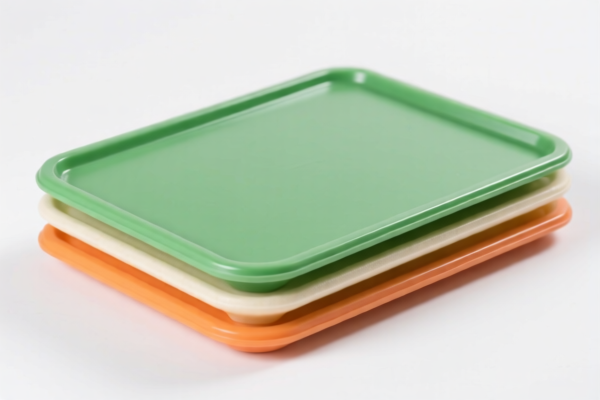
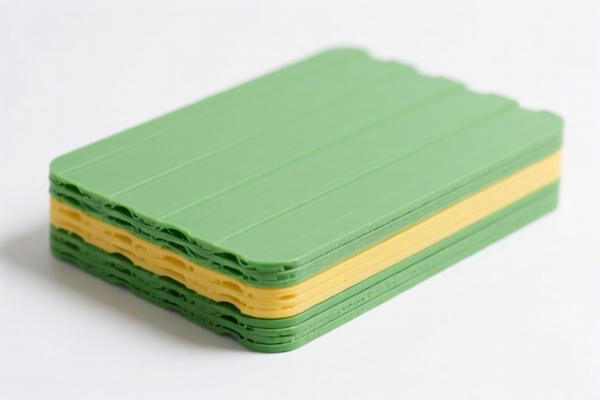
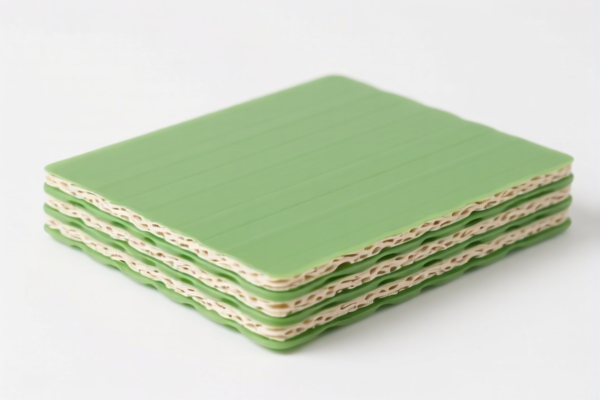
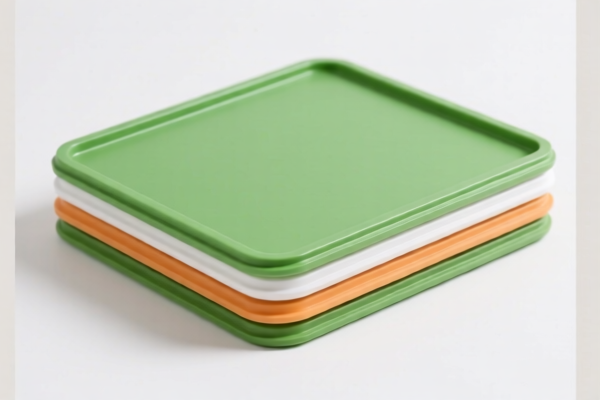
AI Analysis
🌿 Lightweight Plant Fiber Plastic Board (LPPB)
🌐 HS Code Reference & Customs Clearance Guide | 2024 Latest Tariff Analysis | Professional-Level Strategy
📌 I. Product Definition & Classification: Do You Really Understand "LPPB"?
Lightweight Plant Fiber Plastic Board is a composite material combining natural plant fibers (such as wood flour, bamboo powder, or agricultural straw) with thermoplastics (such as PE, PP, or PVC). It is widely used in construction, interior decoration, and outdoor landscaping.
In international trade, LPPB is classified based on its primary function and physical form: 1. Builders' Ware of Plastics: If the board is a finished construction component (e.g., siding, decking, wall panels) or a raw material specifically designed for construction integration without further assembly into furniture. 2. Furniture of Plastics: If the board is specifically manufactured into or part of furniture items (e.g., play yards, children's enclosures, or decorative furniture components made of reinforced plastic).
⚠️ Key Distinction Point:
- If the product is a raw board, siding, or decking intended for direct installation as part of a building structure → Classify under Chapter 39 (Builders' Ware).
- If the product is a completed furniture item or a specific furniture part (e.g., a playpen frame made of laminated plastic) → Classify under Chapter 94 (Furniture).
📦 II. HS Code Classification Details (Latest Tariff Concordance)
| HS Code | Product Description | Applicable Scenario | Tariff Rate (China to US) |
|---|---|---|---|
3925.90.00.00 |
Builders' ware of plastics, N.E.S.: Other | General-purpose plastic construction boards, siding, non-specific plastic building materials | 0.0% |
3925.20.00.91 |
Builders' ware of plastics: Doors, windows, frames, thresholds | Plastic doors, window frames, or threshold strips made of plant-fiber plastic | 12.8% |
9403.70.40.03 |
Furniture of plastics: Of reinforced/laminated plastics: Play yards/enclosures for children | Plastic playpens, baby gates, or children's confinement enclosures | 25.0% |
9403.70.40.31 |
Furniture of plastics: Of reinforced/laminated plastics: Other | Other plastic furniture parts (e.g., laminated plastic table tops, decorative furniture panels) | 25.0% |
🔍 Critical Reminder:
- Do not misclassify construction boards as furniture. If the LPPB is shipped as raw planks for decking or siding, use 3925.90.00.00.
- If the LPPB is used to make children's play yards or specific furniture parts made of reinforced/laminated plastic, use 9403.70.40.03/31.
- Plastic doors/windows must be classified under 3925.20.00.91, not general builders' ware.
💰 III. Detailed Tariff Rate Breakdown (2024 Latest)
✅ Applicable Country: United States (US)
✅ Origin: China (CN)
✅ Effective Time: Current Tariff Schedule (Subject to Section 301 & IEEPA adjustments)
🎯 1. 3925.90.00.00 —— Builders' Ware of Plastics (Other)
| Item | Content |
|---|---|
| Base Duty Rate | 0.0% |
| Section 301 Additional Duty | 0.0% |
| IEEPA Additional Duty | 0.0% |
| Total Tax Rate | 0.0% |
| Tax Calculation | CIF Value × 0% = $0 |
| De Minimis Eligibility | ✅ Yes (if under $800, subject to CBP rules) |
| Legal Basis | HTSUS 3925.90.00.00 |
📌 Explanation:
- This category benefits from a 0% total tariff, making it highly competitive for general plastic construction materials.
- Suitable for generic plastic siding, fencing, and non-specific building plastics.
🎯 2. 3925.20.00.91 —— Builders' Ware: Doors, Windows & Frames
| Item | Content |
|---|---|
| Base Duty Rate | 5.3% |
| Section 301 Additional Duty | 7.5% |
| IEEPA Additional Duty | Not explicitly listed in data (assumed included in 7.5% or 0% based on current policy) |
| Total Tax Rate | 12.8% |
| Tax Calculation | CIF Value × 12.8% |
| De Minimis Eligibility | ❌ No (Subject to scrutiny) |
| Legal Basis | HTSUS 3925.20.00.91 |
📌 Explanation:
- Plastic doors and windows attract a higher tariff due to their specific classification as "finished building components."
- The 12.8% rate is significantly higher than general builders' ware (0%).
🎯 3. 9403.70.40.03 & 9403.70.40.31 —— Furniture of Plastics
| Item | Content |
|---|---|
| Base Duty Rate | 0.0% |
| Section 301 Additional Duty | 25.0% |
| IEEPA Additional Duty | Not explicitly listed (assumed included in 25.0%) |
| Total Tax Rate | 25.0% |
| Tax Calculation | CIF Value × 25.0% |
| De Minimis Eligibility | ❌ No |
| Legal Basis | HTSUS 9403.70.40.03 / 9403.70.40.31 |
📌 Explanation:
- Furniture items made of plastics are subject to a 25.0% additional tariff.
- This applies to play yards (9403.70.40.03) and other laminated plastic furniture parts (9403.70.40.31).
- High Risk: Misclassifying furniture as general plastic boards to avoid the 25% duty is a common customs violation.
🛠️ IV. Customs Clearance Practical Advice (Real-World Pitfall Guide)
✅ 1. Documentation Checklist (Mandatory)
| Document | Required | Description |
|---|---|---|
| ✅ Product Specification Sheet | ✔️ | Must state composition: % of plant fiber vs. % of plastic |
| ✅ Material Safety Data Sheet (MSDS) | ✔️ | For plastic components, especially if containing additives |
| ✅ Product Photos | ✔️ | Show the board’s texture, edges, and any branding |
| ✅ Commercial Invoice | ✔️ | Clearly state "Lightweight Plant Fiber Plastic Board" or "Plastic Door Frame" |
| ✅ Packing List | ✔️ | Detail weight, dimensions, and packaging type |
| ✅ Certificate of Origin (CO) | ✔️ | To determine eligibility for any FTAs (if applicable) |
✅ 2. Declaration Tips (Key Mantra)
🔥 "Function determines Code, Form determines Tax!"
| Scenario | Correct Declaration | Wrong Practice |
|---|---|---|
| Raw plastic siding/decking boards | 3925.90.00.00 (0%) |
Misclassified as furniture → 25% |
| Plastic window frames | 3925.20.00.91 (12.8%) |
Misclassified as general plastic → 0% (Risk of penalty) |
| Children’s plastic playpen | 9403.70.40.03 (25%) |
Misclassified as building material → 0% (High Audit Risk) |
| Laminated plastic table top | 9403.70.40.31 (25%) |
Misclassified as furniture part without specifying "plastic" |
✅ 3. Special Handling
| Situation | Handling Advice |
|---|---|
| Mixed Shipments | If a shipment contains both raw boards and furniture, split the declaration. Do not combine under one HS code. |
| OEM Custom Boards | Provide design drawings to prove it is a "building material" not "furniture." |
| Reinforced Plastic | If the board is laminated or reinforced, specify this in the description to trigger 9403.70.40.31 if it’s a furniture part. |
| Children’s Products | Must comply with CPSC regulations. Failure to provide ASTM F963 compliance can lead to detention. |
🌍 V. Global Market Clearance Comparison (2024 Latest)
| Country/Region | Recommended HS Code | Tariff Rate | Certification | Notes |
|---|---|---|---|---|
| 🇺🇸 USA | 3925.90.00.00 |
0% | N/A | Best for general boards |
| 🇺🇸 USA | 3925.20.00.91 |
12.8% | N/A | For doors/windows |
| 🇺🇸 USA | 9403.70.40.03 |
25.0% | CPSC/ASTM | For children's furniture |
| 🇨🇳 China | 3925.90.00.00 |
5.0% | N/A | Base duty for import |
| 🇪🇺 EU | 3925.90.00 |
6.5% | CE/RoHS | Subject to anti-dumping if applicable |
| 🇬🇧 UK | 3925.90.00 |
6.5% | UKCA | Post-Brexit rules apply |
📌 Conclusion:
- The USA offers 0% duty for general plastic builders' ware (3925.90.00.00).
- Furniture items incur a 25% duty in the US.
- Doors/Windows incur a 12.8% duty.
- Strategic Advice: If you are exporting LPPB for decking or siding, ensure the description emphasizes "construction material" to qualify for 0% duty. Avoid terms like "furniture" unless it is genuinely a furniture item.
📌 VI. Common Mistakes & Pitfalls (Lessons Learned)
❌ Mistake 1: Classifying plastic decking as "Furniture"
👉 Result: 25% duty instead of 0%. Overpayment!
❌ Mistake 2: Classifying plastic window frames as "General Plastics"
👉 Result: 0% duty applied incorrectly. Customs Penalty & Back Duties!
❌ Mistake 3: Failing to distinguish between "Reinforced Plastic Furniture" and "Plastic Building Materials"
👉 Result: Audit risk. Customs may reclassify and assess 25% duty.
❌ Mistake 4: Not providing material composition for plant-fiber boards
👉 Result: Delays in clearance. Customs may suspect "anti-dumping" evasion or misdeclaration.
✅ Correct Declaration Example:
"Lightweight Plant Fiber Plastic Decking Board, 5ft x 0.75in, PE Material, 50% Wood Flour, 50% Polyethylene, for Outdoor Construction Use, Model XYZ"
🎯 VII. Conclusion: Professional Declaration, Cost Savings!
🎯 Remember the Mantra:
🔹 "Building Material = 0% | Doors/Windows = 12.8% | Furniture = 25%!"
🔹 "Describe Function, Not Just Material!"
📌 Pro Tip:
If your plant-fiber plastic board is intended for outdoor decking, clearly state "Decking" or "Siding" in the product name to secure the 0% tariff. Avoid vague terms like "Plastic Sheet" which may attract scrutiny.
📣 Immediate Action:
📞 Contact a licensed customs broker + Provide Product Images + Apply for Pre-Ruling if unsure.
🚀 Ensure smooth clearance, avoid penalties, and maximize profit margins!
✨ Professional Clearance Starts with Accurate Classification!
💼 Your Costs Are Worth Precise Calculation!
Customer Reviews
About HS Code Classification
The Harmonized System (HS) is an internationally standardized nomenclature developed by the World Customs Organization (WCO) to classify traded products. Over 200 countries use the HS system as the basis for customs tariffs, trade statistics, and import/export regulations.
Each HS code follows a hierarchical structure:
- Chapter (2 digits) — Broad category of goods (e.g., Chapter 84: Machinery and Mechanical Appliances)
- Heading (4 digits) — More specific grouping within the chapter
- Subheading (6 digits) — Internationally standardized breakdown, used by all WCO member countries
- National subdivisions (8-10 digits) — Country-specific extensions for further classification, such as US HTSUS 10-digit codes
Correct HS code classification is essential for smooth customs clearance, accurate duty payment, and compliance with trade regulations. Misclassification can lead to customs delays, overpayment of duties, or penalties.
When importing from CN to US, the applicable tariff rates may include:
- Most-Favored-Nation (MFN) rate — The standard duty rate applied to WTO members
- General rate — Applied to countries without trade agreements
- Trade remedy duties — Additional tariffs such as Section 301 (anti-dumping), Section 232 (national security), or countervailing duties
The information provided on this page is for reference purposes only. For official classification, please consult with your local customs authority or a licensed customs broker.