Lightweight Printing Paper
CN → US| HS Code | Tariff Rate | Origin | Destination | Doc |
|---|---|---|---|---|
| 4805917000 | 35.0% | CN | US | Official Doc |
| 4805919000 | 35.0% | CN | US | Official Doc |
| 4802543100 | 35.0% | CN | US | Official Doc |
| 4802554000 | 35.0% | CN | US | Official Doc |
| 4810131300 | 35.0% | CN | US | Official Doc |
Product Images
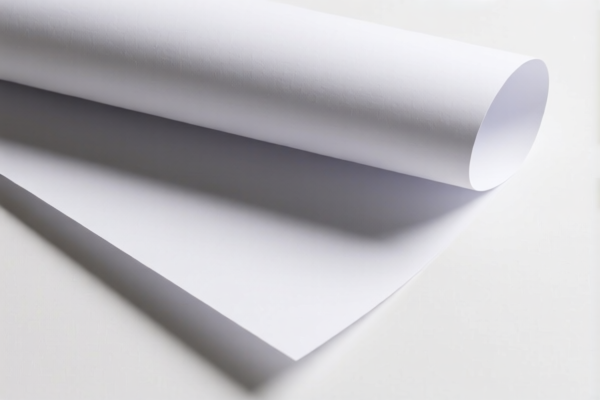
AI Analysis
📜 Lightweight Printing Paper Rolls
🌐 HS Code Reference & Customs Clearance Guide | 2026 Latest Tariff Analysis | Professional Compliance Strategy
📌 I. Product Definition & Classification: Do You Truly Understand "Lightweight Printing Paper"?
Lightweight Printing Paper Rolls refer to paper products specifically designed for high-speed printing processes (such as offset, gravure, or digital printing). In international trade, classification is strictly determined by material treatment (coated vs. uncoated) and gram weight (g/m²).
Key Distinction Points: * Uncoated Paper (未涂布纸): Porous surface, no chemical coating. Often used for newspapers, lightweight books, or specialized printing. Classified primarily under 4802. * Coated Paper (涂布纸): Surface treated with mineral pigments or polymers for better print resolution. Classified primarily under 4810. * Weight Thresholds: The boundary between "lightweight" and standard paper often lies at 40 g/m² and 150 g/m². Products ≤150 g/m² generally fall into specific "lightweight" sub-categories.
⚠️ Critical Clarification:
- If the paper is uncoated and <40 g/m² → Go to 4802.54.31.00
- If the paper is uncoated and 40–150 g/m² → Go to 4802.55.40.00
- If the paper is uncoated and >30–150 g/m² (broad category) → Go to 4805.91.90.00
- If the paper is uncoated but very light (15–30 g/m²) → Go to 4805.91.70.00
- If the paper is coated (any weight ≤150 g/m²) → Go to 4810.13.13.00
📦 II. HS Code Classification Details (2026 Latest Tariff Authority)
| HS Code | Product Description | Application Scenario | Coating Status | Weight Range |
|---|---|---|---|---|
4802.54.31.00 |
Uncoated paper rolls, <40 g/m², for printing | Lightweight newsprint, bible paper, special printing | ✅ Uncoated | < 40 g/m² |
4802.55.40.00 |
Uncoated paper rolls, 40–150 g/m², for printing | Standard light printing paper, catalog paper | ✅ Uncoated | 40–150 g/m² |
4805.91.70.00 |
Lightweight paper rolls, 15–30 g/m² | Ultra-lightweight special purposes | ✅ Uncoated | 15–30 g/m² |
4805.91.90.00 |
Other uncoated paper rolls, >30–150 g/m² | General uncoated printing stock | ✅ Uncoated | >30 & ≤150 g/m² |
4810.13.13.00 |
Coated paper rolls, ≤150 g/m² | High-quality printing, brochures, magazines | ✅ Coated | ≤ 150 g/m² |
🔍 Key Reminder:
- Coating is the primary divisor: Coated paper (4810) vs. Uncoated (4802/4805).
- Weight matters: Even within uncoated paper, specific weight bands (<40vs40-150) dictate the exact HS Code.
- Form Factor: Must be in rolls (卷状). If cut into sheets, classification may change.
💰 III. 2026 Latest Tariff Rate Breakdown (Including Surcharges & Policy Add-ons)
✅ Applicable Country: United States (US)
✅ Country of Origin: China (CN)
✅ Effective Date: November 10, 2025 (and subsequent imports)
🎯 1. 4802.54.31.00 —— Uncoated Paper Rolls (<40 g/m²)
| Item | Content |
|---|---|
| Base Tariff | 0.0% (ad valorem) |
| USITC Surtax (Section 301) | +25.0% |
| 122 Clause Surtax (IEEPA) | +10.0% |
| Total Effective Rate | 35.0% |
| Tax Calculation | CIF Value × 35% |
| De Minimis Exemption | ❌ Not Available (High risk of seizure if below threshold) |
| Legal Basis Path | USITC:4802.54.31.00 → FOOTNOTE:301.88.01 → IEEPA:9903.01.24 |
📌 Explanation:
- The 25% USITC surcharge is applied due to Section 301 investigations targeting Chinese goods.
- The 10% IEEPA surcharge applies specifically to Chinese-origin products under the International Emergency Economic Powers Act.
- Total 35% is a significant cost factor. Pre-calculation is mandatory.
🎯 2. 4802.55.40.00 —— Uncoated Paper Rolls (40–150 g/m²)
| Item | Content |
|---|---|
| Base Tariff | 0.0% |
| USITC Surtax (Section 301) | +25.0% |
| 122 Clause Surtax (IEEPA) | +10.0% |
| Total Effective Rate | 35.0% |
| Tax Calculation | CIF × 35% |
| De Minimis Exemption | ❌ Not Available |
| Legal Basis Path | USITC:4802.55.40.00 → FOOTNOTE:301.88.01 → IEEPA:9903.01.24 |
📌 Note:
- Same tariff structure as the <40 g/m² category.
- Applies to standard printing paper rolls. Ensure the 40–150 g/m² weight is accurately declared.
🎯 3. 4805.91.70.00 —— Lightweight Paper Rolls (15–30 g/m²)
| Item | Content |
|---|---|
| Base Tariff | 0.0% |
| USITC Surtax (Section 301) | +25.0% |
| 122 Clause Surtax (IEEPA) | +10.0% |
| Total Effective Rate | 35.0% |
| Tax Calculation | CIF × 35% |
| De Minimis Exemption | ❌ Not Available |
| Legal Basis Path | USITC:4805.91.70.00 → FOOTNOTE:301.88.01 → IEEPA:9903.01.24 |
📌 Note:
- For ultra-lightweight paper. Even if "lightweight," it is not exempt from surcharges.
🎯 4. 4805.91.90.00 —— Other Uncoated Paper Rolls (>30–150 g/m²)
| Item | Content |
|---|---|
| Base Tariff | 0.0% |
| USITC Surtax (Section 301) | +25.0% |
| 122 Clause Surtax (IEEPA) | +10.0% |
| Total Effective Rate | 35.0% |
| Tax Calculation | CIF × 35% |
| De Minimis Exemption | ❌ Not Available |
| Legal Basis Path | USITC:4805.91.90.00 → FOOTNOTE:301.88.01 → IEEPA:9903.01.24 |
📌 Note:
- This is a "catch-all" for uncoated rolls between >30 g/m² and 150 g/m² that don't fit the specific <40 g/m² category (4802.54.31.00).
- Verify if your product fits4802.55.40.00(specifically 40-150) or4805.91.90.00(general >30). Precision here is key.
🎯 5. 4810.13.13.00 —— Coated Paper Rolls (≤150 g/m²)
| Item | Content |
|---|---|
| Base Tariff | 0.0% |
| USITC Surtax (Section 301) | +25.0% |
| 122 Clause Surtax (IEEPA) | +10.0% |
| Total Effective Rate | 35.0% |
| Tax Calculation | CIF × 35% |
| De Minimis Exemption | ❌ Not Available |
| Legal Basis Path | USITC:4810.13.13.00 → FOOTNOTE:301.88.01 → IEEPA:9903.01.24 |
📌 Note:
- Coated paper falls under Chapter 4810.
- Despite being a different material type, the total tariff rate is identical (35%).
- Do not assume coating changes the tax burden significantly in this specific US-China context.
🛠️ IV. Customs Clearance Practical Advice (Combat Pitfalls Guide)
✅ 1. Required Documentation Checklist (Non-Negotiable)
| Document | Mandatory? | Description |
|---|---|---|
| ✅ Product Specification Sheet | ✔️ | Must clearly state Gram Weight (g/m²), Coating Status, and Roll Dimensions. |
| ✅ Material Composition Report | ✔️ | Confirm 100% paper content. No plastic layers. |
| ✅ Product Photos (Raw & Rolls) | ✔️ | Show the roll surface texture (smooth = coated, matte = uncoated). |
| ✅ Commercial Invoice | ✔️ | Must describe item as "Printing Paper Rolls, Uncoated/Coated, [Weight] g/m²". |
| ✅ Packing List | ✔️ | Detail net/gross weight and number of rolls. |
| ✅ Certificate of Origin (CO) | ✔️ | Essential for proving CN origin (and thus surcharge application). |
✅ 2. Declaration Skills (Key Mnemonic)
🔥 "Weight Defines the Bucket, Coating Defines the Chapter!"
(克重定子目,涂布定章目)
| Scenario | Correct Declaration | Wrong Practice |
|---|---|---|
| Uncoated, 35 g/m² | 4805.91.70.00 or 4802.54.31.00 |
Declaring as 4802.55.40.00 → Misclassification |
| Uncoated, 100 g/m² | 4802.55.40.00 |
Declaring as 4805.91.90.00 → Audit Risk |
| Coated, 80 g/m² | 4810.13.13.00 |
Declaring as Uncoated → Higher Inspection Rate |
| Cut Sheets (not rolls) | Different HS Code | Declaring as Rolls → Rejection |
✅ 3. Special Handling
| Situation | Handling Advice |
|---|---|
| Ambiguous Coating | Provide a chemical test report or supplier declaration confirming "Uncoated" vs. "Coated". |
| Mixed Weights | Do not mix rolls of different weights in one HS Code declaration. Split accordingly. |
| OEM Printing | If already printed, it may be considered "printed paper goods" rather than raw paper. Check Chapter 49. |
| Re-Export | Ensure the supplier confirms the exact g/m². Small variations (e.g., 39 vs. 41) change the HS Code. |
🌍 V. Global Market Comparison (2026 Latest)
| Country/Region | Recommended HS Code | Tariff (China Origin) | Certification | Notes |
|---|---|---|---|---|
| 🇺🇸 USA | 4802.55.40.00 / 4810.13.13.00 |
35% (0% + 25% + 10%) | N/A | High surcharges apply to ALL paper categories. |
| 🇨🇳 China | 4802.55.40.00 / 4810.13.13.00 |
5% - 15% | N/A | Import duty varies by type. No surcharges. |
| 🇪🇺 EU | 4802.55.00 / 4810.13 |
0% - 4.5% | CE (if applicable) | Generally low tariffs for paper. |
| 🇬🇧 UK | 4802.55.00 / 4810.13 |
0% - 5% | N/A | Post-Brexit rates similar to EU. |
| 🇯🇵 Japan | 4802.55.00 / 4810.13 |
3% - 5% | JIS | Moderate tariffs. |
📌 Conclusion:
- The US is the most expensive market for Chinese paper imports due to the 35% blended rate.
- EU, UK, and Japan are significantly more cost-effective regarding tariffs.
- Strategy: If exporting to the US, consider supply chain diversification (e.g., Vietnam, Thailand) to potentially avoid IEEPA/Section 301 surcharges, subject to Rules of Origin.
📌 VI. Common Errors & Pitfalls (Lessons Learned)
❌ Mistake 1: Ignoring the Coating Status.
👉 Consequence: Declaring coated paper as uncoated (4802 instead of 4810).
👉 Result: Customs audit, delays, and potential fines for incorrect classification, even if the rate is similar.
❌ Mistake 2: Imprecise Gram Weight declaration.
👉 Consequence: Stating "35 g/m²" when it is "42 g/m²".
👉 Result: Wrong HS Code (4805 vs 4802). While the rate is the same, accuracy is critical for compliance.
❌ Mistake 3: Assuming De Minimis applies.
👉 Consequence: Sending small samples or low-value rolls under $800 without declaring surcharges.
👉 Result: Seizure or forced return. Section 301 and IEEPA surcharges often negate de minimis benefits for specific Chinese goods.
❌ Mistake 4: Confusing Rolls vs. Sheets.
👉 Consequence: Declaring cut sheets as rolls.
👉 Result: Classification error. Sheets may fall under different sub-headings or chapters.
✅ Correct Practice:
"Uncoated Printing Paper Rolls, 50 g/m², 1000m Width, Volatile Paper, HS Code 4802.55.40.00, Made in China"
🎯 VII. Conclusion: Precision Classification, Cost Control, Compliance First!
🎯 Remember the Mantra:
🔹 "Coating determines the Chapter, Weight determines the Sub-category."
🔹 "35% is the US Reality: 0% Base + 25% Sec 301 + 10% IEEPA."
🔹 "One gram difference can change the HS Code."
📌 Pro Tip:
- If your paper is produced in Vietnam, Malaysia, or Thailand, you may qualify for lower or zero surcharges.
- Apply for a Binding Tariff Information (BTI) or Advance Ruling from US CBP before shipping large volumes.
- Cost-Benefit Analysis: With a 35% tax, margins are thin. Optimize packaging to reduce CIF value where possible (legally).
📣 Immediate Action:
📞 Consult a licensed customs broker.
📄 Provide exact technical specs (g/m², coating, roll width).
🚀 Ensure your commercial invoice matches the HS Code description perfectly.
✨ Professional Clearance Starts with Accurate Classification!
💼 Every percentage point of tax affects your bottom line!
Customer Reviews
About HS Code Classification
The Harmonized System (HS) is an internationally standardized nomenclature developed by the World Customs Organization (WCO) to classify traded products. Over 200 countries use the HS system as the basis for customs tariffs, trade statistics, and import/export regulations.
Each HS code follows a hierarchical structure:
- Chapter (2 digits) — Broad category of goods (e.g., Chapter 84: Machinery and Mechanical Appliances)
- Heading (4 digits) — More specific grouping within the chapter
- Subheading (6 digits) — Internationally standardized breakdown, used by all WCO member countries
- National subdivisions (8-10 digits) — Country-specific extensions for further classification, such as US HTSUS 10-digit codes
Correct HS code classification is essential for smooth customs clearance, accurate duty payment, and compliance with trade regulations. Misclassification can lead to customs delays, overpayment of duties, or penalties.
When importing from CN to US, the applicable tariff rates may include:
- Most-Favored-Nation (MFN) rate — The standard duty rate applied to WTO members
- General rate — Applied to countries without trade agreements
- Trade remedy duties — Additional tariffs such as Section 301 (anti-dumping), Section 232 (national security), or countervailing duties
The information provided on this page is for reference purposes only. For official classification, please consult with your local customs authority or a licensed customs broker.