Lightweight Tapestry Fabrics
CN → US| HS Code | Tariff Rate | Origin | Destination | Doc |
|---|---|---|---|---|
| 6304991000 | 21.3% | CN | US | Official Doc |
| 6304991500 | 28.8% | CN | US | Official Doc |
| 5907008090 | 35.0% | CN | US | Official Doc |
| 5907003500 | 43.0% | CN | US | Official Doc |
| 5805004090 | 35.0% | CN | US | Official Doc |
| 5805003000 | 35.0% | CN | US | Official Doc |
Product Images
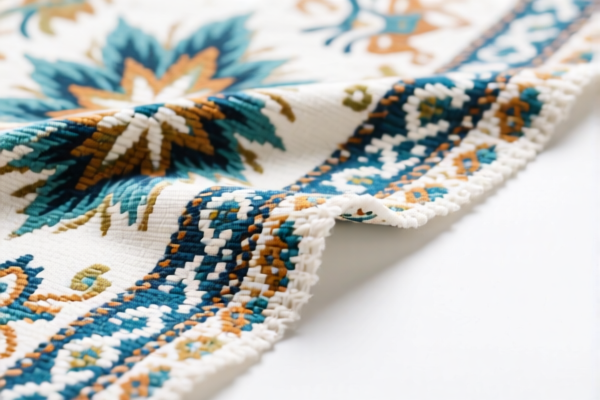
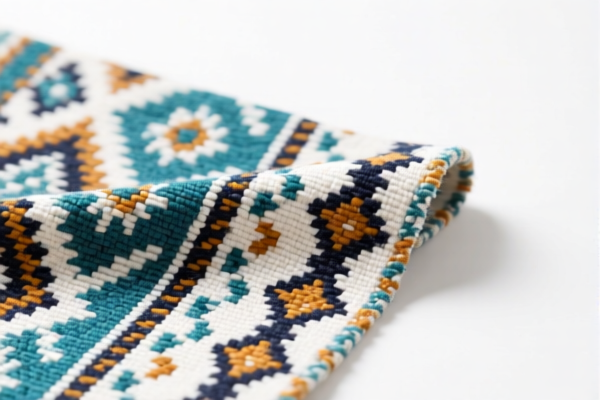
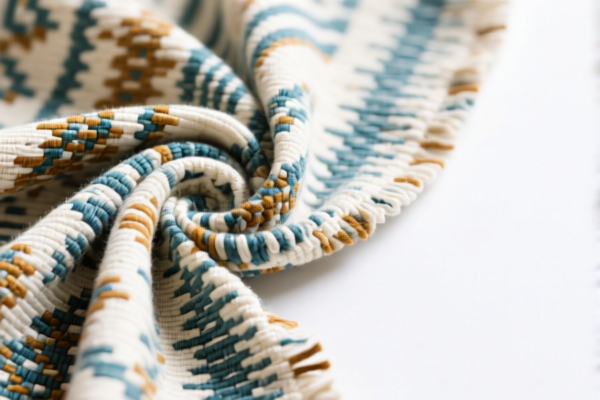
AI Analysis
🎨 Lightweight Tapestry Fabrics
🌐 HS Code Classification & Customs Clearance Guide | 2026 Latest Tariff Breakdown | Expert Compliance Strategy
📌 One: Product Definition & Classification – What Exactly Are “Lightweight Tapestry Fabrics”?
Lightweight tapestry fabrics are handwoven or needle-worked textile artworks, traditionally crafted using intricate techniques such as Gobelin, Flanders, Aubusson, Beauvais, or petit point, cross-stitch. These are not mass-produced textiles but artisanal, culturally significant pieces, often reflecting folklore, regional heritage, or historical motifs.
⚠️ Key Distinction: - If the fabric is hand-woven or needle-worked, and not knitted or crocheted, and made from cotton, wool, or fine animal hair, it falls under Chapter 58 (Textile Fabrics). - If it's not handcrafted, or made from non-textile materials, or mass-produced, it may be classified elsewhere (e.g., 6304.99.10.00 for wall hangings).
📦 Two: HS Code Classification Details (2026 Official Tariff Authority)
| HS Code | Product Description | Material Type | Craft Type | Key Feature |
|---|---|---|---|---|
5805.00.30.00 |
Hand-woven tapestries (Gobelins, Flanders, Aubusson, Beauvais) & needle-worked (petit point, cross stitch), of cotton | Cotton | Hand-woven / Needle-worked | Certified artisanal, folklore origin |
5805.00.40.90 |
Hand-woven tapestries & needle-worked tapestries, other than cotton | Wool, fine animal hair, other textiles | Hand-woven / Needle-worked | Not knitted or crocheted, not cotton |
🔍 Critical Note: - "Hand-woven" ≠ "machine-made" – Only true handcrafted pieces qualify for the lower tariff. - "Folklore products" must be certified to qualify for preferential treatment under
5805.00.30.00. - Cotton vs. Wool/Fine Hair: Material type determines the HS Code.
💰 Three: 2026 Latest Tariff Breakdown (Including附加 Taxes & Legal Triggers)
✅ Applicable Country: United States (US)
✅ Origin: China (CN)
✅ Effective Date: November 10, 2025 (and onward)
🎯 1. 5805.00.30.00 — Needle-worked or Hand-woven Tapestries, of Cotton
| Item | Detail |
|---|---|
| Base Duty | 0.0% (ad valorem) |
| USITC Additional Duty | +25.0% (from Section 301 of U.S. Trade Act) |
| IEEPA Additional Duty | +10.0% (International Emergency Economic Powers Act) |
| Total Effective Duty | 35.0% |
| Tax Calculation | CIF Value × 35.0% |
| De Minimis Threshold | ❌ Not eligible (denied under U.S. de minimis rule) |
| Legal Basis Path | IEEPA:9903.01.25 → IEEPA:9903.01.24 → USITC:5805.00.30.00 → FOOTNOTE:9903.88.01 |
📌 Explanation: - Despite 0% base tariff, this item is subject to 25% USITC + 10% IEEPA due to China origin. - Total 35% is extremely high – not just a "cultural product" exemption. - Only applies if the product is made of cotton and not certified as folklore/artisanal.
🎯 2. 5805.00.40.90 — Other Hand-woven or Needle-worked Tapestries (Not Cotton)
| Item | Detail |
|---|---|
| Base Duty | 0.0% |
| USITC Additional Duty | +25.0% |
| IEEPA Additional Duty | +10.0% |
| Total Effective Duty | 35.0% |
| Tax Calculation | CIF × 35.0% |
| De Minimis Threshold | ❌ Not eligible |
| Legal Basis Path | IEEPA:9903.01.25 → IEEPA:9903.01.24 → USITC:5805.00.40.90 → FOOTNOTE:9903.88.01 |
📌 Important Note: - Applies to wool, fine animal hair, or other textile materials. - No difference in tariff vs. cotton version – both face 35% total duty. - No exception for "artistic value" or "cultural heritage" – only certification matters.
🛠️ Four: Customs Clearance Best Practices (Pro Tips to Avoid Penalties)
✅ 1. Required Documentation (Must-Have List)
| Document | Required? | Why It Matters |
|---|---|---|
| ✅ Product Specifications | ✔️ | Must state material (cotton/wool), craft method (hand-woven/needle-worked), size, design origin |
| ✅ Craft Certification (Folklore/Artisanal) | ✔️ | Essential for 5805.00.30.00 – proves it’s not mass-produced |
| ✅ High-Resolution Photos | ✔️ | Show stitching, material, and craftsmanship |
| ✅ Commercial Invoice | ✔️ | Must clearly state: “Hand-woven tapestry, cotton, folklore product, certified artisanal” |
| ✅ Certificate of Origin (CO) | ✔️ | If origin is not China, may reduce or eliminate additional duties |
| ✅ Packing List | ✔️ | Prove the item is not part of a bulk shipment of mass-produced goods |
✅ 2.申报技巧(Critical Rules to Remember)
🔥 “Certify or Pay – No Middle Ground!”
| Scenario | Correct HS Code | Wrong Approach | Risk |
|---|---|---|---|
| Hand-woven cotton tapestry, certified folklore | 5805.00.30.00 |
5805.00.40.90 |
Higher duty, loss of exemption |
| Wool tapestry, not certified | 5805.00.40.90 |
5805.00.30.00 |
Incorrect classification, penalties |
| Mass-produced “tapestry-style” fabric | ❌ Not 5805 |
❌ Claim as “art” | Detention, seizure, fines |
| Wall hanging made of non-textile materials | ❌ Not 5805 |
❌ Use 6304.99.10.00 |
Misclassification, 11.3% vs 35% |
✅ 3. Special Cases & Workarounds
| Situation | Recommended Action |
|---|---|
| Product is handcrafted but not certified | Apply for USITC Pre-Ruling or CBP Advance Ruling to confirm classification |
| Selling as “art” or “decor” | Must provide provenance, artist signature, crafting process video to avoid "mass-produced" label |
| Exporting to EU or Japan | Lower or zero tariffs – check local rules (EU: 0% if CE compliant; Japan: 0% if PSE) |
| Using a third-party certifier | Use recognized folklore certification bodies (e.g., UNESCO, national craft associations) |
🌍 Five: Global Market Comparison (2026 Tariff Snapshot)
| Country/Region | Recommended HS Code | Base Duty | Additional Taxes | Notes |
|---|---|---|---|---|
| 🇺🇸 United States | 5805.00.30.00 / 5805.00.40.90 |
0% | +35% (25% USITC + 10% IEEPA) | High cost – avoid if possible |
| 🇨🇳 China | 5805.00.30.00 / 5805.00.40.90 |
5% | 0% | No extra tariffs |
| 🇪🇺 European Union | 5805.00.30.00 / 5805.00.40.90 |
0% | 0% (if CE compliant) | No additional duties |
| 🇯🇵 Japan | 5805.00.30.00 / 5805.00.40.90 |
0% | 0% | PSE certification only |
| 🇦🇺 Australia | 5805.00.30.00 / 5805.00.40.90 |
5% | 0% | RCM required |
📌 Conclusion: - Only the U.S. imposes 35% total duty on these items from China. - EU, Japan, Australia, and China offer much lower or zero tariffs. - Consider shifting production or re-export via Vietnam/Mexico to avoid U.S. tariffs.
📌 Six: Common Mistakes & How to Avoid Them (Real Cases)
❌ Mistake 1: Claiming “handmade” without certification
👉 Result: Classified as 5805.00.40.90, taxed at 35%, even if cotton.
❌ Mistake 2: Using “tapestry” as a generic term without specifying craft method
👉 Result: Customs may assume it’s machine-made, leading to higher scrutiny or seizure.
❌ Mistake 3: Not providing craft certification or photos of weaving process
👉 Result: Denied de minimis, delayed clearance, fines.
❌ Mistake 4: Shipping multiple units as “art pieces” without individual documentation
👉 Result: Treated as bulk goods, triggering 35% duty on all.
✅ Correct Approach:
“Hand-woven cotton tapestry, 120x150 cm, folk art from [Region], certified by [Certification Body], artisanal, not mass-produced, for decorative use only.”
🎯 Seven: Final Verdict – Smart Export Strategy
🎯 Remember the Golden Rule:
🔹 “Certify the craft, declare the material, avoid the U.S. if possible.”
✅ Best Path: - Certify your product as folklore/artisanal. - Use cotton if possible →
5805.00.30.00. - Avoid U.S. import unless you can absorb 35% duty. - Export via non-China origin (e.g., Vietnam, Mexico) to avoid IEEPA/USITC.
📌 Pro Tip:
📞 Apply for a Pre-Ruling (Advance Ruling) from U.S. Customs (CBP) before shipping.
🚀 Get official confirmation of HS Code and duty rate – protect your business from surprise charges.
📣 Act Now!
📩 Contact a licensed customs broker + submit product photos + craft certification
🌐 Get your HS Code pre-approved – avoid delays, fines, or seizure!
✨ Expert Advice:
🎨 "A tapestry is not just fabric – it’s heritage. But in trade, it’s a tariff code. Get it right, or pay the price."
💼 Your craftsmanship deserves fair treatment. Let your art cross borders – legally, safely, and profitably!
Customer Reviews
About HS Code Classification
The Harmonized System (HS) is an internationally standardized nomenclature developed by the World Customs Organization (WCO) to classify traded products. Over 200 countries use the HS system as the basis for customs tariffs, trade statistics, and import/export regulations.
Each HS code follows a hierarchical structure:
- Chapter (2 digits) — Broad category of goods (e.g., Chapter 84: Machinery and Mechanical Appliances)
- Heading (4 digits) — More specific grouping within the chapter
- Subheading (6 digits) — Internationally standardized breakdown, used by all WCO member countries
- National subdivisions (8-10 digits) — Country-specific extensions for further classification, such as US HTSUS 10-digit codes
Correct HS code classification is essential for smooth customs clearance, accurate duty payment, and compliance with trade regulations. Misclassification can lead to customs delays, overpayment of duties, or penalties.
When importing from CN to US, the applicable tariff rates may include:
- Most-Favored-Nation (MFN) rate — The standard duty rate applied to WTO members
- General rate — Applied to countries without trade agreements
- Trade remedy duties — Additional tariffs such as Section 301 (anti-dumping), Section 232 (national security), or countervailing duties
The information provided on this page is for reference purposes only. For official classification, please consult with your local customs authority or a licensed customs broker.