Lightweight Textile Composite Plastic Strips
CN → US| HS Code | Tariff Rate | Origin | Destination | Doc |
|---|---|---|---|---|
| 5911900040 | 38.8% | CN | US | Official Doc |
| 6815994170 | 35.0% | CN | US | Official Doc |
| 5911900080 | 38.8% | CN | US | Official Doc |
| 3926905700 | 41.5% | CN | US | Official Doc |
| 5911900040 | 38.8% | CN | US | Official Doc |
Product Images
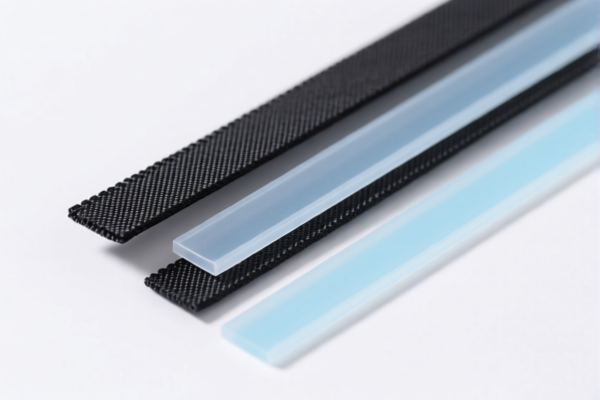
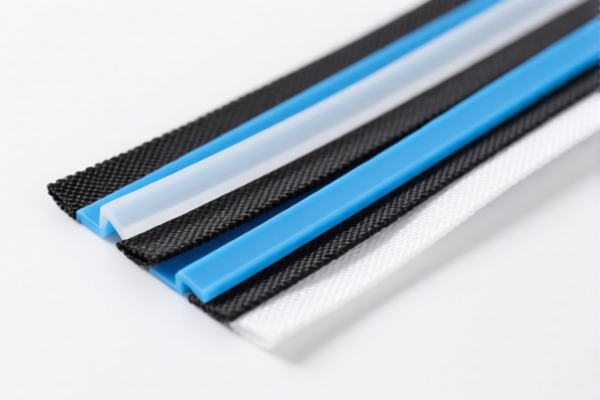
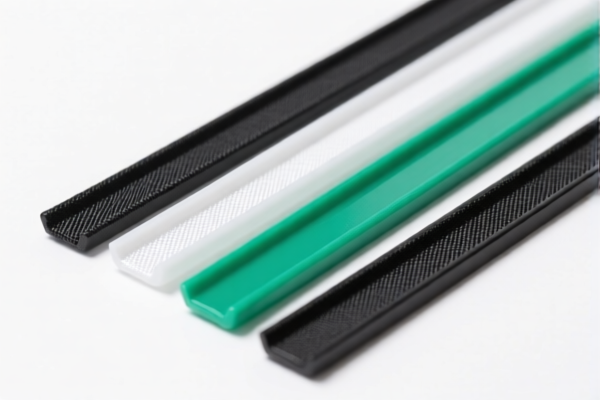

AI Analysis
🏗️ Lightweight Textile Composite Plastic Strips
(Industrial Building Materials | Composite Textile-Plastic Profiles)
🌐 HS Code Reference & Customs Clearance Guide | 2026 Latest Tariff Analysis | Professional Clearance Strategy
📌 I. Product Definition & Classification: What Are "Textile Composite Plastic Strips"?
Lightweight Textile Composite Plastic Strips are specialized industrial materials constructed by bonding or integrating textile fibers (such as glass, polyester, or aramid) with plastic polymers (such as PVC, PE, PP, or composite resins). These strips are typically extruded or laminated into linear profiles.
In international trade, their classification depends heavily on: 1. Primary Material Composition: Is it primarily textile or plastic? 2. Functional Purpose: Are they used for structural reinforcement, sealing, insulation, or general construction? 3. Form: Are they in strips, rolls, or specific manufactured forms?
⚠️ Critical Distinction:
- If the product is primarily a technical textile used for construction reinforcement or filtering → It leans towards Chapter 59.
- If the product is primarily a plastic profile containing textile fibers as reinforcement → It may fall under Chapter 39 (Plastics) or specific composite categories.
- Note on "Construction Use": Many composite building materials are classified as "Other prepared textiles" or "Other plastic articles" depending on the dominant characteristic.
📦 II. HS Code Classification Details (2026 Latest Tariff Authority Comparison)
Based on the product description and industrial usage, here are the four most relevant HS Codes identified in the reference data:
| HS Code | Product Description & Logic | Key Characteristics |
|---|---|---|
5911.90.00.40 |
Technical Textile Products for Industrial Use • Description: Textile composite plastic strips used in construction. • Logic: Classified under "Technical textiles" where the textile component is significant for its industrial function (e.g., reinforcement, filtration, insulation). |
✅ Primary: Textile-based composite ✅ Use: Construction/Industrial ✅ Form: Strips/Profiles |
5911.90.00.80 |
Other Technical Textile Products • Description: Includes textile materials meeting technical product characteristics for construction. • Logic: A broader category for technical textiles not specifically listed elsewhere, covering composite strips with textile features. |
✅ Primary: Technical Textile ✅ Use: Construction ✅ Flexibility: Broad "Other" category |
3926.90.57.00 |
Other Plastic Articles • Description: Plastic articles, including those containing textile fibers or composites. • Logic: If the plastic matrix is dominant and the product is considered a "manufactured plastic article" rather than a textile product. |
✅ Primary: Plastic-based composite ✅ Content: Contains textile fibers ✅ Form: Other plastic articles |
6815.99.41.70 |
Articles of Stone or Other Mineral Substances • Description: Other articles of mineral substances, possibly containing plastic. • Logic: Note: This classification seems less intuitive for pure plastic/textile strips unless the product is a mineral-plastic composite (e.g., stone-coated plastic strip) or misclassified in specific datasets. However, per the reference data, it is included as a "fallback" for composite/mineral-like strips. |
⚠️ Specific Case: Mineral-plastic composite ⚠️ Fallback: "Other" category for non-standard composites |
🔍 Key Insight:
-5911.90.00.40and5911.90.00.80are the most common for textile-reinforced plastic strips used in construction (e.g., geotextiles, reinforcement membranes).
-3926.90.57.00applies if the product is predominantly a plastic profile with embedded textiles (less common for "textile composite" descriptions).
-6815.99.41.70is a niche classification for mineral-composite strips; verify if your product contains significant mineral content.
💰 III. 2026 Latest Tariff Rate Breakdown (Including Surcharges & Policy Add-ons)
✅ Applicable Country: United States (US)
✅ Origin: China (CN)
✅ Effective Date: Post-2025 Trade Policies (301 Tariffs + IEEPA)
🎯 1. 5911.90.00.40 — Technical Textile Products for Construction
| Item | Detail |
|---|---|
| Base Tariff | 3.8% (Ad Valorem) |
| Section 301 Surcharge | +25.0% (USITC Footnote 9903.88.01) |
| IEEPA Surcharge | +10.0% (China-specific, effective 2025) |
| Total Tax Rate | 38.8% |
| Calculation | CIF Value × 38.8% |
| De Minimis Eligibility | ❌ Not Eligible (Denied due to high tariff rate and China origin) |
| Legal Path | IEEPA:9903.01.25 → USITC:5911.90.00.40 → FOOTNOTE:9903.88.01 |
📌 Explanation:
- This is a high-tax classification. The 25% Section 301 tariff is standard for Chinese textiles/composites.
- The additional 10% IEEPA surcharge brings the total to 38.8%.
- Risk: High duty cost significantly impacts profit margins.
🎯 2. 5911.90.00.80 — Other Technical Textile Products
| Item | Detail |
|---|---|
| Base Tariff | 3.8% |
| Section 301 Surcharge | +25.0% |
| IEEPA Surcharge | +10.0% |
| Total Tax Rate | 38.8% |
| Calculation | CIF Value × 38.8% |
| De Minimis Eligibility | ❌ Not Eligible |
| Legal Path | Same as above (5911.90.00.80 shares similar tariff structure) |
📌 Note:
- Identical tax burden to5911.90.00.40.
- Choose this code if your product does not meet the specific criteria for5911.90.00.40but still qualifies as a technical textile.
🎯 3. 3926.90.57.00 — Other Plastic Articles (Composite)
| Item | Detail |
|---|---|
| Base Tariff | 6.5% |
| Section 301 Surcharge | +25.0% |
| IEEPA Surcharge | +10.0% |
| Total Tax Rate | 41.5% |
| Calculation | CIF Value × 41.5% |
| De Minimis Eligibility | ❌ Not Eligible |
| Legal Path | IEEPA:9903.01.25 → USITC:3926.90.57.00 → FOOTNOTE:9903.88.01 |
📌 Explanation:
- Despite being a "plastic article," the higher base rate (6.5%) results in a higher total tax (41.5%) compared to textile classifications.
- Avoid this code unless your product is predominantly plastic and cannot be classified as a technical textile.
🎯 4. 6815.99.41.70 — Articles of Mineral Substances (Composite)
| Item | Detail |
|---|---|
| Base Tariff | 0.0% |
| Section 301 Surcharge | +25.0% |
| IEEPA Surcharge | +10.0% |
| Total Tax Rate | 35.0% |
| Calculation | CIF Value × 35.0% |
| De Minimis Eligibility | ❌ Not Eligible |
| Legal Path | IEEPA:9901.25 → USITC:6815.99.41.70 → FOOTNOTE:9903.88.01 |
📌 Note:
- Lowest total tax (35.0%) due to 0% base rate.
- Critical Warning: This classification is highly restrictive. It typically applies to products with significant mineral content (e.g., stone-plastic composites).
- If your product is purely plastic/textile, misclassifying it here could lead to customs audits, penalties, or seizure. Only use if your product contains mineral fillers or coatings.
🛠️ IV. Customs Clearance Practical Advice (Pitfall Avoidance Guide)
✅ 1. Required Documentation Checklist
| Document | Mandatory? | Purpose |
|---|---|---|
| Product Specification Sheet | ✔️ | Details material composition (e.g., "60% PVC, 40% Glass Fiber"), dimensions, and usage. |
| Technical Data Sheet | ✔️ | Proves "technical textile" or "composite" status. |
| Bill of Materials (BOM) | ✔️ | Breaks down textile vs. plastic vs. mineral components to justify HS Code. |
| Product Photos | ✔️ | Clear images of cross-section, labeling, and packaging. |
| Commercial Invoice | ✔️ | Must match HS Code description exactly (e.g., "Technical Textile Composite Strip for Construction"). |
| Certificate of Origin | ✔️ | Required for origin verification and surcharge application. |
| Third-Party Test Report | ✔️ | ISO or ASTM tests proving material composition and industrial use. |
✅ 2. Declaration Tips (Key Mnemonic)
🔥 "Match Material, Justify Use, Avoid Mineral Unless Confirmed!"
| Scenario | Correct Declaration | Wrong Practice |
|---|---|---|
| Textile-Reinforced Plastic Strip | 5911.90.00.40 or 5911.90.00.80 |
Declare as 3926.90.57.00 → Higher Tax (41.5%) |
| Mineral-Plastic Composite Strip | 6815.99.41.70 |
Declare as 5911 → Misclassification Risk |
| Pure Plastic Strip (No Textile) | 3926.90.57.00 |
Declare as 5911 → Rejection |
| General "Building Strip" | Vague Description | Customs Query → Delay + Penalties |
✅ 3. Special Handling Cases
| Case | Recommendation |
|---|---|
| OEM Custom Strips | Provide customer specs + design drawings to prove "technical" nature. |
| Mixed Composition | Use Chapter 98 Notes or GRI 3(b) to determine "essential character." If textile is dominant → 5911. If plastic is dominant → 3926. |
| Mineral Content <5% | Do NOT use 6815.99.41.70. It is likely a mineral-poor product and should be 5911 or 3926. |
| Free Trade Agreements (FTA) | Check if any FTA (e.g., USMCA) allows duty-free entry for non-Chinese origin. China-origin products are ineligible for most FTAs. |
🌍 V. Global Market Comparison (2026)
| Country/Region | Recommended HS Code | Tax Rate (China Origin) | Certification | Notes |
|---|---|---|---|---|
| 🇺🇸 USA | 5911.90.00.40 |
38.8% | None specific | High Tax. Consider supply chain shift. |
| 🇨🇳 China | 5911.90.00.40 |
10-13% | CCC (if applicable) | Lower base tax, no 301/IEEPA. |
| 🇪🇺 EU | 5911.90.00.40 |
~6.5% | CE, REACH | No 301 tariffs. Best for EU market. |
| 🇬🇧 UK | 5911.90.00.40 |
~6.5% | UKCA | Post-Brexit alignment with EU. |
| 🇦🇺 Australia | 5911.90.00.40 |
~5% | APEC | Low tax, but verify local standards. |
📌 Conclusion:
- USA: Highest tax burden (38.8%-41.5%). Requires careful classification and budgeting.
- EU/UK/Australia: Significantly lower taxes (~5-7%). Consider diversifying export destinations or supplier base to avoid US tariffs.
📌 VI. Common Errors & Pitfalls (Lessons Learned)
❌ Error 1: Declaring "Textile Composite" as "Plastic Article" (3926.90.57.00)
👉 Consequence: Higher tax (41.5% vs. 38.8%). While not huge, it’s unnecessary cost.
👉 Fix: Use 5911.90.00.40 if textile is essential.
❌ Error 2: Misclassifying Pure Plastic/Textile Strip as Mineral Composite (6815.99.41.70)
👉 Consequence: Customs Audit. If mineral content is negligible, this is fraud/misdeclaration.
👉 Fix: Only use 6815 if mineral filler >10% or product is stone-like.
❌ Error 3: Ignoring IEEPA 10% Surcharge
👉 Consequence: Under-declaring duty liability.
👉 Fix: Always add 10% IEEPA to any China-origin goods post-2025.
❌ Error 4: Vague Product Description
👉 Consequence: Customs cannot determine "essential character" → Delay.
👉 Fix: Use precise terms: "Glass Fiber Reinforced PVC Strips for Construction"
🎯 VII. Conclusion: Professional Declaration, Cost Optimization
🎯 Key Takeaways:
🔹 For Textile-Dominant Strips: Use
5911.90.00.40(38.8% total tax).
🔹 For Plastic-Dominant Strips: Use3926.90.57.00(41.5% total tax).
🔹 For Mineral-Plastic Strips: Use6815.99.41.70(35.0% total tax) ONLY if justified.
🔹 Avoid US Market if possible due to high tariffs; target EU/UK for better margins.
📌 Pro Tip:
📞 Apply for an Advance Ruling (Pre-Ruling) from US Customs (CBP) to confirm the correct HS Code before shipment. This provides legal certainty and prevents post-clearance audits.
📣 Immediate Action:
📄 Review your Bill of Materials.
🏷️ Confirm Mineral vs. Textile vs. Plastic dominance.
🌍 Evaluate US vs. Non-US market strategy.
✨ Professional Clearance Starts with Accurate Classification!
💼 Your Profit Margin Depends on the Right HS Code!
Customer Reviews
About HS Code Classification
The Harmonized System (HS) is an internationally standardized nomenclature developed by the World Customs Organization (WCO) to classify traded products. Over 200 countries use the HS system as the basis for customs tariffs, trade statistics, and import/export regulations.
Each HS code follows a hierarchical structure:
- Chapter (2 digits) — Broad category of goods (e.g., Chapter 84: Machinery and Mechanical Appliances)
- Heading (4 digits) — More specific grouping within the chapter
- Subheading (6 digits) — Internationally standardized breakdown, used by all WCO member countries
- National subdivisions (8-10 digits) — Country-specific extensions for further classification, such as US HTSUS 10-digit codes
Correct HS code classification is essential for smooth customs clearance, accurate duty payment, and compliance with trade regulations. Misclassification can lead to customs delays, overpayment of duties, or penalties.
When importing from CN to US, the applicable tariff rates may include:
- Most-Favored-Nation (MFN) rate — The standard duty rate applied to WTO members
- General rate — Applied to countries without trade agreements
- Trade remedy duties — Additional tariffs such as Section 301 (anti-dumping), Section 232 (national security), or countervailing duties
The information provided on this page is for reference purposes only. For official classification, please consult with your local customs authority or a licensed customs broker.