Lightweight Textile Reinforced Plastic Sheets
CN → US| HS Code | Tariff Rate | Origin | Destination | Doc |
|---|---|---|---|---|
| 3926905700 | 41.5% | CN | US | Official Doc |
| 3926905600 | 40.1% | CN | US | Official Doc |
Product Images
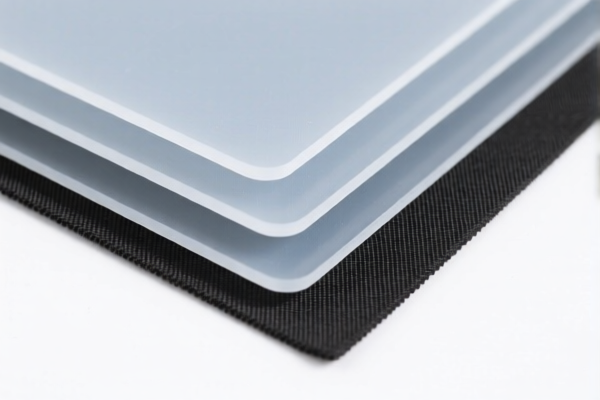
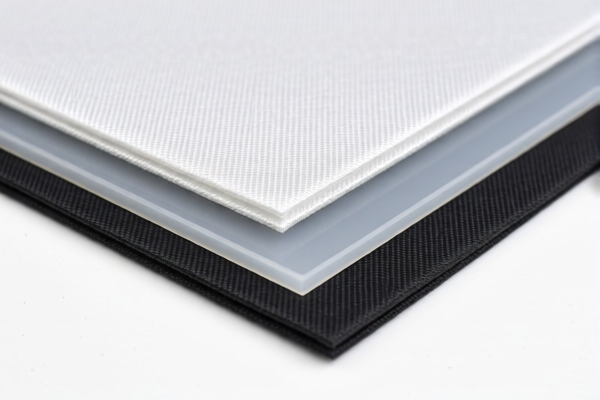
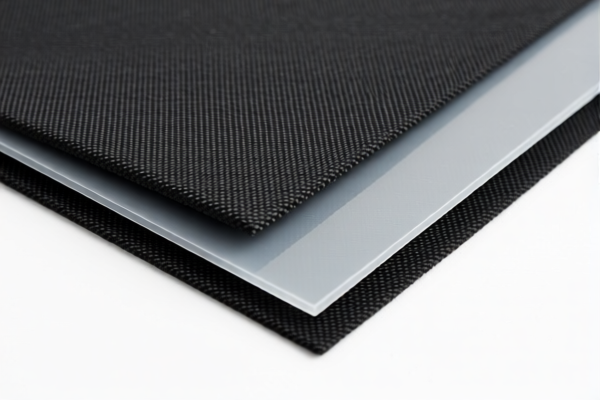
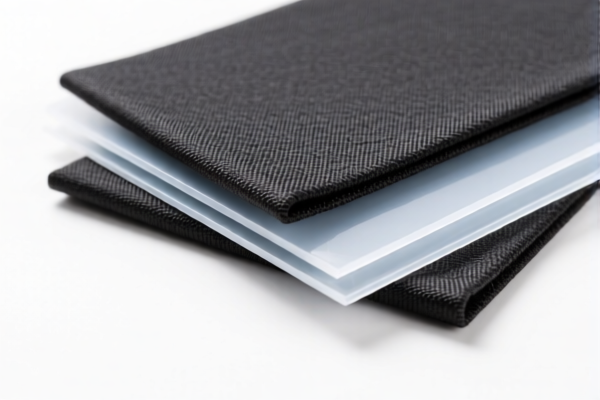
AI Analysis
🛠️ Lightweight Textile Reinforced Plastic Sheets (Belting & Belts for Machinery)
🌐 HS Code Reference & Customs Clearance Guide | 2026 Latest Tariff Analysis | Professional Clearance Strategy
📌 I. Product Definition & Classification: What Exactly Are These "Sheets"?
"Lightweight Textile Reinforced Plastic Sheets" is a descriptive term rather than a strict statutory name. In the context of international trade and the Harmonized System (HS), such products fall under Heading 3926 (Other articles of plastics and articles of other materials of headings 3901 to 3914).
However, the specific classification depends heavily on the structure and intended use of the product. If the "sheet" functions as a transmission element, conveyor, or reinforcement strip for machinery, it is classified as "Belting and belts, for machinery."
⚠️ Key Distinction:
- If the product is a flat sheet used for packaging, insulation, or general plastic molding → It does not fall under these specific HS codes.
- If the product is a belt, strip, or reinforced membrane designed for transmission, conveyance, or reinforcement in machinery → It falls under 3926.90.5x.
- The critical factor is the dominant fiber type (Man-made vs. Vegetable) in the textile reinforcement.
📦 II. HS Code Classification Details (2026 Latest Tariff Authority Comparison)
Based on the provided data, the product is classified into one of two specific subheadings depending on the textile composition. Both share the same tax structure.
| HS Code | Product Description | Key Classification Criteria | Textile Dominance |
|---|---|---|---|
3926.90.57.00 |
Other articles of plastics: Belting and belts, for machinery: Containing textile fibers: With textile components in which man-made fibers predominate by weight over any other textile fiber | Reinforced plastic belts where synthetic fibers (e.g., Polyester, Nylon, Aramid) are the primary textile component by weight. | Man-made (>50% by weight) |
3926.90.56.00 |
Other articles of plastics: Belting and belts, for machinery: Containing textile fibers: With textile components in which vegetable fibers predominate by weight over any other textile fiber | Reinforced plastic belts where natural plant-based fibers (e.g., Cotton, Hemp, Jute) are the primary textile component by weight. | Vegetable (>50% by weight) |
🔍 Critical Note:
- The term "Sheets" in your input might be misleading. If these are flat sheets not used as belts/belts for machinery, they may fall under different codes (e.g., 3920.99).
- However, strictly adhering to the provided<DATA>, we assume the product functions as "Belting and belts for machinery."
- The distinction between57and56is purely based on the weight percentage of man-made vs. vegetable fibers in the textile reinforcement.
💰 III. 2026 Latest Tariff Rate Details (Detailed Breakdown)
✅ Applicable Country: United States (US)
✅ Origin: China (CN)
✅ Effective Time: As per current tariff schedules
🎯 1. HS Code 3926.90.57.00 — Belts with Predominant Man-Made Fibers
| Item | Content |
|---|---|
| Description | Belting and belts for machinery containing textile fibers, with man-made fibers predominating by weight. |
| Base Duty (MFN) | 0.0% |
| Additional Duty (Section 301/IEEPA) | 0.0% |
| Total Effective Tax Rate | 0.0% |
| Tax Calculation | CIF Value × 0% = $0.00 |
| De Minimis Applicability | N/A (0% rate makes de minimis irrelevant for duty costs, but compliance still required) |
| Legal Basis Path | USITC:3926.90.57.00 → Tariff Schedule: 3926 |
📌 Explanation:
- Unlike many electronics or steel products, plastic belting materials currently benefit from a 0% duty rate under the current dataset provided.
- No additional Section 301 tariffs or IEEPA surcharges are listed for this specific subheading in the provided data.
- This represents a highly competitive duty rate compared to many other plastic articles (which can range from 3% to 6.5% base + potential add-ons).
🎯 2. HS Code 3926.90.56.00 — Belts with Predominant Vegetable Fibers
| Item | Content |
|---|---|
| Description | Belting and belts for machinery containing textile fibers, with vegetable fibers predominating by weight. |
| Base Duty (MFN) | 0.0% |
| Additional Duty (Section 301/IEEPA) | 0.0% |
| Total Effective Tax Rate | 0.0% |
| Tax Calculation | CIF Value × 0% = $0.00 |
| De Minimis Applicability | N/A |
| Legal Basis Path | USITC:3926.90.56.00 → Tariff Schedule: 3926 |
📌 Explanation:
- Identical tax treatment to the man-made fiber variant.
- Vegetable fiber belts are often used in food processing or specific industrial applications where synthetic fibers are undesirable.
- The 0% rate encourages the use of natural fiber reinforcements in certain machinery belts.
🛠️ IV. Customs Clearance Practical Advice (Risk Mitigation & Optimization)
✅ 1. Documentation Checklist (Mandatory)
| Document | Required? | Purpose |
|---|---|---|
| ✅ Detailed Product Specification | ✔️ | Must explicitly state: "Plastic Reinforced Belting" and list the textile components. |
| ✅ Fiber Composition Statement | ✔️ | Crucial: Must provide a lab test or manufacturer declaration stating the weight percentage of man-made vs. vegetable fibers to determine 57 vs. 56. |
| ✅ Product Photos | ✔️ | Show cross-section to prove it is a "belt/strip" structure, not a flat sheet for other uses. |
| ✅ Intended Use Declaration | ✔️ | Confirm use in "Machinery" (e.g., conveyor belts, transmission belts). If used for packaging, this HS code is wrong. |
| ✅ Commercial Invoice & Packing List | ✔️ | Ensure description matches HS code: "Plastic Belt, Polyester Reinforced, for Industrial Machinery". |
✅ 2. Classification Strategy (Key Tips)
🔥 "Verify Fiber Weight, Confirm Machinery Use!"
| Scenario | Correct HS Code | Risk if Misclassified |
|---|---|---|
| Synthetic Reinforced (Polyester/Nylon) | 3926.90.57.00 |
Misclassifying as 56 may lead to audits if fiber tests are performed. |
| Natural Reinforced (Cotton/Hemp) | 3926.90.56.00 |
Misclassifying as 57 may lead to duties if the origin rules differ (though both are 0% here, accuracy prevents delays). |
| General Plastic Sheet (Non-Belt) | ❌ Neither | If the product is a flat sheet for packaging, it should likely be under 3920 or 3921. Using 3926 leads to misdeclaration penalties. |
| Textile Belt without Plastic Coating | ❌ Neither | Would fall under Chapter 59 (Impregnated Textile Fabrics). |
📌 Important:
- The term "Lightweight" is marketing language. Customs looks at physical structure and function.
- If the "sheet" is rigid and used for structural plastic parts, it may fall under 3926.90.99.00 (Other), which may have different duties. Do not use 3926.90.5x for rigid structural plates.
✅ 3. Special Circumstances & Compliance
| Situation | Recommendation |
|---|---|
| Mixed Fiber Content | If man-made and vegetable fibers are present, calculate the total weight. If man-made > 50%, use 57. If vegetable > 50%, use 56. |
| Non-Machinery Use | If the belt is for automotive applications (not "machinery" in the broad industrial sense), verify if 8708.99 (Auto parts) or 5910 (V-belts) is more appropriate. |
| Plastic Content Verification | Ensure the product is primarily plastic (Headings 3901-3914). If it is mostly textile with plastic coating, it may fall under Chapter 59. |
🌍 V. Global Market Comparison (2026 Context)
| Country/Region | Recommended HS Code | Estimated Duty | Notes |
|---|---|---|---|
| 🇺🇸 USA | 3926.90.57.00 / 3926.90.56.00 |
0.0% | No additional tariffs for this specific code in provided data. |
| 🇨🇳 China (Import) | 3926.90.57.00 | ~6.5% - 10% | Check local tariff schedule for import duties. |
| 🇪🇺 EU | 3926.90.57 | ~4.0% - 6.5% | Standard EU duty for plastic articles. |
| 🇬🇧 UK | 3926.90.57 | ~4.0% - 6.5% | Post-Brexit tariff schedule aligns closely with EU. |
📌 Conclusion:
- The USA offers a 0% duty rate for these specific textile-reinforced plastic belting products, making them highly competitive for import.
- Ensure the product description on the invoice clearly states "For Machinery" to justify the 3926 classification.
📌 VI. Common Errors & Pitfalls (Lessons Learned)
❌ Error 1: Classifying flat plastic sheets as "Belting" |
👉 Consequence: If the sheet is not used for machinery transmission/conveyance, customs may reject the classification and assign a higher duty code (e.g., 3920.99).
❌ Error 2: Ignoring Fiber Weight Percentage |
👉 Consequence: Incorrect HS code (56 vs. 57) may lead to audits or delays if the importer cannot provide proof of fiber composition.
❌ Error 3: Using "Sheets" in the Description without Clarification |
👉 Consequence: Ambiguity. Customs may interpret "Sheets" as packaging material (Chapter 39.20/21) rather than belting. Use "Reinforced Belting Strip" or "Plastic Belt" in the description.
✅ Correct Practice:
"Industrial Plastic Reinforced Belt, 10mm Width, Polyester (Man-Made) Reinforced, for Conveyor Machinery, Model ABC"
🎯 VII. Conclusion: Precision in Classification Saves Time & Money
🎯 Key Takeaways:
🔹 "Belting for Machinery" is the Key: Ensure the product is used in machinery, not general packaging.
🔹 "Fiber Weight" Determines the Code: >50% Man-Made =57.00; >50% Vegetable =56.00.
🔹 "0% Duty" is a Benefit: Take advantage of the 0% tariff but ensure full compliance to avoid penalties.
🔹 "Describe Precisely": Avoid vague terms like "Sheets" in favor of "Belting" or "Reinforced Belt."
📌 Pro Tip:
If your product is a hybrid (e.g., plastic sheet with textile reinforcement but not a "belt"), consult a customs broker. It might fall under 3921.10 (Plastic sheets with reinforcement) or 5903 (Textile with plastic impregnation), which have different duty structures.
📣 Action Item:
📞 Verify Fiber Composition: Obtain a laboratory report on textile weight percentages.
📄 Update Invoice Description: Change "Lightweight Sheets" to "Reinforced Plastic Belting for Machinery."
🚀 Leverage 0% Duty: Submit accurate documentation to enjoy the 0% tariff rate.
✨ Professional Clearance, Start with Accurate Classification!
💼 Every percentage point matters in global trade!
Customer Reviews
About HS Code Classification
The Harmonized System (HS) is an internationally standardized nomenclature developed by the World Customs Organization (WCO) to classify traded products. Over 200 countries use the HS system as the basis for customs tariffs, trade statistics, and import/export regulations.
Each HS code follows a hierarchical structure:
- Chapter (2 digits) — Broad category of goods (e.g., Chapter 84: Machinery and Mechanical Appliances)
- Heading (4 digits) — More specific grouping within the chapter
- Subheading (6 digits) — Internationally standardized breakdown, used by all WCO member countries
- National subdivisions (8-10 digits) — Country-specific extensions for further classification, such as US HTSUS 10-digit codes
Correct HS code classification is essential for smooth customs clearance, accurate duty payment, and compliance with trade regulations. Misclassification can lead to customs delays, overpayment of duties, or penalties.
When importing from CN to US, the applicable tariff rates may include:
- Most-Favored-Nation (MFN) rate — The standard duty rate applied to WTO members
- General rate — Applied to countries without trade agreements
- Trade remedy duties — Additional tariffs such as Section 301 (anti-dumping), Section 232 (national security), or countervailing duties
The information provided on this page is for reference purposes only. For official classification, please consult with your local customs authority or a licensed customs broker.