Lightweight Vegetable Fiber Plastic Boards
CN → US| HS Code | Tariff Rate | Origin | Destination | Doc |
|---|---|---|---|---|
| 4823908000 | 35.0% | CN | US | Official Doc |
| 4823902000 | 35.0% | CN | US | Official Doc |
Product Images
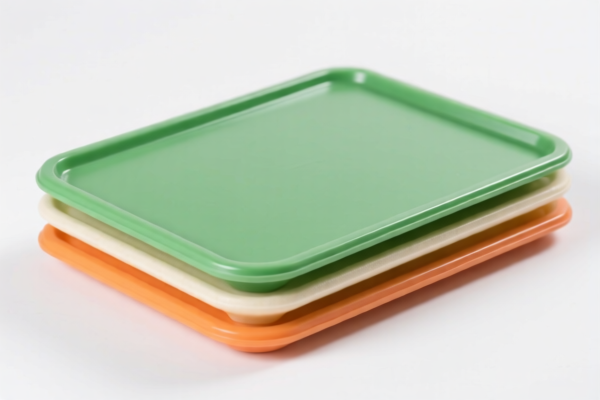
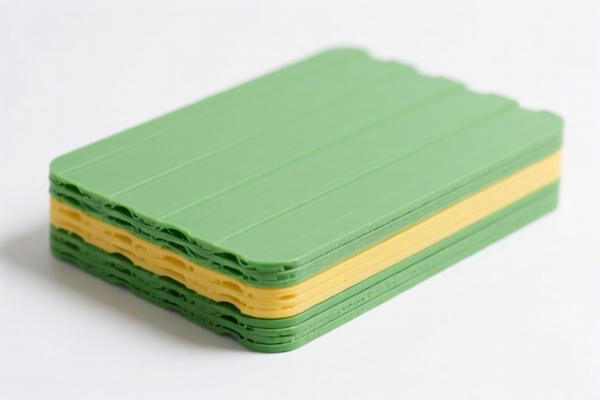
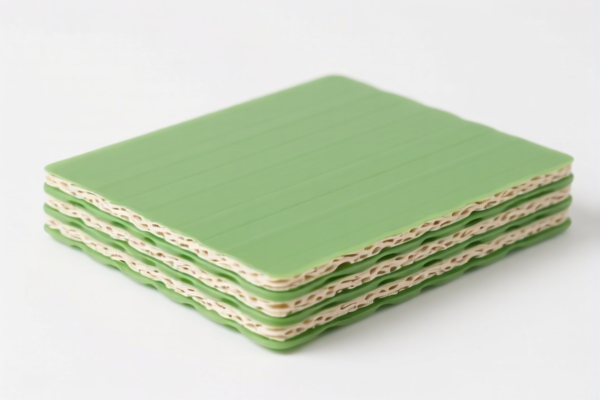
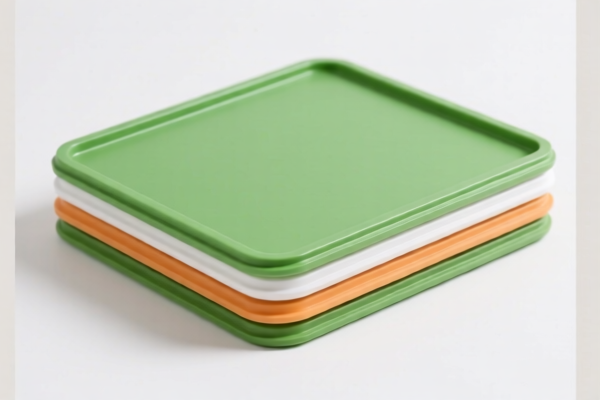
AI Analysis
🌿 Lightweight Vegetable Fiber Plastic Boards (Composite Boards)
🌐 HS Code Reference & Customs Clearance Guide | 2026 Latest Tariff Analysis | Professional Customs Strategy
📌 I. Product Definition & Classification: Do You Truly Understand "Vegetable Fiber Plastic Boards"?
"Lightweight Vegetable Fiber Plastic Boards" typically refer to composite materials made from natural plant fibers (such as wood flour, bamboo dust, or agricultural residues) mixed with thermoplastic resins (such as PE, PP, or PVC). In international trade, these are not classified as simple "wood products" or pure "plastics," but rather as "Articles of Paper Pulp, Paper, Paperboard, Cellulose Wadding or Webs of Cellulose Fibers" if they meet specific structural criteria (specifically involving paper pulp/matrix integration) or more commonly under Heading 48 for paper-based composites or Chapter 39 for plastics.
However, based strictly on the provided , the classification points directly to Chapter 48 (Paper and Paperboard), specifically focusing on "Other articles of paper pulp... cut to size or shape." This implies the product is likely a Honeycomb Paper Board, Papier-mâché board, or a composite board where the paper/pulp matrix is dominant and it has been cut to a specific shape.
⚠️ Key Distinction Point: - If the board is primarily solid plastic with fiber fillers → It usually falls under Chapter 39 (Plastics), not in the provided data. - If the board is Paper-based/Honeycomb/Papier-mâché with fiber reinforcement or surface coating → It falls under Chapter 48, which matches the . - Crucial for this analysis: We are classifying based on the provided HS codes: 4823.90.80.00 and 4823.90.20.00.
📦 II. HS Code Classification Details (Based on Provided )
| HS Code | Product Description | Applicable Scenario | Tax Rate (US/CN) |
|---|---|---|---|
4823.90.80.00 |
Other paper, paperboard, cellulose wadding and webs of cellulose fibers, cut to size or shape; other articles... : Other: Gaskets, washers and other seals | Board cut into specific shapes for sealing, packaging inserts, or non-structural components. | 25.0% |
4823.90.20.00 |
Other paper, paperboard, cellulose wadding and webs of cellulose fibers, cut to size or shape; other articles... : Other: Of papier-mâché | Boards made from pulped paper/fiber mixed with binders (mâché), often lightweight and molded. | 25.0% |
🔍 Key Insight: - Both codes in the provided data carry a 25% Total Tax Rate (0% Base + 25% Additional). - The distinction lies in the form and material: - 4823.90.20.00: Specifically for Papier-mâché boards. If your "vegetable fiber plastic board" is essentially molded pulp or paper-mâché composite, this is the correct code. - 4823.90.80.00: A "catch-all" for other paper/board articles. If the board is not papier-mâché but is cut to size (e.g., honeycomb cores, laminated paper boards), this code applies.
💰 III. 2026 Latest Tariff Rate Breakdown (Including Additional Taxes)
✅ Applicable Country: USA (US) ✅ Origin: China (CN) ✅ Effective Date: Current Trade Policies (Section 301 / IEEPA Context)
🎯 1. 4823.90.80.00 — Other Paper/Board Articles (e.g., Cut-to-Shape Seals/Composites)
| Item | Content |
|---|---|
| Base Tariff | 0% (ad valorem) |
| Additional Tariff (Section 301) | +25% |
| Total Tax Rate | 25.0% |
| Tax Calculation | CIF Value × 25% |
| De Minimis Exemption | ❌ Not Applicable (Section 301 tariffs apply to de minimis shipments for China origin in many contexts, or strictly enforced) |
| Legal Basis Path | HTSUS:4823.90.80.00 → Section 301 Footnote |
📌 Explanation: - The "25.0%" total tax is derived from the 0% base rate plus a 25% additional duty imposed under US trade laws (likely Section 301) on specific Chinese-origin goods. - This is a high tariff. Importers must factor this into landed cost calculations.
🎯 2. 4823.90.20.00 — Papier-Mâché Articles
| Item | Content |
|---|---|
| Base Tariff | 0% (ad valorem) |
| Additional Tariff (Section 301) | +25% |
| Total Tax Rate | 25.0% |
| Tax Calculation | CIF Value × 25% |
| De Minimis Exemption | ❌ Not Applicable |
| Legal Basis Path | HTSUS:4823.90.20.00 → Section 301 Footnote |
📌 Note: - Even though the base rate is 0%, the 25% surcharge makes the effective duty significant. - "Papier-mâché" is broadly interpreted in customs to include molded fiber products. If your board is a molded plant fiber composite, this code is precise.
🛠️ IV. Customs Clearance Practical Advice (Avoiding Pitfalls)
✅ 1. Documentation Checklist (Mandatory)
| Document | Required | Description |
|---|---|---|
| ✅ Product Specification Sheet | ✔️ | Must detail: Material composition (e.g., "70% bamboo fiber, 30% PLA plastic"), dimensions, weight, and manufacturing process (molded vs. laminated). |
| ✅ Material Safety Data Sheet (MSDS) | ✔️ | Especially if the "plastic" component involves chemical binders. |
| ✅ Certificate of Origin (CO) | ✔️ | Proves China origin. If from a non-China country, 25% tariff may not apply. |
| ✅ Commercial Invoice | ✔️ | Must clearly state: "Vegetable Fiber Composite Board, Cut to Size, HS Code 4823.90.80.00" |
| ✅ Packing List | ✔️ | List net/gross weight and number of pieces. |
| ✅ Photos of Product | ✔️ | Show texture, cut edges, and any branding/labeling. |
✅ 2. Declaration Strategy (Critical Tips)
🔥 “Be Specific, Avoid Generic Terms!”
| Situation | Correct Declaration | Incorrect Declaration | Consequence |
|---|---|---|---|
| Molded Plant Fiber Board | "Papier-mâché board, molded, cut to size" → 4823.90.20.00 |
"Plastic Board" | Risk of misclassification to Chapter 39 (different duties) or detention. |
| Honeycomb Paper Core | "Honeycomb paper board, cut to size" → 4823.90.80.00 |
"Fiberboard" | Too vague; may trigger manual inspection. |
| Laminated Wood-Plastic | "Wood-plastic composite board" | HS Code 4823 | Wrong Chapter! Likely belongs to Chapter 39 (Plastics). If declared under 4823, it will be rejected for material mismatch. |
⚠️ Critical Warning: - If your product is >50% plastic by weight and not primarily a paper/pulp structure, it may NOT fit under Chapter 48. It might belong to 3926.90 (Other articles of plastic). - However, since the provided data only contains Chapter 48 codes, we assume the product is primarily paper/pulp-based (e.g., honeycomb, molded pulp, papier-mâché). - Do not misdeclare a plastic-heavy board as "paper" to avoid higher plastic tariffs; customs may seize goods for fraud.
✅ 3. Special Circumstances
| Situation | Handling Advice |
|---|---|
| Mixed Materials | If the board has a metal or hard plastic core, it may not qualify as "paper/pulp article." Consider reclassifying to Chapter 39 or 44 (Wood). |
| Origin Non-Chinese | If manufactured in Vietnam, Mexico, or Thailand, the 25% additional tariff may not apply. Provide a valid Certificate of Origin from that country. |
| Small Samples | If value is very low, check if the US de minimis ($800) exemption still applies to Section 301 goods for your specific carrier/platform (TikTok, Temu, etc., often face stricter scrutiny). |
🌍 V. Global Market Comparison (2026 Latest)
| Country/Region | Recommended HS Code | Estimated Duty (China Origin) | Certification | Notes |
|---|---|---|---|---|
| 🇺🇸 USA | 4823.90.20.00 / 4823.90.80.00 |
25.0% | None specific | High tariff due to Section 301. |
| 🇨🇳 China | 4823.90.20.00 / 4823.90.80.00 |
0% - 5% | None | Low import duty. |
| 🇪🇺 EU | 4823.90.20.00 / 4823.90.80.00 |
~3% - 6% | CE (if applicable) | No Section 301 equivalent. |
| 🇨🇦 Canada | 4823.90.80.00 |
0% (if under CUSMA) | None | Check for USMCA/CUSMA eligibility if transiting. |
📌 Conclusion: - USA is the most expensive market due to the 25% surcharge. - Consider supply chain diversification if the 25% tariff erodes profit margins.
📌 VI. Common Mistakes & Pitfalls (Lessons Learned)
❌ Mistake 1: Calling it "Plastic Board" when it’s actually Papier-Mâché/Honeycomb Paper. 👉 Result: Customs may reclassify to Chapter 39, leading to different duties and potential penalties for incorrect description.
❌ Mistake 2: Not declaring "Cut to Size" or "Specific Shape." 👉 Result: Unclear classification. Customs may classify under "Uncut Paper" (different duty) or reject the entry.
❌ Mistake 3: Assuming "Vegetable Fiber" means Chapter 44 (Wood). 👉 Result: If it’s molded pulp or papier-mâché, it’s Chapter 48. If it’s wood veneer, it’s Chapter 44. Misclassification causes delays.
✅ Correct Approach:
“Molded Bamboo Fiber Board, Papier-Mâché Type, Cut to 12x12 inches, HS Code 4823.90.20.00”
🎯 VII. Conclusion: Professional Declaration, Cost Control
🎯 Remember:
🔹 “Material Determines Chapter” – Is it Plastic (Ch. 39) or Paper/Pulp (Ch. 48)? 🔹 “China Origin = 25% Surcharge” – Budget for this in your landed cost. 🔹 “Be Specific” – Vague descriptions lead to audits and delays.
📌 Tip: If your product is >50% plastic, investigate Chapter 39 codes. The provided data is for paper/pulp-based composites. Using the wrong chapter can lead to serious customs violations.
📣 Immediate Action:
📞 Consult a licensed customs broker to verify if your specific "Vegetable Fiber Plastic Board" qualifies as Papier-Mâché (4823.90.20.00) or Other Paper Article (4823.90.80.00) based on material composition. 🚀 Ensure accurate documentation to avoid 25% surprise tariffs!
✨ Professional Customs, From Precise Classification Onwards! 💼 Your Every Cent of Cost, Deserves Precise Calculation!
Customer Reviews
About HS Code Classification
The Harmonized System (HS) is an internationally standardized nomenclature developed by the World Customs Organization (WCO) to classify traded products. Over 200 countries use the HS system as the basis for customs tariffs, trade statistics, and import/export regulations.
Each HS code follows a hierarchical structure:
- Chapter (2 digits) — Broad category of goods (e.g., Chapter 84: Machinery and Mechanical Appliances)
- Heading (4 digits) — More specific grouping within the chapter
- Subheading (6 digits) — Internationally standardized breakdown, used by all WCO member countries
- National subdivisions (8-10 digits) — Country-specific extensions for further classification, such as US HTSUS 10-digit codes
Correct HS code classification is essential for smooth customs clearance, accurate duty payment, and compliance with trade regulations. Misclassification can lead to customs delays, overpayment of duties, or penalties.
When importing from CN to US, the applicable tariff rates may include:
- Most-Favored-Nation (MFN) rate — The standard duty rate applied to WTO members
- General rate — Applied to countries without trade agreements
- Trade remedy duties — Additional tariffs such as Section 301 (anti-dumping), Section 232 (national security), or countervailing duties
The information provided on this page is for reference purposes only. For official classification, please consult with your local customs authority or a licensed customs broker.