Lightweight Writing Paper Sheets
CN → US| HS Code | Tariff Rate | Origin | Destination | Doc |
|---|---|---|---|---|
| 4801000140 | 35.0% | CN | US | Official Doc |
| 4805919000 | 35.0% | CN | US | Official Doc |
| 4802541000 | 35.0% | CN | US | Official Doc |
| 4802551000 | 35.0% | CN | US | Official Doc |
| 4801000120 | 35.0% | CN | US | Official Doc |
| 4805917000 | 35.0% | CN | US | Official Doc |
Product Images

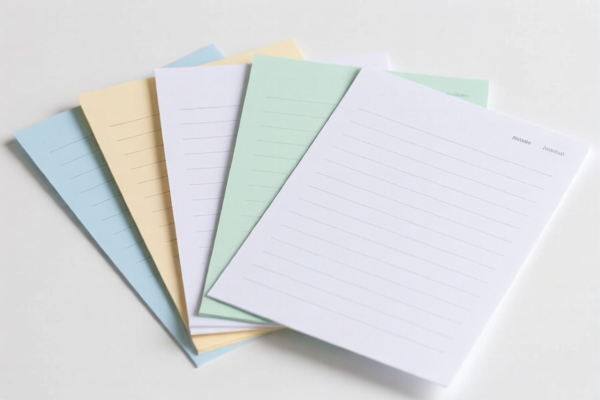
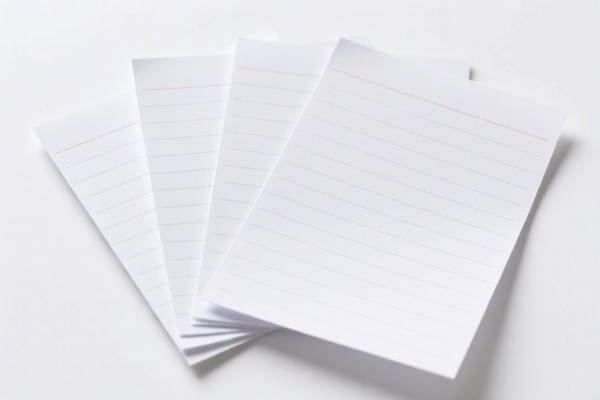
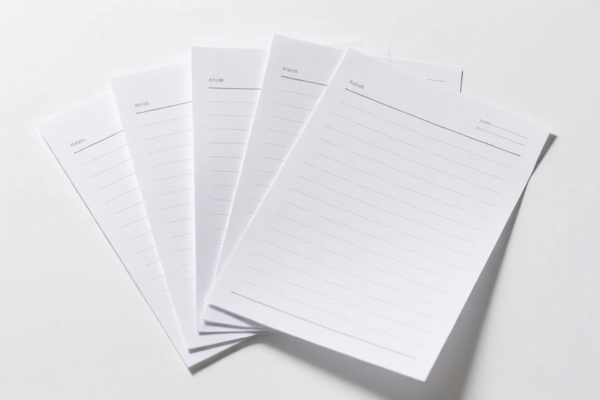
AI Analysis
📄 Lightweight Uncoated Writing Paper Sheets
🌐 HS Code Reference & Customs Clearance Guide | 2026 Latest Tariff Analysis | Professional Customs Strategy
📌 I. Product Definition & Classification: Do You Really Understand "Lightweight Writing Paper"?
"Lightweight writing paper sheets" refer to cellulose-based products primarily used for writing, printing, or office purposes. They are characterized by a smooth, uncoated surface and a low grammage (weight per square meter).
In international trade, these sheets are classified based on three critical factors: 1. Material Structure: Pure wood pulp or mixed fiber, without coating or glazing. 2. Usage: Specifically designated for writing or printing (not for industrial wrapping, technical drawing, or newspaper). 3. Weight (Grammage): Typically ranges from 15 g/m² to 150 g/m².
⚠️ Key Distinction Point:
- If the paper is coated, glazed, or impregnated → It falls under different headings (e.g., 4805, 4810).
- If it is newsprint (very low quality, high pulp content) → It may fall under 4801.
- If it is standard uncoated writing/printing paper → It falls under 4802.
📦 II. HS Code Classification Details (2026 Latest Tariff Authority Comparison)
Based on the provided data, here are the 6 specific HS Codes applicable to "lightweight uncoated writing paper," categorized by their precise technical definitions.
| HS Code | Product Description | Key Characteristics | Target Use Case |
|---|---|---|---|
4801.00.01.40 |
Light newsprint/writing paper | Paper material, fits newsprint/writing category | High-volume, lower-quality writing/printing |
4805.91.90.00 |
Light uncoated writing paper | Uncoated, grammage inferred 30–150 g/m² | General office printing, high-quality documents |
4802.54.10.00 |
Light uncoated writing paper | Explicitly "uncoated" & "writing" feature | Standard A4 copy paper, stationery |
4802.55.10.00 |
Light uncoated writing paper | Uncoated material + Writing purpose | Premium writing paper, letterheads |
4801.00.01.20 |
Light writing paper | Paper material, light weight, uncoated | Basic writing tasks, school supplies |
4805.91.70.00 |
Light uncoated writing paper | Uncoated, grammage inferred 15–30 g/m² | Ultra-light paper, tissue-like paper products, tracing |
🔍 Critical Reminder:
- All these codes apply to Uncoated paper. If any surface coating (clay, polymer) is added, these codes are invalid. - The distinction between4801(Newsprint/Light) and4802/4805(Writing/Printing) often lies in the fiber quality and opacity.4802usually denotes higher quality for writing/printing, while4801may cover lighter, lower-opacity variants.
💰 III. 2026 Latest Tariff Rate Details (Including Surtaxes & Policy Add-ons)
✅ Applicable Country: United States (US)
✅ Country of Origin: China (CN)
✅ Effective Date: From November 10, 2025 (and subsequent imports)
All 6 HS Codes listed below share the exact same tariff structure due to current trade policies.
🎯 Universal Tariff Breakdown for All Listed HS Codes
| Item | Content |
|---|---|
| Base Tariff | 0.0% (Ad Valorem) |
| Section 301 Surtax | +25.0% (USITC Footnote related to Chinese goods) |
| Section 122 Tariff | +10.0% (Specific additional duty on certain paper products) |
| Total Effective Tax Rate | 35.0% |
| Tax Calculation | CIF Value × 35% |
| De Minimis Exemption Eligible? | ❌ NO (deny_de_minimis) |
| Legal Authority Path | Base Tariff: 0% → Section 301: +25% → Section 122: +10% |
📌 Explanation:
- "Base Tariff 0%": Standard MFN (Most Favored Nation) rate for many paper products is zero.
- "Section 301 Surtax 25%": Imposed under the Trade Act of 1974, targeting Chinese manufacturing imports.
- "Section 122 Tariff 10%": An additional layer on specific paper categories to protect domestic paper producers.
- Combined 35%: This is a high-cost category. Unlike electronics where de minimis (under $800) might apply, paper products are explicitly excluded from this exemption. Every shipment is subject to full customs duty.
🛠️ IV. Customs Clearance Practical Advice (Real-World Pitfall Avoidance)
✅ 1. Required Documentation Checklist (Missing any = Delay)
| Document | Mandatory? | Explanation |
|---|---|---|
| ✅ Product Specification Sheet | ✔️ | Must explicitly state "Uncoated," "Writing/Printing Use," and Grammage (g/m²). |
| ✅ Composition Analysis Report | ✔️ | Confirm fiber content (wood pulp vs. recycled) to differentiate between 4801 and 4802/4805. |
| ✅ Product Photos | ✔️ | Show texture (uncoated surface) and packaging. Avoid images that look like coated photo paper. |
| ✅ Commercial Invoice | ✔️ | Must clearly describe goods as "Uncoated Writing Paper" and include HS Code. |
| ✅ Packing List | ✔️ | Detail weight and dimensions. |
| ✅ Origin Certificate (CO) | ✔️ | Essential to prove Origin = China (to apply the specific surtax rules correctly, or verify if any exemptions apply). |
✅ 2. Declaration Tips (Key Mantra)
🔥 "Uncoated is Key, Grammage Defines Sub-code, Name Must Be Precise!"
| Scenario | Correct Declaration | Wrong Practice |
|---|---|---|
| Standard A4 Copy Paper | 4802.54.10.00 or 4802.55.10.00 |
Calling it "Office Supplies" (vague) → Audit risk |
| Tracing Paper / Tissue-like | 4805.91.70.00 (15-30 g/m²) |
Misdeclaring as standard copy paper → Wrong HS Code |
| High-Volume Newsprint | 4801.00.01.20 or 4801.00.01.40 |
Declaring as "Writing Paper" → Potential classification error |
| Coated Art Paper | NOT 4802/4805 | Using these codes for coated paper → Refusal of Entry |
⚠️ Crucial: Do NOT split a single shipment of writing paper into multiple HS codes (e.g., half 4802, half 4805) unless they are physically distinct and separately packaged with different specs. Customs expects a unified description for homogeneous cargo.
✅ 3. Special Cases
| Situation | Handling Advice |
|---|---|
| Grammage Borderline (29 vs 31 g/m²) | The difference between 4805.91.70.00 (<30 g/m²) and 4805.91.90.00 (30-150 g/m²) is critical. Provide lab test results to justify the exact grammage. |
| Mixed Batches | If a container has both newsprint (4801) and premium writing paper (4802), declare separately. Mixing them complicates duty calculation. |
| Recycled Paper | If made from recycled pulp, ensure the description highlights "Recycled" to avoid misclassification as virgin wood pulp, which may affect regulatory checks. |
🌍 V. Global Market Comparison (2026 Latest)
| Country/Region | Recommended HS Code | Tariff (China Origin) | Certification | Notes |
|---|---|---|---|---|
| 🇺🇸 USA | 4802.54.10.00 / 4805.91.90.00 |
35% (0% + 25% + 10%) | No specific tech cert | Highest duty rate. No de minimis. |
| 🇨🇳 China | 4802.54.10.00 |
5-6% | CCC (if applicable) | Lower cost for domestic sales. |
| 🇪🇺 EU | 4802.55.00 |
0-6.5% | CE (if printed on) | No Section 301/122 equivalent. |
| 🇬🇧 UK | 4802.55.00 |
0-6.5% | UKCA | Post-Brexit rules apply. |
| 🇯🇵 Japan | 4802.55.00 |
0% | FSC (if eco-friendly) | Generally low duty for paper. |
📌 Conclusion:
- USA is the most expensive market for Chinese writing paper due to the 35% combined surtax.
- EU and Japan offer significant tariff advantages (0-6.5%).
- Strategy: If exporting to the US, consider value-add processing in a third country (e.g., Vietnam) to potentially change origin rules, or absorb the 35% cost in pricing.
📌 VI. Common Errors & Pitfalls (Lessons Learned)
❌ Error 1: Misclassifying Coated Paper as Uncoated
👉 Consequence: HS Code error → Seizure or heavy penalty. Coated paper has different duties and regulatory requirements.
❌ Error 2: Ignoring Grammage
👉 Consequence: Declaring 35 g/m² paper as <30 g/m² (4805.91.70.00) instead of 30-150 g/m² (4805.91.90.00). While the tax rate is the same (35%), incorrect HS codes trigger audits and delays.
❌ Error 3: Assuming De Minimis Applies
👉 Consequence: Small shipments (<$800) are NOT exempt from the 35% tariff. You must pay duty even on small e-commerce orders.
❌ Error 4: Vague Description "Paper Sheets"
👉 Consequence: Customs may classify under a higher duty or restricted category. Always specify "Uncoated Writing Paper."
✅ Correct Declaration Example:
"Uncoated Writing Paper, Wood Pulp, 80g/m², 210x297mm, For Office Printing, Model XYZ, Origin China"
🎯 VII. Conclusion: Precise Classification Saves Money!
🎯 Remember the Mantra:
🔹 "Uncoated is King, Grammage Defines the Code, 35% is the US Price!"
🔹 "No De Minimis for Paper, Plan Your Duty Cost in Advance!"
📌 Pro Tip:
If your paper is recycled or has special finishes (embossed, textured), ensure these are clearly documented. While the tariff remains 35%, incorrect documentation can lead to inspections and port delays.
📣 Immediate Action:
📞 Consult a licensed customs broker to confirm the exact grammage and fiber composition.
🚀 Calculate landed cost with 35% duty included in your pricing strategy for the US market.
✨ Professional Customs Clearance Starts with Accurate Classification!
💼 Every percentage point matters in the paper trade!
Customer Reviews
About HS Code Classification
The Harmonized System (HS) is an internationally standardized nomenclature developed by the World Customs Organization (WCO) to classify traded products. Over 200 countries use the HS system as the basis for customs tariffs, trade statistics, and import/export regulations.
Each HS code follows a hierarchical structure:
- Chapter (2 digits) — Broad category of goods (e.g., Chapter 84: Machinery and Mechanical Appliances)
- Heading (4 digits) — More specific grouping within the chapter
- Subheading (6 digits) — Internationally standardized breakdown, used by all WCO member countries
- National subdivisions (8-10 digits) — Country-specific extensions for further classification, such as US HTSUS 10-digit codes
Correct HS code classification is essential for smooth customs clearance, accurate duty payment, and compliance with trade regulations. Misclassification can lead to customs delays, overpayment of duties, or penalties.
When importing from CN to US, the applicable tariff rates may include:
- Most-Favored-Nation (MFN) rate — The standard duty rate applied to WTO members
- General rate — Applied to countries without trade agreements
- Trade remedy duties — Additional tariffs such as Section 301 (anti-dumping), Section 232 (national security), or countervailing duties
The information provided on this page is for reference purposes only. For official classification, please consult with your local customs authority or a licensed customs broker.