Lightweight car tires
CN → US| HS Code | Tariff Rate | Origin | Destination | Doc |
|---|---|---|---|---|
| 4012128019 | 38.4% | CN | US | Official Doc |
| 4011201005 | 39.0% | CN | US | Official Doc |
| 4011205010 | 38.4% | CN | US | Official Doc |
| 4012124015 | 39.0% | CN | US | Official Doc |
Product Images
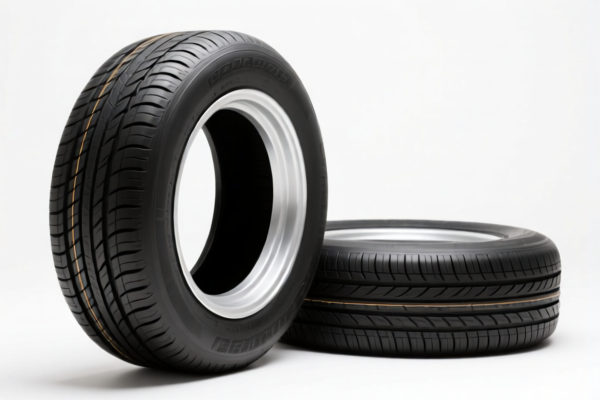
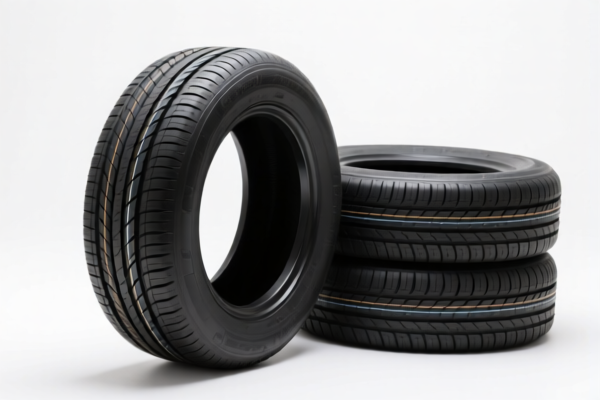
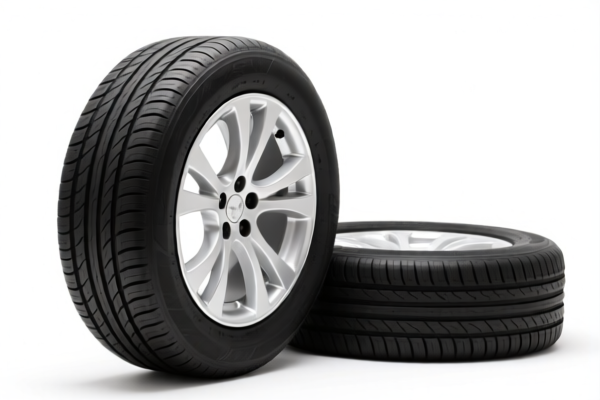
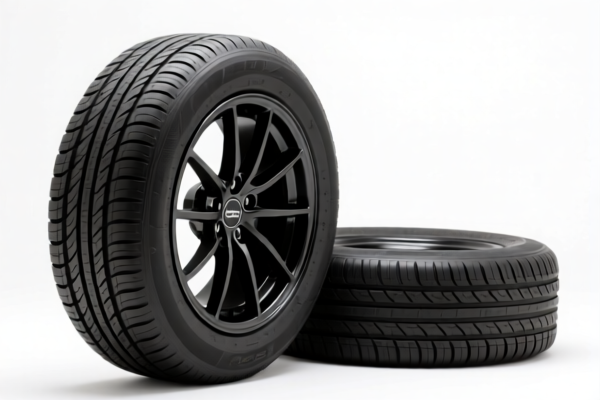
AI Analysis
🚗 Lightweight Car Tires (Automotive Rubber Tires)
🌐 HS Code Reference & Customs Clearance Guide | 2026 Latest Tariff Analysis | Professional Clearance Strategy
📌 I. Product Definition & Classification: Do You Really Understand "Lightweight Car Tires"?
Lightweight car tires are critical safety components for vehicles, specifically designed for light trucks, passenger cars, and similar light-duty vehicles. In international trade, they are classified under Chapter 40 (Rubber and Articles Thereof), specifically Heading 4011.
Key Distinctions: * New vs. Retreaded: The provided data explicitly states "New" (implied by the HS codes and tax structure). Retreaded tires fall under 4012.12/4012.19 but often have different tax treatments. Here, we focus on New Pneumatic Tires. * Application: These tires are specifically for light trucks (Gross Vehicle Weight Rating usually under 4.5 tons or similar national definitions). Tires for heavy trucks (4011.10) or motorcycles (4011.20 is sometimes ambiguous but often linked to light vehicles depending on subheading structure in specific tariff schedules like the US HTS) must be distinguished. The summary notes "Light Truck Tires," which aligns with subheadings under 4011.20 or 4012.12 depending on the specific tariff schedule version (e.g., US HTS 2026).
⚠️ Critical Classification Point:
- If the tire is for light trucks/passenger cars → 4011.20 or 4012.12 series.
- Material is inferred as Rubber (standard for pneumatic tires).
- Do not confuse with bicycle tires (4013.10) or heavy truck tires (4011.10).
📦 II. HS Code Classification Details (2026 Latest Tariff Authority Comparison)
Based on the provided <DATA>, here are the specific HS Codes for Lightweight Car Tires:
| HS Code | Product Description | Application Scenario | Key Feature |
|---|---|---|---|
4012.12.80.19 |
Pneumatic rubber tires, new, for light trucks | Light-duty commercial vehicles, SUVs, Pickups | Specific sub-80 classification for light truck tires |
4011.20.10.05 |
Pneumatic rubber tires, new, for cars or light trucks | Passenger cars, light commercial vans | Standard light truck/car tire classification |
4011.20.50.10 |
Pneumatic rubber tires, new, for cars or light trucks | Same as above, specific size/rim variation | Form and use consistent with light truck tires |
4012.12.40.15 |
Pneumatic rubber tires, new, for light trucks | Light-duty trucks, specific tread pattern/type | Another valid sub-80 classification for light trucks |
🔍 Key Insight:
- All four codes fall under 4011 or 4012.12, which are the primary headings for pneumatic rubber tires.
- The suffixes (.10.05, .50.10, .80.19, .40.15) represent national statistical subdivisions (e.g., US HTS 10-digit codes).
- Despite different last digits, they share the same tax burden in this dataset, indicating they are treated similarly for duty purposes under current trade policies.
💰 III. 2026 Latest Tariff Rate Breakdown (Including Surtaxes & Policy Add-ons)
✅ Applicable Country: United States (US)
✅ Origin: China (CN)
✅ Effective Time: Current (2025-2026 trade policy period)
✅ Product: New Pneumatic Rubber Tires for Light Trucks
🎯 General Tariff Structure for All Listed HS Codes
| Item | Content |
|---|---|
| Base Duty Rate | 3.4% – 4.0% (Ad Valorem) |
| Section 301 Surtax | +25.0% (Added by USITC for Chinese goods) |
| Section 122 / IEEPA Surtax | +10.0% (Additional tariff on Chinese goods) |
| Total Weighted Duty Rate | 38.4% – 39.0% |
| Calculation Basis | CIF Value × Total Rate |
| De Minimis Exemption | ❌ Not Applicable (Tires are excluded from $800 de minimis relief in many cases, or subject to strict valuation) |
| Legal Basis Path | HTS:4011/4012 → USITC:Section301 → IEEPA:Section122 |
📌 Detailed Tax Explanation:
1. Base Tariff (3.4% or 4.0%):
-4012.12.80.19and4011.20.50.10have a lower base rate of 3.4%.
-4011.20.10.05and4012.12.40.15have a slightly higher base rate of 4.0%.
Note: The difference is minimal compared to surtaxes.
- Section 301 Surtax (+25%):
- This is the most significant additional cost. It applies to all Chinese-origin goods in these categories due to trade tensions.
Calculated on the CIF value.
Section 122 / IEEPA Surtax (+10%):
- This is an additional layer of tariff on top of Section 301.
- Often referred to as the "122-clause tariff" in the provided data, likely referencing specific executive orders or trade acts targeting Chinese imports.
Total Rate Calculation Example:
- For HS4012.12.80.19:
3.4% (Base) + 25.0% (301) + 10.0% (122) = 38.4%
- For HS4011.20.10.05:
4.0% (Base) + 25.0% (301) + 10.0% (122) = 39.0%
🛠️ IV. Customs Clearance Practical Advice (Field Pitfall Guide)
✅ 1. Documentation Checklist (Must-Haves)
| Document | Mandatory? | Purpose |
|---|---|---|
| Commercial Invoice | ✔️ | Must clearly state "New Pneumatic Rubber Tires" and HS Code. |
| Packing List | ✔️ | Detail dimensions, weight, and number of tires. |
| Country of Origin Certificate | ✔️ | Critical to prove CN origin (triggers surtaxes). If re-exported, need proof of substantial transformation. |
| Product Specifications | ✔️ | Tread pattern, size (e.g., 205/55R16), load index, speed rating. |
| DOT Compliance Statement | ✔️ | For US import, tires must meet DOT standards (FMVSS 139). |
| Bill of Lading / Air Waybill | ✔️ | Standard shipping document. |
⚠️ Warning:
- Do not understate the value. The 38.4–39.0% tax is significant. Misdeclaration can lead to penalties + back taxes. - Ensure the HS Code is precise. Using a generic "Tires" code may trigger manual examination and delays.
✅ 2. Classification Strategy (Key Tips)
🔥 "Correct HS Code, Avoid Penalties, Accurate Value, Smooth Clearance!"
| Scenario | Recommended Action | Error Consequence |
|---|---|---|
| Light Truck Tires | Use 4012.12.xxxx or 4011.20.xxxx as per exact size/spec |
Misclassifying as passenger car tires may seem okay if tax is same, but incorrectly declared. |
| Retreaded Tires | Do NOT use these codes. Use 4012.19 series. |
Wrong HS → Higher duties or rejection. |
| Bicycle Tires | Use 4013.10. |
Using 4011 for bike tires → Classification Error. |
| Tires with Rims | Declare separately. Tires as 4011, Rims as 8708. |
Combined shipment without separation → Valuation issues. |
✅ 3. Special Considerations
| Situation | Handling Advice |
|---|---|
| High Duty Rate (39%) | Factor this into your landed cost. Consider FTZ (Foreign Trade Zone) entry to defer duty payment. |
| Anti-Dumping/Countervailing Duties (AD/CVD) | Check if specific brands or types fall under AD/CVD orders. The provided data doesn't mention AD/CVD, but it's a critical check. |
| DOT Labeling | Ensure every tire has a visible DOT stamp and ECE marking if applicable. Non-compliant tires are seized. |
| Pre-Clearance Ruling | Apply for a Binding Ruling from CBP if unsure about the specific 10-digit subheading. Saves time and disputes later. |
🌍 V. Global Market Comparison (2026 Latest)
| Country/Region | Recommended HS Code | Base Duty | Additional Surtax | Total Est. Rate | Notes |
|---|---|---|---|---|---|
| 🇺🇸 USA | 4012.12.80.19 etc. |
3.4% – 4.0% | +35% (25% Sec 301 + 10% Sec 122) | 38.4% – 39.0% | Highest effective rate. Strict DOT rules. |
| 🇨🇳 China (Import) | 4011.20 |
10% – 12% | None (if no trade dispute) | ~10-12% | Lower base duty. |
| 🇪🇺 EU | 4011.20 |
~0% – 4.5% | None (unless specific measures) | ~0-5% | No Section 301 equivalent. |
| 🇲🇽 Mexico | 4011.20 |
0% (USMCA) | None | 0% | If originating in NAFTA/USMCA region. |
| 🇨🇦 Canada | 4011.20 |
0% (USMCA) | None | 0% | If originating in NAFTA/USMCA region. |
📌 Conclusion:
- The USA market is the most challenging due to the ~39% total duty rate.
- Competitors in Mexico and Canada have a massive advantage if they source or manufacture within the USMCA zone.
- EU and China have much lower barriers for these goods (assuming no countermeasures).
📌 VI. Common Mistakes & Pitfall Guide (Lessons Learned)
❌ Mistake 1: Ignoring the Section 122 / IEEPA 10% surtax.
👉 Consequence: Underestimating landed cost by 10% → Profit margin erosion.
❌ Mistake 2: Misclassifying Retreaded Tires as New Tires.
👉 Consequence: HS Code error, potential fraud allegation, and higher duties.
❌ Mistake 3: Failing to provide DOT Compliance.
👉 Consequence: Cargo seizure and destruction by US CBP.
❌ Mistake 4: Combining Tires with Rims in one line item without separation.
👉 Consequence: CBP may assign a higher combined duty rate or require complex valuation.
✅ Best Practice:
"Declare 'New Pneumatic Rubber Tires for Light Trucks,' HS Code
4012.12.80.19, Value $X, Origin China. Attach DOT compliance docs."
🎯 VII. Conclusion: Professional Clearance, Cost Optimization
🎯 Remember the Formula:
🔹 HS Code Accuracy → Avoids fines.
🔹 Tax Planning → Accounts for 39% duty.
🔹 Documentation → Ensures DOT and CBP compliance.💡 Pro Tip:
- If you are importing into the US, consider Foreign Trade Zone (FTZ) utilization to defer duty payments until the tires are sold domestically.
- Verify if any AD/CVD cases apply to your specific tire model, as this could add 100%+ in duties.
📣 Immediate Action:
📞 Engage a licensed Customs Broker.
📄 Prepare DOT certification and Country of Origin proof.
📊 Calculate Landed Cost with 38.4–39.0% duty included.
✨ Professional Clearance Starts with Accurate Classification!
💼 Every Percent of Duty Counts!
Customer Reviews
About HS Code Classification
The Harmonized System (HS) is an internationally standardized nomenclature developed by the World Customs Organization (WCO) to classify traded products. Over 200 countries use the HS system as the basis for customs tariffs, trade statistics, and import/export regulations.
Each HS code follows a hierarchical structure:
- Chapter (2 digits) — Broad category of goods (e.g., Chapter 84: Machinery and Mechanical Appliances)
- Heading (4 digits) — More specific grouping within the chapter
- Subheading (6 digits) — Internationally standardized breakdown, used by all WCO member countries
- National subdivisions (8-10 digits) — Country-specific extensions for further classification, such as US HTSUS 10-digit codes
Correct HS code classification is essential for smooth customs clearance, accurate duty payment, and compliance with trade regulations. Misclassification can lead to customs delays, overpayment of duties, or penalties.
When importing from CN to US, the applicable tariff rates may include:
- Most-Favored-Nation (MFN) rate — The standard duty rate applied to WTO members
- General rate — Applied to countries without trade agreements
- Trade remedy duties — Additional tariffs such as Section 301 (anti-dumping), Section 232 (national security), or countervailing duties
The information provided on this page is for reference purposes only. For official classification, please consult with your local customs authority or a licensed customs broker.