Lignosulfonate Composite Dispersant
CN → US| HS Code | Tariff Rate | Origin | Destination | Doc |
|---|---|---|---|---|
| 3824994140 | 39.6% | CN | US | Official Doc |
| 3824999397 | 40.0% | CN | US | Official Doc |
| 3824992900 | 41.5% | CN | US | Official Doc |
| 3824992900 | 41.5% | CN | US | Official Doc |
| 3824992900 | 41.5% | CN | US | Official Doc |
Product Images
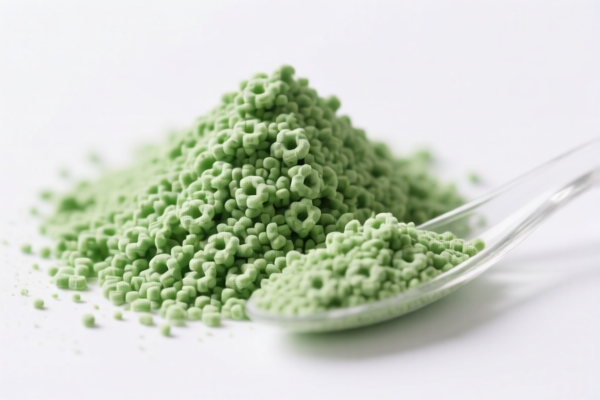
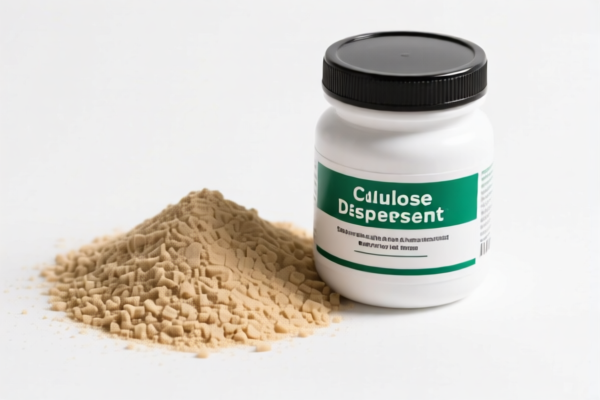
AI Analysis
🧪 Lignosulfonate Composite Dispersant
🌐 HS Code Reference & Customs Clearance Guide | 2026 Latest Tariff Analysis | Professional Entry Strategy
📌 I. Product Definition & Classification: What exactly is "Lignosulfonate"?
Lignosulfonate Composite Dispersant is a chemical product derived from lignin (a polymer found in wood pulp), primarily used in concrete, ceramics, and agricultural chemicals to improve fluidity and stability. In international trade, its classification depends heavily on whether it is considered a "plant-based substance" or a "chemical industrial preparation."
Key Classification Logic: * Plant-Derived Chemicals: If the product is defined strictly as a substance derived from plants (lignin source), it may fall under "Other chemical products" with specific sub-headings for plant origins. * Chemical Preparations: If it is a mixture, compounded, or formulated with other agents to serve a specific function (dispersion), it falls under general chemical preparations.
⚠️ Critical Distinction:
- If classified as a plant-derived substance → HS Code3824.99.41.40
- If classified as a general chemical product/preparation → HS Code3824.99.93.97or3824.99.29.00
📦 II. HS Code Classification Details (2026 Latest Tariff Authority Comparison)
| HS Code | Product Description | Applicable Scenario | Classification Logic |
|---|---|---|---|
3824.99.41.40 |
High-concentration lignosulfonate dispersant | Plant-derived chemical substance | ✅ Falls under plant-source logic (Bottom-of-category fallback for plant chemicals) |
3824.99.93.97 |
High-concentration lignosulfonate dispersant | Chemical industry-related product | ✅ Falls under general chemical logic (Bottom-of-category fallback for chemical products) |
3824.99.29.00 |
Lignosulfonate compound dispersant | Chemical preparation/mixture | ✅ Falls under chemical preparation definition (No material conflict inferred from name) |
3824.99.29.00 |
Lignosulfonate compound dispersant | Chemical preparation/mixture | ✅ No material conflict (Inferred as chemical preparation) |
🔍 Key Reminder:
-3824.99.41.40: Best if the product is marketed/defined strictly as a plant-derived chemical with high lignin concentration.
-3824.99.93.97: Best for high-concentration lignosulfonates where the "chemical industry product" classification is more appropriate.
-3824.99.29.00: Best for compound/mixed dispersants where the specific chemical composition is less critical than its function as a chemical preparation.
💰 III. 2026 Latest Tariff Rate Breakdown (Including Surcharges & Policy Add-ons)
✅ Applicable Country: United States (US)
✅ Origin: China (CN)
✅ Effective Date: 2025+ (Current Trade Policy)
🎯 1. 3824.99.41.40 —— High-Concentration Lignosulfonate (Plant-Derived Logic)
| Item | Content |
|---|---|
| Base Tariff | 4.6% (ad valorem) |
| Section 301 Tariff | +25.0% (USITC Footnote for Chinese Chemicals) |
| Section 122 Tariff | +10.0% (Specific Chinese import surcharge) |
| Total Tariff | 39.6% |
| Tax Calculation | CIF Value × 39.6% |
| De Minimis Exemption | ❌ Not Eligible (High tariff rates exceed exemption thresholds) |
| Legal Basis Path | USITC:3824.99.41.40 → FOOTNOTE:Section301 → FOOTNOTE:Section122 |
📌 Explanation:
- "Base 4.6%": Standard MFN rate for other chemical products.
- "Section 301 25%": Standard additional tariff on Chinese chemical goods.
- "Section 122 10%": Additional surcharge for specific Chinese-origin imports.
- Total 39.6%: High tariff burden. Must be calculated into landed cost.
🎯 2. 3824.99.93.97 —— High-Concentration Lignosulfonate (Chemical Product Logic)
| Item | Content |
|---|---|
| Base Tariff | 5.0% (ad valorem) |
| Section 301 Tariff | +25.0% |
| Section 122 Tariff | +10.0% |
| Total Tariff | 40.0% |
| Tax Calculation | CIF Value × 40.0% |
| De Minimis Exemption | ❌ Not Eligible |
| Legal Basis Path | USITC:3824.99.93.97 → FOOTNOTE:Section301 → FOOTNOTE:Section122 |
📌 Note:
- 5.0% base is slightly higher than3824.99.41.40(4.6%).
- Total 40.0% is the highest rate among the three options.
- Use this code only if the product is strictly defined as a chemical industry product without plant-specific exemptions.
🎯 3. 3824.99.29.00 —— Lignosulfonate Compound Dispersant (Chemical Preparation Logic)
| Item | Content |
|---|---|
| Base Tariff | 6.5% (ad valorem) |
| Section 301 Tariff | +25.0% |
| Section 122 Tariff | +10.0% |
| Total Tariff | 41.5% |
| Tax Calculation | CIF Value × 41.5% |
| De Minimis Exemption | ❌ Not Eligible |
| Legal Basis Path | USITC:3824.99.29.00 → FOOTNOTE:Section301 → FOOTNOTE:Section122 |
📌 Caution:
- 6.5% base is the highest base rate.
- Total 41.5% is the most expensive option.
- Only use this code if the product is a compound mixture with no specific plant or general chemical sub-category fit.
🛠️ IV. Customs Clearance Practical Advice (Real-World Pitfall Avoidance)
✅ 1. Preparation Checklist (Must-Haves)
| Document | Required | Description |
|---|---|---|
| ✅ Product Specification Sheet | ✔️ | Must state: Concentration, Lignin Source, Function (Dispersant), Composition. |
| ✅ Chemical Composition Analysis | ✔️ | Detailed breakdown of ingredients to justify HS Code choice (Plant vs. Chemical Prep). |
| ✅ Product Photos (Label & Container) | ✔️ | Show clear labeling, hazard symbols (if any), and manufacturer info. |
| ✅ Commercial Invoice | ✔️ | Must clearly describe the product as "Lignosulfonate Dispersant" and specify concentration. |
| ✅ Certificate of Origin | ✔️ | Essential for proving Chinese origin (to apply/add applicable tariffs). |
| ✅ MSDS (Material Safety Data Sheet) | ✔️ | Required for chemical clearance, even if non-hazardous. |
✅ 2. Declaration Strategy (Key Mantras)
🔥 “Accurate Description, Justify Category, Avoid Over-Tax!”
| Scenario | Correct Declaration | Incorrect Approach |
|---|---|---|
| High-Concentration, Plant-Sourced | 3824.99.41.40 |
Declare as generic chemical → 40-41.5% |
| High-Concentration, Industrial Chem | 3824.99.93.97 |
Declare as plant-derived → Potential mismatch |
| Compound/Mixed Dispersant | 3824.99.29.00 |
Declare as pure lignin → Compliance risk |
| Any Lignosulfonate Product | Do NOT split shipment | Splitting parts → Each part taxed separately, higher complexity |
✅ 3. Special Situations Handling
| Situation | Handling Advice |
|---|---|
| OEM Private Label | Provide client agreement + product specs. Ensure HS Code matches physical product, not just label name. |
| High Concentration vs. Diluted | Concentration matters! High concentration may qualify for 3824.99.41.40 or 3824.99.93.97. Diluted mixtures may fall under 3824.99.29.00. |
| Non-Chinese Origin? | If sourced from Vietnam/Thailand/Malaysia, verify if IEEPA/Section 301 exemptions apply. Tariffs could drop significantly. |
| Sample Shipments | Even samples are subject to same tariffs. Do not assume "no tax" for small quantities. |
🌍 V. Global Market Comparison (2026 Latest)
| Country/Region | Recommended HS Code | Tariff (China Origin) | Certification | Notes |
|---|---|---|---|---|
| 🇺🇸 USA | 3824.99.41.40 / 3824.99.93.97 / 3824.99.29.00 |
39.6% ~ 41.5% | None Specific | High Tariff Zone. Pre-clearance crucial. |
| 🇨🇳 China | 3824.99.41.40 etc. |
~6-9% (VAT+Tariff) | CNCA/CCC (if applicable) | Lower barrier for export. |
| 🇪🇺 EU | 3824.99.90 |
6.5% (Standard) | REACH Registration | REACH compliance is mandatory for chemicals. |
| 🇬🇧 UK | 3824.99.90 |
6.5% | UK REACH | Post-Brexit UK REACH required. |
| 🇦🇺 Australia | 3824.99.90 |
5.0% | AICIS Registration | Chemical import notification required. |
📌 Conclusion:
- USA is the highest-cost market due to Section 301 + Section 122 surcharges.
- EU/UK/Australia have standard MFN rates but require chemical safety compliance (REACH/AICIS).
- No "De Minimis" exemption for US imports under current policy.
📌 VI. Common Mistakes & Pitfalls (Blood & Tears Lessons)
❌ Mistake 1: Declaring as "Wood Powder" or "Organic Material"
👉 Result: Incorrect HS Code → Penalties + Delayed Clearance. Lignosulfonate is a chemical preparation, not raw wood.
❌ Mistake 2: Ignoring "Compound" Nature
👉 Result: If mixed with other dispersants, 3824.99.29.00 is more accurate. Misdeclaring as pure lignin leads to under-declaration risks.
❌ Mistake 3: Assuming "Plant-Based" = Lower Tax
👉 Result: While 3824.99.41.40 (39.6%) is slightly lower than others, all are >39%. No significant savings. Don’t rely on "plant" status for tax avoidance.
❌ Mistake 4: Not Providing MSDS
👉 Result: Chemical products require MSDS. Missing document → Hold at Port + Demurrage Fees.
✅ Correct Approach:
“Lignosulfonate Dispersant, High Concentration, Plant-Derived, Used in Concrete Admixture, HS Code 3824.99.41.40, MSDS Attached”
🎯 VII. Conclusion: Precise Classification Saves Money!
🎯 Remember the Mantra:
🔹 “Plant vs. Chemical: Choose Wisely. 39.6% vs 41.5%: Every Point Counts.”
🔹 “MSDS is Mandatory. Splitting Shipment is Risky.”
🔹 “Pre-Audit Your HS Code. Avoid Surprise Tariffs.”
📌 Pro Tip:
If your Lignosulfonate Dispersant is sourced from Vietnam, Thailand, or Malaysia, you may qualify for lower or zero US tariffs under USMCA or ASEAN-Free Trade Agreements. Check Origin Certificates!
📢 Immediate Action:
📞 Consult Customs Broker + Provide Product Specs + Apply for Advance Ruling (if possible)
🚀 Ensure Smooth Clearance, Reduce Landed Cost, Maximize Profit!
✨ Professional Clearance Starts with Precise Classification!
💼 Every Cent in Tax Matters!
Customer Reviews
About HS Code Classification
The Harmonized System (HS) is an internationally standardized nomenclature developed by the World Customs Organization (WCO) to classify traded products. Over 200 countries use the HS system as the basis for customs tariffs, trade statistics, and import/export regulations.
Each HS code follows a hierarchical structure:
- Chapter (2 digits) — Broad category of goods (e.g., Chapter 84: Machinery and Mechanical Appliances)
- Heading (4 digits) — More specific grouping within the chapter
- Subheading (6 digits) — Internationally standardized breakdown, used by all WCO member countries
- National subdivisions (8-10 digits) — Country-specific extensions for further classification, such as US HTSUS 10-digit codes
Correct HS code classification is essential for smooth customs clearance, accurate duty payment, and compliance with trade regulations. Misclassification can lead to customs delays, overpayment of duties, or penalties.
When importing from CN to US, the applicable tariff rates may include:
- Most-Favored-Nation (MFN) rate — The standard duty rate applied to WTO members
- General rate — Applied to countries without trade agreements
- Trade remedy duties — Additional tariffs such as Section 301 (anti-dumping), Section 232 (national security), or countervailing duties
The information provided on this page is for reference purposes only. For official classification, please consult with your local customs authority or a licensed customs broker.